Tallinn (Estonia) – Detailed City Information with Photos. Main Attractions of Tallinn with Descriptions, Guides, and Maps.
- The city of Tallinn (Estonia)
- Practical Information and Interesting Facts about the City
- Best Time to Visit
- Geography and Weather
- History
- How to Get There
- Transport
- Hotels
- Shopping and Purchases
- Where to Eat
- Where to Go Out
- Attractions of Tallinn
- Sacral Architecture
- Notable and Interesting Places in Tallinn
- Video – Tallinn
The city of Tallinn (Estonia)
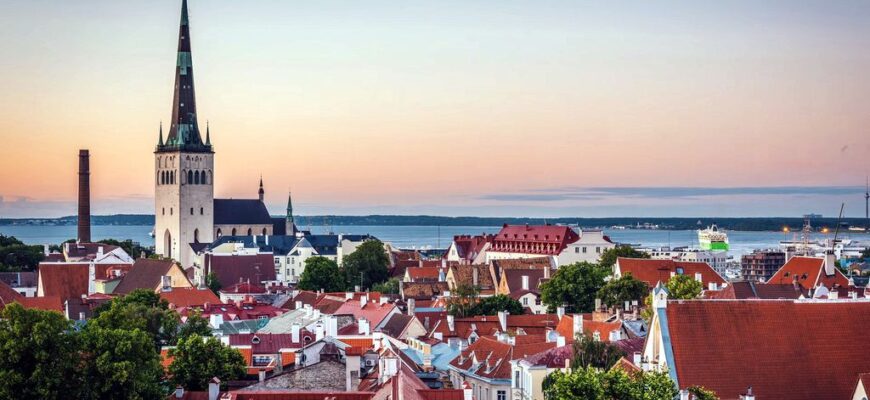
Tallinn (Estonian: Tallinn) is the capital of Estonia, one of the largest and most beautiful cities in the Baltics, situated on the northeastern coast of the Baltic Sea. It is a major port and the most fascinating city in Estonia. Tallinn represents a stunning blend of antiquity and modernity. Particularly impressive is the well-preserved Old Town, which is included in the UNESCO World Heritage List. Tallinn’s historic center exudes a magical medieval atmosphere of an old Hanseatic town: city walls with towers, a network of winding cobblestone streets, ancient houses, intriguing landmarks, and historical and architectural monuments.

Tallinn can be conditionally divided into two parts: the new town and the old town. The Old Town includes:
- Toompea Hill (Upper Town) – a medieval fortress with old cobbled streets, medieval houses, and historical & architectural monuments surrounded by fragments of the city wall.
- The Lower Town – adjoining the city wall and lying at the foot of the hill.
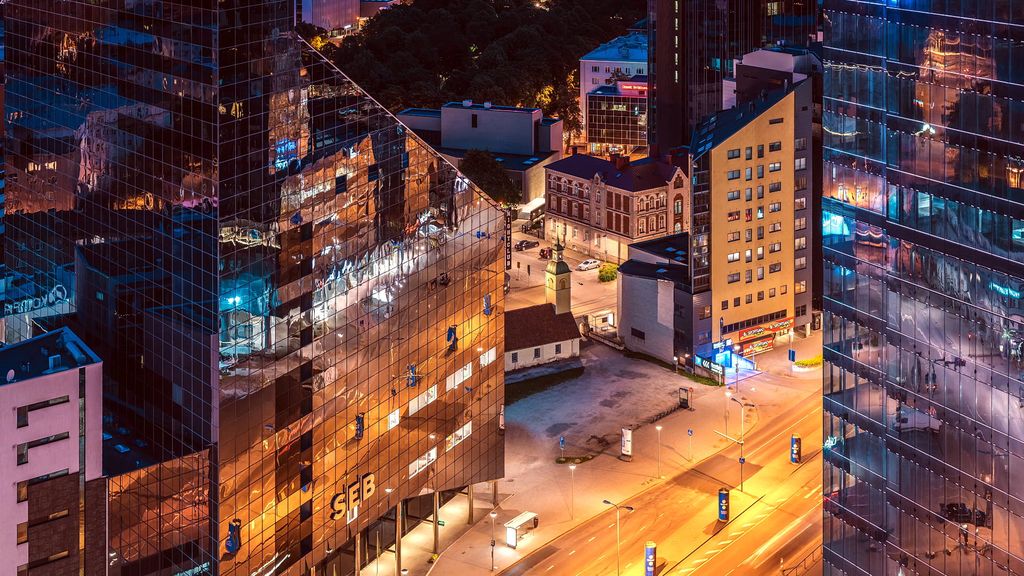
The New Town strongly contrasts with the historic center, presenting classic Soviet-era buildings interspersed with modern glass and concrete high-rises.

Practical Information and Interesting Facts about the City
- Population of Tallinn is about 450,000 residents. Of these, over 50% are Estonians and almost 40% are Russians.
- The official language is Estonian. Russian is widely spoken. English and German are also in use.
- Currency – Euro. Bank cards are accepted almost everywhere.
- Among religious denominations, Orthodox and Lutherans predominate.
- Time: winter +2, summer +3.
- Visa – Schengen.
Best Time to Visit
Although Tallinn is beautiful and interesting in any weather, we consider summer and early autumn (until October) the best time to visit. During this period, it is quite warm and the weather is usually good. Another magical time is New Year’s and Christmas. During this season, a fairy-tale atmosphere prevails in Tallinn, with Christmas markets and fairs taking place.
Geography and Weather
Tallinn is territorially located in Northern Europe, in the southern part of the Gulf of Riga, which is part of the Baltic Sea, 80 km from the capital of Finland – Helsinki. The terrain is quite flat. The highest point of Tallinn (64 m) is in its southwestern part. Within the city limits there are several large lakes, the largest of which is Ülemiste.
Tallinn’s climate is temperate maritime with high humidity. The Tallinn climate is characterized by: quite mild winters with slight frosts and thaws, cool spring, warm summer, and rainy autumn. The average temperature in July-August is 15-20 degrees Celsius.
History
Tallinn is a rather ancient city. Its history spans more than 8 centuries. The first written records of the city date back to 1154. At that time, there was a market and a fishing harbor here. In the first half of the 13th century, Tallinn was captured by the Danes. They destroyed the old settlement and began building a new one. At that time, the city was called Reval. Meanwhile, Tallinn was constantly subjected to raids by Estonians and German knights. In 1227, German knights captured the city, but it returned to Denmark in 1238 and belonged to the Danish kingdom for over 100 years. The founding of Tallinn’s coat of arms dates back approximately to this time.

In 1346, Reval was sold by Denmark together with part of Estonia to the Teutonic Order. The period from the 14th to the 16th century saw the flourishing of ancient Tallinn. In 1347, Reval received city privileges and soon joined the Hanseatic League. Membership in the Hansa turned Tallinn into one of the richest cities in the Baltics.
During the Livonian War, the eponymous order ceased to exist. In 1561, Reval swore allegiance to the Swedish king. At the same time, Tallinn became one of the main trading cities of Sweden, surpassing even the Swedish capital, Stockholm. During the Livonian War, the city was besieged by Poles, Danes, and Russian troops stood near it for 3 months. The result of this military campaign was a decline in trade, and Tallinn lost its importance. In 1583, the city became the center of the Duchy of Estonia within Sweden. The era of Swedish domination lasted until the 18th century. During this period, defensive walls were built.

After the end of the Great Northern War, Reval became part of the Russian Empire. At that time, the city became one of the central ports of the Russian Baltic, alongside St. Petersburg and Riga. Tallinn remained part of the Russian Empire until 1918.
In 1918, Estonia’s independence was declared in Reval. In 1919, the city was renamed Tallinn. In 1940, Estonia became part of the USSR. In 1941, Tallinn was occupied by the Germans. In 1944, the city was liberated. During the liberation, the city was bombed, damaging 40% of the old town. Since 1991, Tallinn has been the capital of independent Estonia.
How to Get There
Tallinn International Airport is located 5 km from the historic center. Flights arrive here from Kyiv, Amsterdam, Berlin, Munich, Bremen, Oslo, Copenhagen, Istanbul, London, Milan, Bergamo, and many other European cities. From the airport, bus ✓ 2 (every half hour, ticket costs €2) and tram ✓ 4 (ticket also costs €2) run to the center. A taxi to the center costs approximately €10.
Advertisement placeholder
Ferry connections link Tallinn with Helsinki. You can also reach the Estonian capital by sea from Stockholm and St. Petersburg.
By bus, you can get to Tallinn from almost all major cities in the Baltics, Finland, St. Petersburg, etc. Buses arrive at the central bus station located at Lastekodu 46. From the bus station, you can reach the center by buses 17, 23, 2, 54, 15 and trams 4, 2.
Trains arrive at the Baltic Station, located near the old town. Highways connect Tallinn with Russia and Latvia.

Transport
For getting around the city, you can use buses, trolleybuses, and trams. Public transport in Tallinn operates from 6:00 AM to 11:00 PM (though some lines may run until 12:00 AM). You can view the public transport map here. The Old Town is quite compact, so it’s easy to explore on foot. The fare when paying with cash is €2. Tickets can be bought from the driver. You can also use the TallinCard, which entitles you to free travel on public transport for its entire validity period, or a single travel card. Validation of the card must be done immediately after starting the trip.
On the citybike.ee portal, you will find information about bike rentals, organized bike tours in Tallinn, as well as maps with routes. A good map with bicycle paths in the city and its surroundings can be found here.

Hotels
Tallinn is a city we recommend visiting with a group: it’s warmer together. In that case, renting an apartment is easier: it saves money and provides your own space for those who value it. On city24.ee you can find apartments from €20 per night. It’s best to rent accommodation near the center: you’ll save on transport and won’t get lost on the way home.
Tallinn is simply filled with hostels, so if you want to spend time in this city cheaply but cheerfully, we recommend staying, say, at Kohver (Sauna, 1), where its creators Nikita and Misha will gladly welcome you. – €10 per bed and €30 for a double room. The hostel is located in the center of the old town. For breakfast, the guys offer a buffet. There is a terrace for smokers. The main feature of Kohver is the preservation of the post-war interior and, as a result, the atmosphere, which is occasionally broken up by concerts by local young musicians.
Oru Hotel (Narva maantee, 120). A nice little hotel for those who want to live by the sea: a 3-minute walk and you’re at Pirita, a beautiful seaside promenade. Another couple of minutes and you’re on the beach. A quiet place, comfortable rooms, fast internet. Room from €46.

Taanilinna Hotel (Uus, 6). A very cozy, clean, and polished hotel in the Old Town. A nice restaurant and a private parking in the courtyard right in the center — room from €55.
FeelGood Hostel (Kaarli, 11). Another good hostel located in the very heart of Tallinn. From €14 not only for a bed but also for the hospitality and responsiveness of the staff, who will treat you to breakfast and show you the most interesting places in the Estonian capital. You can also rent a bike here.
Old Town Hostel Alur (Lai, 20) – a good hostel in the old town. Beds from €14 and discount coupons for some pubs and restaurants, as well as free entry to one of the city’s clubs.
Tallink Express Hotel (Sadama, 9). If you have always dreamed of experiencing port romance or you are simply catching an early morning ferry at 7 AM, check out this new hotel near the Tallink terminal. Large rooms, delicious breakfast, and €46 for a double room.
Shopping and Purchases
Tallinn is one of the shopping centers in the Baltics. The main shopping quarter is Rotermann, where you can find many shops and restaurants. Many shops and stores with souvenirs and more can be found in the Old Town.

Shopping centers and large supermarkets in Tallinn:
- Solaris, Estonia pst. 9
- WW Passaaž, Aia 3 / Vana-Viru 10
- Kristiine, Endla 45
- FoorumKeskus, Narva maantee
- Stockmann, Liivalaia 53
- Norde Centrum, Lootsi 7
- Viru Keskus, Viru väljak 6
- Sikupilli, Tartu mnt 87
Where to Eat
Many restaurants and cafes are located in the old town. Excellent food (including traditional Estonian cuisine) can be tried around Raekoja Square (Town Hall Square). However, food in restaurants on this square is expensive by Estonian standards. Unusual and inexpensive establishments can be found in the Kalamaja and Kopli districts.
Where to Go Out
In terms of entertainment, Tallinn is in no way inferior to the trendiest European capitals. So even avid party-goers won’t be bored here. Usually, Tallinn clubs are open on Friday and Saturday and holidays, although you can always find a fun venue here. Clubs open from 10:00 PM – 11:00 PM and work until 3:00 AM – 4:00 AM. A plus of Tallinn is its compactness, so if you don’t like one place, you can stroll to another.
See interesting events in Tallinn here – https://www.visittallinn.ee/rus/visitor/see-do/events.
Attractions of Tallinn
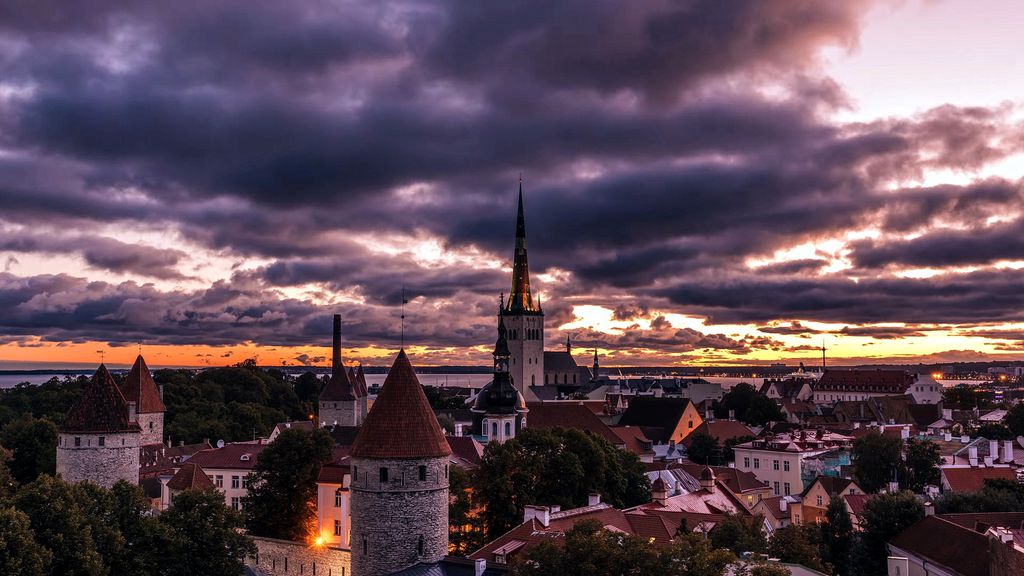
The main attraction and symbol of Tallinn is the Old Town. This is an amazingly beautiful place with a wonderful atmosphere, which has surprisingly survived despite all the wars and adversities. Old winding cobblestone streets, medieval architecture, Gothic church spires, and street lanterns introduce us to the history and culture of Tallinn and give it a kind of mystical charm.
The historic center of Tallinn took shape between the 13th and 15th centuries during the Hanseatic era. The Old Town has largely preserved its original layout and even buildings. It was surrounded by a powerful fortress wall, fragments of which have survived to this day. This is a place of atmospheric red tiled roofs, old stone houses, cozy courtyards, and historical and cultural monuments.
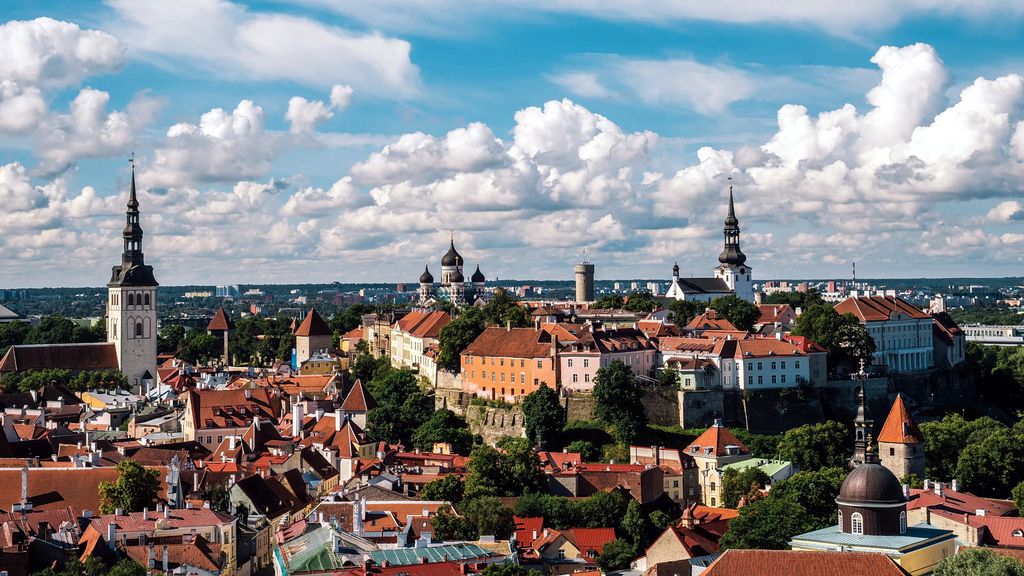
Originally, the Old Town was divided into Upper Town (Toompea) and Lower Town. The nobility and wealthy residents of Tallinn lived in the Upper Town, while craftsmen and other less wealthy people lived in the Lower Town. The Upper Town was separated from the Lower Town by gates. Now these two parts form a single historical and architectural ensemble.
The main attraction of the Upper Town is Toompea Castle, which towers on a cliff over all of Tallinn. This is the oldest place in the city, founded by German knights in the first half of the 13th century. Throughout Tallinn’s history, Toompea Castle has been the center of power. Today, the parliament is located here. Over its nearly 800-year history, the castle has been rebuilt many times, but has largely retained its original fortress structure from the 13th-14th centuries. On the southern side of the castle, you can see the Tall Hermann tower. This 46-meter stone colossus is an Estonian national symbol. The Estonian flag is raised on it every morning.

The heart of the old city is Town Hall Square, which is practically the same age as Tallinn. The square is surrounded by ancient houses. In summer, outdoor cafes are set up here, and in winter, a Christmas tree. Interestingly, a Christmas tree has been placed on Town Hall Square since the first half of the 15th century.
The main attraction of the square, as expected, is the Town Hall, a beautiful Gothic building constructed in the early 15th century. Interestingly, the Tallinn Town Hall is the only fully preserved one in all of Northern Europe. The keen-eyed can see the town hall’s symbol on the weather vane – a figurine of Old Thomas. In summer, the most physically fit tourists can climb the 64-meter tower and enjoy a splendid view of Tallinn.
Next to the town hall is the oldest pharmacy in Europe, which has been operating since the 15th century.
In Old Tallinn, you can find many beautiful, romantic, and atmospheric places. One of the most picturesque streets is St. Catherine’s Passage (Katariina käik). Here you’ll find the most famous souvenir market. A very interesting place is the Master’s Courtyard located at Vene tn 6. Some of the oldest medieval buildings have been preserved here.
On the eastern side of Toompea is one of Tallinn’s most photogenic spots — Kohtuotsa viewing platform. Here you can not only enjoy a beautiful view of the old town but also take great photos.
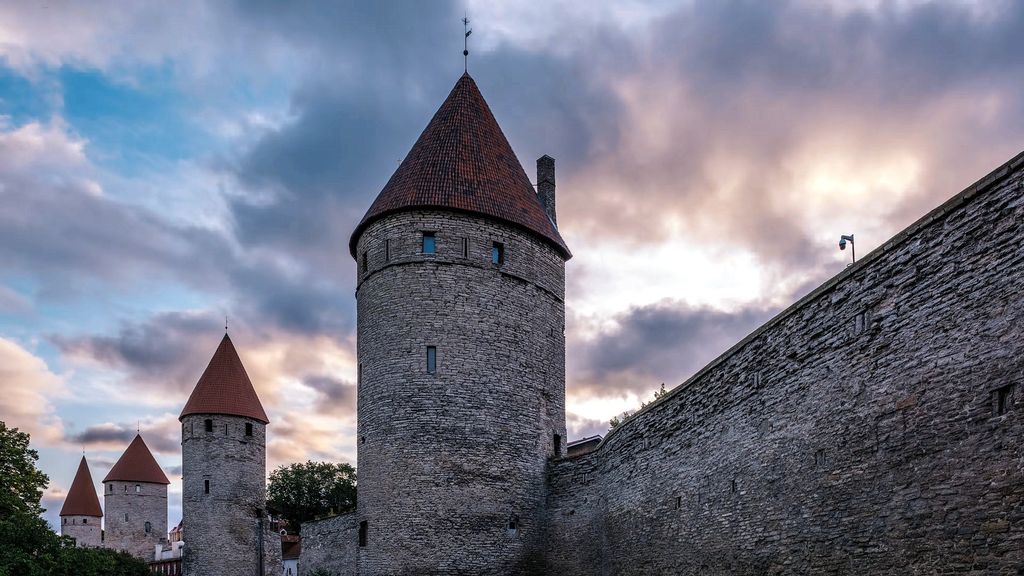
A true symbol of Tallinn is the city wall. Previously, the Lower Town was girded by a 4-kilometer wall with 46 towers. Approximately 2 km of the wall and 20 towers have survived to this day. Construction of the wall began in the 13th century. But most of it dates back to the 16th century, the period of Tallinn’s flourishing as a trading city of the Hanseatic League. The wall is 14-16 meters high and up to 3 meters thick.
In the northwestern part of the old town, a section of the city wall with three towers has been preserved. Here you can climb the wall and even walk along it. A beautiful view of the city walls opens from the viewing platform on Toompea and Tower Square, located near the railway station. Some towers of the city wall are open to visitors and host interesting exhibitions.
Sacral Architecture
In Tallinn, you can discover several masterpieces of sacred architecture.

St. Nicholas Church – a 13th-century church dedicated to the patron saint of sailors. It is a powerful building commissioned by German settlers even before the fortress walls. Interestingly, this religious building is the only one in the Lower Town that did not suffer during the Reformation. St. Nicholas Church was damaged during World War II and later restored. Today it is a museum. Here you can admire a unique altarpiece, ancient tombstones, and masterpieces of sacred art.

St. Olaf’s Church – one of the most famous churches in the Baltics. It is a beautiful Gothic structure known for its high tower, which in the 15th-16th centuries was the tallest building in the world. The church was built in the 13th century for Scandinavian merchants. It acquired its current appearance in the 15th-16th centuries. At that time, the spire reached a height of 159 meters. The church spire became not only a symbol of Tallinn but also served as a landmark for ships. Several times throughout history, the spire was damaged by lightning. Today, the height of the tower is 124 meters.
Dome Church (Toomkirik) – one of the oldest religious buildings in Tallinn and Estonia. The exact date of the church’s construction is unknown. But there is evidence of its existence already in the first half of the 13th century. The church was built for the German community. The oldest part dates back to the 14th century. The 69-meter Baroque tower was built in the 18th century. The famous navigator I. F. Kruzenshtern is buried in the church.
Church of the Holy Spirit (Püha Vaimu kirik) – an ancient church from the 14th century. In olden times, this religious building was the main church for ordinary townspeople. The church stands out with its interesting wooden interior decoration and a 17th-century clock on the facade.

Alexander Nevsky Cathedral – the main Orthodox church in Tallinn. The church was built at the beginning of the 20th century. It features rich interior decoration. 11 bells are installed under the domes.

Notable and Interesting Places in Tallinn
Tallinn is a city rich in interesting and unique places. Here are some of them:
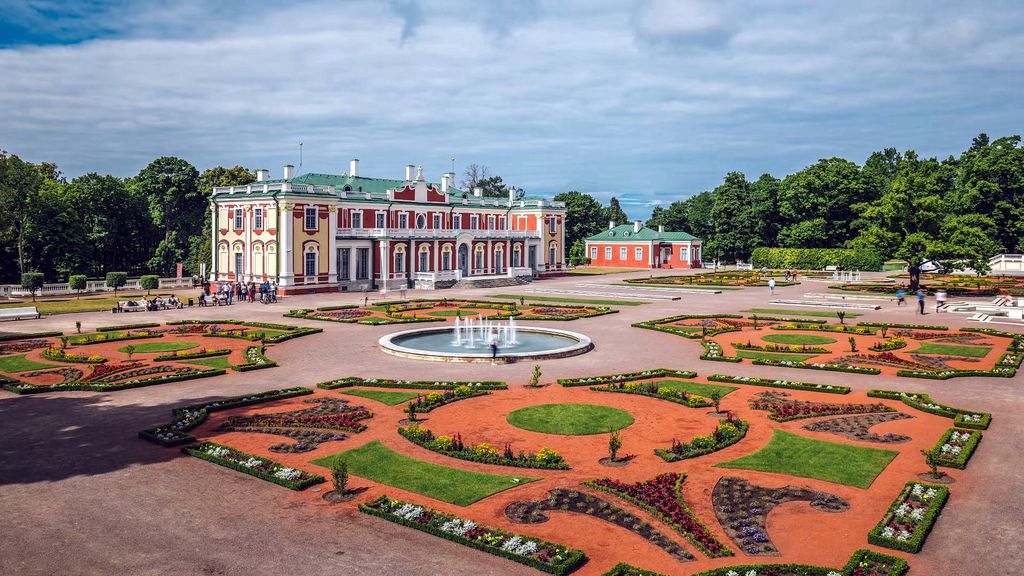
- Kadriorg – a Baroque masterpiece, a splendid palace complex built by Peter I for his wife Catherine. Today, the art museum is located here. Kadriorg Palace boasts a vast collection of paintings from the 16th-20th centuries. Undoubtedly, it is one of the largest and most interesting art museums in the Baltics.
- The Great Guild Hall, which houses the Estonian History Museum. This building dates back to the 15th century and was the residence of the Guild of the most influential merchants.
- Kiek in de Kök Tower – a 38-meter medieval tower built in the 15th century. Here you can see interesting exhibitions on the theme of city fortifications and weapons.
- Patkuli viewing platform, located in the northern part of Toompea.
- Tallinn Zoo – one of the largest in the Baltics, located in Veskimetsa Park. An excellent place for family recreation. Ticket prices are very affordable: adults – €5, children – €3.

- Tallinn TV Tower. You can climb it and view the city from a height of 170 meters.
- Freedom Square – one of the symbols of independent Estonia. Located on the edge of the historic center.
- Hellemann Tower – a 14th-century watchtower which you can climb and walk along the city wall.
- Maiden Tower (Neitsitorn) – a 14th-century medieval tower with a museum and a unique cafe.
- Kiekemäe Tower – a 14th-century medieval stone tower that can be rented for various events.
- Viru Gates – the city gate to the Old Town, located on Viru Street. The gates were built in the 14th century. Although most of the gate was destroyed, two watchtowers have survived, which are among the most recognizable symbols of Tallinn.
- Kaarli Church on Toompea Hill – one of the most beautiful new churches in Tallinn, built in the Neo-Romanesque style in the 19th century.
- Kalamaja – a fishing district that neighbors the historic center. This is an area of old colorful wooden houses, street cafes, youth, and bohemia.
- Of course, Tallinn’s attractions are not limited to these places. This city is rich in discovery, where you can always find something new!
Video – Tallinn