We’ll explain what stars are, how they shine, and why we can’t see them during the day.
What Is a Star
A star is a massive and extremely hot celestial body made of gas that emits light. This light is produced through nuclear fusion in the star’s core, where hydrogen atoms are converted into helium. This process releases a tremendous amount of energy in the form of heat and light.
The interiors of stars also forge heavy chemical elements, which later form solid objects, including planets.
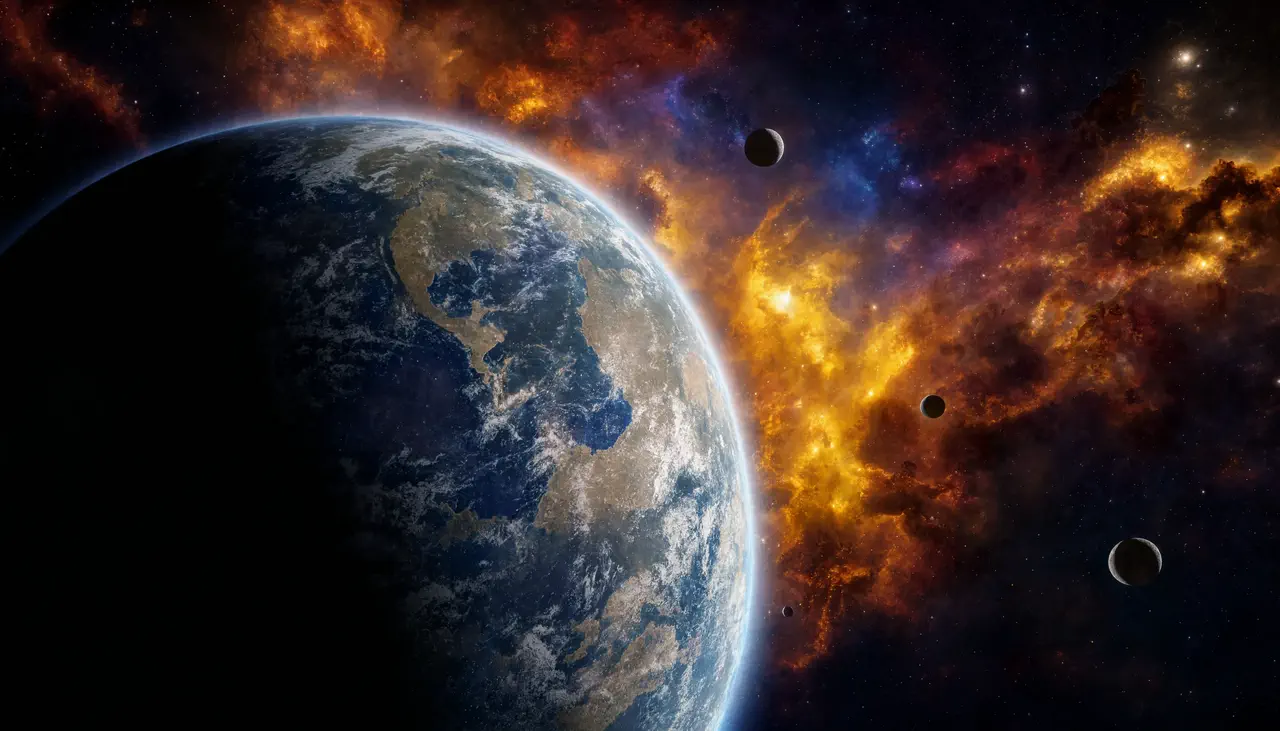
It is important not to confuse stars with planets. Although stars and planets may look similar to the naked eye, there is a fundamental difference between them.
How Stars Differ from Planets
-
Stars are sources of light, while planets can only reflect it.
-
Most stars are significantly larger in size and are always more massive than planets.
-
The life of stars follows a specific life cycle, whereas planets can exist until something external destroys them.
-
Stars consist only of gas, while planets, besides gas, can contain rocky material.
-
Stars cannot be habitable.
-
Stars have a higher surface temperature than planets.
-
Stars orbit the center of a galaxy, while planets orbit stars.
-
The atmospheres of stars are composed of hydrogen and helium, while planets may also contain nitrogen, oxygen, carbon dioxide, and other gases.
Parameters of Stars
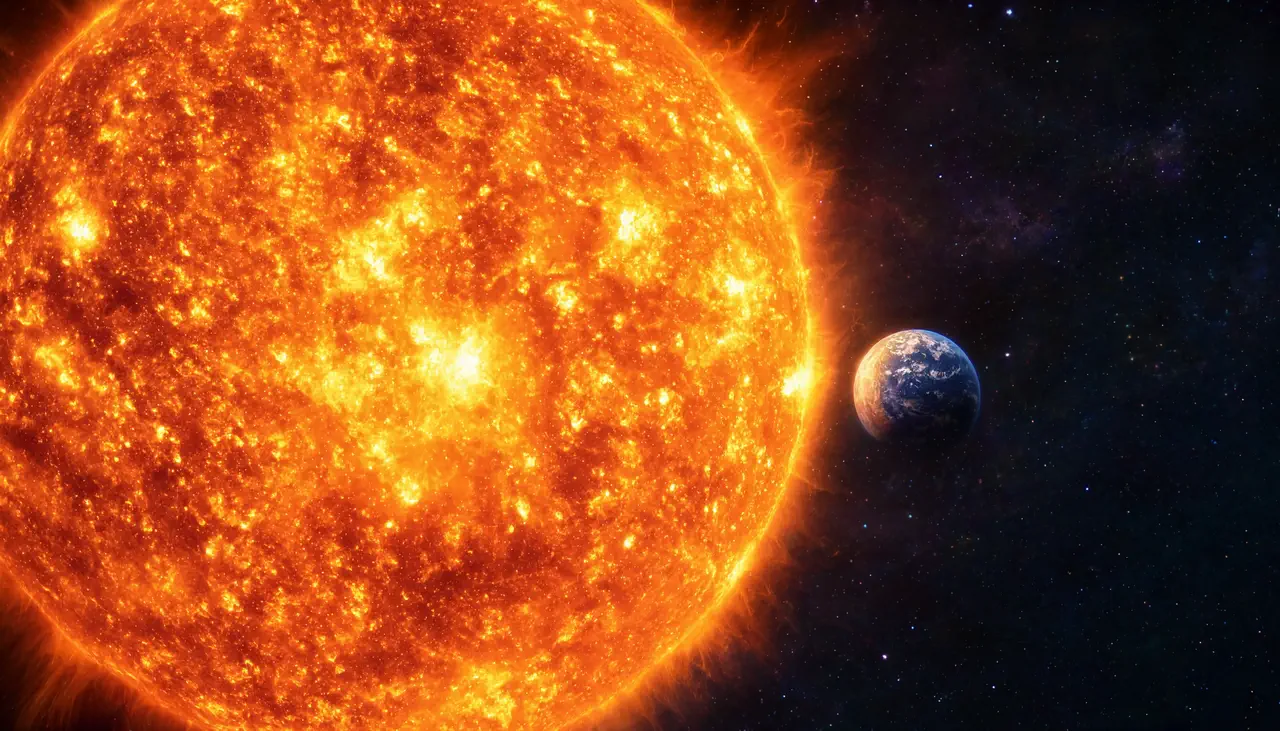
Stars look like tiny points of light in the sky, but this impression is only created because of their immense distance from our planet. The distance to the nearest star to us, excluding the Sun — Proxima Centauri — is estimated at 4.24 light-years. And the distance from Earth to the Sun is “only” about 8.3 light-minutes. By the way, do you know why distances in space are measured not in kilometers?
In the Solar System, where our planet is located, the Sun is the only star. Without its heat and energy, life on Earth would be impossible. The diameter of the Sun is about 1.4 million kilometers, and it is about 109 times larger than Earth. Compared to our planet, the Sun seems like a true giant, but among other stars, its size is not large at all. For example, the star Betelgeuse, one of the largest stars visible to the naked eye, is about 700 times larger in diameter than the Sun.
Throughout their existence, stars go through various stages. They are born in molecular clouds, then spend a long time on the so-called “main sequence.” At this stage, which occupies up to 90% of a star’s life cycle, the energy source is thermonuclear reactions in the core. At the end of their path, depending on their mass, stars can transform into different objects: some become white dwarfs, others — neutron stars or black holes.
By physical parameters, stars differ in size — radius, mass, luminosity, and surface temperature.
The latter is possible if stars orbit in close binary systems: gas can be pulled from one star to another by gravity.
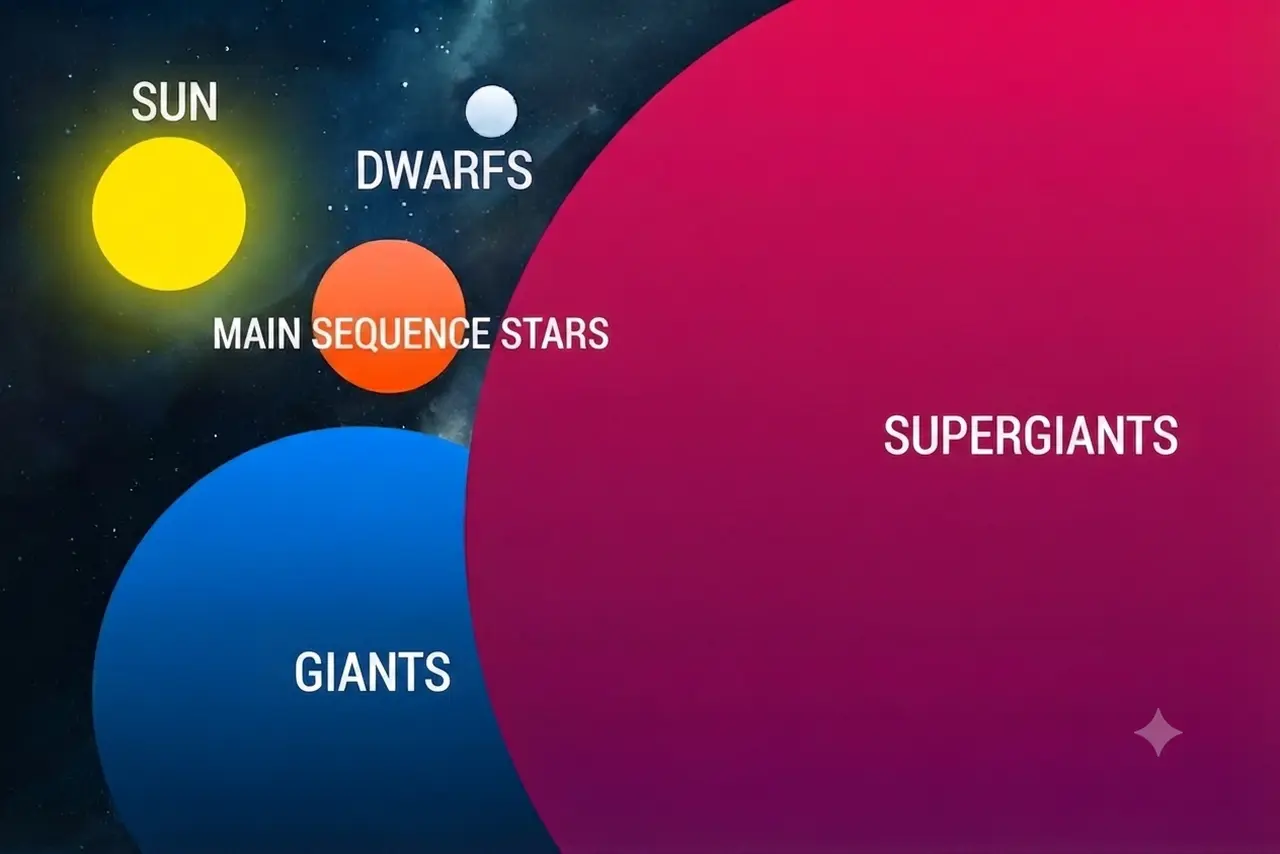
Stars are divided into four types by size. For clarity, each category is compared to the mass of the Sun:
-
Normal. Their mass is comparable to the mass of the Sun.
-
Dwarfs. Their mass is hundreds of times less than the mass of the Sun.
-
Giants. Tens of times larger than the mass of the Sun.
-
Supergiants. The mass of such stars exceeds the mass of the Sun by hundreds of times.
Why and How Stars Shine
Stars are the only cosmic objects that emit light.
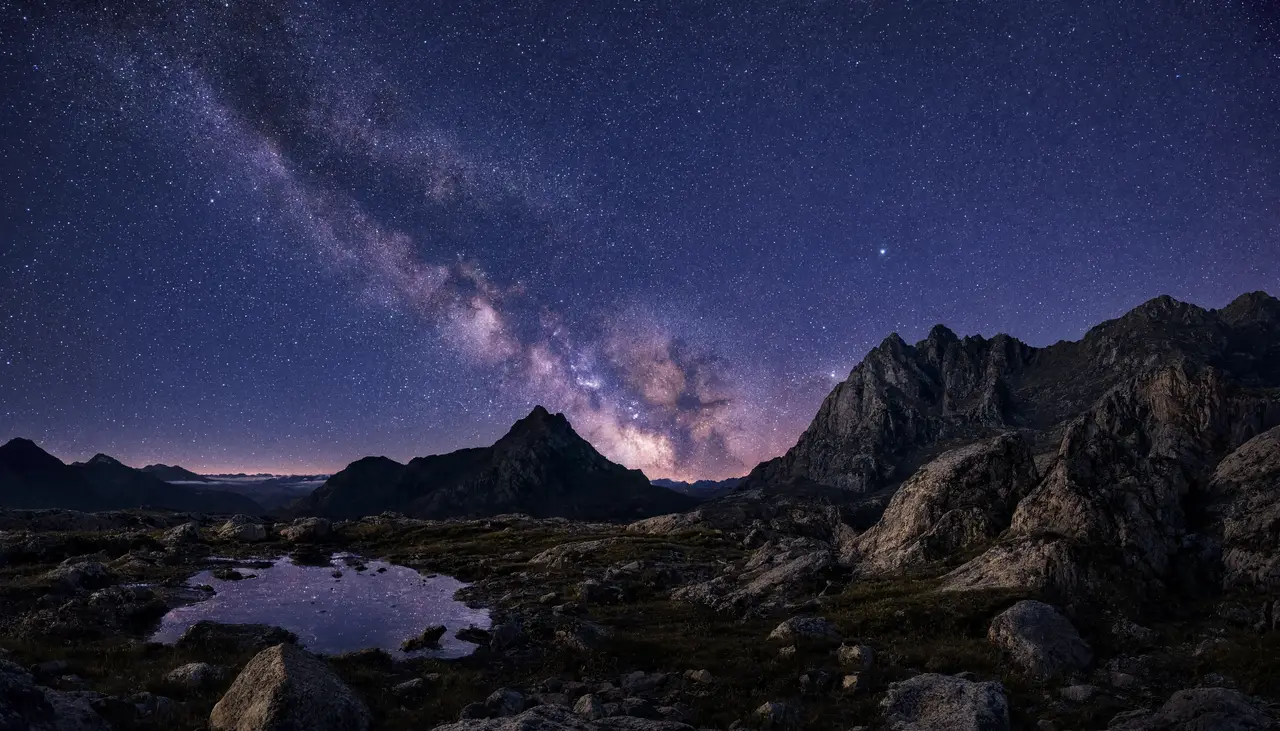
Starlight is visible electromagnetic radiation emanating from stars other than the Sun. It can be observed from Earth’s surface at night.
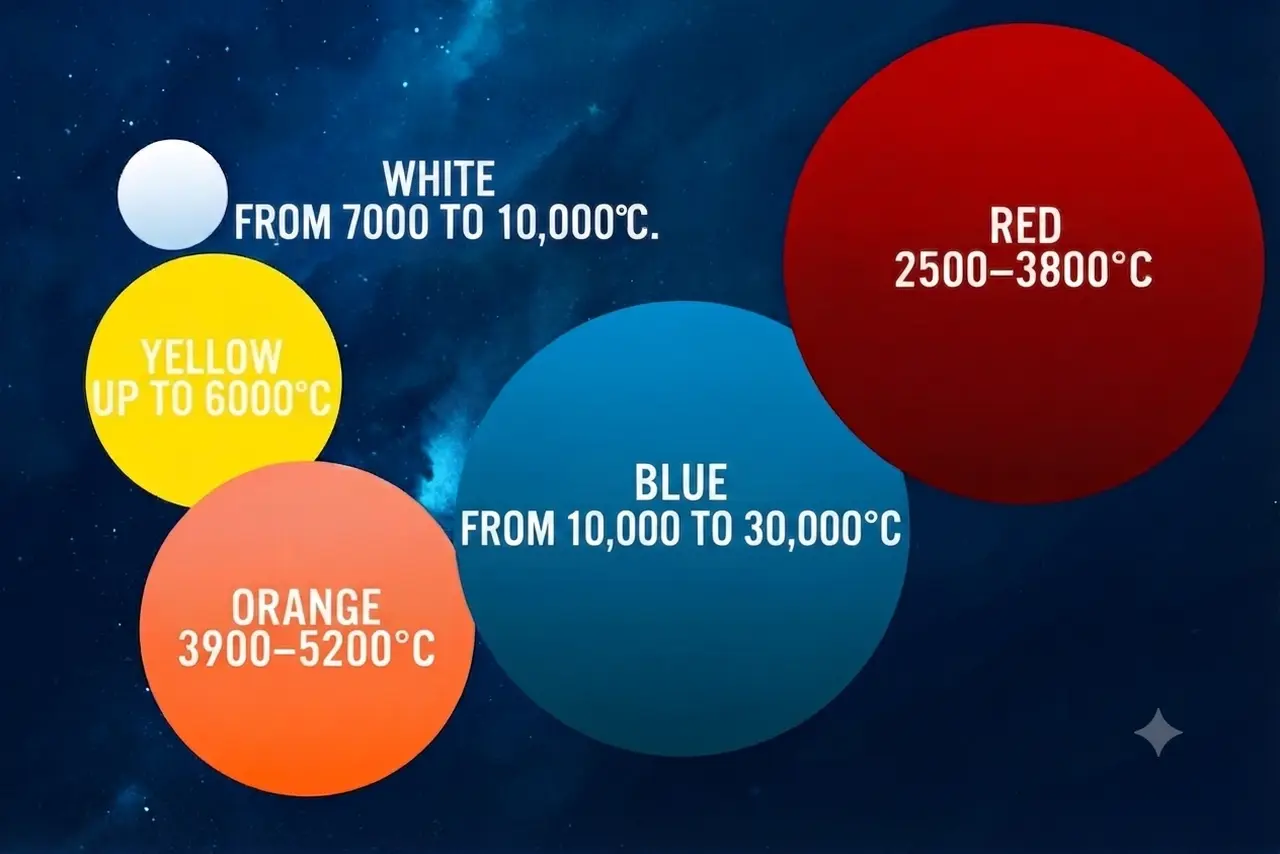
All stars have different temperatures and colors. The temperature depends on the level of energy radiation and the size of the celestial body, i.e., the surface area emitting heat. And the color of a star is determined by its temperature. The hottest stars shine with blue or white light, while cooler ones are yellow, orange, or red.
-
The “coolest” stars are red. Their temperature is 2,500–3,800 °C.
-
The temperature of orange stars is 3,900–5,200 °C.
-
Yellow stars heat up to 6,000 °C. The Sun is a yellow star, its temperature is 5,500 °C.
-
The temperature of white stars ranges from 7,000 to 10,000 °C.
-
Blue stars have the highest temperature — from 10,000 to 30,000 °C, and some stars heat up to 60,000 °C.
When observing stars, it may seem that they twinkle. In fact, this is an optical illusion, and stars do not twinkle. This effect arises because we look at the sky through the atmosphere, which consists of many layers. As starlight passes through these layers, it is refracted multiple times, which affects our perception. The distortion of starlight caused by the inhomogeneity of atmospheric layers is called scintillation.
Why Stars Are Not Visible During the Day
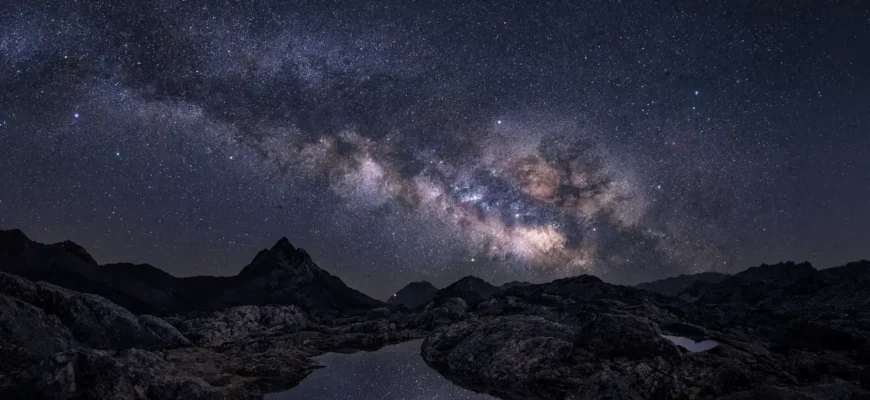
Stars shine around the clock, but they can only be seen at night. During the day, this is impossible because of the Sun: due to its close distance to Earth, its light is so bright that it completely overwhelms the glow of other stars, making them invisible to humans.
Other factors also affect the visibility of stars:
-
Stars are much harder to see in large populated areas because a large amount of artificial light is produced there, which interferes with observation. This phenomenon is called light pollution.
-
High air humidity, dust, fog, clouds, and other atmospheric conditions also complicate visibility.
-
Observation location. Some stars can only be seen from the Southern or only from the Northern Hemisphere.
-
A full moon can interfere with stargazing, as during this period the bright moonlight outshines the light of fainter stars.
-
The season also affects visibility due to our planet’s rotation around the Sun. August is considered one of the best months for observing stars and meteor showers. Every year, our planet crosses a stream of star dust ejected by the comet Swift-Tuttle. These particles burn up in the atmosphere, creating the effect of a meteor shower. This phenomenon is called the Perseid meteor shower.