A practical Copenhagen guide covering Amalienborg, Tivoli Gardens, Strøget shopping, Danish food, transport zones, and more. Everything a first-time visitor should know.
City of Copenhagen (Denmark)
Copenhagen (Danish: København) is the capital of Denmark and its largest city. It is located in the eastern part of the country on the islands of Zealand, Slotsholmen, and Amager, overlooking the Øresund strait. Copenhagen is one of the most beautiful European cities, geographically and culturally linking Scandinavia and Europe. It is perhaps the calmest of the Scandinavian capitals, enchanting visitors with its lovely provincial charm, wonderful maritime atmosphere, and world-class attractions. Copenhagen is a place where ancient fairy tales coexist with modernity, and warm jazz blends with cool electronic music.
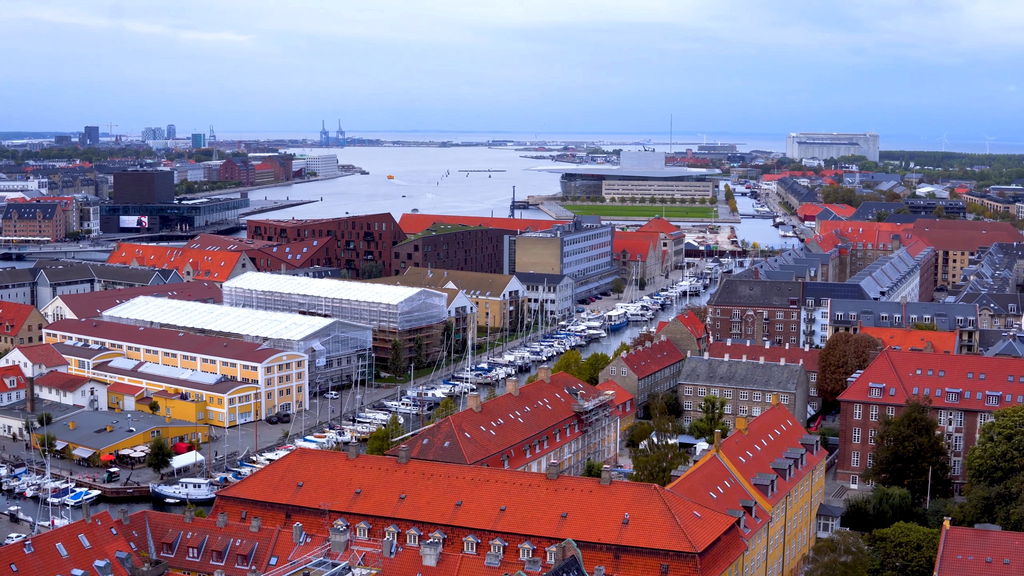
Once, back in the 11th century, on the site of the future capital of Denmark, there was a small fishing village. Later, thanks to maritime trade and the fishing industry, a wealthy city and a large port grew here. The port atmosphere is especially felt in the New Harbour, whose embankment is lined with bright merchant houses and filled with boats and ships. Now Copenhagen is one of the main financial and cultural centers of Northern Europe. The city is famous for the friendliness of its locals, interesting street and nightlife, unique food culture, beautiful historical architecture, and a multitude of palaces, ancient churches, and museums.
Geography and Weather
Copenhagen is located in eastern Denmark on the islands of Zealand, Slotsholmen, and Amager. The Øresund strait separates the capital of Denmark from Sweden. The climate of Copenhagen is temperate maritime. Summer is relatively cool and rainy. Winter is quite mild, with slight negative temperatures and unstable snow cover.

Practical Information
-
Population — over 650,000 people (over 1.3 million in the urban agglomeration).
-
Area — 86.40 km².
-
Language — Danish.
-
Currency — Danish krone (DKK).
-
Time — UTC +1, in summer +2.
-
Visa — Schengen.
-
VAT in Denmark is 25%. You can claim Tax Free on purchases of 300 Danish kroner or more in one store on one day.
-
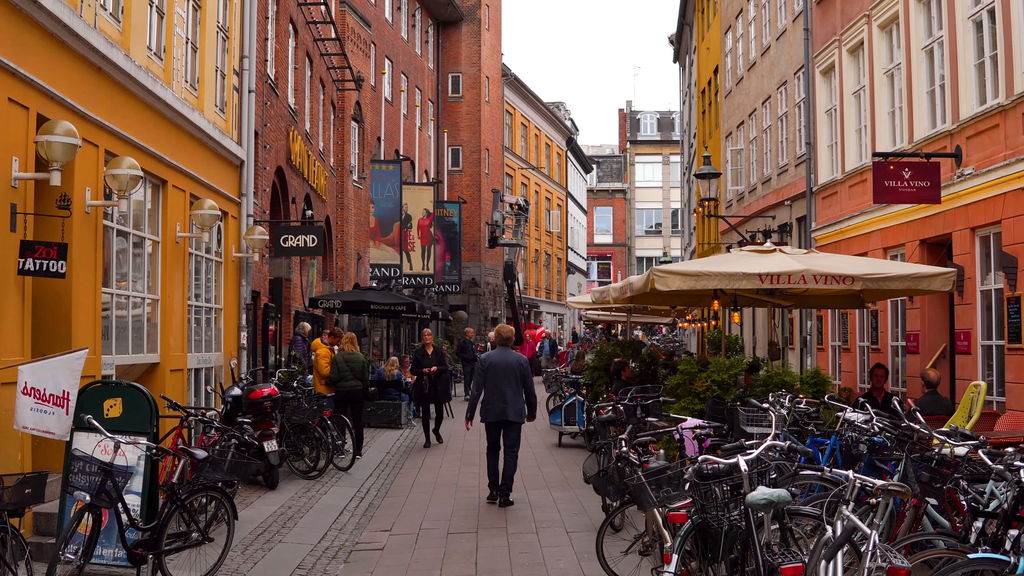
One of the most popular shopping streets in Copenhagen is Strøget with its many fashionable and designer shops. Many interesting boutiques are also located on the narrow streets nearby.
-
Flea markets are called Loppemarked in Danish. Such a market operates every Saturday near the central station, as well as on the square behind the town hall, on the museum square, and in the Nørrebro district.
-
Today, Copenhagen is a popular destination for gastronomic tourism. Gourmets from all over the world come to the Danish capital to get acquainted with modern culinary trends. But this does not mean you cannot find cheap food here. In Pølsevogn (literally “sausage wagon”), you can buy relatively inexpensive hot dogs and sausages. Also, there are many kebab shops and other fast food on the streets of Copenhagen. To drink coffee and taste local pastries, you can visit local bakeries quite inexpensively.
-
The most popular drink in Denmark is beer (mainly Carlsberg or Tuborg). Beer in bars and restaurants costs from 50 to 80 Danish kroner. It is legal and very popular to drink beer in public places (except public transport). Therefore, you can grab a beer at the nearest supermarket and enjoy the drink in the open air.
Districts of Copenhagen
-
Østerbro is a cozy district north of the center, in whose harbor the famous Little Mermaid is located.
-
Vestegnen — the southwestern suburbs with beaches and campsites.
-
Amager — an island with its own special atmosphere and the international airport.
-
Nørrebro — one of the most vibrant parts of Copenhagen with a large number of immigrants and students.
-
Frederiksberg — a small town that grew up around the castle of the same name. It is now practically surrounded by Copenhagen but is still a separate municipality.
-
Christianshavn — a working-class district with numerous canals, built three hundred years ago. Today it is a trendy place with a vibrant nightlife.
-
Inner City (Indre By) — the medieval center and historical heart of Copenhagen with narrow streets, beautiful historical buildings, and historical and cultural landmarks.
-
Vesterbro — one of the most fashionable places to live with many cafes, restaurants, and hotels.
History and Interesting Facts
In the 11th–12th centuries, there was a small fishing village on the site of Copenhagen. Everything changed in 1160 when King Valdemar granted control of the settlement to the Archbishop of Roskilde, Absalon. This influential clergyman built a castle here (on the island of Slotsholmen) and laid the foundations for the future prosperity of the city.
In 1254, Copenhagen received city privileges. In 1416, the city was conquered by King Eric of Pomerania, who made it his residence. Thanks to its advantageous strategic position (on the shore of the important Øresund strait) and the fishing industry, Copenhagen grew and prospered. But not everyone was pleased with the wealth and status of the new city. During the Middle Ages, Copenhagen was plundered and devastated several times. The Hanseatic League once completely destroyed the city.
After the Reformation, the Danish king permanently moved the capital of the kingdom to Copenhagen. New fortifications and many buildings were constructed. In the mid-17th century, Copenhagen withstood a Swedish siege. In 1728, a great fire destroyed 25% of the city. At the beginning of the 19th century, Copenhagen was significantly damaged by an English squadron under the command of Admiral Nelson. Despite this, the 19th century is considered the Golden Age for Copenhagen.
In the 19th century, most of the old fortifications were dismantled. By the 20th century, Copenhagen had transformed into a flourishing industrial city. The capital of Denmark was practically undamaged during the two world wars. And today, Copenhagen is considered one of the most comfortable cities for living.

How to Get There
Copenhagen International Airport is called Kastrup and is located on the island of Amager. Many passengers consider it much more convenient and functional than, for example, London Heathrow or Frankfurt Airport. The airport serves dozens of European and intercontinental destinations, including flights to Berlin, Paris, London, Stockholm, Amsterdam, and other cities. The most convenient way to get from the airport to the city center is by metro. Trains run every 4 minutes, and the journey takes 12–14 minutes.
Copenhagen’s public transport has a zonal system. Tickets can be purchased through the DOT mobile app, using a Rejsekort travel card, or at special machines at metro stations.
Copenhagen has excellent rail and bus connections with most cities in Denmark, as well as Malmö, Gothenburg, Lund, Hamburg, Berlin, Gdańsk. The capital of Denmark also has regular ferry connections with Oslo.
Sights and Landmarks
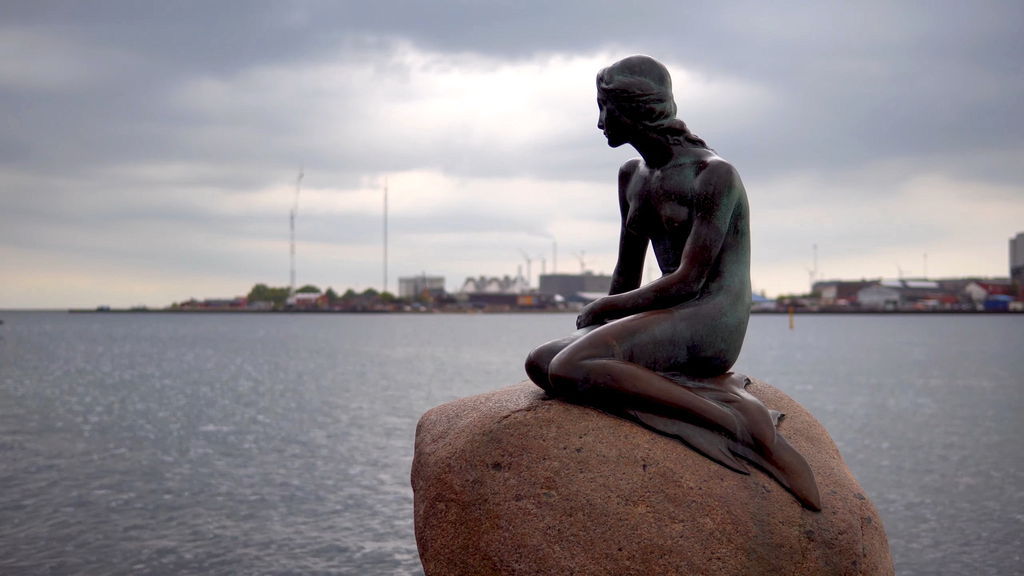
The Little Mermaid — one of the symbols of Copenhagen. This bronze statue is located at the Langelinie pier and is dedicated to the heroine of the famous fairy tale by H. C. Andersen. The sculpture, created by Edvard Eriksen, was unveiled on August 23, 1913, and became a gift from the Danish brewer Carl Jacobsen to the city of Copenhagen. The sculpture is made of bronze and granite and is inspired by Andersen’s fairy tale of a mermaid who gives up everything for the love of a young prince. Every morning and evening, she emerges from the sea abyss and, sitting on a rock, gazes longingly at the shore hoping to see her beloved.
Near the Langelinie pier is Kastellet — the former citadel of Frederikshavn, the oldest parts of which date back to 1625.

New Harbour (Nyhavn) — the most charming place in Copenhagen with beautiful, brightly colored old houses, excellent restaurants, a relaxed atmosphere, and boats moored along the canal. Originally (in the 17th century), Nyhavn was a busy commercial port where ships from all over the world could dock. The pier was filled with sailors, pubs, and beer houses.

Copenhagen City Hall is located on City Hall Square and was built between 1892 and 1905. The building is a combination of Italian Renaissance and medieval Danish architecture. The 106-meter-high tower is the tallest in the city. Above the main entrance, one can notice the figure of Bishop Absalon, who effectively founded Copenhagen. The town hall is richly decorated with sculptures and paintings.
The Round Tower (Rundetårn) — one of the most famous structures in Copenhagen. The building was erected in the 17th century as an observatory. The tower is 36 meters high and is still used by amateur astronomers.
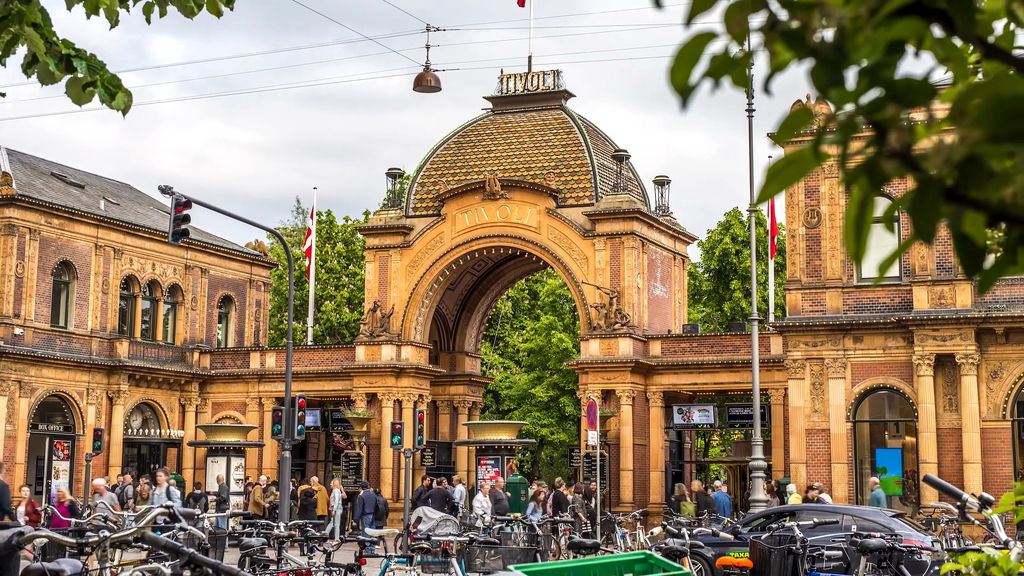
Tivoli (Tivoli) — one of the most famous amusement parks in Europe, featuring over 20 attractions: roller coasters, carousels, mirror halls, theaters, and much more. Tivoli Park was founded in 1843 and has become a true national treasure. The storyteller Andersen visited it several times, and Walt Disney himself found inspiration here for his own world. Tivoli is a beautiful landscape with exotic architecture, historic buildings, and lush gardens. At night, thousands of colorful lights create an absolutely unique fairy-tale atmosphere here.
The oldest amusement park in the world — Bakken, located about a 20-minute drive north of Copenhagen, is a more modest version of Tivoli.
Strøget — is one of the longest pedestrian streets in Europe and the largest shopping district in Copenhagen, where a multitude of shops are concentrated — from budget chains to the most fashionable brands.
Castles and Palaces

Kronborg, probably the most famous Danish castle thanks to W. Shakespeare’s “Hamlet”. It is listed as a UNESCO World Heritage Site and is located on a cape in North Zealand between Elsinore and Swedish Helsingborg. The grandiose fortifications with bastions and casemates were used to defend the Danish land from enemies and were the residence of the royal family until the end of the 17th century. Kronborg has beautifully decorated halls with Renaissance and Baroque interiors.

Christiansborg — a palace with an eight-century history, located on the tiny island of Slotsholmen. It was on this site that Archbishop Absalon built his castle, around which the future Copenhagen grew. The ruins of the ancient castle and fortress were discovered during the construction of the palace. Christiansborg was built in 1760 in the Baroque style. It now houses the Danish Parliament (Folketing) and the Supreme Court.
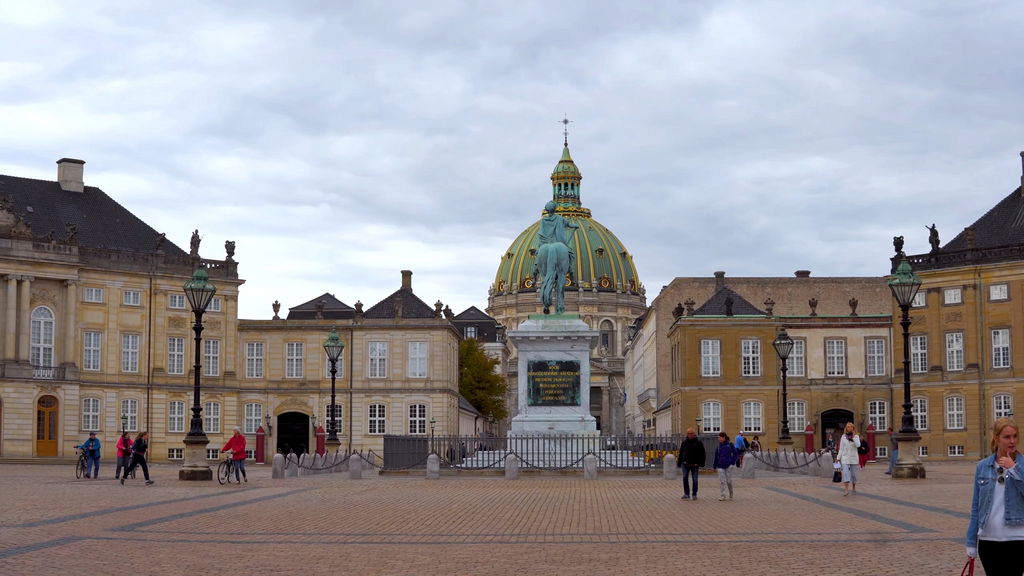
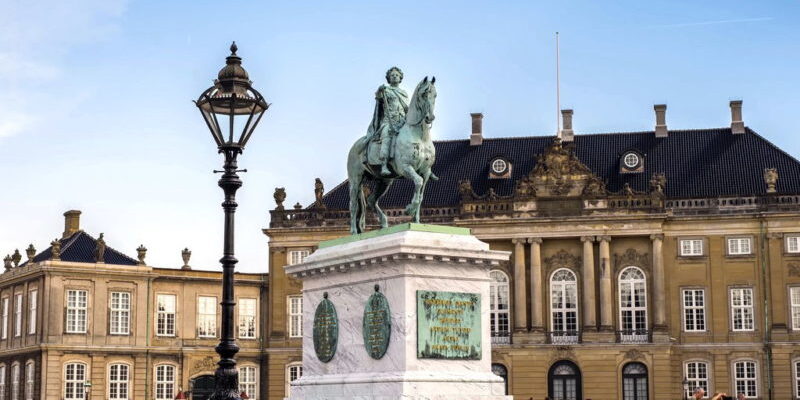
Amalienborg — a significant palace complex in the Rococo style, built between 1746 and 1766 during the reign of Frederick V. The palace is the official residence of the Danish royal family and consists of four buildings facing a large square. One of the main symbols of Amalienborg is the ceremony of the changing of the Royal Guard.

Rosenborg was built by one of the most famous Scandinavian kings, Christian IV, in the early 17th century and served as the royal family’s residence for some time. Among its main attractions are the Knight’s Hall with royal thrones and three life-size silver lions standing guard, tapestries on the walls, and well-preserved interiors. It now houses the Royal Treasury, where the crown jewels and royal regalia are kept.

Frederiksborg — an impressive 17th-century Renaissance castle built by Christian IV and located in Hillerød, north of Copenhagen. Its walls now house the Museum of National History, where beautifully decorated halls with portraits, historical paintings, furniture, and decorative arts take visitors on a journey through Danish history and culture — from the late Middle Ages to the present day. The historical interiors and lavish rooms create a sense of changing styles and eras, and the portrait collection is the largest and most significant in Denmark.
Churches of Copenhagen

Church of Our Saviour (Vor Frelsers Kirke) — a charming Baroque brick church from the late 17th century in the Christianshavn district, best known for its spiral spire and the largest carillon in Northern Europe. The building is erected in the Dutch Baroque style in the shape of a Greek cross. The walls rest on a granite foundation and are made of red and yellow brick.

The Marble Church (Marmorkirken) or Frederick’s Church — a Lutheran church in the Rococo style, located west of the Amalienborg Palace. The building was designed by architect Nicolai Eigtved in 1740 and was completed only at the end of the 19th century.
Grundtvig’s Church (Grundtvigs Kirke) — a Lutheran church built in the first half of the 20th century. It is one of the most famous structures in Copenhagen and a unique example of expressionism. The yellow brick church combines features of traditional Danish churches, Gothic, Baroque, and various modernist trends.

St. Paul’s Church (Sankt Pauls Kirke) — a brick Lutheran church from the late 19th century in the Neo-Gothic architectural style.
St. Nicholas Church (Sankt Nikolaj Kirke) — a former religious building in the Neo-Baroque style with a powerful tower and a high spire. The first building was erected at the beginning of the 13th century and is the third oldest church in Copenhagen. After the fire of 1795, the church was closed and has not been a religious building since 1805. It now houses a contemporary art center.
Church of the Holy Spirit (Helligåndskirken) — one of the oldest churches in Copenhagen, founded in 1238 by Franciscan monks. Originally, it was the first and only monastery in the city, converted into a hospital in 1296, and into an abbey in 1469. After the Reformation, the monastery was closed, and the church became Lutheran.
St. James’s Church (Sankt Jakobs Kirke) — a beautiful brick Neo-Gothic church from the late 19th century.
Museums of Copenhagen
-
The National Museum (Nationalmuseet) is housed in a former 18th-century royal palace. It presents exhibitions from the Stone Age, the Viking Age, the Middle Ages, the Renaissance, and modern Danish history.
-
The National Gallery (SMK) — the largest art museum in Denmark, showcasing outstanding collections of Danish and international art from the last seven centuries.
-
The Glyptotek (Ny Carlsberg Glyptotek) — an art museum founded in 1888 by brewer Carl Jacobsen. The antiquities department houses beautiful collections of Egyptian, Greek, Etruscan, and Roman art. The modern department presents Danish painting and sculpture of the 19th–20th centuries, as well as French art from the same period.
-
The Open Air Museum (Frilandsmuseet) is one of the oldest and largest museums of its kind in the world. It features over 50 farms, mills, and houses from the period 1650–1940.
-
ARKEN Museum of Modern Art — one of Scandinavia’s finest collections of contemporary art, from the greatest modernist artists to young talents.