Discover Porto, Portugal’s historic riverside city. A complete guide to top attractions, Ribeira, port wine, local food, practical tips, and how to get there.
The City of Porto (Portugal)
Porto (Portuguese: Porto) is the second-largest and second-most important city in Portugal, which impresses with a rich collection of cultural landmarks. It is a lively industrial and commercial center, considered the capital of the Portuguese north. Porto is a picturesque city, built along the hills overlooking the mouth of the Douro River, renowned for its Baroque architecture, grand neoclassical buildings, and excellent museums. Its historical heart (Ribeira), a UNESCO World Heritage Site, is a labyrinth of atmospheric narrow streets and stunning architectural treasures.
Geography and Weather
Porto is located in the northwest of Portugal at the mouth of the Douro River, which flows into the Atlantic Ocean. The city occupies the right bank of the river valley and is built on hills. The distance from Lisbon is 300 km. The climate is subtropical (Mediterranean). The weather here is significantly influenced by the Atlantic, so the summer is usually not as hot as in neighboring Spain. Winter in Porto is warm and quite windy. The temperature, even on the coldest winter nights, rarely drops below zero.

Practical Information
- Population — over 230,000 people (in the metropolitan area — over 1.7 million).
- Area – 41.66 km².
- Language — Portuguese.
- Currency — Euro.
- Visa — Schengen.
- Time – UTC 0, in summer + 1
- Porto is famous for its cuisine. It is considered to have some of the best restaurants in Portugal, most of which are concentrated in the Matosinhos area (between the beach and the port). The city is also famous for its pastries (bakeries are called Pão Quente) and traditional dishes Francesinha (a type of sandwich) and Bacalhau (salted cod).
- Among traditional products and souvenirs from Porto, the most popular is port wine (fortified wine).
- Porto is generally a safe place, provided you take the usual precautions.
History and Interesting Facts
Porto is one of the oldest and most significant historical cities in Portugal. It was founded in the 3rd – 4th century BC by Celtic tribes. In 136 BC, the settlement was conquered by the Roman Empire. The Romans named the city Portus Cale, from which the modern name of the city, the medieval county, and the entire country derive.
After the fall of the Roman Empire in 540, Porto was conquered by the Visigoths. In the early 8th century, the city was captured by the Moors. In 848, it was reconquered by the founder of the County of Portugal, Vímara Peres, but between 997 and 1050 it was again under Moorish rule. The city was finally liberated in 1092 during the Reconquista era and became part of the Kingdom of León.

In 1096, the city became part of the County of Portugal, which was later declared an independent state. In 1123, Porto received city status. In 1370, during the reign of Ferdinand I, the city fortifications were expanded. The city’s heyday came in the 18th century, when it established close trade relations with England. The main commodity in this trade was port wine.
In 1809, Porto was occupied by Napoleon’s troops. The city was liberated by British forces under the command of the Duke of Wellington. Subsequently, Porto was spared from fierce military conflicts. Also, the city (like all of Portugal) was effectively on the sidelines of the world wars, which allowed it to preserve its historical architecture and atmosphere.

How to Get There
Porto is one of the most important transport hubs in Portugal. Its airport, located 15 km from the city center, is the third busiest in the country and is considered one of the best in Europe. A metro line connects the airport terminal with the city center, ensuring a fast and comfortable journey.
Porto Airport receives flights from many airlines, including low-cost carriers, connecting the city with dozens of European cities, including London, Liverpool, Dublin, Marseille, Milan (Bergamo), Paris, Bologna, Rome, Barcelona, Madrid, Valencia, Basel, Geneva, Lyon, Toulouse, Nantes.
Porto has rail connections with most major cities in Portugal, as well as with Paris and Madrid. The city is also served by five main highways, which allow you to get here quite quickly by car or bus from Lisbon, Aveiro, and Spain.

Shopping and Purchases
For shopping, we recommend heading to the area of the historic Mercado do Bolhão market and the pedestrian street Santa Catarina. In the suburbs of Porto, there are large shopping centers: Norte Shopping, Arrábida Shopping, Parque Nascente, Gaia Shopping, and Mar Shopping.

Sights and Landmarks
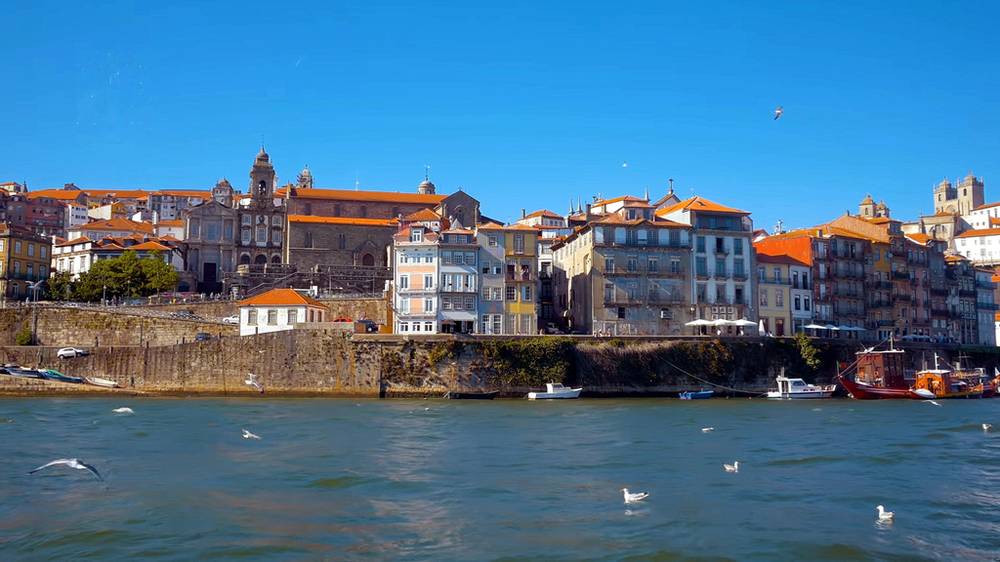
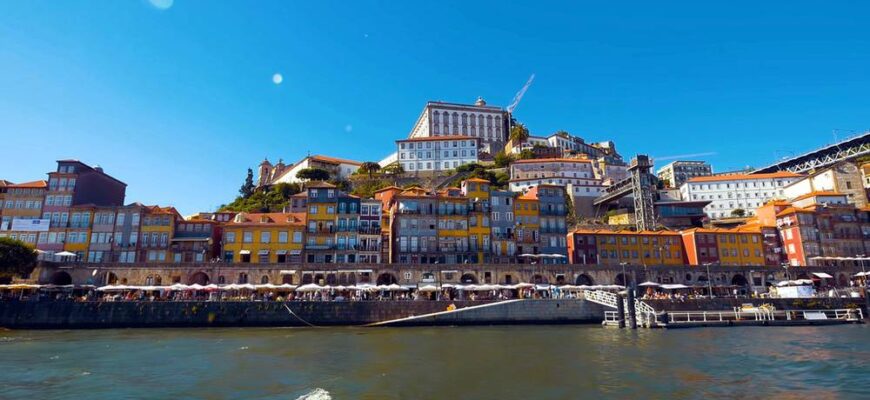
The waterfront quarter of Porto, or Ribeira, is a labyrinth of narrow, winding streets and alleyways with brightly colored houses in shades of yellow, blue, and brown, permeated with the aromas of pastries and filled with hundreds of voices. It is the most popular district in Porto, famous for its lively and friendly atmosphere with numerous restaurants and grocery stores. The heart of this quarter is the square of the same name, which attracts thousands of people daily. Ribeira is a captivating history and amazing medieval relics built directly on ancient Roman foundations.
The waterfront quarter of Porto is included in the UNESCO World Heritage List.
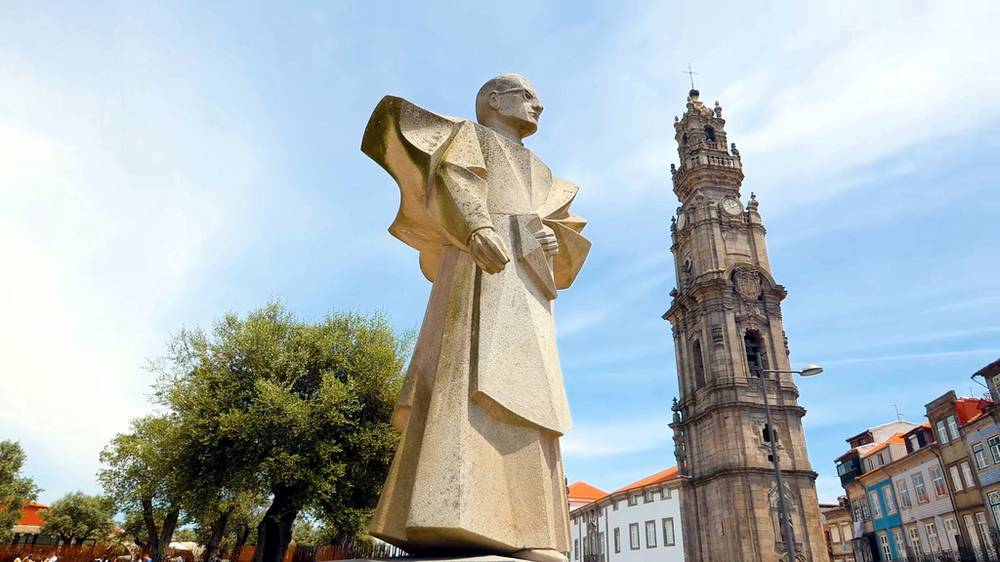
Clérigos — a symbol of Porto and one of the most prominent landmarks of the city. It is a stunning granite Baroque bell tower built in the 18th century. To reach the top, you need to climb 240 steps. This effort will be rewarded with a panorama of the old town and the Douro Valley. The tower is part of the adjacent church, built between 1732 and 1750. This Baroque structure is one of the first churches in Portugal to feature an elliptical layout.
 Palácio da Bolsa — a historical building of the former stock exchange, built in the 19th century on the site of a Franciscan monastery. It is famous for its luxurious interior with Moorish motifs.
Arrábida Bridge — a striking example of 20th-century engineering, opened in 1963. The bridge is built over the Douro River and has a height of 65 meters (at its highest point). An interesting feature of this structure is that you can climb onto its arch.
São Francisco — a beautiful 18th-century Baroque church, which has a simply stunning interior decorated with dazzling gilded elements. Beneath the church building are ancient catacombs that can be visited as part of a tour.

Church of Saint Ildefonso — a magnificent 18th-century Baroque church with a beautiful facade. This religious building is constructed on the site of a 13th-century medieval chapel, which was demolished in the 18th century due to the threat of collapse.
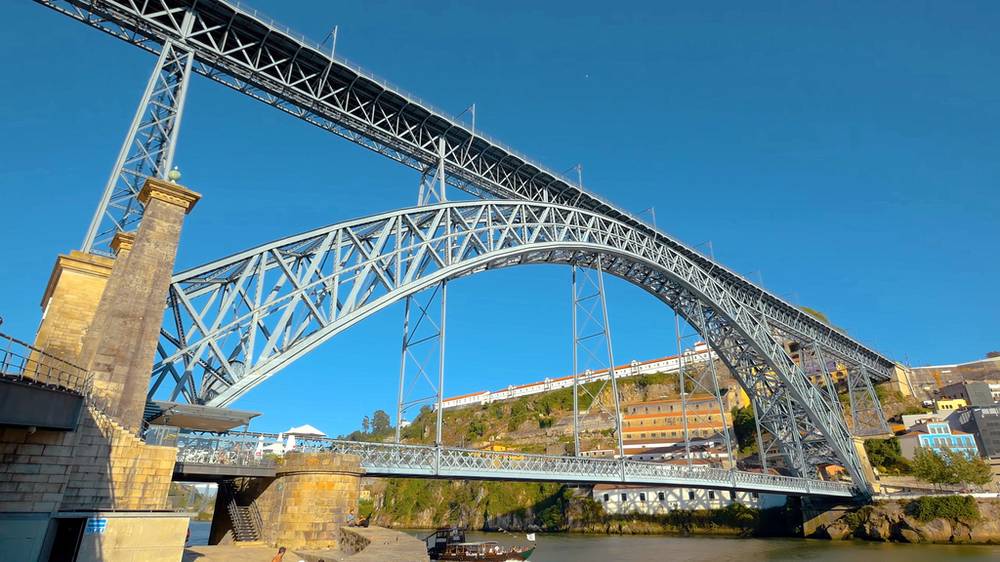
Dom Luís I Bridge – a grandiose 19th-century engineering structure, which is one of the most iconic civil objects in Portugal. The bridge is built of metal structures and connects Porto with the city of Vila Nova de Gaia on the opposite bank of the Douro.

Cathedral (Sé) – a significant 12th-century church, which is one of the most important Romanesque buildings in Portugal. The cathedral began to be built in 1110 and was completed only 627 years later.
Carmo Church — a wonderful 18th-century religious structure in the Baroque style with a magnificent facade and equally beautiful interior decoration.
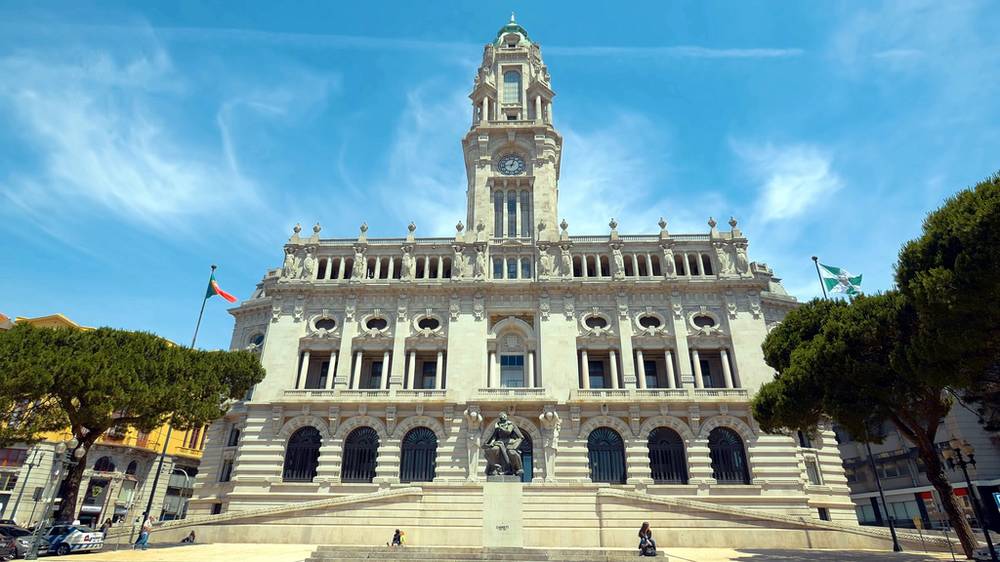
Avenida dos Aliados (Avenida dos Aliados) — a wide double avenue and the bustling commercial center of the city with many shops, cafes, and restaurants.
Video of Porto