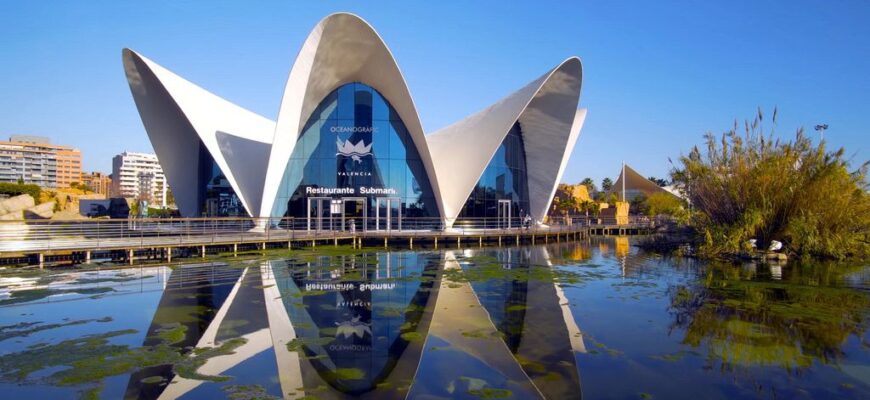
Valencia (Spain) – everything about the city, Valencia’s main attractions with photos and descriptions, location on the map, and videos.
Valencia (Spain)
Valencia (Val. València, Spanish: Valencia) is one of the largest and most vibrant cities in Spain. Valencia’s second name is the land of festive lights and flowers. This city is located in the southeastern part of Spain, on the Mediterranean coast.
Holidays & Leisure
Valencia has become a very popular tourist destination. A holiday here is already a tradition for many Norwegians, Germans, and English. All the fashionable Spanish resorts, such as Peñíscola (Castellón), Benidorm (Alicante), and Gandia (Valencia), are located here.
The climate in these parts is the warmest and mildest in Europe. The average temperature never drops below 18 degrees Celsius. Summers are very warm, winters are mild. Valencia is almost always sunny. The favorable time for a holiday is considered to be from late autumn to early spring. A family holiday in Valencia offers not only a large selection of affordable and comfortable hotels, apartments (including cottages), but also an incredible number of amusement parks.

Active holidays include sailing trips, various excursions on horseback and by bicycle. There are also several dozen different golf courses near almost all towns (Villarreal, Benidorm, Denia, and others).
Many tourists come to Valencia not for the beaches at all, but to visit the famous castles in Alicante and Castellón, as well as Valencia’s museums and cathedrals. Tourists have the opportunity to experience rural tourism. Valencia also offers the possibility of a productive vacation (leisure and learning): combining a beach holiday with Spanish language courses.

There are also tourists who come here to improve their health, because Valencia is an excellent place for this type of getaway. Spa centers are everywhere: on the coast, in mountainous areas (for example, such as Sierra Calderona). The most famous spa regions are the outskirts of the towns of Cofrentes, Gúliva in the province of Valencia, and Requena. The finest spa centers or spa hotels are located in the Valencian capital.
Beaches of Valencia
The beach will be the best place to relax, as the hot sun and the cleanest sea leave no one indifferent. By the way, the selection of beaches also offers a great variety. The best beaches are considered to be those on the Costa Blanca (White Coast) resort.
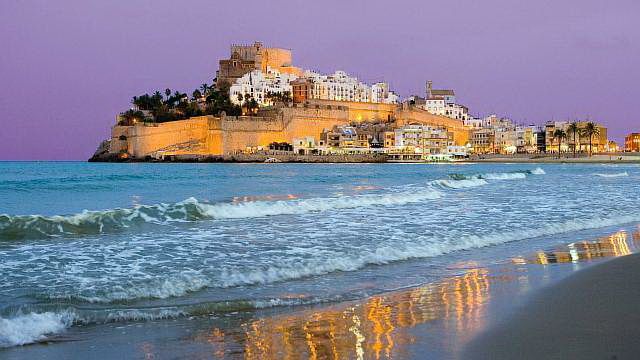
El Raset forest is a good place for diving, and the beaches of Denia are excellent for windsurfing. You will see perfectly clean beaches in Benicàssim, and the most colorful ones in Peñíscola. There are special nudist beaches – Oropesa del Mar. There are lively and noisy beaches like Pineda, El Saler, and Malvarrosa on the Costa Valencia coast. There are also calm and quiet ones, perfect for family relaxation, such as the olive beaches. The resorts of Valencia are famous for their sporting traditions. On the beaches, tourists can play football and volleyball, and rent water equipment for windsurfing.
Shopping
Those who love shopping will also be satisfied. There are huge shopping centers here that are in no way inferior to the famous Galeries Lafayette in Paris. Everyone can buy whatever their heart desires: souvenirs, jewelry, unique handmade items, and much more. The recognized shopping hubs are the shopping centers located in Alicante and Benidorm.

Wines
There are also those who come here to enjoy not only the sun, warm sea, and art, but also excellent wines. After all, Valencia is the largest producer and exporter of wine. Walks through cool cellars and wine cellars will be a great change of pace on a hot afternoon.
Festivals
Furthermore, lavish and famous festivals are held in Valencia and its surroundings in honor of the Spanish national hero El Cid. There is a medieval romance titled “The Song of My Cid” that tells how the hero fought against the Moors.
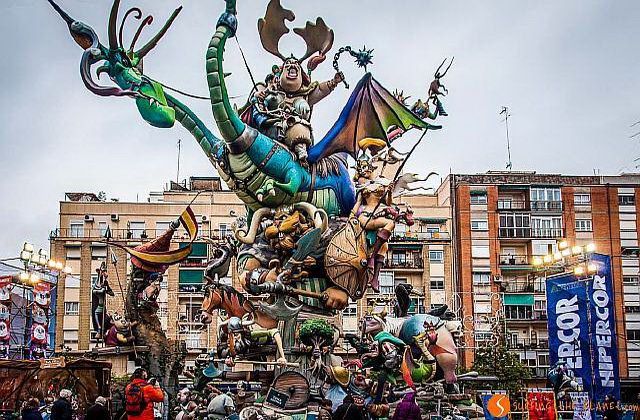
But the most famous and popular festival in Valencia is Las Fallas de San Jose (welcoming spring). This is an amazing fiesta of light and fire. For five days, cardboard monuments are erected in all the squares and main streets of Valencia, around which playful performances are held. On the fifth day, the huge monuments are consigned to flames. Tourists who visit Valencia during this period will enjoy an endless stream of divine music day and night, watch beautiful fireworks, and hear the explosions of firecrackers. The Spanish Las Fallas de San Jose is partly similar to our Maslenitsa (Shrovetide).
Gastronomy
Traditional and Mediterranean cuisine will certainly appeal to many tourists: paella, baked rice, seafood, duck, lobsters, black rice with mushrooms. Here is a map of good restaurants in Valencia with traditional and Mediterranean cuisine.
Sights and Landmarks of Valencia
Valencia is considered a leader in tourism in Europe. This is a city capable of pleasing everyone, even the most demanding and troublesome tourist. You too can appreciate the interesting landmarks, incredible aromas, and bright colors of this heavenly city.
Strolling through the charming parks that lend a fantastic romantic atmosphere to the city… what could be better? Here you can experience the feeling of 18th-century neoclassicism with its flowing fountains, arches, and avenues. There is even a song called “Valencia – Land of Flowers.”
Among the most interesting sights of Valencia are the following:

Cathedral — a beautiful 13th-century cathedral. Its architecture and interior intricately weave together Romanesque style, French Gothic, Renaissance, Baroque, and Neoclassicism. Valencia Cathedral is located in the very heart of the Old Town – a district called El Carmen. The Cathedral connects the district’s two central squares — Plaza de la Reina and Plaza de la Virgen. Interestingly, it was built on the foundation of an old Roman church that was later converted into a mosque. Next to the main entrance rises the bell tower — El Miguelete. By climbing the spiral staircase to the terrace, you can enjoy a beautiful panorama of Valencia’s historic center.
Santa Catalina — a 13th-century temple built on the site of a Muslim mosque. A tall bell tower, built between 1688 and 1705, stands out in its architecture. This is a true masterpiece of Valencian Baroque, with an interesting hexagonal shape.
Basilica of the Virgin (de la Virgen) — one of the most important churches in Valencia, located in the historic center. It is dedicated to the patroness of the city and the entire kingdom — Our Lady. The current appearance of the church dates from the 17th century. It represents a mixture of Baroque, Gothic, and Renaissance. Inside, the 17th-century decoration and frescoes by Palomino are preserved.

Real Parroquia de los Santos Juanes (St. John’s Church) — a church in the historic center near the Central Market. Its origin is similar to other churches in Valencia — it was built on the foundation of an old mosque. Initially, a small chapel was built here, then a Gothic temple, which was damaged by fire and rebuilt in the Baroque style in the 17th-18th centuries. The facade is decorated with a small clock tower and sculptures. Inside the church, you can see frescoes by Palomino.
Church of San Juan del Hospital — an interesting medieval church in the Old Town of Valencia. It was founded in the 13th century, almost immediately after the conquest of the city by James I. It combines Romanesque, Gothic, and Baroque elements. The small bell tower was built in the 17th century.
Monastery of San Miguel de los Reyes — a former 16th-century monastery, which now houses a library. Built on the site of an ancient abbey. It is a large Renaissance-style complex with beautiful towers and gates.
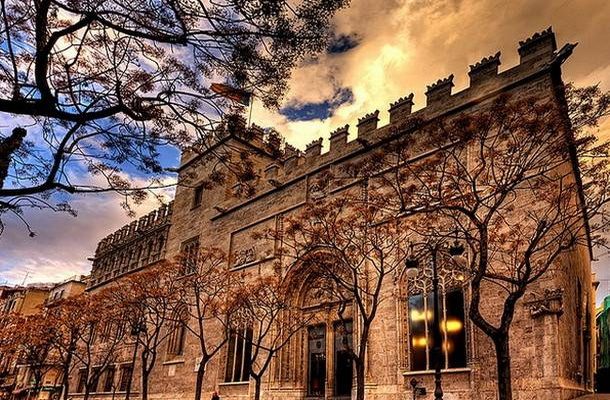
La Lonja de la Seda (Silk Exchange) — a masterpiece of Gothic architecture located in the very center of Valencia. This building is listed as a UNESCO World Heritage Site. It was built between 1482 and 1548 for silk and cloth merchants. The Silk Exchange is the most brilliant example of European civil Gothic architecture.

Torres de Serranos (Serranos Towers) — one of the symbols of Valencia, powerful medieval gates from the end of the 14th century, which for a long time were the main entrance to the city from the north. The massive walls and towers are built of brick. The main entrance consists of huge doors with semicircular arches. On the sides are two powerful pentagonal towers.
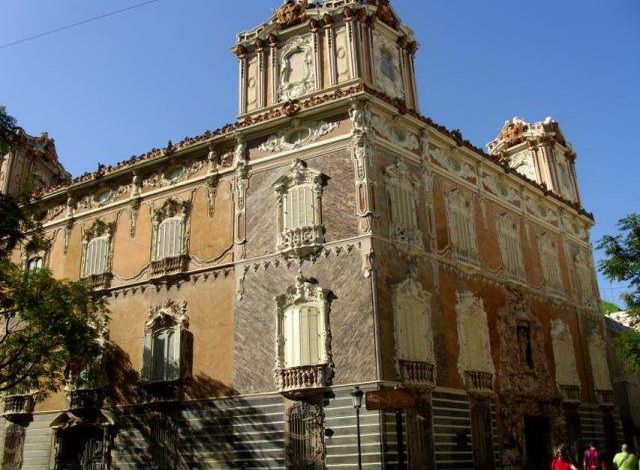
Palacio del Marques de Dos Aguas (Palace of the Marquis of Dos Aguas) — a palace rebuilt in the Rococo style from an old early 18th-century manor. Now it houses the National Museum of Ceramics and Decorative Arts.

Estació del Nord (North Station) — the city’s main railway station, built in the early 20th century in the Modernist style.

City Hall — A building in the Neo-Renaissance, Neoclassical, and Neo-Baroque styles. Historically, it consists of two parts: the House of Education — in the Neoclassical style, built in the second half of the 18th century, and the main facade — in the Neo-Renaissance style, built at the beginning of the 20th century.

Mercado de Colon (Columbus Market) — an old market built in the early 20th century in the Modernist style.
Central Market — a Modernist-style building constructed in the early 20th century. It still functions as a market. It houses 400 small food stalls. If you want to buy fresh produce, this is the place for you.

Torres de Quart (Quart Towers) — medieval twin towers that were part of the city wall protecting the old city of Valencia. These powerful cylindrical structures were built in the mid-15th century. The gate for entering the city was located between them. They have almost no decoration, as they served purely defensive functions.

Ancient Cross — a masterpiece of 14th-century Gothic by an unknown author. Located on the old royal road.
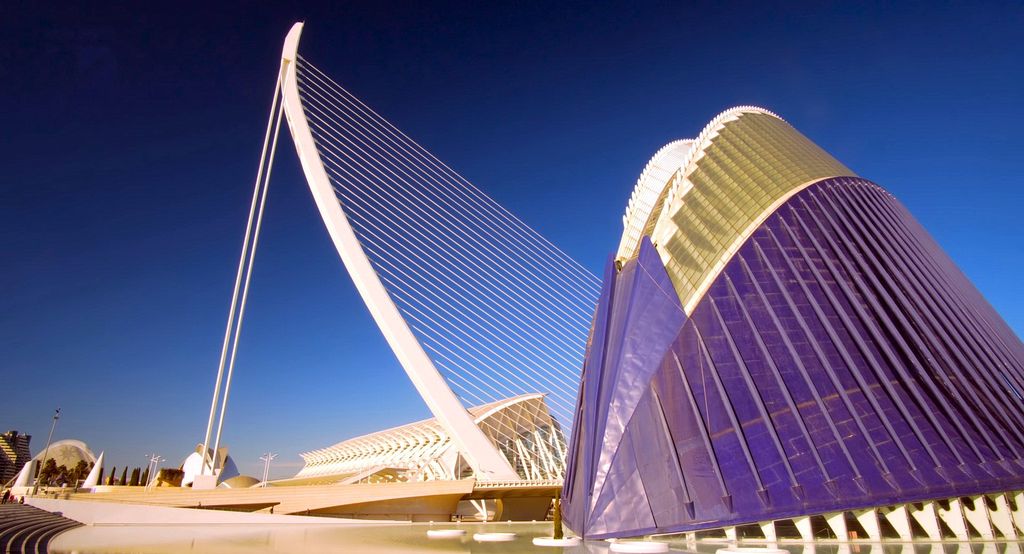
City of Arts and Sciences — one of Valencia’s hallmarks. This is a complex of cultural, architectural, and entertainment structures, opened in 1998. One of the most impressive structures of its kind in Europe and the world.
Plaza de Toros de Valencia (Valencia Bullring) — a bullring built in the mid-19th century in a style reminiscent of ancient structures of this type, such as the Colosseum. The arena is built of brick. The facade of the building is arched (384 arches).
Hotels in Valencia
When choosing accommodation, it is best to stay either near the sea or in the center. Since Valencia is primarily a resort, hotel owners are not particularly eager to show imagination, simply adapting their properties to standards.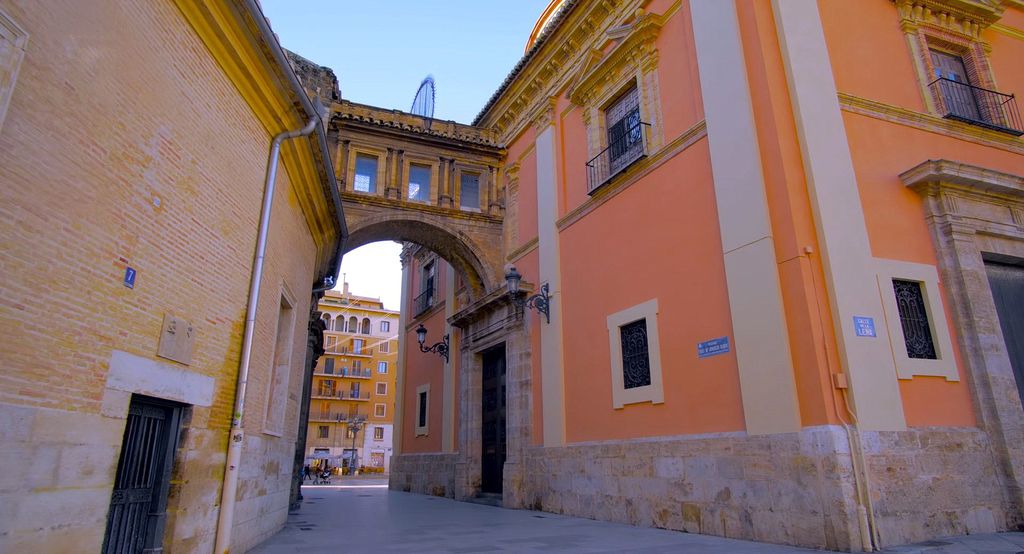
- If you focus on walking around the city, then Pensión Universal (Barcas 5, Puerta 3, Ciutat Bella), a surprisingly decorated guesthouse, will be just right. Colorful rooms with simple but famous Valencian ceramic tiles and quirky little things – a suitable option if you don’t plan to spend the whole weekend sitting in the hotel eating snacks and emptying the minibar. Besides the convenient location, pros include shared rooms with 4 beds and single rooms for those who like solitude (from €15 and €20). Double rooms (from €30) sell out quickly, so it’s better to book well in advance. Keep in mind there is no central heating in the building, so in winter you’ll need to bring a flannel pajama.
- The cute little hotel Casual Valencia de la Música (Padilla 4, Ciutat Bella), which seems to have been decorated by music lovers, is a step away from the bullring (bullfights are held during the March Fallas festival, and it will be noisy these days). Clean and tidy rooms, friendly staff, and a nice breakfast if you’re too lazy to go out in the morning. A double room costs €75, but there are often special offers with discounts down to €45.
- Also check out Russafa Youth Hostel (Padre Perera 5 1st), located in the currently most popular district of Valencia. The set of options is standard: here you will find bright and quite comfortable rooms, breakfast, access to the kitchen, and friendly staff.
- NH Ciudad de Valencia (Avenida del Puerto 214, Camins al Grau) – a standard but fairly budget hotel (€50 for a double). It is located roughly halfway between the beach and the City of Arts and Sciences, with the metro and restaurants nearby. Besides Mediterranean cuisine, you can easily find inexpensive Indian and Vietnamese food. Opening the curtains and looking out the window, you’ll see how the Spanish, who prefer home comfort, spend their evenings and siestas.
Valencia Video