Plan your trip to Toulouse, France’s Pink City. Explore the Basilica of Saint-Sernin, Capitole Square, Canal du Midi, museums, local cuisine, and get practical travel advice.
The City of Toulouse (France)
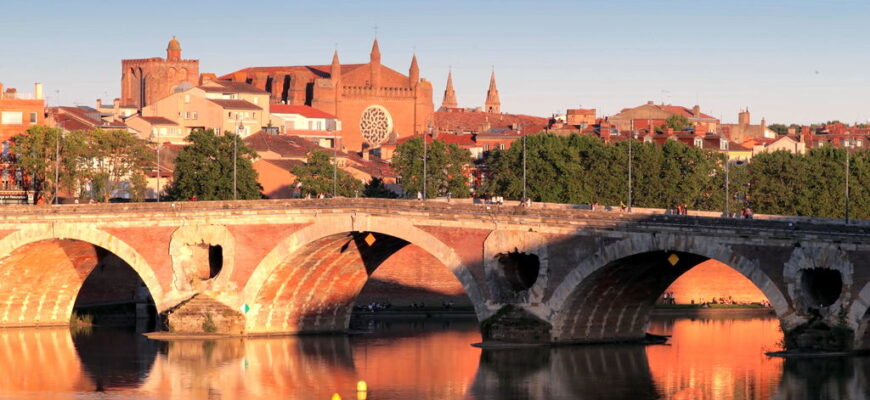
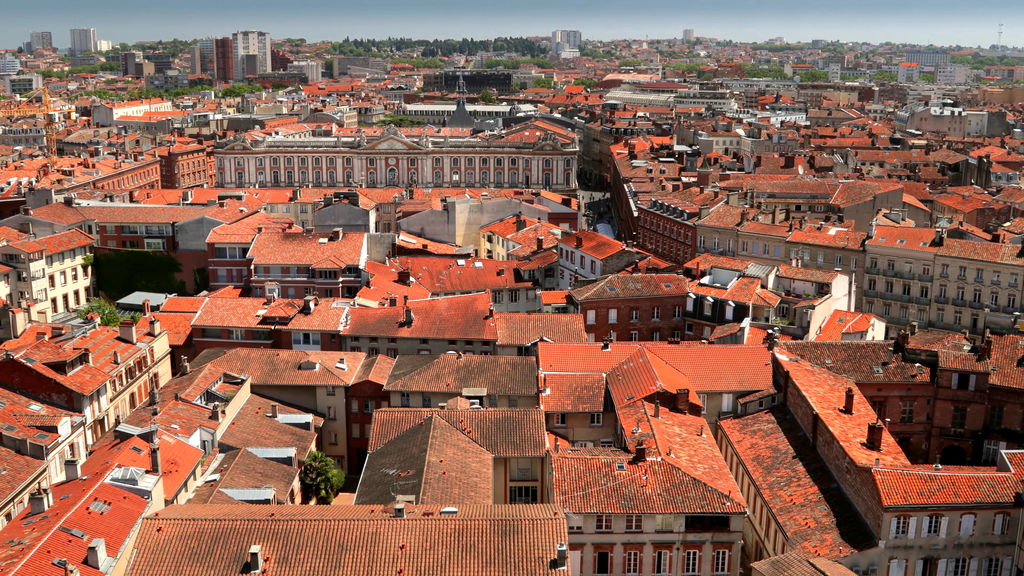
Toulouse (French: Toulouse, Occitan: Tolosa) is a city in the south of France and the capital of the Occitanie region. It is located in the heart of the French southwest near the Pyrenees, halfway between the Atlantic and the Mediterranean. Toulouse is one of the most beautiful cities in France, with interesting brick architecture, a rich history, a sunny climate, and a friendly and relaxed atmosphere. La Ville Rose (translates to “the Pink City”) is the name given to Toulouse because of the terracotta brick from which many of the historic center’s old buildings are constructed.
Toulouse was founded on the site of an ancient Roman settlement. In the Middle Ages, it was a popular pilgrimage site and religious center of Southern France. The Basilica of Saint-Sernin was one of the stops on the Way of St. James and is now included in the UNESCO World Heritage list. Today, Toulouse is an important scientific, industrial, and cultural center of the country.
Geography and Climate
Toulouse is located on the banks of the Garonne River, 680 km from Paris. The old town occupies the right bank, while the suburb of Saint-Cyprien is located on the left. The climate is subtropical (Mediterranean). It is characterized by hot summers and mild winters.

Practical Information
-
Population — over 498,000 people (as of 2021; metropolitan area — over 1 million).
-
Area — 118.3 km².
-
Language — French.
-
Currency — euro.
-
Visa — Schengen.
-
Time — UTC +1, in summer +2.
-
Blagnac International Airport is located 11 km from Toulouse, connecting it with many major European cities.
- Toulouse has excellent transport connections with Paris, Barcelona, Bordeaux, Marseille.
-
The city is famous for its excellent gastronomy. The most famous local dishes: duck, Saucisse de Toulouse (Toulouse sausages), and Cassoulet (a baked bean and meat stew).
-
Toulouse is a very safe city. It is sufficient to observe basic safety rules and watch your belongings in crowded places.
Hotels and Hostels in Toulouse on the Map
History and Interesting Facts
The history of Toulouse spans more than two thousand years, and it is one of the oldest cities in France. As early as the pre-Roman period, there was a Gallic settlement called Tolosa, which was captured by the Romans in 106 BC. From the 4th century AD, Toulouse has been the seat of a bishop. From 419 to 507 — the capital of the Visigothic kingdom. At the beginning of the 6th century, Toulouse was captured by the Franks.

Subsequently, the city was the center of the Kingdom of Aquitaine. In 721, it was besieged by the Saracens, but the city held out. From the second half of the 8th century, Toulouse was the residence of the Counts of Toulouse, who controlled practically the entire south of France. In the Middle Ages, the city flourished and was an important pilgrimage center, as it was located on the religious Way of St. James.
In 1214, the Dominican order was founded here. In 1217–1218, Toulouse was besieged and taken by the crusaders. In 1229, the University of Toulouse was founded. In 1271, Toulouse became part of the Kingdom of France and the center of the province of Languedoc.
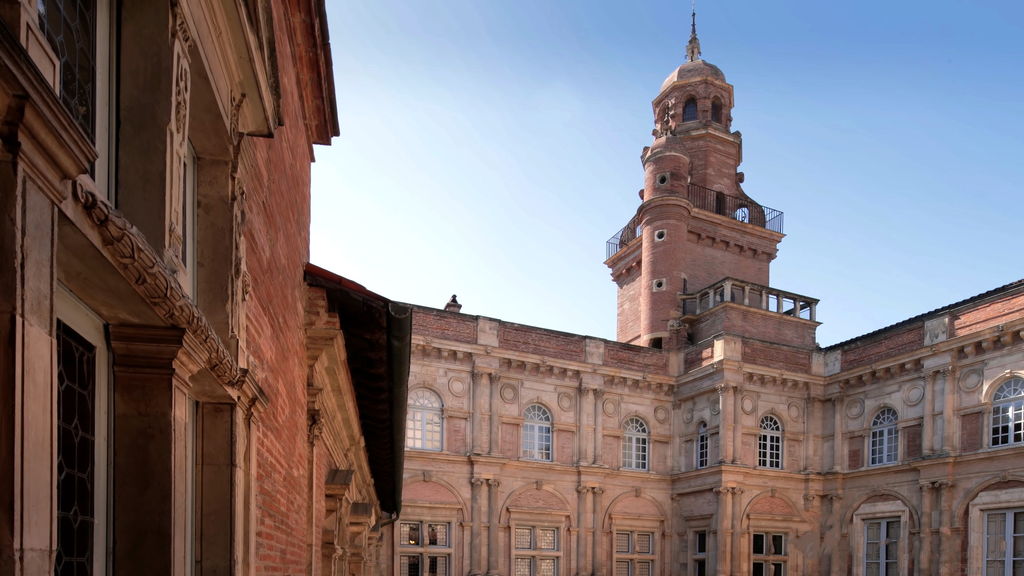
In the 16th century (during the Huguenot Wars), Toulouse was a stronghold of the Catholics. Subsequently, the importance of the city declined. Everything changed relatively recently. In the 20th century, Toulouse became the center of French aircraft manufacturing, and Charles de Gaulle ordered the placement of the National Centre for Space Research here. This contributed to the economic upturn and population growth.
Landmarks and Places of Interest

Saint-Sernin is an ancient Romanesque basilica and a UNESCO World Heritage site. It is one of the most beautiful churches on the medieval religious Way of St. James to Santiago de Compostela. Saint-Sernin was built between the 11th and 13th centuries from red brick, typical of Toulouse architecture.
The building has a five-nave structure and a three-nave transept in the Romanesque style. The basilica is dedicated to St. Saturnin (Sernin), who was martyred in Patras (Greece). His tomb is located in the apse. Interesting features of Saint-Sernin: the wonderful Romanesque facade, a portal with sculptures, a beautiful 17th-century choir, a huge carved Romanesque crucifix in the north transept, 11th-century marble reliefs, and a crypt with religious relics.
Dominican Monastery — a beautiful example of Southern Gothic architecture. It was founded in the 13th century and built entirely of red brick. The tower of the monastery church resembles the architecture of the Saint-Sernin tower. The monastery has a strict exterior and an exquisite interior. The Chapel of St. Anthony is decorated with 16th-century paintings. The relics of St. Thomas Aquinas are also kept here.

Capitole Square — the lively center of Toulouse, featuring exquisite classical architecture. On the western side of the square, you can admire the beautiful arcades. On the eastern side is the famous 18th-century Capitole building with its impressive halls. Behind the square is an ancient 16th-century defensive tower, and to the south are the charming streets of the old town.
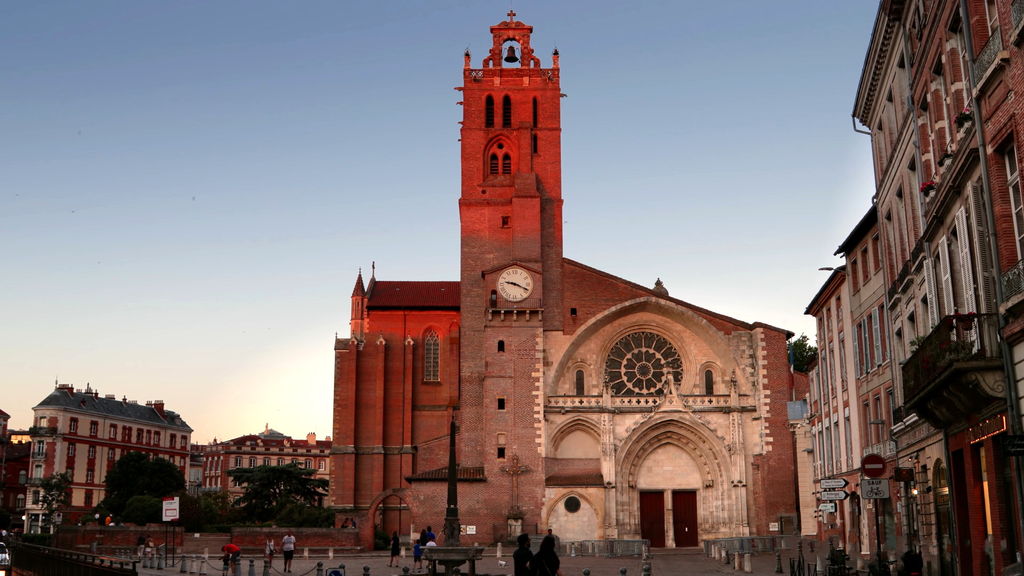
Saint-Étienne — the cathedral, which was built over several centuries and features several architectural styles. The first church on this site was built at the end of the 12th century in the Southern Gothic style. Later, the cathedral was rebuilt in the Northern Gothic style to compete with the magnificent cathedrals of Northern Europe. The church structure features a massive tower, a huge rose window with stained glass, and complex decorative elements on the facade. Inside, you can see 17 chapels and beautiful tapestries from the 16th–18th centuries.
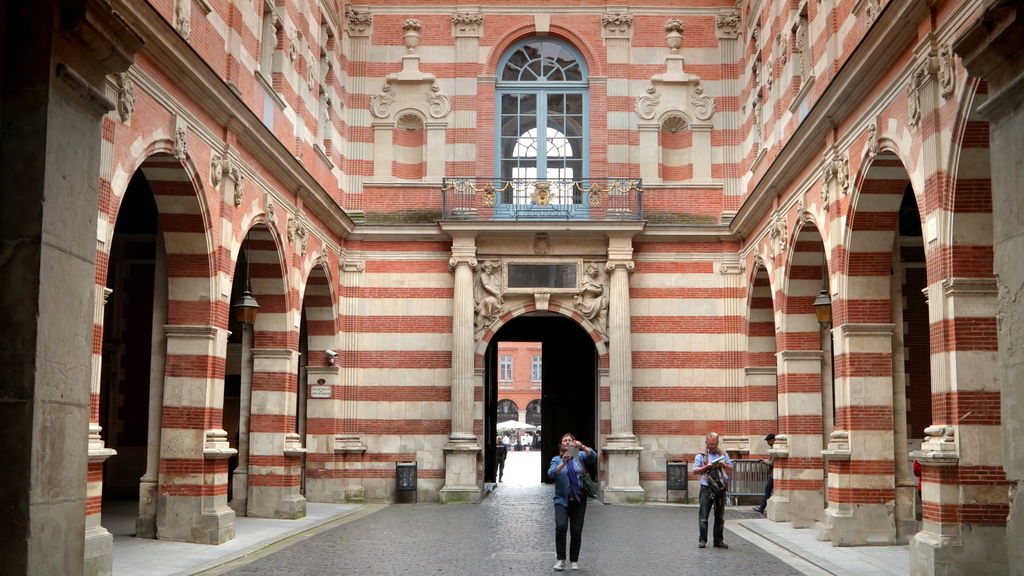
Carmelite Chapel — a small religious building with wonderful paintings inspired by the Sistine Chapel. The chapel was built in the 17th century and was part of a Carmelite monastery destroyed during the French Revolution.

Canal du Midi — a 240 km long hydraulic engineering structure built in the 17th century, connecting the Atlantic Ocean and the Mediterranean Sea. Here you can enjoy a leisurely stroll and a relaxed atmosphere.