Thailand is a tropical paradise that offers not only stunning beaches, temples, and culture, but also a rich and diverse bounty of fruits. The fruits of Thailand are some of the most delicious and unique in the world, with a range of colors, shapes, sizes, and tastes. Whether you are looking for a refreshing snack, a healthy dessert, or a new culinary adventure, you will find something to suit your palate among the fruits of Thailand.
A Taste of Paradise: 10 Exotic Fruits of Thailand You Must Try
In this article, we will introduce you to 10 exotic fruits of Thailand that you must try on your next visit. We will also tell you about their health benefits, how to eat them, and where to find them. Let’s get started!
Mango
Mango is one of the most popular and widely available fruits of Thailand. It is also one of the most versatile, as it can be eaten ripe or unripe, fresh or dried, cooked or raw. The ripe mango has a sweet and juicy flesh that ranges from yellow to orange in color, while the unripe mango is green and sour, often eaten with salt, sugar, and chili. Mango is rich in vitamin C, vitamin A, and antioxidants, and can help boost your immune system, improve your vision, and prevent infections.

One of the most famous dishes made with mango is the mango sticky rice, a traditional dessert that consists of glutinous rice cooked in coconut milk and topped with sliced mango and sesame seeds. You can find this dish in many street stalls, markets, and restaurants across Thailand.
Papaya
Papaya is another common and delicious fruit of Thailand. It has a yellow-green skin and a bright orange flesh that is soft and sweet. Papaya is high in vitamin C, vitamin A, folate, and fiber, and can help improve your digestion, lower your cholesterol, and protect your skin from sun damage.

Papaya is often eaten fresh, either as a snack or as a dessert with lime juice and honey. It can also be used to make papaya salad, a spicy and tangy dish that combines shredded green papaya with garlic, chili, fish sauce, lime juice, sugar, peanuts, and dried shrimp. Papaya salad is a staple of Thai cuisine and can be found in almost every street corner and restaurant.
Mangosteen
Mangosteen is one of the most prized and exotic fruits of Thailand. It has a dark purple skin that encloses a white and juicy flesh that is divided into segments. The flesh has a sweet and slightly sour taste that is reminiscent of strawberries, peaches, and grapes. Mangosteen is low in calories but high in vitamin C, vitamin B6, potassium, and antioxidants, and can help fight inflammation, prevent cancer, and boost your brain function.

Mangosteen is best eaten fresh, as the flesh can lose its flavor and texture when cooked or processed. To open a mangosteen, you can either cut the skin with a knife or squeeze it gently until it cracks. Then, you can peel off the skin and enjoy the flesh, discarding the seeds and the bitter rind. You can find mangosteen in many markets and supermarkets, especially during the rainy season from May to September.
Longan
Longan is a small and round fruit of Thailand that has a brown and brittle skin and a translucent and juicy flesh that contains a black seed. The flesh has a sweet and fragrant taste that is similar to lychee, but less acidic. Longan is a good source of vitamin C, iron, and phosphorus, and can help improve your blood circulation, enhance your memory, and relieve stress.

Longan is often eaten fresh, either as a snack or as a dessert with ice and syrup. It can also be dried, canned, or made into juice, wine, or tea. Longan is widely cultivated in northern Thailand, where it is harvested from June to August. You can find fresh or dried longan in many markets and shops throughout the country.
Lychee
Lychee is another small and round fruit of Thailand that has a red and bumpy skin and a white and juicy flesh that contains a brown seed. The flesh has a sweet and floral taste that is very refreshing and satisfying. Lychee is rich in vitamin C, vitamin B, copper, and manganese, and can help boost your immune system, regulate your blood sugar, and prevent anemia.

Lychee is usually eaten fresh, either as a snack or as a dessert with ice cream or yogurt. It can also be canned, dried, or made into juice, jam, or jelly. Lychee is mainly grown in northern and eastern Thailand, where it is harvested from April to June. You can find fresh or canned lychee in many markets and supermarkets.
Pitaya
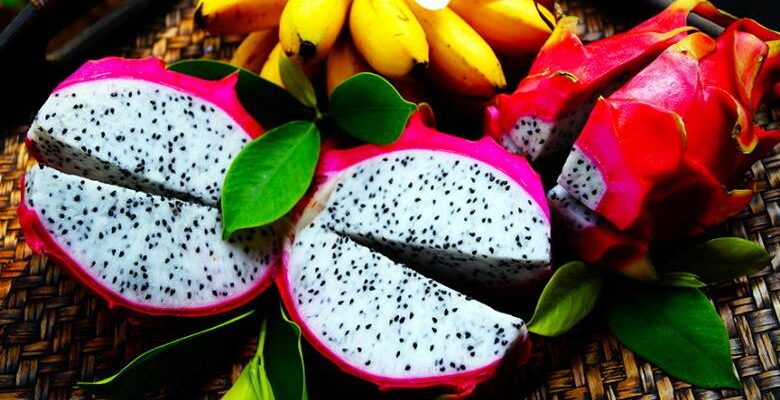
Pitaya, also known as dragon fruit, is a striking and colorful fruit of Thailand that has a pink, yellow, or red skin and a white or red flesh that is dotted with tiny black seeds. The flesh has a mild and sweet taste that is similar to kiwi, pear, or watermelon. Pitaya is low in calories but high in vitamin C, vitamin E, iron, and fiber, and can help improve your digestion, lower your blood pressure, and prevent constipation.

Pitaya is often eaten fresh, either as a snack or as a salad with other fruits. It can also be blended into smoothies, juices, or cocktails, or made into sorbet, ice cream, or pudding. Pitaya is widely cultivated in southern Thailand, where it is available all year round. You can find fresh or frozen pitaya in many markets and shops.
Durian
Durian is the most controversial and notorious fruit of Thailand. It has a spiky and green skin and a yellow and creamy flesh that is divided into segments. The flesh has a strong and pungent smell that can be either loved or hated, and a rich and custardy taste that is sweet and savory at the same time. Durian is high in calories, fat, and sugar, but also in vitamin C, vitamin B, potassium, and magnesium, and can help increase your energy, strengthen your bones, and improve your mood.

Durian is usually eaten fresh, either as a snack or as a dessert with sticky rice and coconut milk. It can also be cooked, fried, or baked into cakes, pies, or cookies, or made into candy, chips, or ice cream. Durian is mainly grown in eastern and southern Thailand, where it is harvested from April to August. You can find fresh or processed durian in many markets and shops, but be aware that some places, such as hotels, buses, or trains, may ban durian due to its smell.
Guava
Guava is a common and inexpensive fruit of Thailand. It has a green or yellow skin and a white, pink, or red flesh that is crunchy and juicy. The flesh has a sweet and sour taste that is refreshing and thirst-quenching. Guava is high in vitamin C, vitamin A, fiber, and antioxidants, and can help prevent scurvy, improve your eyesight, and protect your cells from damage.

Guava is often eaten fresh, either as a snack or as a salad with salt, sugar, and chili. It can also be juiced, pureed, or made into jam, jelly, or sauce. Guava is widely cultivated in central and northern Thailand, where it is available all year round. You can find fresh or juiced guava in many markets and shops.
Jackfruit
Jackfruit is the largest and heaviest fruit of Thailand. It can weigh up to 35 kg and measure up to 90 cm in length. It has a green or yellow skin and a yellow and fleshy pulp that is attached to large seeds. The pulp has a sweet and tropical taste that is similar to pineapple, banana, or mango. Jackfruit is high in vitamin C, vitamin B, potassium, and fiber, and can help boost your immune system, regulate your bowel movements, and prevent dehydration.

Jackfruit is usually eaten fresh, either as a snack or as a dessert with coconut milk and palm sugar. It can also be cooked, fried, or roasted into chips, curry, or soup, or made into flour, noodles, or bread. Jackfruit is mainly grown in southern and eastern Thailand, where it is harvested from January to May. You can find fresh or cooked jackfruit in many markets and shops.
Conclusion
The fruits of Thailand are a feast for the senses, offering a variety of flavors, textures, colors, and aromas. They are also a great way to enjoy the natural and healthy bounty of this beautiful country. Whether you are looking for a sweet treat, a refreshing drink, or a new culinary experience, you will find something to delight you among the fruits of Thailand. So, what are you waiting for? Grab a basket and start exploring the fruit paradise of Thailand!