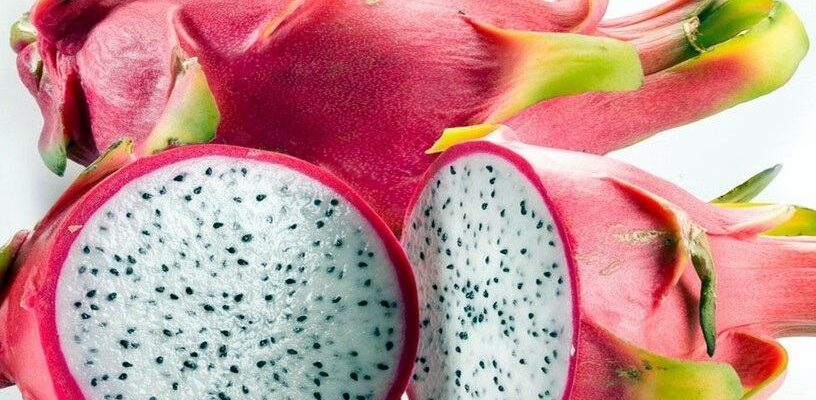
Pitaya, also known as dragon fruit or strawberry pear, is a tropical fruit that grows on several species of cactus. It has a striking appearance, with a bright red or yellow skin covered with green scales and a white or red pulp dotted with tiny black seeds. Pitaya is not only attractive to look at, but also delicious to eat and nutritious to consume. In this article, we will explore the origin, varieties, benefits, and uses of this exotic fruit.
The Origin and Legend of Pitaya
Pitaya is native to the region of southern Mexico and along the Pacific coasts of Guatemala, Costa Rica, and El Salvador It was first cultivated by the indigenous people of these areas, who valued it for its sweet taste and medicinal properties. Pitaya was later introduced to other parts of the world by Spanish explorers and traders, who brought it to Asia, Australia, and the Caribbean. Today, pitaya is grown in tropical and subtropical regions around the globe.

According to a legend from Vietnam, one of the main producers of pitaya today, the fruit was created by a dragon. The story goes that a long time ago, there was a fierce dragon that breathed fire on its enemies during a war. After the battle was over, the dragon spat out a piece of fruit that had been formed from its flames. The fruit was given to the king as a symbol of victory and peace. The king was amazed by the fruit’s beauty and flavor, and named it “dragon fruit”. He also noticed that the fruit had many seeds inside, which he distributed to his people so they could grow more dragon fruits and enjoy their benefits.
The Varieties of Pitaya
There are two main types of pitaya: sour pitayas and sweet pitayas. Sour pitayas belong to the genus Stenocereus, and have a more acidic and refreshing flavor. They are commonly eaten in the arid regions of the Americas, where they grow naturally. Sweet pitayas belong to the genus Selenicereus (formerly Hylocereus), and have a more mild and sweet flavor. They are cultivated in East Asia, South Asia, Southeast Asia, the United States, the Caribbean, Australia, and throughout tropical and subtropical regions of the world.

Sweet pitayas come in three varieties, all with leathery skin and scaly spikes:
- Selenicereus undatus (Pitaya blanca or white-fleshed pitaya) has pink-skinned fruit with white flesh. This is the most commonly seen “dragon fruit”.
- Selenicereus costaricensis (Pitaya roja or red-fleshed pitaya) has red-skinned fruit with red flesh.
- Selenicereus megalanthus (Pitaya amarilla or yellow pitaya) has yellow-skinned fruit with white flesh.
The different varieties of pitaya have subtle differences in taste and texture, but they all share a similar flavor profile that resembles a cross between a kiwi and a pear.
The Useful Properties of Pitaya
Pitaya is not only tasty but also healthy. It contains several nutrients that are beneficial for your body and mind. Here are some of the main health benefits of pitaya:
- It is low in calories but high in fiber. A 100-gram serving of pitaya has only 60 calories but 3 grams of fiber. Fiber helps you feel full longer, aids digestion, lowers cholesterol levels, and regulates blood sugar levels.
- It is rich in antioxidants. Antioxidants are compounds that protect your cells from damage caused by free radicals, which are unstable molecules that can cause chronic diseases and aging3 Pitaya contains several types of antioxidants, such as betalains, hydroxycinnamates, and flavonoids3 Betalains are responsible for the red color of some varieties of pitaya, and they have been shown to protect “bad” LDL cholesterol from becoming oxidized or damaged. Hydroxycinnamates have demonstrated anticancer activity in test-tube and animal studies. Flavonoids are linked to better brain health and a reduced risk of heart disease.
- It is a good source of vitamin C and iron. Vitamin C is essential for your immune system, skin health, and wound healing. Iron is important for your red blood cells, energy production, and oxygen transport. A 100-gram serving of pitaya provides 3% of the recommended daily intake (RDI) of vitamin C and 4% of the RDI of iron. Pitaya also contains other vitamins and minerals, such as magnesium, calcium, phosphorus, potassium, and zinc.
- It contains prebiotic fibers. Prebiotics are substances that feed the beneficial bacteria in your gut, which are called probiotics. A healthy gut microbiome is associated with improved digestion, immunity, mood, and metabolism. Pitaya contains oligosaccharides, which are a type of prebiotic fiber that can stimulate the growth of probiotics such as Bifidobacteria and Lactobacilli.

The Nutritional Value of Pitaya
Here is a table that summarizes the nutritional value of pitaya per 100 grams of edible portion:
| Nutrient | Amount | % RDI |
| Calories | 60 kcal | – |
| Protein | 1.2 g | 2% |
| Fat | 0 g | – |
| Carbohydrates | 13 g | 4% |
| Fiber | 3 g | 12% |
| Vitamin C | 20.5 mg | 23% |
| Iron | 1.9 mg | 11% |
| Magnesium | 50 mg | 13% |
| Calcium | 8.5 mg | 1% |
| Phosphorus | 22.5 mg | 2% |
| Potassium | 436 mg | 9% |
| Zinc | 0.7 mg | 6% |
As you can see, pitaya is a nutrient-dense fruit that can provide you with many health benefits.
The Harm of Pitaya
Pitaya is generally safe to eat for most people, but there are some potential drawbacks and precautions to consider:
- It may cause allergic reactions in some people. Pitaya belongs to the same family as cacti and latex plants, which are known to cause allergic reactions in some people. Symptoms may include skin rashes, itching, swelling, hives, or anaphylaxis. If you have a history of allergies to cacti or latex plants, you may want to avoid pitaya or consult your doctor before eating it.
- It may interact with certain medications. Pitaya contains vitamin C and iron, which can affect the absorption and effectiveness of some drugs. For example, vitamin C can increase the absorption of iron supplements but decrease the absorption of some antibiotics and antiviral drugs. Iron can interfere with the action of some antacids, thyroid medications, and blood thinners. If you are taking any medications, you may want to check with your doctor or pharmacist before eating pitaya or taking it with supplements.
- It may cause digestive issues in some people. Pitaya is high in fiber and fructose, which can cause bloating, gas, diarrhea, or constipation in some people, especially if they eat too much or are not used to it. To prevent or reduce these effects, you may want to eat pitaya in moderation and drink plenty of water.

How to Peel and Eat Pitaya
Pitaya is easy to peel and eat. Here are the steps to follow:
- Wash the fruit under running water and pat it dry with a paper towel.
- Cut the fruit in half with a sharp knife.
- Scoop out the flesh with a spoon or peel off the skin with your fingers.
- Cut the flesh into bite-sized pieces or enjoy it as-is.
You can also use a melon baller to make small balls of pitaya flesh for a more elegant presentation.

How to Choose and Store Pitaya
Pitaya is available year-round in most supermarkets and specialty stores. Here are some tips on how to choose and store pitaya:
- Look for fruits that are bright in color and firm to the touch. Avoid fruits that are bruised, wrinkled, or soft.
- Store unripe fruits at room temperature until they ripen. You can speed up the ripening process by placing them in a paper bag with a banana or an apple.
- Store ripe fruits in the refrigerator for up to five days. You can also freeze them for up to three months.
- To freeze pitaya, peel and cut it into pieces and place them in a freezer-safe container or bag.

The Culinary Applications of Pitaya
Pitaya is a versatile fruit that can be enjoyed in many ways. Here are some ideas on how to use pitaya in your cooking:
- Eat it fresh as a snack or dessert.
- Add it to smoothies, juices, or cocktails for a refreshing drink. You can use fresh or frozen pitaya, or pitaya puree packets that are available in some stores. Pitaya pairs well with other fruits, such as banana, strawberry, kiwi, pineapple, and mango. You can also add some coconut water, milk, yogurt, or honey for extra creaminess and sweetness.
- Make a pitaya bowl for a nutritious breakfast or snack. A pitaya bowl is a thick smoothie made with pitaya and other fruits that is served in a bowl and topped with granola, nuts, seeds, coconut, or more fruits. It is a colorful and delicious way to start your day or boost your energy.
- Use it as a natural food coloring. Pitaya has a vibrant color that can be used to dye foods and drinks without any artificial additives. You can use pitaya juice or puree to color cakes, cupcakes, frosting, ice cream, popsicles, pudding, or lemonade. The red-fleshed pitaya will give a pink or purple hue, while the yellow-fleshed pitaya will give a yellow or orange hue.
- Bake it into muffins, breads, or pies. Pitaya can add moisture and flavor to baked goods, as well as some extra nutrients and antioxidants. You can use fresh or frozen pitaya chunks or puree in your recipes. Pitaya works well with flavors such as vanilla, lemon, coconut, chocolate, or almond.
- Make a pitaya salsa or salad for a savory dish. Pitaya can also be used in savory dishes to add some sweetness and freshness. You can make a pitaya salsa by mixing chopped pitaya with onion, cilantro, lime juice, salt, and pepper. You can serve it with tortilla chips, tacos, nachos, or grilled fish or chicken. You can also make a pitaya salad by tossing sliced pitaya with lettuce, spinach, avocado, cucumber, cheese, nuts, or dressing of your choice.

How to Grow Pitaya at Home
If you love pitaya and want to have your own supply of fresh fruit at home, you can try growing it yourself. Pitaya is a cactus plant that can grow in pots or in the ground. Here are some tips on how to grow pitaya at home:
- Choose the right variety of pitaya for your climate. Pitaya plants are divided into two groups: highland and lowland varieties. Highland varieties need cooler temperatures and more shade than lowland varieties. Lowland varieties need warmer temperatures and more sun than highland varieties. Choose the variety that suits your climate best.
- Get a healthy cutting of pitaya from a nursery or a friend who has a mature plant. A cutting is a piece of stem that has at least one node (a bump where leaves or branches grow). Cuttings are easier to grow than seeds because they already have roots and buds.
- Plant the cutting in a well-draining potting mix that contains sand, perlite, peat moss, or compost. You can use a large pot with drainage holes or a raised bed if you have space. Plant the cutting about 4 inches deep and water it well.
- Place the pot in a sunny spot that gets at least 6 hours of direct sunlight per day. If you live in a hot climate, you may want to provide some shade during the hottest part of the day. If you live in a cold climate, you may want to bring the pot indoors during the winter.
- Water the plant regularly but not too much. Pitaya plants are drought-tolerant but they still need some water to grow and produce fruit. Water the plant when the top inch of soil feels dry to the touch. Avoid overwatering as this can cause root rot and fungal diseases.
- Fertilize the plant once a month during the growing season (spring to fall). Use an organic fertilizer that is low in nitrogen and high in phosphorus and potassium. These nutrients will help the plant produce more flowers and fruits.
- Prune the plant once a year after harvesting the fruits. Pruning will help the plant maintain its shape and size and encourage new growth and flowering. Cut off any dead or diseased branches and any branches that are too long or crowded.
- Hand-pollinate the flowers at night to increase fruit production. Pitaya flowers are nocturnal and only open at night for a few hours. They are pollinated by bats and moths in their natural habitat but they may not have enough pollinators in your area. You can hand-pollinate the flowers by using a small brush or cotton swab to transfer the pollen from the stamens (male parts) to the stigma (female part) of the same or different flowers.
- Harvest the fruits when they are ripe. Pitaya fruits are ready to harvest when they have a bright color and a slight give when pressed. You can use a sharp knife or scissors to cut the fruits from the stem. Be careful of the spines on the skin and wear gloves if needed. Enjoy your fresh pitaya fruits or store them in the refrigerator for up to five days.

Conclusion
Pitaya is a valuable fruit of the cactus that has many benefits and uses. It is a delicious, nutritious, and versatile fruit that can be enjoyed in many ways. It is also a beautiful and easy-to-grow plant that can add some color and flavor to your garden. Pitaya is truly a fruit worth trying and growing. Have you ever tasted or grown pitaya? What are your favorite ways to use it? Share your thoughts and experiences in the comments below.