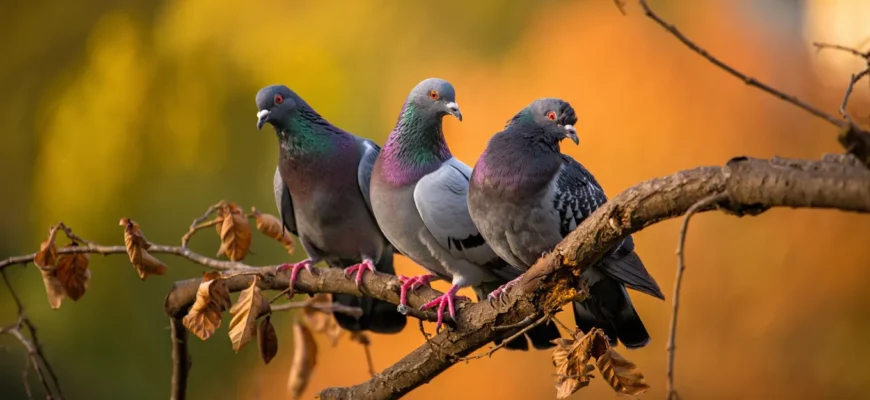
All the birds we see on the streets and in parks are adults. Do pigeons hide their chicks?
In summer, it’s not uncommon to spot a mallard with ducklings on a pond, hear the cawing of a young crow that fell from its nest, or come across a yellow-beaked thrush fledgling in a park. Pigeons, however, always look equally adult in any city flock. There are no obvious signs that they ever have babies — bare, short-tailed, and flightless ones. But they’re not robots, already assembled and ready for adult life, are they?
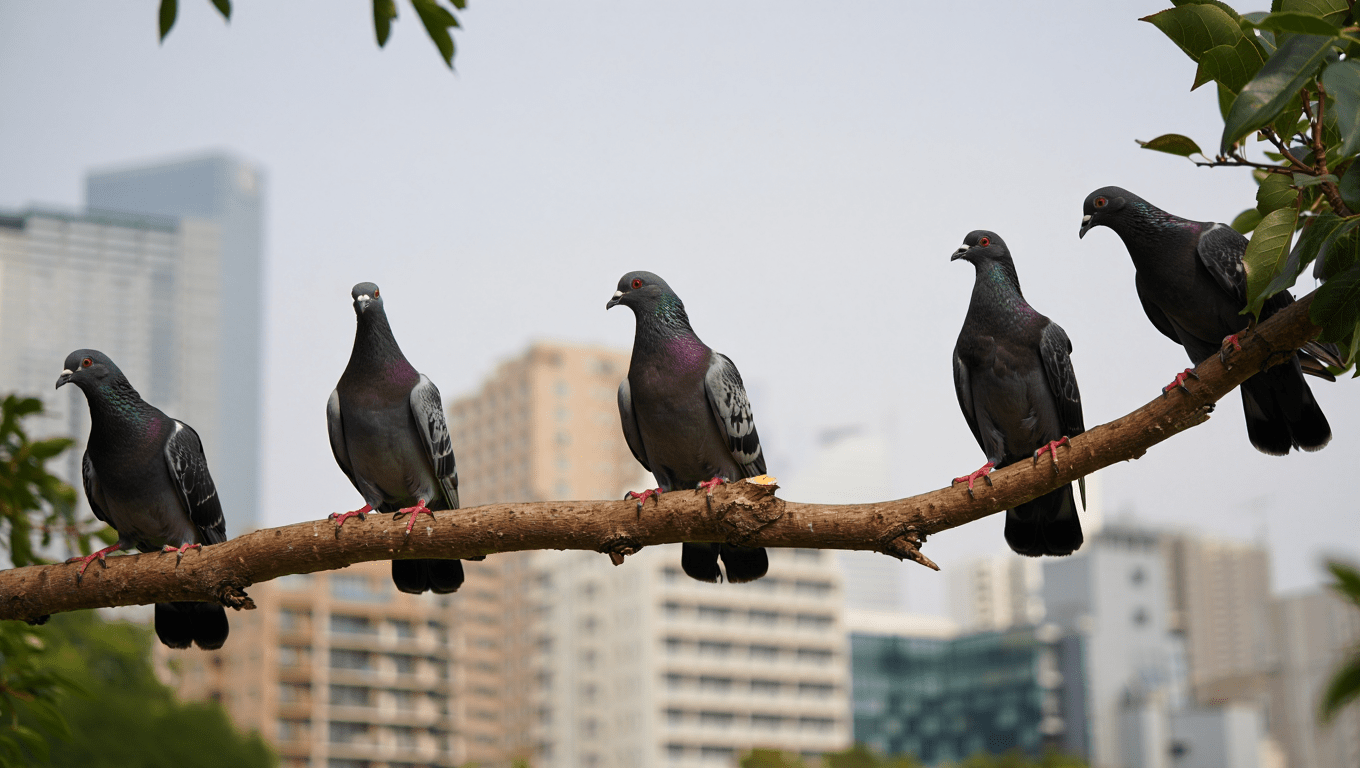
In reality, there’s no mystery here. People who often happen to visit the attics of apartment buildings could surely tell us something about pigeon chicks. Fifty years ago, when housewives dried laundry in attics and boys played hide-and-seek there, such a question would have made many laugh. Pigeon chicks? What’s unusual about that?
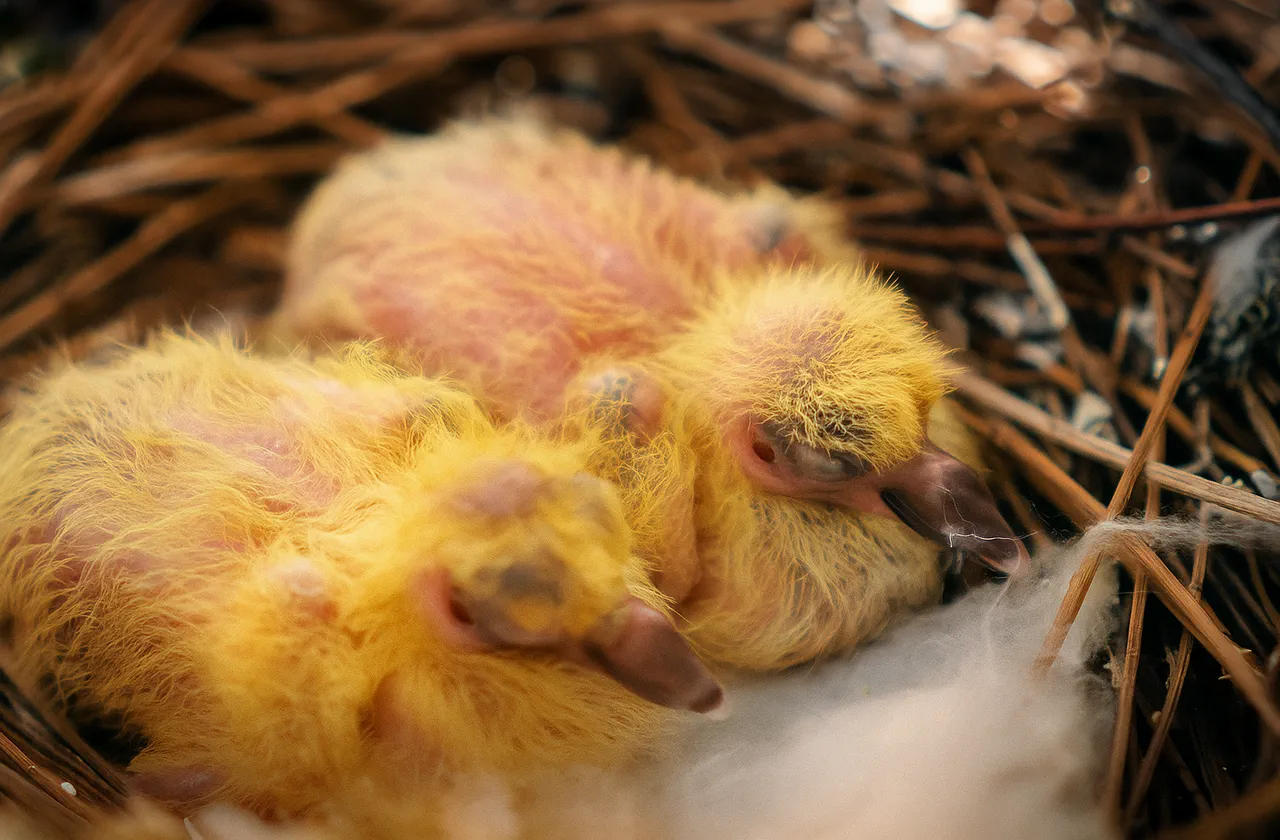
Newly hatched pigeons may look frightening to many. They bear little resemblance to the familiar city rock pigeons. In fact, they hardly resemble birds at all — more like tiny pterodactyls covered with sparse yellow fuzz, with abnormally large purple eyes and swollen pink beaks.
Of course, adult pigeons don’t hide their little “monsters” because they’re embarrassed by their appearance. In fact, they don’t deliberately hide them from us at all. It’s just that nearly the entire breeding process — from nest building onward — takes place in the attics of city buildings, places most modern urban dwellers never see. Even courtship between pigeons happens mostly in attics. On the asphalt, ledges, and rooftops, we can only observe fragments of their mating behavior: a cooing male circling a female, special display flights with wing claps, and — very rarely — mating itself.
The real action happens under the roof. A female pigeon always lays two white eggs. Incubation lasts 18 days, with both parents — male and female — taking turns. Then the chicks hatch and develop rapidly. By day four, tiny dark bumps — the beginnings of feathers — start to appear on their skin. From day six, “quills” begin sprouting from the bumps, forming the shafts of future feathers. By day ten, the chick’s body is fully covered with quills, and the yellow fuzz of a newborn disappears. By the end of the second week, the quills start transforming into normal feathers.
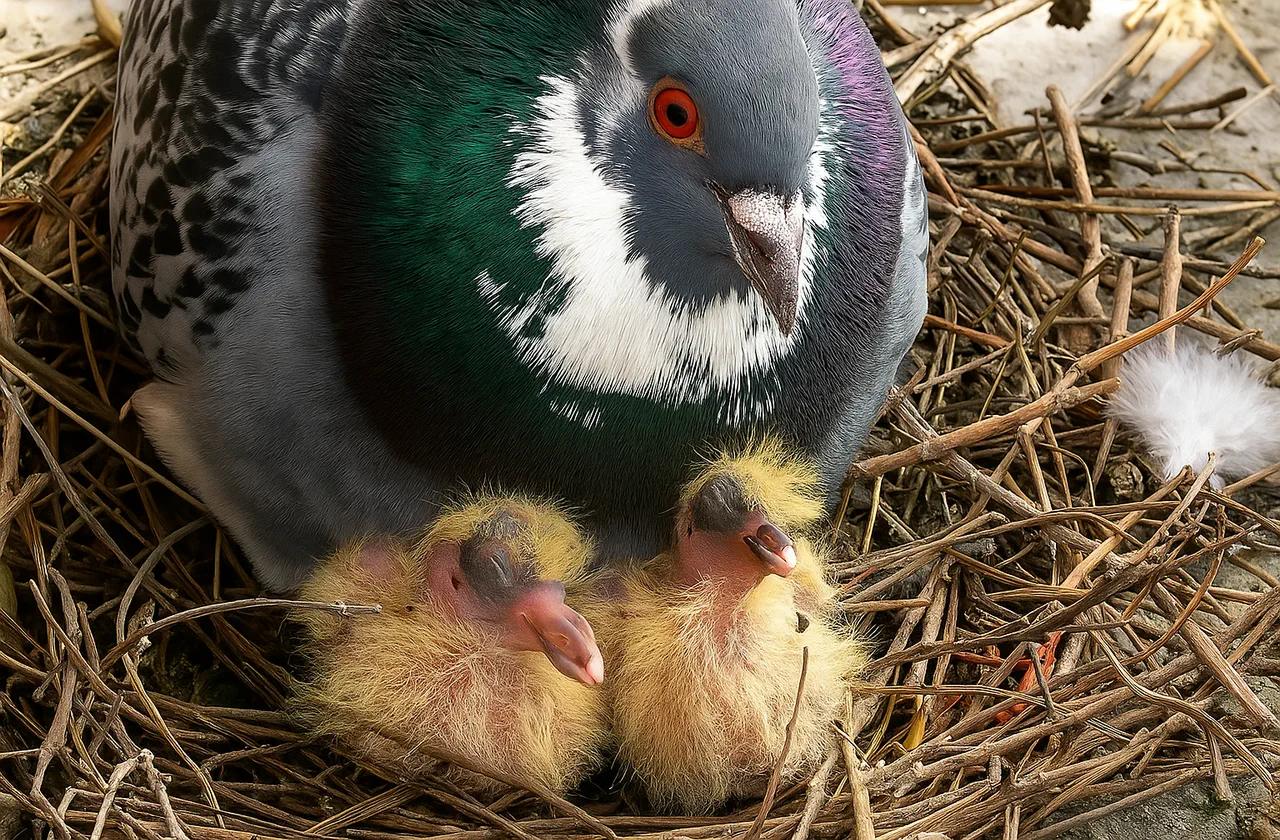
In the first days of life, pigeon chicks can only lie still. By day six, they begin to crawl a little. By the eighth or ninth day, they can already stand. By day 18, the chicks can walk and peck at objects. At 20 days, they start stretching their not-yet-fully-feathered wings and often preen themselves. By day 24–25, they leave the nest during the day: either walking around the attic or hopping from place to place. At 26–28 days, they fly confidently within the attic. On day 30, the young pigeons begin flying outside, accompanying their parents to nearby feeding spots. At 32 days, they’re ready for independent life. A 30-day-old pigeon looks almost identical to an adult bird. That’s why it seems to us that all pigeons in city flocks are the same age.