What are panic attacks, where do they come from, and what to do about them. Based on personal experience from a person who has been living with them for more than 25 years.
It is commonly believed that panic attacks and neurosis are a manifestation or consequence of VSD or difficult life situations, although this is a controversial issue. And I’m talking about ordinary people at home, living a normal, relatively safe everyday life, not victims of violence or military conflicts with PTSD. According to statistics, 2% of the population has panic attacks (American data), and women suffer from them twice as often as men.
All the problems since childhood?
I started having them at the age of 15 (which is atypical, men usually have them after 25), and I didn’t have any explicit or implicit stress or scary situations leading to strong feelings. And before the first attack, I was absolutely healthy, moderately “hooligan” and impudent. Another point that may or may not be relevant is that I was constantly flogged as a child for failing grades, for not wanting to go to my relatives, for my opinion, for petty hooliganism.
I didn’t have the best relationship with my parents, and most importantly, we didn’t have a trusting relationship. I was kind of on my own, I had no one to discuss my teenage problems with, but at the same time I was getting punished for my misdeeds. But these fights and whippings were not something that had a strong impact on the psyche, in my opinion. Rather, they simply spoiled the building of parent-child contact. Many people had worse situations, in the form of drunken fathers breaking their children’s limbs and leaving bruises. I have ordinary Soviet burghers who gave birth to children but had no idea how to raise them, except with a belt. So I would not personally take this point into account. Although any homegrown psychologist will definitely tell you that all the problems are from childhood.
Rather, something deeper lies in the psyche, and I am still trying to understand what it is. Immediately after my birth, I was infected with a staph infection in the hospital and almost died there. The doctor told my mother that you, mommy, should accept it, you can leave him here, there is no chance. But my mother did not accept it, and then there was a Jewish doctor who suggested using bifidumbacterin, which was very difficult to find in those years (late 70s), but they found it. As a result, I am writing these lines now, as you can see.

Could this be a moment that affected the psyche? An infant left alone in a cold room with flickering fluorescent lights, dying of an infection, going through an existential crisis that leaves an imprint on his psyche? I doubt it, too, because half the world suffers from infections, many babies are abandoned after childbirth and they are left all alone from childhood, and no direct correlation has been noticed. I’ve talked a lot with my colleagues, and neurotics often come from quite ordinary families.
A curse or a blessing?
Once, at a regular consultation, I asked a man in a white coat where neuroses and panic attacks come from. She replied that if you find the answer, you will be awarded the Nobel Prize. I’m not applying for the Nobel Prize, but I’ve been looking for the answer since then and I’m still looking for it. I have several theories, but the main one is that neurosis is a kind of defense reaction created by the psyche to protect us from ourselves. But for this particular theory to have the right to exist, we must recognize the existence of a more developed superstructure in our psyche.
That is, there is some kind of self that operates in everyday life, helps me write this article now, is responsible for my thought processes and decision-making (provided that I am not emotional, then other hormones affect the process, and decisions are not the best, but this is a separate topic). In general, I am me as an educated personality, the one whose parents and society take part in the formation.
But above this I, perhaps, there is some kind of Super-Self, which acts as an adult, and which has some control and influence on the I. These ideas were developed by Freud, and I read them from him, but I came to these ideas before reading his works. Freud himself may have been familiar with Hinduism and borrowed his ideas from there, because the idea itself was not original at all, see Paramatma. I can’t prove the existence of this Super-Self, I don’t know how, but I draw such conclusions on the basis of what I see and have experienced myself. More on this later.
What exactly are we afraid of and how?
So, what happens to us psychos at the moment when a panic attack begins. I personally don’t remember my first sexual experience, but I remember my first panic attack clearly by the minute. It was the end of 1993. I was sitting in a literature class, it was the first lesson, and I felt some kind of anxiety, so I asked for a break, saying that I didn’t feel well and needed to go to the medical office. While I was walking down the hall, I started to shake a little. When I reached the office, I saw that it was closed. On my way back, I went to the teacher’s restroom and drank some water from the tap, because my mouth started to dry and my eyes started to darken. The strange feeling inside was getting stronger, it was not an obvious fear, but something deeper that I could not understand. When I entered the classroom, I lied that the nurse had let me go home, and under the stares of my classmates, I got up and left the class. It was on December 28 or 29.
Looking ahead, the next time I came to school was in February or March. On the way home (a seven-minute walk from school to home), I was again seized with fear, dry mouth, and lacked air. I ate snow to take away the dryness. When I thought I was going to faint, I stopped a woman who was walking by, told her I had asthma and asked her to take me home. From home, I called my mother at work, she arrived an hour and a half later, and all this time I was chilled, short of breath, taking deep breaths and drinking water. I started to lose my swallowing reflex. They called an ambulance, but they did not understand what was wrong with me and did not take me away. I spent the New Year 93/94 in bed with chills and the same symptoms.

I should also say that on the eve of the school incident, I had already gone to bed, but I could not fall asleep, I was overcome with anxiety, I got out of bed, walked around the room, and eventually did what some people usually call praying, and then fell asleep. I am still very ashamed of this action, because I denied the idea of God from the age of 12 and was a rational person. By the way, about six months before the first attack, I started to have the first manifestations of OCD, which are still there, but they never really bothered me.
Is the life of a neurotic hell?
Since those days, I’ve been to pulmonologists, endocrinologists, had blood tests, ECG and EEG, and even got to the Center for the Study of Tropical Diseases. Then I got to a closed hospital. By acquaintance, I visited several doctors I knew privately. Nobody understood what was going on (and it was the mid-90s and movies like Analyze This and Soprano hadn’t been made yet).
I couldn’t ride in elevators or the subway, I couldn’t go out alone, I kept short of breath and feeling scared.
Sometime in May 1994, I ended up in a youth center and a lady therapist named Toma handed me over to the caring hands of a doctor named America (accent on the i). So he was the first of all the doctors to see what was wrong, although at that time I intuitively understood that if I was completely healthy physically, then I had to deal with my psyche, which I told the doctors myself.
He did all sorts of tests for my professional aptitude, IQ, and his colleague asked me to draw all sorts of pictures to understand the course of my thoughts, how, for example, I define myself among my relatives or what exotic animals come to my mind (I drew a mixture of an owl and some kind of house animal, and this creature lived in a hollow in a dark forest). It was then that I first heard that I had a spatial mind, that I was good at turning complex shapes in my mind, and that I could work as a designer or architect (I never became either). He also gave me a placebo, saying that it was a powerful drug that would remove fear, but I knew it was vitamins because I already knew about placebos, but I still pretended that it would. He also forced me to leave the center alone and go out of town on two or three different trams (I came there with my mother, I couldn’t go alone).
At that time, I went through several adolescent psychologists and one psychiatrist, whose last name was Pyatnitsky (it’s interesting that I remember things and details that happened to me more than 25 years ago, but I don’t remember what I did the day before yesterday). Dr. Pyatnitsky was bald, terse, with a calm but piercing gaze, and he used hypnosis on me. The first (and last) time I was hypnotized, it seemed to me that I spent about five minutes in this state, but my mother said that I stayed in this state for forty minutes. I had a feeling that I was in some sunny, calm place and there was a glowing ball in front of me.
After coming out of hypnosis, I felt lighter for a while.
At the same time, I got acquainted with sedatives, I don’t remember everything, but I definitely took phenazepam, relanium, eglonil, parkopan and haloperidol (I was smart enough not to use the last two, I was already well read and understood the difference between sedatives and neuroleptics, and executioner doctors who prescribe such things to teenagers should be hanged by the testicles). The most interesting thing is that, despite all my suffering, I was not deprived of a full-fledged teenage life. Yes, I stopped talking to hooligans in the yard, stayed home more, started reading a lot of books on psychology (Freud, Jung, Fromm), then took up philosophy (Nietzsche, Schopenhauer, Kant, the latter two of whom, unlike Friedrich, did not leave), and then switched to fiction. That is, between the ages of 15 and 18, I expanded and deepened my knowledge quite well, became wiser and gained a vocabulary. At the same time, I did not disdain alcohol and dated ladies. I usually met one friend in the center because we lived on opposite sides of the city, and to get there, I had to take 0.5 mg of Phenazepam, which took away my fear of the subway.
Are these “special effects” so scary during a seizure?
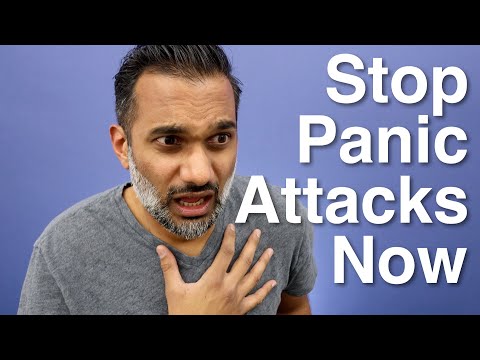
The fear and panic itself followed a standard pattern: increasing tension, muscle spasms (back, subcostal), difficulty breathing, all of which causes even more fear, and then it snowballs. Hands shake, palms get wet, very large drops appear. When you inhale, you swallow a lot of air, and then you start to experience such an unpleasant effect as aerophagia, or belching. The most disgusting thing is the annoying thought that you are going to die, or you will not have enough air or faint. Although I personally have never fainted in 25 years. It’s very difficult to stop it yourself, and all the instructions on how to stop an attack are only suitable for nervous office workers who have had too much coffee.
A panic attack can be stopped by only two methods: you either take a sedative (if the attack is severe, you can grind it into powder and intranasally, which is faster than through the stomach, or into a muscle or vein, but you need to have relanium or dimedrol in ampoules). Or distract yourself with activities or conversation.
By the way, I once missed the beginning of an attack, it started very quickly, I was already shaking, I got a box of ampoules of dimedrol, and while I was cutting the ampoule, filling the syringe and blowing air, the attack decreased. I noted this at the time. Another time I called the ambulance (both cases happened in 2003), they surprisingly realized who they were dealing with, switched me to my grandfather, who sounded like a psychiatrist, he talked to me for two minutes and finally said, “Don’t worry, young man, it’s your emotions.” Then I also calmed down very quickly, because I know in my mind that these are emotions.
Is there any salvation?
The main thing if you have an attack is to try to distract yourself and switch. Therefore, if you are suffering yourself, look for something to distract you (watching adult videos helped me a lot at the time, the explanation is simple, adrenaline stops being produced). If your loved one has a similar condition, take their hand, hug them and talk about anything, it’s also a good distraction. I’m not a fan of pills at all, I quickly learned to do without them, and on one specialized forum I was known as an active anti-pill person. But if an attack has gone too far, it’s better to have a sedative on hand. I was once on an airplane and didn’t have any pills with me. I had a very severe attack, I couldn’t take breaths, my whole body was shaking, I wanted to get out of the plane, out of the enclosed space.
The stewardesses helped me. I approached them, told them I was having a panic attack, and one of them stayed with me to talk about abstract topics, and in 10 minutes I was already back to normal. The company was KLM, and they were clearly trained to work with such passengers. Simple human communication and the person is healthy and enjoying life again. After that, a similar situation happened a couple of times on other flights. The girls there were less knowledgeable, but someone always stayed to talk to me and help me calm down.
Is it true that neurotics are psychos and crazy?
Now the most pressing question. Are we real psychos and can we be dangerous to others and ourselves? Maybe people in white coats are crying for us and can’t wait? The answer is no.
This is not a mental illness; on the physical level, it is a malfunction in the nervous system, an adrenaline rush, and as a result, fear.
Usually, this happens under the influence of external factors in all people, but a neurotic has his or her own internal triggers that trigger the production of adrenaline. That is, the mechanism is as follows: a trigger situation (everyone has their own) provokes the release of adrenaline, adrenaline makes us scared, in fear we begin to feel somatic effects (muscle spasms, heavy breaths), these effects, in turn, scare us that we can die, this makes the body release even more adrenaline, and until this vicious circle is broken, the attack can last for a long time, up to several days with peaks and troughs.
The only moment when we can be a little dangerous to ourselves is when the attack is already underway, there are no pills, no people around, it needs to be relieved, and you can cause yourself a little pain to do this, so you can also be distracted. I used to put my wrist under hot water. It removes the pain or reduces the attack, working like a switch.
Is there anything positive in this situation?
Now for the good news. Statistics and observations say that neurotics are mostly intellectually developed people (and I will not argue with this) and their IQ is quite high. Why is that? I promised to come back to this point above, and I am doing so. Personally, my neurosis started every time I should have stopped and thought about whether I was doing the right thing. It started at a time when I had already started drinking and smoking, and I was very close to drugs. As a result, the yard hooligans started smoking cannabis, hashish, snorting and injecting heroin, and at that time I was reading Zarathustra while sitting at home. Since then, I have never touched drugs, at first fearing that they would provoke an attack (I rarely smoke cannabis, and yes, sometimes it does provoke a panic attack), and then simply because I have become wiser. The benefit of neurosis as a deterrent is obvious.
I dropped out of medical school because the attacks met me in the subway, and it took me an hour and a half to get there one way, and went back to school to finish my studies. I practically did not go to school for all 10 and 11 grades, because I was promised a certificate anyway. In addition, there was nothing to do there, I was bored there, there were scum from the whole neighborhood (I was not accepted back to my old school, where I studied until the 9th grade), but I had a lot of free time to read books. Instead of going to school, I would go to the library and read books on psychology because I had no money back then and couldn’t buy them. At the same time, I read the works of Dale Carnegie, but I wouldn’t brag about it or take credit for it.
My neurosis often prevented me from riding the subway, but it did not prevent me from getting on a plane in 1998, at the height of the attacks, and flying to America, where for two years there were practically no incidents at all, but they began when I flew to Kyiv for vacation.
Neurosis was also a great motivator. My fear of the subway meant that it was difficult for me to go anywhere or take it. When I returned home, I bought a car and a driver’s license (in that order) to get around, and I practically never had an attack in the car. I had no desire to go to work, having such an ailment, and since 2000, I have never gone to work (although in the period 1996-1998, between studies, I worked as a bartender in three places for a year in total, but both work and study trips were difficult for me, since I got there by public transport). And on a small note, thanks to my neurosis, I received a deferment from the army at the age of 16. The first one was for three years, I had to pass the commission at the age of 19, but I was already living in America at the time. The second one was supposed to be when I was 22, when I was already in Kyiv. On the first call from the military commissariat, I politely asked them not to call me again. On the second call, I sent them away in a foul manner, and since then I haven’t heard from them again. Although I wouldn’t have joined the army without my neurosis.
Medications or psychotherapy? Or meditation? Or going in for sports? Or knock all the nonsense out of my head and go do hard work?
Professor Smulevich, an arrogant and rude old man from the Neurosis Center (a testing ground for new drugs on unfortunate neurotics) called the cessation of neurosis when you go to America a remission, the old fool. One conversation with him and a five-minute visit to the department itself was enough for me to understand what was going on there, and later my suspicions were confirmed by numerous negative reviews on the forums. My point is that desperate neurotics, hoping to be cured, will go for any method and drink whatever they are told, but institutions like this center do poor desperate people only harm.
Therefore, before taking incomprehensible medications, I strongly recommend that you work out the problem with a psychologist.
My personal feeling was that neurosis and seizures were some kind of signal to me, perhaps from this Super-Self – you are doing wrong, stop. Of course, if I were to have an attack right now, it’s not a given that it would be the same signal, some trigger like a smell could work. For example, once I spent the night in a hotel, it smelled like cleaning chemicals, it made me dizzy, it caused thoughts about my health, then my hypochondria kicked in, and I couldn’t sleep for a long time. I would not consider such a case to be the work of the Super-Self. But on a large scale, it seems that it was.
A couple of years ago, when I was in Kyiv, I started seeing a psychoanalyst again, because the attacks started again, and they had started very actively a few years before, as soon as I moved to France. At the same time, depression also came along (which is most likely endogenous, and I have reasons to think so). I won’t bore you with the details of my personal affairs and experiences, but the reason for this was quite serious, and it was again that I was not doing exactly what I wanted to do. That is, again, it was the same thing from above that was knocking on my door with hands and feet. In our conversations, we did discuss this topic and came to the conclusion that the vector of movement, although pleasant, was not quite right at the time.
To make it even clearer, I’ll give you an example from Freud. He describes one of his patients who had been working since childhood, was always in business, engaged in business. And then he came up with the idea to retire, buy a mansion with horses and live there in relaxation, indulging in laziness. Of course, he did not succeed in relaxing, because all the unspent energy went into neurosis and poisoned all his dreamed-of peace.
But I did take up sports. The period of 2001-2004 was quite active for me both in business and personal terms. At that time, I was still partying a lot and drinking alcohol (yes, sometimes mixing it with phenazepam). At the end of 2004, I broke up with two women at once, fell into a funk, and until the beginning of 2005 I was in a kind of special funk, drinking even more alcohol. At that time, I was hanging out with Internet graphomaniacs, I often flew to Ukraine to visit friends, and drinking and partying 24/7 were commonplace then (my young body allowed it).
At some point, I got tired of it all, and after another binge, without really sobering up, I went to a local fitness center and bought a subscription. I started going there 6 days a week from 9 am to 2 pm. I swung, did aerobics and mix-fighting, signed up for kickboxing and swam in the pool. That’s when I noticed that the seizures became weaker. This discovery was later confirmed by one of the doctors who recommended that I swing a barbell, saying that this way adrenaline is removed from the blood. At the same time, I bought a bicycle and became a resident of Velomania. It was normal for ordinary people to go for a bike ride in the center of Kyiv, but for me it was a feat to ride one from the suburbs. But active cycling plus joining the team did the trick. From 2005 to 2011, seizures became rare and did not even really prevent me from flying long distances, such as Thailand.
Esotericism or science?
The main question in the case of neurosis remains open – can neurosis be a product of the Super-Self as a way of telling our Self to stop, you are doing wrong? Or is neurosis a way of preserving the personality and protecting it from various kinds of problems? Perhaps neurosis is a kind of depot where a neurotic can stand up and make another, more correct decision? But if all this is true, then it raises another question: this Super-Self really exists in the form of an add-on to the personality, it is higher and wiser than our self, but then its nature is unclear, where it comes from.
Religious people already have an answer to this question, but we are not satisfied with it. An inquiring mind needs and wants to understand what kind of mechanism it could be, how it gets its development, and how it can know what is better or worse for us, if it is the job of the self to decide such things.
I also have a strong suspicion that a person in prayer, addressing the gods, is actually addressing the Super-Self, and it already helps a person to perform some actions that can sometimes lead to the desired results, and which he takes for divine intervention. But this is already a very dark forest, due to the lack of any scientific research, and here I will probably wrap up.
The main thing is to remember that a person with neurosis and panic attacks is not a simulator, it can be very difficult for him to live with this, and your help and participation in his fight against this disease will only make him happy.
What will happen next?
To be honest, I personally envy you, healthy people who have no idea what panic is, who don’t shake with irrational fear when flying in an airplane or stuck in an elevator, and who don’t know what it’s like to refuse some simple things, like traveling alone in a car for long distances or climbing into the mountains on a wild trail. You don’t know the feeling when you wake up in the middle of the night and you have one very clear, very acutely aware, piercing thought in your head that you are mortal, that this day will come one day, and everything you have, your consciousness, your thoughts, your memory and experience, will all end with the fading of the neuronal activity in your brain. One day you will die.
But on the other hand, I feel sorry for you for exactly the same reasons. Because instead of real existential experiences and attempts at direct dialog with yourself, you are feeding yourself a surrogate from charlatans in the form of yoga, meditation, conversations with allegedly enlightened people, and the use of “consciousness-expanding” substances. You will most likely never become either deeper or wiser. To the delight of the same charlatans. Especially those who come from religion, who will sell you false promises with great pleasure and zeal.
Personally, I have a feeling that I am different from ordinary people and that there is some kind of boundary between us, which makes it difficult for me to fit into society and make new contacts, and it was with the onset of neurosis that I started to feel this way. I won’t go into the topic of whether this is bad or good, it’s just a fact. But this is probably absolutely normal and typical for people who have some kind of difference, physical or mental. This text is primarily for them. Don’t be afraid to be different. And yes, neuroses and panic attacks are very unpleasant, but you can live with them. The main thing is to have someone to talk to, or at worst, a strip of phenazepam.
P.S.
Maybe next time we’ll talk about depression separately
S. Goldberg