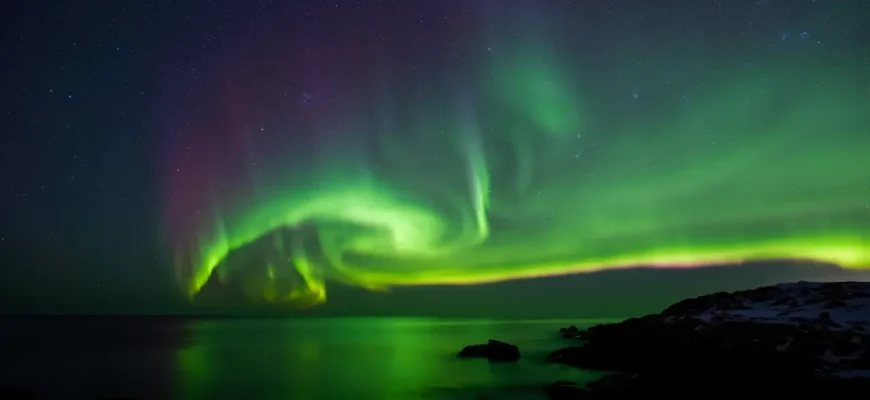
The Vikings believed the Northern Lights were the shimmer of a celestial palace where warriors who died in battle would go. Icelanders thought elves were dancing in the sky. And the Sami people wavered between seeing sparks from the swish of a fox’s tail and a message from the world of the dead. In reality, it’s both simpler and more complex.
What are the Northern Lights?
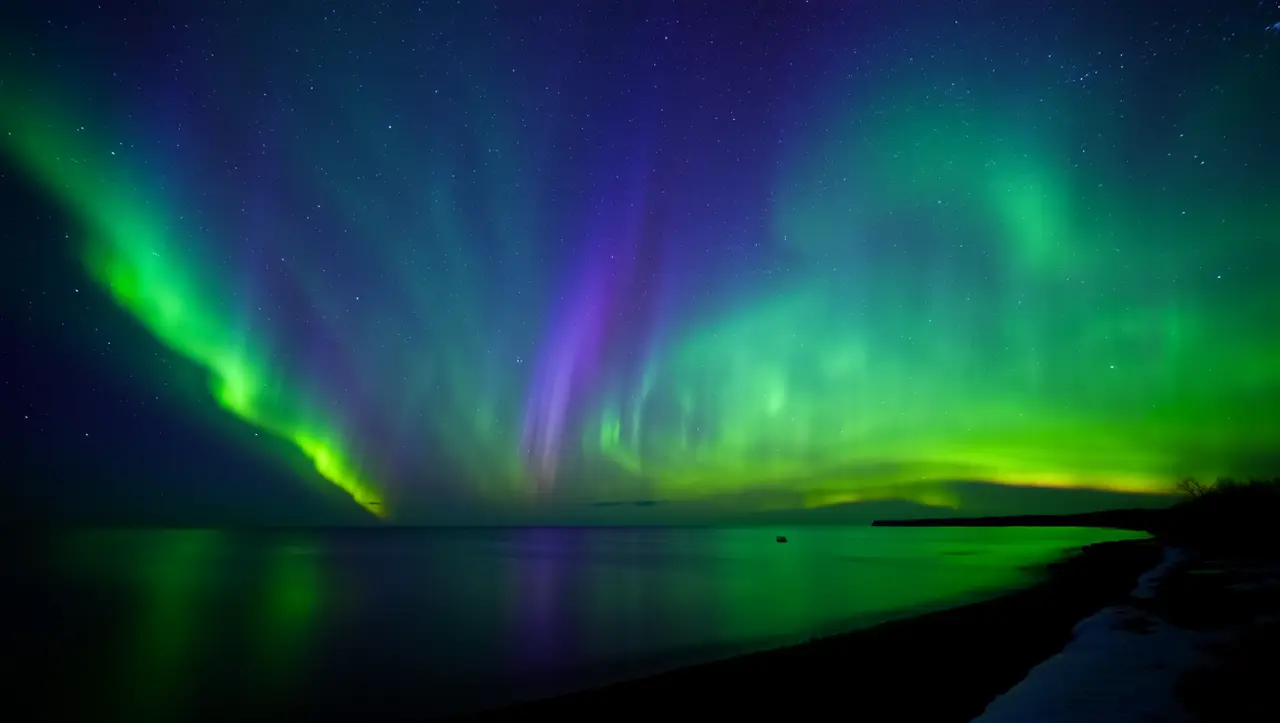
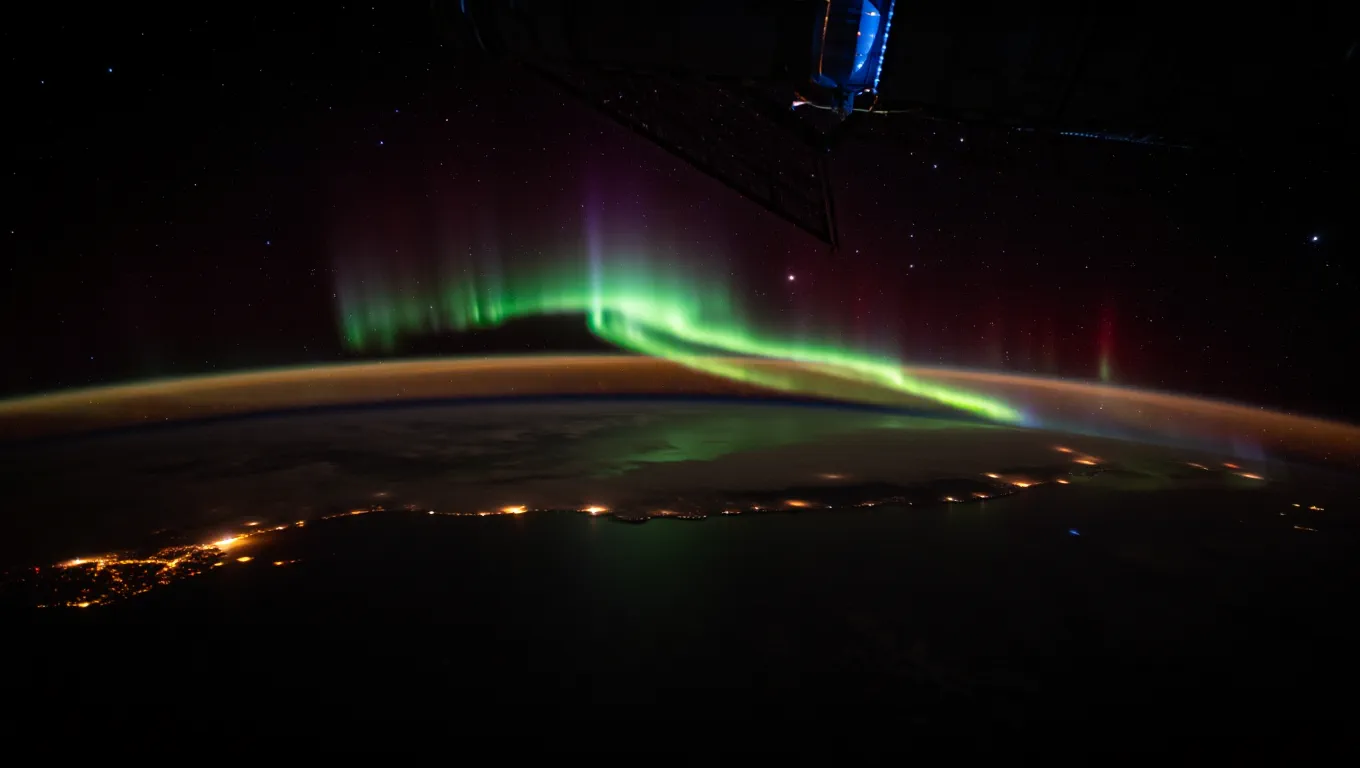
The Northern Lights, or Aurora Borealis, are a luminous glow in the upper layers of the Earth’s atmosphere. They occur due to the interaction of atmospheric gases with protons and electrons from the solar wind. The scientific name for this phenomenon is aurora borealis.
The process had long been known and proven, but in 2018, scientists from the Japan Aerospace Exploration Agency (JAXA) observed with their own eyes a stream of electrons passing through Earth’s magnetosphere. They managed to do this using a special sensor. This was the Northern Lights.
Why are the Northern Lights these specific colors? When particles reach an altitude of 100–400 km above sea level, they excite atoms of nitrogen and oxygen, causing the sky to change color. The resulting color depends on the altitude and composition of the atmosphere: nitrogen is responsible for purple and blue hues, while oxygen produces green.
Sometimes the aurora suddenly becomes brighter, a phenomenon known as an auroral breakup.
Japanese scientists determined that the cause of auroral breakups is plasma vortices in near-Earth space. And in 2018, University of Helsinki professor Minna Palmroth noted that sometimes the glow resembles sand dunes. Research showed this is possible at altitudes from 80 to 120 km due to an increased density of oxygen atoms.
The color of the Northern Lights depends on the composition of the atmosphere. Nitrogen is responsible for purple and blue, while oxygen creates green.
Earlier, Finnish scientists proved that the Northern Lights have an acoustic accompaniment. However, it can only be heard in frosty and windless weather. As warm air rises, it collides with colder atmospheric layers carrying a negative charge. This forms a kind of dome that impedes the movement of particles. They lose their charge, and the shimmering in the sky is accompanied by a crackling sound.
Where can you see the Northern Lights?
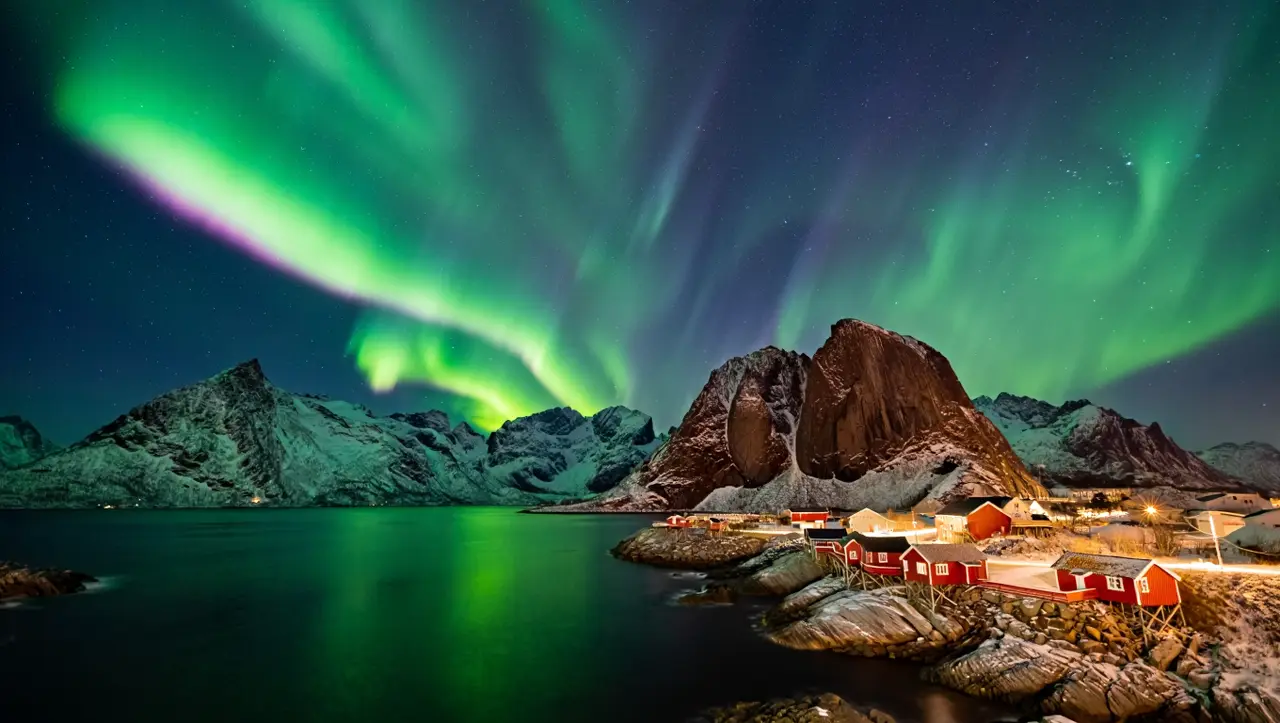
The Northern Lights mainly occur at high latitudes, near the Earth’s magnetic poles: in northern Russia, Norway, and Canada. In Finland, every cabin at the Arctic Snow Hotel features a heated glass roof, allowing guests to admire the phenomenon without leaving their beds. All that’s left is to wait. And it’s impossible to guess for how long. Attempts to predict the aurora involve monitoring the sun, weather, and forecasting geomagnetic storms, but no one can offer a 100% guarantee. Nevertheless, every winter, tourists head to northern regions hoping to see the elusive phenomenon and show the Northern Lights to their children.
When is the best time to see the Northern Lights?
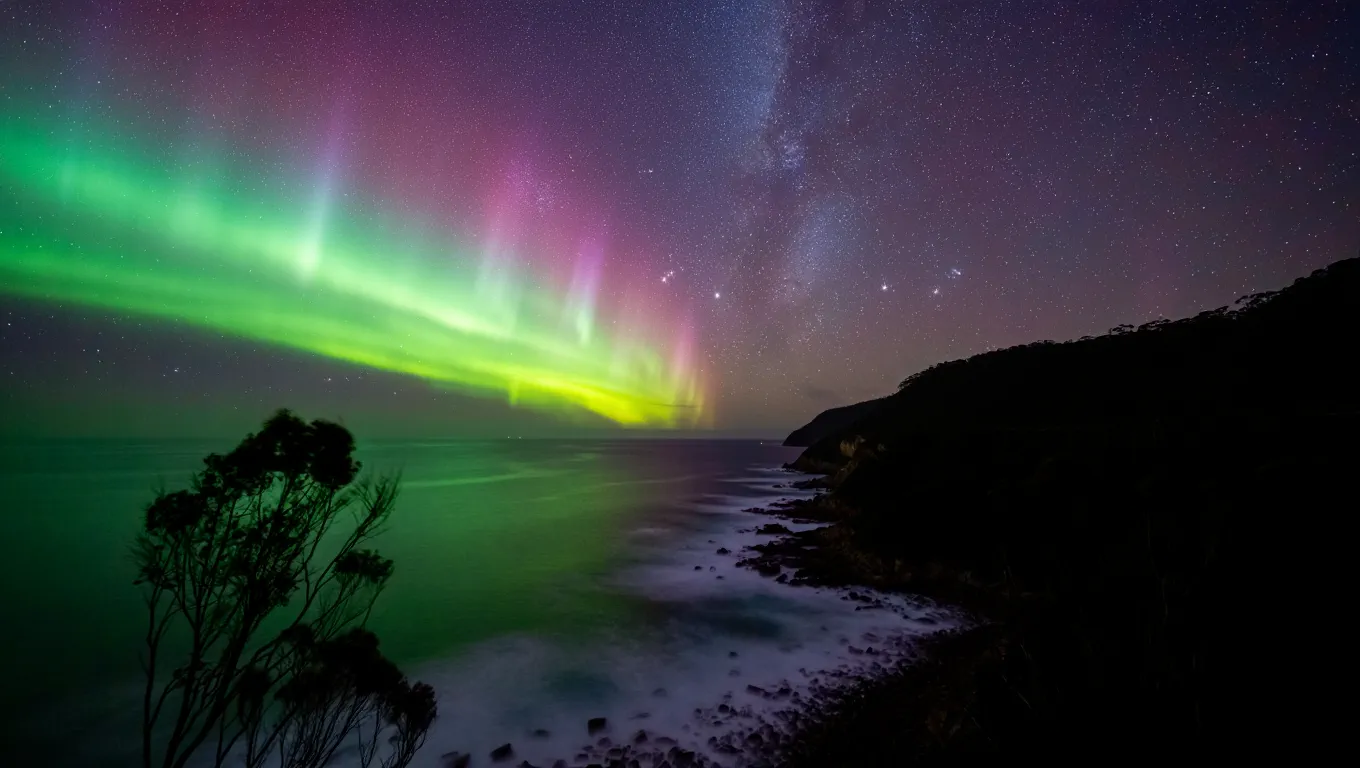
The appearance of the aurora borealis depends not on the season but on solar storms; the Northern Lights can even occur in summer. However, the best period for “aurora hunting” is considered to be from September to the end of March. The sky is most ablaze from nightfall until about 3 a.m.; during the day, sunlight drowns out the shimmering hues. In Russia, the Northern Lights can most often be seen in the Arkhangelsk region, Karelia, Khanty-Mansiysk, on the Yamal Peninsula, the Kola Peninsula, and other northern regions.
During periods of high solar activity, the aurora can be seen at lower latitudes. For example, Stewart Island in New Zealand regularly witnesses the southern polar lights, aurora australis—the northern lights’ twin brother. And in 2023-2024, thanks to the strongest magnetic storms, residents of Central Russia were able to enjoy the flaming sky.
Where else does the polar aurora occur?
Earth is not the only planet in the Solar System where polar auroras occur. On Jupiter, they are about a thousand times more powerful. An international group of scientists figured out why in 2019 using data from NASA’s Juno spacecraft. Earth is smaller, has a weaker magnetic field, and rotates more slowly. Auroras have also been recorded on other planets. Mercury was not so lucky: due to its proximity to the Sun, it lost its atmosphere, so charged particles have nothing to interact with.
Is it possible to create the Northern Lights… on your own?
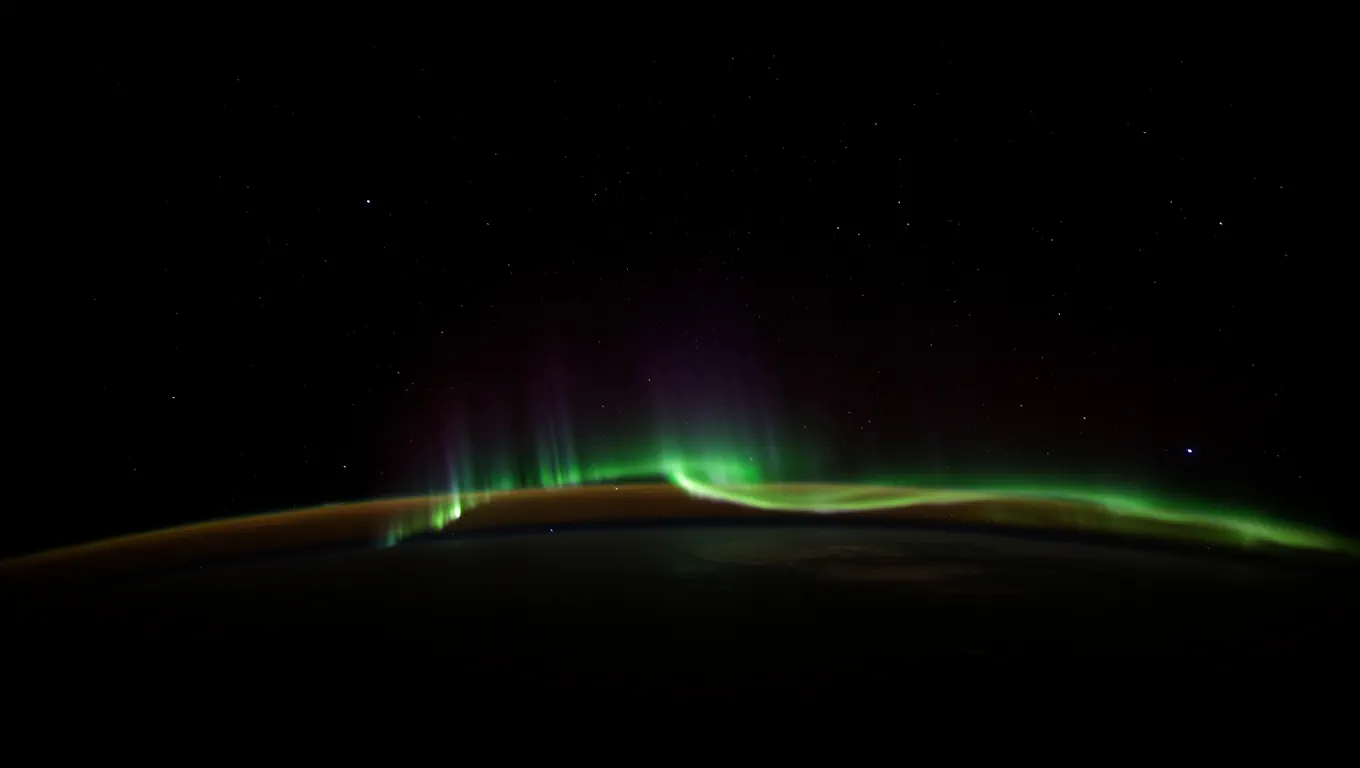
You don’t necessarily have to wait for the Northern Lights. They can be triggered artificially. Soviet and French scientists proved this back in 1975. They launched a particle accelerator from the Kerguelen archipelago in the Indian Ocean, which emitted electrons at an altitude of several hundred kilometers; these electrons, moving along the magnetic field, reached the Northern Hemisphere. If not for bad weather, residents of the Arkhangelsk region would have observed the polar lights. Instruments recorded it nonetheless.
The Northern Lights can even be created in a laboratory
Later, French scientists created a device that simulates conditions in Earth’s atmosphere at an altitude of 80 km. Now, the Northern Lights can even be summoned in a laboratory.