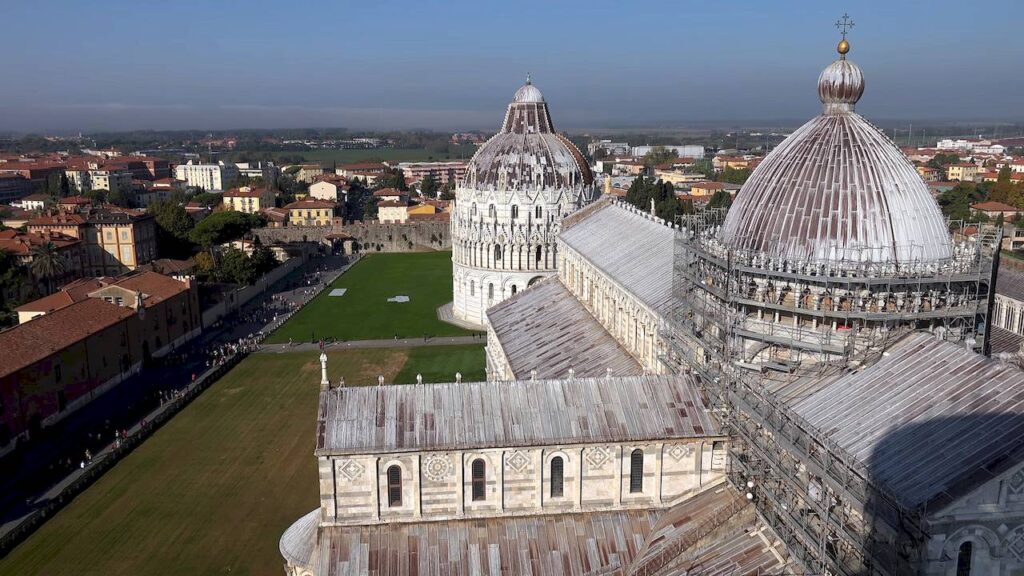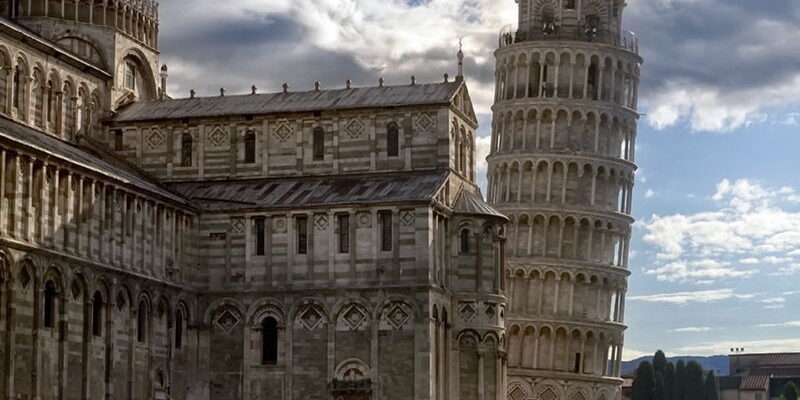
In the 11th century, in the Italian city of Pisa, on its very outskirts, construction began on the Cathedral of the Assumption of the Blessed Virgin Mary. It might have remained one of hundreds of other, undoubtedly beautiful, but little-known Italian cathedrals, if not for its world-famous bell tower, better known as the Leaning Tower of Pisa (Italian: Torre pendente di Pisa).
The Leaning Tower of Pisa (Pisa, Italy)
Interesting Facts
Everything about it is unusual and remarkable, and it is not for nothing that it is located on the Square of Miracles. Firstly, it is perhaps the only bell tower in the world that stands at a considerable distance from the cathedral, which is explained by the special architectural design of the ensemble. Secondly, in its exterior decoration, some experts see Muslim motifs, finding a distant resemblance of the bell tower to a minaret. Be that as it may, it is not only part of the Christian cathedral ensemble but also its main adornment.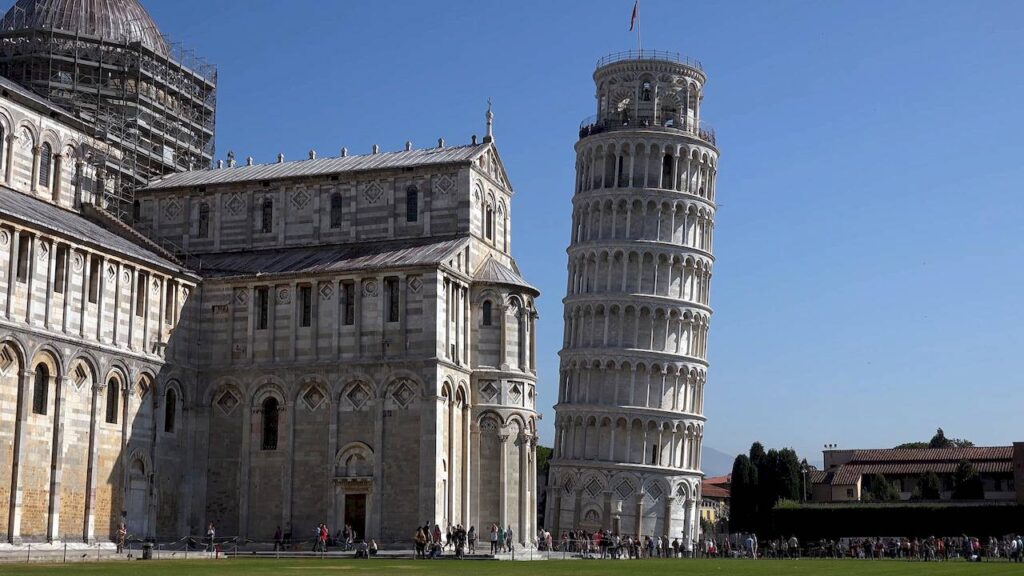
Construction
Already at the beginning of construction, which dates back to 1173, it became clear that the clay soil under the tower was prone to subsidence. It was built for almost 200 years, and after the completion of the work, restoration has been ongoing almost continuously. The Leaning Tower of Pisa is an eight-story cylindrical structure consisting of a massive base and six tiers of arcades, crowned with a belfry.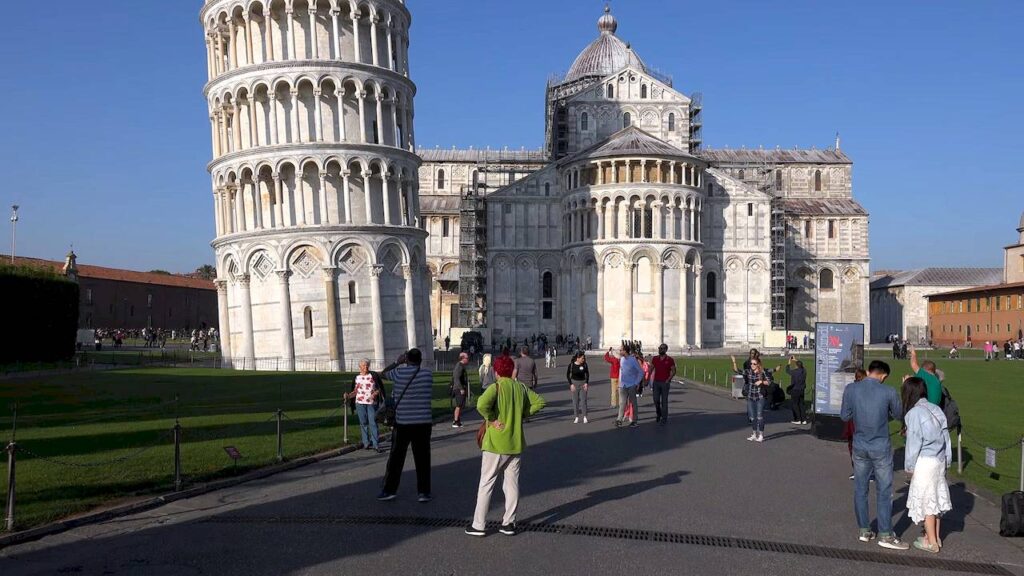
Interiors
Inside the tower is a hollow cylinder, the walls of which are cut through by the arches of the external galleries. The central space is open all the way to the top. A spiral staircase winds along the inner surface of the walls, leading to the belfry. Seven bells are located there. The largest of them weighs over three and a half tons, and the oldest is over 750 years old.

The Fall of the Tower
It has been established that the difference between the foundation levels reaches more than two meters. But thanks to the fact that the center of gravity of the bell tower still projects onto the base, it continues to stand, although by the end of the 20th century its deviation from the axis had reached a critical 5.5 degrees. For a long time, the Leaning Tower of Pisa was indeed in motion: its tilt would increase, then it would slightly straighten. This was caused by soil shifts, groundwater activity, and unsuccessful human intervention attempts. For example, in the century before last, it was decided to excavate the soil around the foundation, which led to catastrophic consequences — groundwater washed away a number of adjacent buildings.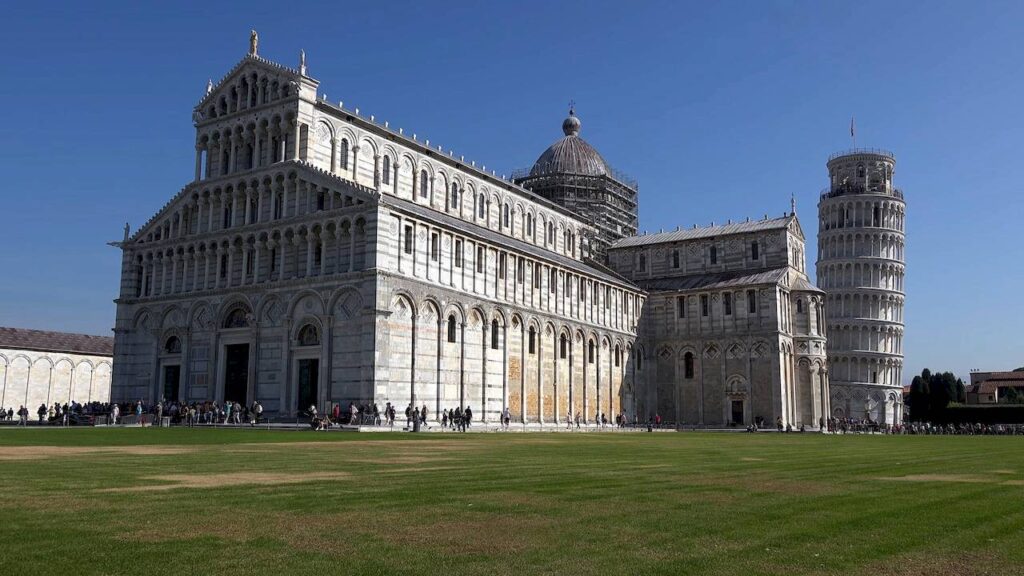
In the mid-20th century, a special commission was created, which included competent specialists, to save the Leaning Tower of Pisa from destruction. However, the most successful work began in the 1990s. Thanks to the precise extraction of soil from under the foundation and the installation of a counterweight system, the tower’s tilt was reduced by half a degree and, most importantly, stabilized. Now engineers are convinced that the tower is not moving and will be able to stand without intervention for at least 200–300 years.