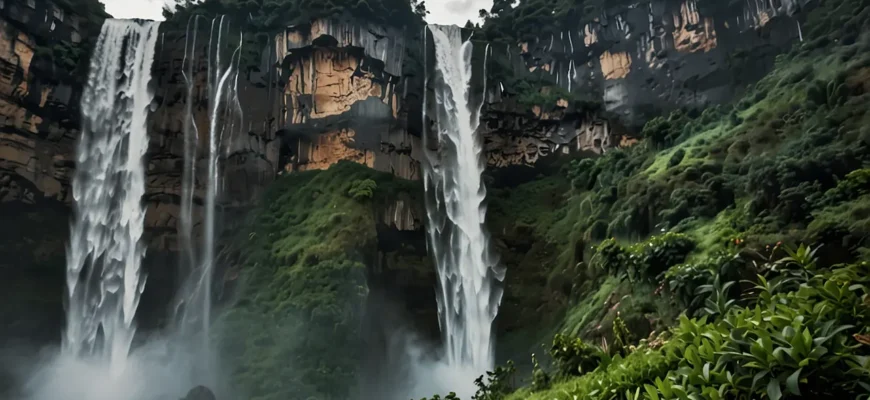
Spoiler: it’s not Angel Falls. So what is it then? Let’s find out.
When it comes to the highest waterfalls, most people immediately think of Angel Falls. This giant drops water from a height of nearly a kilometer and is rightfully considered the king among terrestrial waterfalls. But should we only look for record-holders on land? Actually, no.
Which waterfall is the largest?
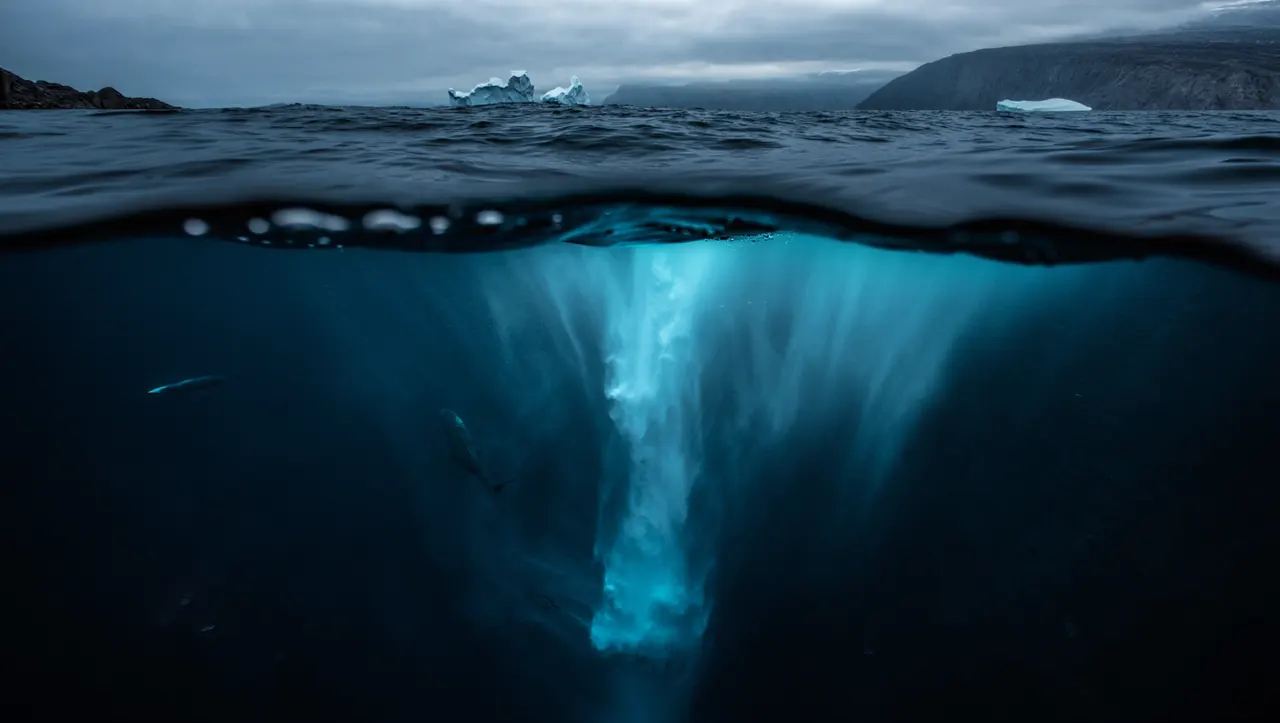
The largest waterfall on Earth is hidden underwater in the Denmark Strait between Greenland and Iceland. The height of this underwater giant exceeds 3 km (1.86 miles), making it more than three times taller than Angel Falls. The width of the flow is 160 km (about 100 miles), comparable to the distance from Milan to Verona.
Every minute, about 5 million cubic meters (over 175 million cubic feet) of freezing water cascade through the strait. To put it in perspective: this volume would fill nearly 2,000 Niagara Falls at their maximum flow. Interestingly, humans discovered this wonder relatively recently, only in 1989 — it is hidden far too deep and unconventionally from human eyes.
How can water fall underwater?
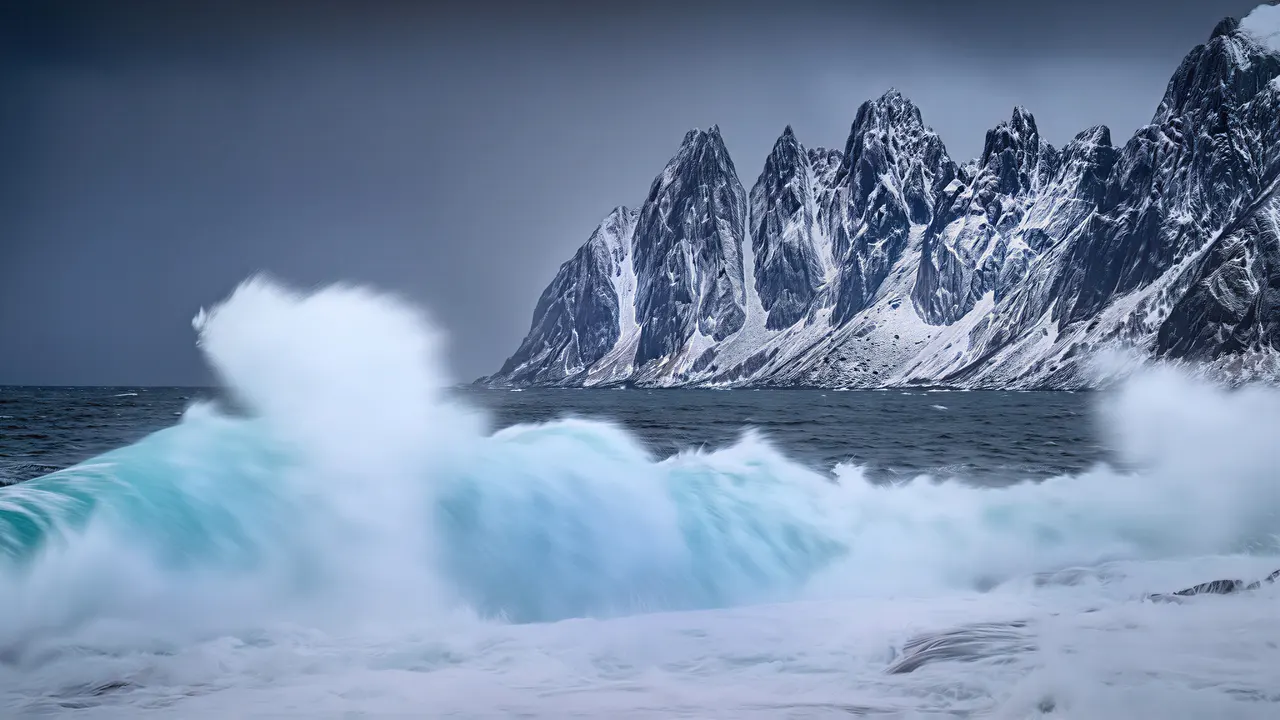
The secret lies in the difference in temperature and density. Cold water is significantly denser than warm water, so when icy streams from the northern seas flow south and meet the warmer water of the Irminger Sea, they don’t mix — instead, they rapidly plunge downward, displacing the lighter warm layers.
Moving down the slope of an underwater precipice, this dense mass accelerates and falls from a tremendous height to the seafloor — and that’s how a waterfall is born, just without the foam, spray, and roar we are used to on land. The human eye wouldn’t be able to notice this phenomenon because the water looks the same both above and below. But instruments record a powerful current that surpasses any terrestrial waterfall in its parameters.
The Denmark Strait waterfall plays a key role in the complex circulation of the Atlantic Ocean, which in turn affects the planet’s climate. The journey begins in the Arctic: surface waters there cool, become heavier, and sink. Then they move toward lower latitudes, follow the bends of the seabed, accelerate over the submarine thresholds of the Denmark Strait, and eventually flow into the deep-sea basins of the North Atlantic. In this way, the invisible giant supports life in deep ecosystems and regulates weather on the continents.
Unfortunately, the largest waterfall on Earth has a serious enemy — global warming. The oceans are getting warmer, more fresh meltwater is entering them, and sea ice coverage is shrinking. All of this reduces the volume of cold, dense water that feeds the waterfall.
Where else are underwater waterfalls located?
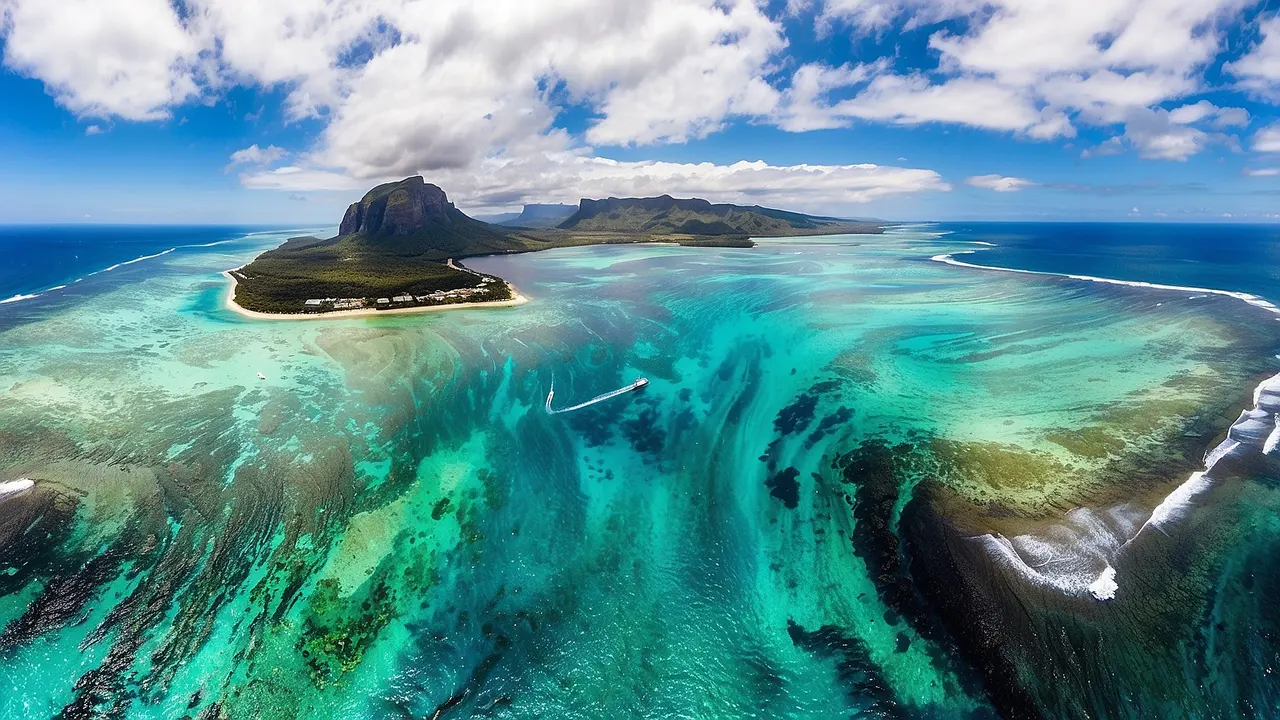
The Denmark Strait waterfall is not the only one underwater, although it is the largest. The most famous of the “illusory” waterfalls is located near the island of Mauritius in the Indian Ocean. Unlike the Danish giant, there is neither a temperature gradient nor a powerful continuous flow. Mauritius’s secret lies in the sand and the features of the seabed topography.
Mauritius is a volcanic island with rich sandy shores. When ocean currents intensify, they transport sand back and forth across the shallows that surround the island. These shallows are part of an underwater plateau, and on the southern edge of Mauritius, it drops sharply into deep, dark waters. The currents push coastal sand off the edge of this precipice, and it cascades into the abyss.
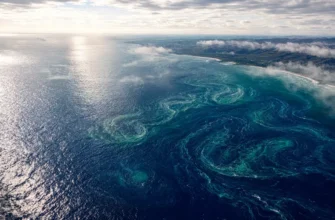
From a bird’s-eye view, it looks as if the water is rapidly disappearing into an abyss, creating a powerful waterfall. In reality, it is just sand slowly settling to the ocean floor. A pure optical illusion, but no less fascinating for that. So in Mauritius, you can admire an underwater waterfall without diving into the depths — just ascend into the air.
Interesting fact: if this underwater waterfall ever “stops” due to warming, Europe could become significantly colder. Have you ever heard of ocean currents as a “conveyor belt” that warms the planet?