Beach vacations are invariably associated with serenity and relaxation. However, there can be dangers on the seashore that carefree vacationers often forget about. Here is a list of them.
Heat stroke
In conditions of high humidity and heat, the process of thermoregulation in the body can fail, sweat stops, and heat stroke sets in – a deadly condition. Many people confuse its symptoms with banal fatigue, but the situation is much more serious. They include weakness, lack of sweat, irritability, darkening of the eyes, and vomiting.
Sunstroke and heatstroke should not be equated: in the first case, the head, and neck overheat, which is, of course, dangerous, but in the second case, the risk to life is much higher. In addition, in sunstroke, the body temperature usually does not rise, while in heatstroke, it can jump up to 40 °C in a few tens of minutes.
Jellyfish
These creatures, often small and almost invisible, can not only seriously harm the body, but even cause death. Therefore, before choosing a coast for your vacation, carefully read the information about the types of jellyfish that live in a particular sea.
Sometimes their bite is not felt at all, but if you feel a tingling or stinging pain while in the water, immediately go ashore and remove the remains of the matsak (not with your fingers, but with tweezers or a towel!). If you have hydrogen peroxide and antihistamine ointment, treat the wound with them and be sure to consult a doctor: the harmful effects of a bite may not appear immediately.

Algae blooms
For many people, the blooming sea is not a reason not to swim – and for good reason. It’s not the look and smell of the water, but the fact that algae colonies emit dangerous toxins. They kill fish, so the blooming water contains particles of their decaying carcasses.
The least that swimming in such a sea brings is a rash, intestinal infections, and inflammation of the mucous membranes. But, according to scientists, it can lead to neurodegenerative diseases and even cancer.
Sharks
The best way to avoid being attacked by man-eating sharks is not to vacation in the seas where they live. If you do find yourself there, follow simple rules of thumb.
- Don’t swim near large concentrations of fish: where there is prey, there is a hunter. Seagulls circling over the water will tell you about such places.
- Do not swim at dawn and dusk: this is the time when sharks hunt most often.
- Remove shiny objects before swimming: marine predators often mistake them for fish scales.
Tsunami
The recommendation here is the same as in the case of sharks: do not vacation in high-risk areas. Yes, many countries use monitoring mechanisms to predict the occurrence of deadly waves, but they are not effective everywhere. The situation is particularly bad in Indonesia, where unexpected tsunamis occur: monitoring often does not take into account data on underwater landslides and volcanic eruptions, and the public warning system does not work properly.
The reflective flow
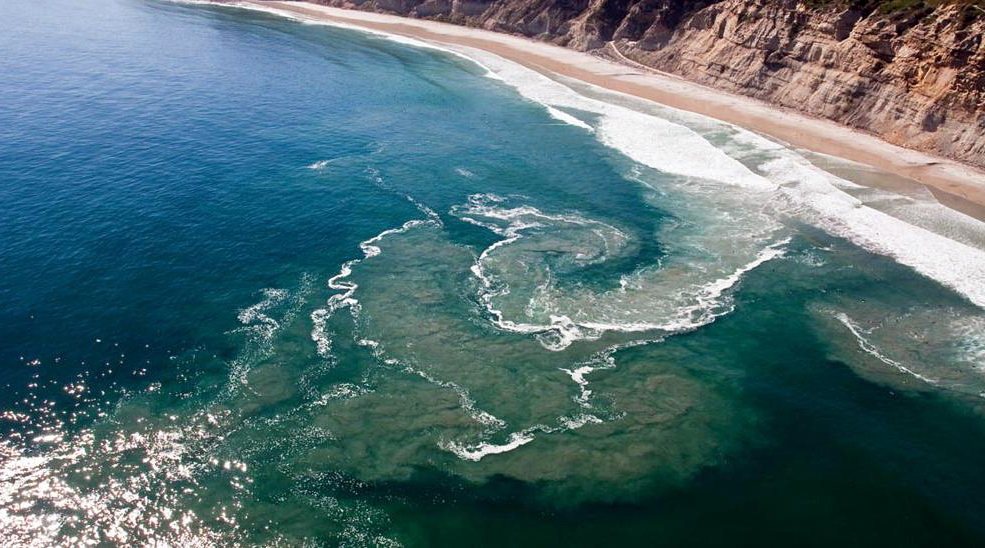
While man-eating sharks and tsunamis are exotic for Ukrainian tourists, everyone can face the danger of a backwater current. This phenomenon occurs at low-lying, gently sloping shores when, at low tide, water, held back by sand spit, rushes back into the sea.
You can recognize a rip current by external signs: a change in the color of the sea compared to neighboring areas, the transverse movement of water relative to the shore. But it is often completely invisible to the eye.
Anyone caught in a rip current is carried away from the shore at a decent speed. If you find yourself in it, remember that it does not pull you to the bottom, so if you calm down and do not resist it, you will survive. Instead of trying to swim to the shore, paddle away from the current. As a rule, its width is no more than 20 meters, and after swimming away from it, a person will be able to return to the shore.
Sunburns
This point may seem unnecessary to some, but some tourists persist in ignoring the dangers of sun exposure. An increased risk of melanoma, accelerated skin aging, and finally, discomfort and burning are clearly not what you want to get as a bonus to your vacation. So don’t go to the sea during peak hours and always wear sunscreen.
Read more in the article What to do to avoid sunburn and how to remove burns