Thessaloniki (Greece) – detailed information about the city with photos. Thessaloniki’s top attractions with descriptions, travel guides, and maps.
City of Thessaloniki (Greece)
Thessaloniki (also known as Salonika; Greek: Θεσσαλονίκη) is the second most populous city in Greece, located in the north of the country in the historical region of Central Macedonia. It serves as the administrative center of the Decentralized Administration of Macedonia and Thrace and is a major seaport. Thessaloniki is a beautiful city with a pleasant cosmopolitan atmosphere, where visitors can discover countless ancient monuments, admire Byzantine churches listed as UNESCO World Heritage Sites, relax in cozy cafes, and enjoy traditional Greek cuisine.
Thessaloniki is considered the cultural capital of Greece. The city is renowned for its vibrant and rich cultural life. It is also home to the largest university in the Balkans, which attracts a great number of young people. Thessaloniki is a city with a long and rich history. The appearance of the old city was shaped by ancient Greeks, Romans, Byzantines, and Ottomans. As a result, visitors can see both ancient monuments from antiquity and considerably more modern structures.
Geography and Climate
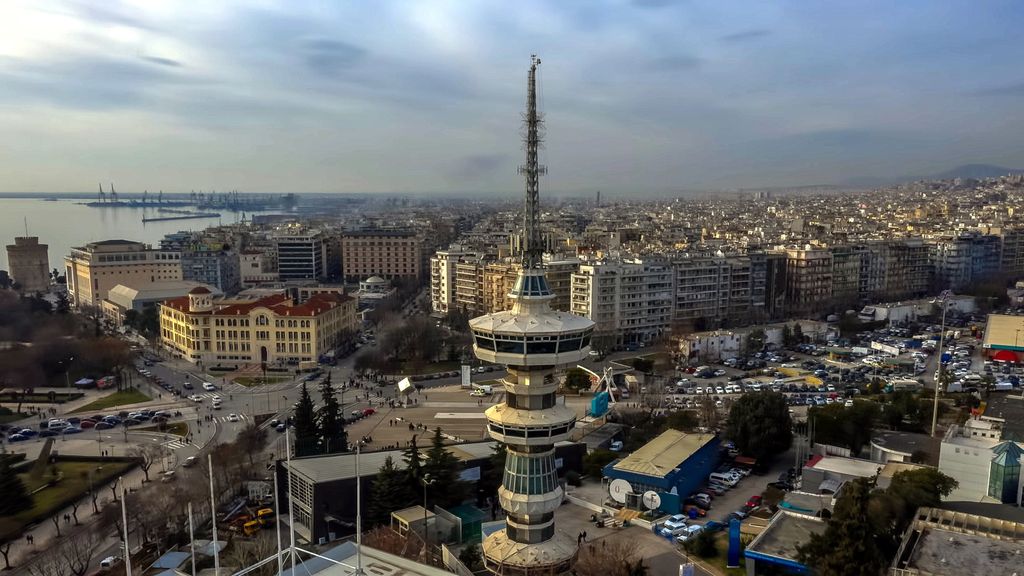
Thessaloniki is situated on the northern shore of the Thermaic Gulf (Aegean Sea) and is bordered to the southeast by the Chortiatis mountains. The climate is subtropical. Summers are quite hot and dry, with average temperatures of 25–27 °C. Winters are mild, with temperatures rarely dropping below zero. Sea water temperatures range from 24–26 °C from July to September. Swimming is possible from May through October.
Practical Information
- Population — over 300,000 (metropolitan area — over 1 million).
- Area — 19.31 km².
- Currency — Euro.
- Visa — Schengen visa required.
- Language — Greek.
- Time zone — UTC+2, UTC+3 in summer.
- Thessaloniki is famous for its shopping streets. The main ones are Tsimiski and Proxenou Koromila.
- The cuisine of Thessaloniki has an oriental character and is distinguished by a wide variety of spices. Greeks consider the city one of their gastronomic capitals. This refers to local delicacies and affordable traditional dishes rather than haute cuisine.
- Thessaloniki is a youthful city, which is why street food is very popular here: souvlaki, gyros, crepes, roasted chestnuts. Young people often frequent the fast-food chain Goody’s.
Popular districts with numerous cafes and restaurants include: Ladadika, Athonos, and Ano Poli.
History and Interesting Facts
Thessaloniki was founded in 315 BC by the Macedonian king Cassander. He named the city after his wife Thessalonike, who was the sister of Alexander the Great. In 146 BC, Thessaloniki was conquered by the Romans. After the fall of the Roman Empire, the city became part of Byzantium. Thessaloniki was located at the crossroads of important trade routes connecting Constantinople to Rome and Athens to the Black Sea region. This ensured rapid growth and prosperity for the city.
In the 6th–8th centuries, Thessaloniki was repeatedly attacked by Goths and Slavs. In 904 AD, the city was captured and plundered by Saracen pirates, with most of its inhabitants sold into slavery. At the end of the 10th century, Thessaloniki was seized by the Bulgarians, and at the end of the 12th century — by the Normans. In 1204, the city became the capital of the Kingdom of Thessalonica, though by 1246 this state had been subjugated by the Nicaean Empire. In 1387, the city was captured by the Turks. The Ottomans ruled Thessaloniki until 1402, when, following their defeat in the war with Timur (Tamerlane), the city was returned to Byzantium.
 In 1430, the Ottoman Empire regained control of the city. During the period of Ottoman rule, Thessaloniki grew into one of the largest cities in Greece. During this time, the ethnic and religious composition of the city changed significantly. The Greek nobility assimilated with the Turks, adopted the Turkish language, and converted to Islam. More than half the population consisted of Sephardic Jews, and the primary language of the city became Ladino. Greeks made up only one-fifth of the city’s residents, with the majority having perished in the military conflicts of the Middle Ages. Many Turks also lived in the city — among them, the famous Mustafa Kemal Atatürk was born here.
The Greeks regained control of Thessaloniki in 1912. During World War II, the city was occupied by German forces. As a result of the exodus of the Turkish population and the genocide of the Jewish population carried out by the Nazis, Thessaloniki became an entirely Greek city.
How to Get There
Thessaloniki Airport is located 15 km southeast of the city center and is connected to both domestic and international destinations including: Athens, Heraklion, Corfu, Santorini, Rhodes, Berlin, Düsseldorf, Frankfurt, Yerevan, Hamburg, Munich, Zurich, Vienna, Basel, London, Stockholm, Oslo, Paris, Milan, Rome, Bergamo, Prague, Budapest, Warsaw, Minsk, Bucharest, and Yerevan. From the airport, you can reach the city center by 24-hour buses 01X / 01N.
Trains and buses connect Thessaloniki with Athens, Sofia, and Belgrade. By car, the city is easily reachable from Athens, Istanbul, Belgrade, Tirana, and Sofia.
Hotels in Thessaloniki
Thessaloniki offers accommodation for every budget — from luxury hotels to simple guesthouses and apartments, as well as youth hostels. The price of a double room in a modest hotel starts from 30 EUR, while a five-star hotel room can be booked for 150–200 EUR per night. Mid-range hotels (3–4 stars) cost around 50–60 EUR per night, with apartments available at similar prices. Those on a tight budget will appreciate hostels from 10 EUR per person, or the most affordable option — camping, where for just 15 EUR you can pitch a tent at a fully equipped site accommodating multiple travelers.
Sights and Attractions
The central part of Thessaloniki, enclosed within the Byzantine walls, forms the oldest part of the city. It is divided into two sections: the main commercial district and the historical center itself. The historic core of the city is called Ano Poli (Upper Town) and has been designated a UNESCO World Heritage Site. This district was largely spared from the devastating fire of 1917.
Ano Poli is perched on a hilltop. This atmospheric quarter is characterized by steep, winding alleyways, several artifacts from the Roman period, and a cluster of ancient Byzantine churches. Numerous fountains from the Ottoman era serve as reminders of Turkish influence. The street Odós Olympíados connects the Upper Town with the lower city, as well as with the old city walls and the citadel.
Byzantine Walls — one of the distinctive features of Thessaloniki’s historic center is the surviving sections of ancient fortification walls. The first walls were built around the city shortly after its founding and were later reinforced during the reign of Constantine. In the 14th–15th centuries, the Ottomans constructed additional defensive structures and towers. By the 19th century, Thessaloniki was completely surrounded by powerful fortifications stretching 8 km. The Ottoman government later decided to dismantle the ancient walls, which were seen as hindering the city’s growth and development.
The best place to begin a tour of the old fortifications is at the Evangelistria Cemetery, north of the university campus. Here you can see the massive 15th-century Trigonion Tower, the Tower of Anna with gates leading into the citadel, on the site of the ancient acropolis.
Heptapyrgion — the fortress of “seven towers,” located at the highest point of the Upper Town. It is believed that the northern towers were built in the late 4th century, while the five southern towers date from the 12th century. Until the late 19th century, the fortress served as a defensive structure, and was then used as a prison for 100 years.
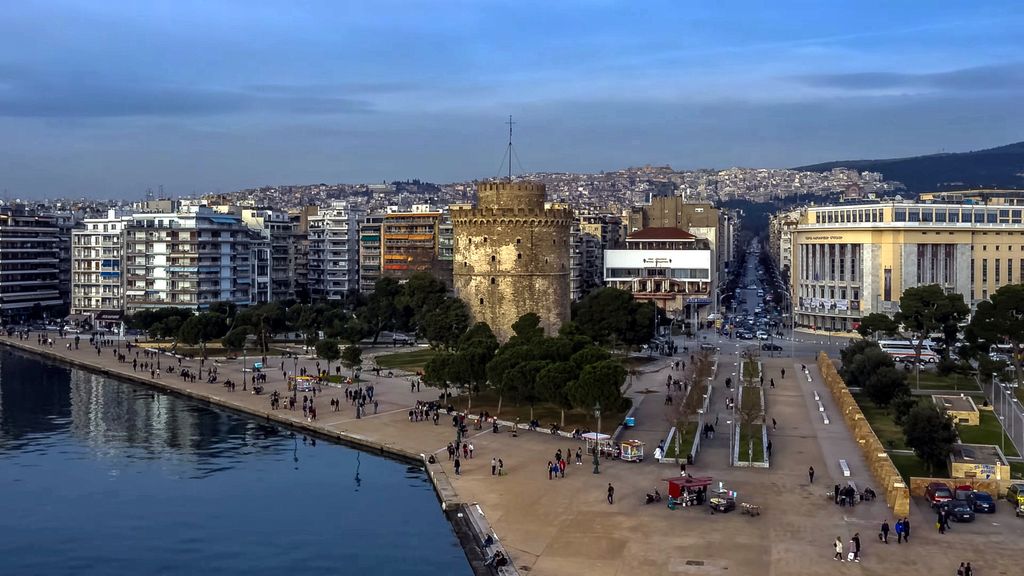
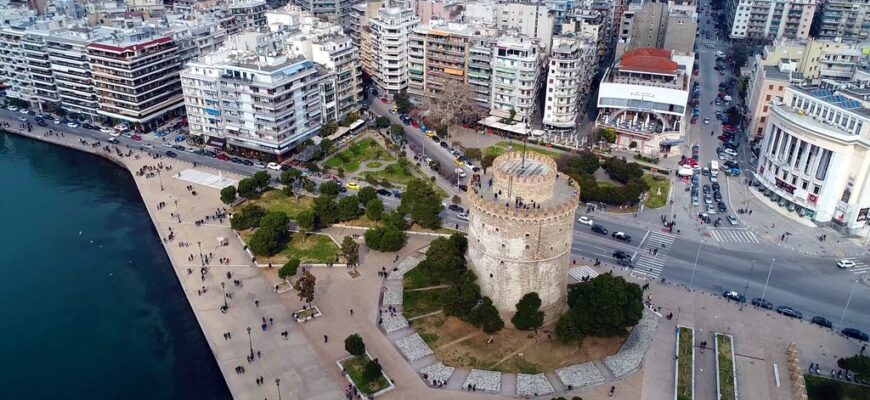
The White Tower is the most recognizable landmark of Thessaloniki, located along the scenic waterfront promenade. The tower was built in 1530 by the Ottomans to defend the city from the sea and was part of the city’s fortifications. During the Ottoman period, it served as a prison and place of execution, earning it the name “Tower of Blood.” It was later symbolically whitewashed and renamed the “White Tower.” Today, visitors can climb the tower and enjoy a magnificent panoramic view of the harbor and city. Inside, a collection from the Museum of Byzantine Culture is on display, including early Christian coins, vases, mosaics, and wall paintings.
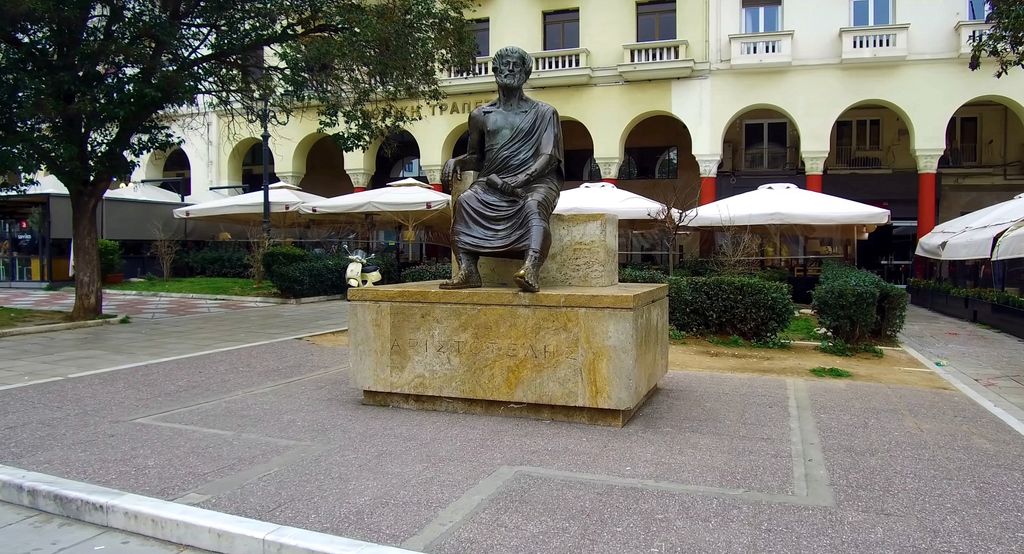
Aristotelous Square is the main square of the city, designed in 1918 by French architect Ernest Hébrard.
Ladadika is a historic district near the port, featuring colorful 19th-century buildings and a charming provincial Mediterranean atmosphere.
A few blocks from Aristotelous Square lie the ruins of the Roman Forum (most likely an ancient agora). The center of public and political life in ancient Thessaloniki, built in the 1st century AD and discovered by accident, contains two Roman baths as well as a small theater that was once used for gladiatorial games.

The Arch of Galerius is an ancient Roman monument built at the end of the 3rd century AD to commemorate the victory over the Persians. This structure served as the main gateway into the city. The arch originally had four passageways and a marble façade decorated with intricate reliefs. Two passageways and portions of the reliefs have survived to this day — and in fact are better preserved than those on the Arch of Constantine in Rome.
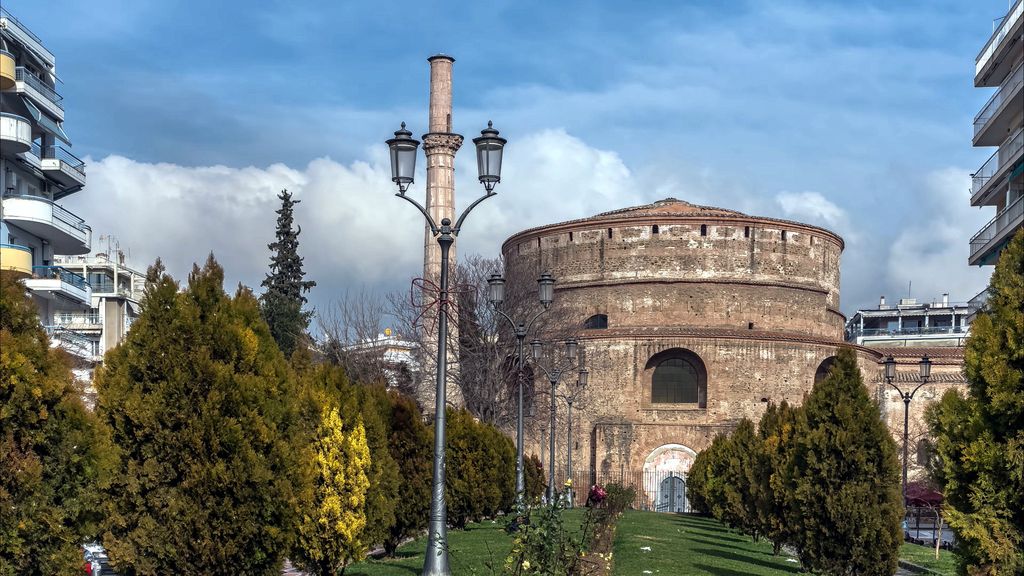
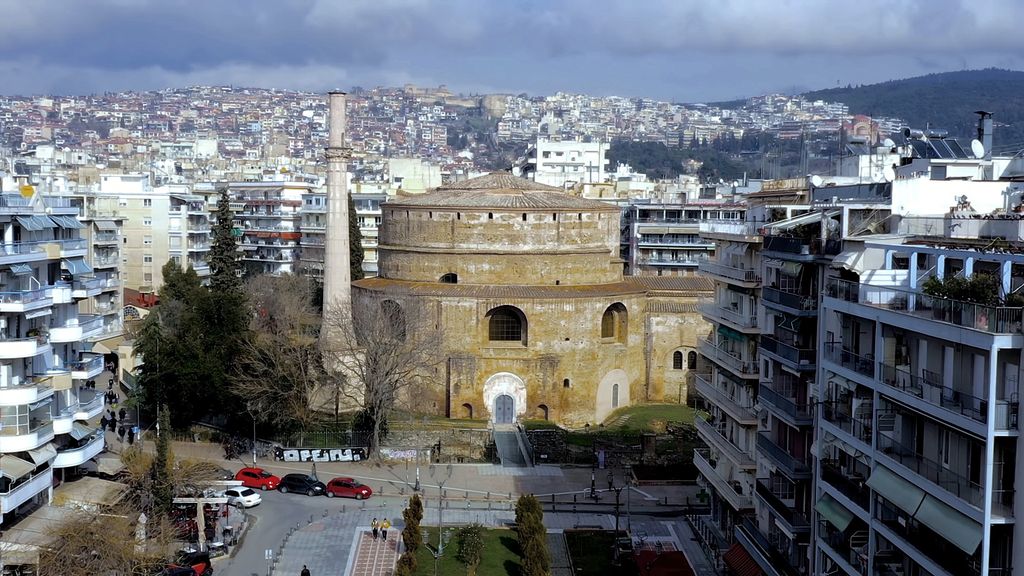
The Rotunda of Galerius (Church of St. George) is a magnificent ancient monument in the city, built in the early 4th century as a mausoleum for the emperor of the same name. The Byzantine Emperor Theodosius converted the mausoleum into a Christian church at the end of the 4th century. During the Ottoman period, the building was transformed into a mosque. In 1912, the Rotunda became a church once again. The Rotunda features cylindrical domed architecture reminiscent of the Roman Pantheon. The dome has a diameter of 24 meters and the building stands 30 meters tall. The interior of the dome is adorned with magnificent mosaics.
Basilica of St. Demetrios is the main religious monument of Thessaloniki, located to the north of the Roman Forum. This magnificent Byzantine basilica was built in the 5th century on the site of an early Christian church near an ancient Roman bath. Fragments of the bath are still visible on the northern side of the building, and the crypt preserves the remains of a Roman road. The church was named after the city’s patron saint, Demetrios, who was imprisoned and executed here in 306 AD. For centuries, pilgrims traveled from across the Byzantine Empire to venerate the saint’s relics, which were kept in a sarcophagus before the iconostasis. The church features rich interior decoration and was converted into a mosque during the Ottoman period.
Church of the Twelve Apostles is a beautiful 14th-century Byzantine brick church located at the edge of the old city, near the Byzantine walls. During the Turkish period, the building was used as a mosque. The church boasts exquisite late-Byzantine frescoes and mosaics that were discovered during restoration work in 1940. On the northern side of the building is a cistern that belonged to the former monastery.
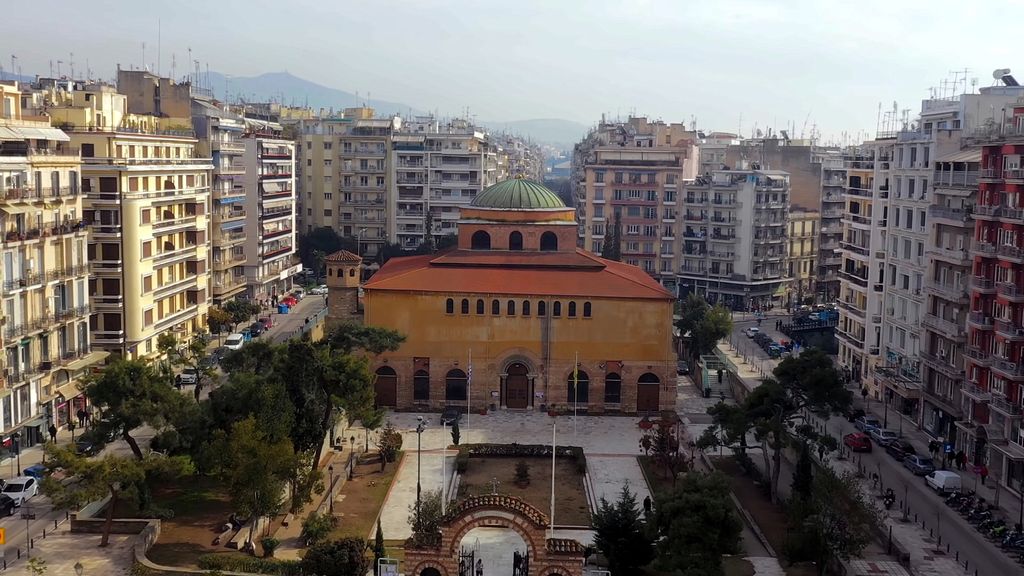
The Church of Hagia Sophia is one of the most historically significant churches in the city. The first religious structure on this site was built in the 8th century. In the 9th–10th centuries, the church was adorned with striking figurative mosaics. From 1204 to 1430, it served as a cathedral. During the Ottoman period, it housed a mosque. The original building did not survive the great fire of 1917.

The Church of St. Paul is a grand modern church built in the style of historical Byzantine architecture, constructed in 1922 on the site of a small chapel from the second half of the 19th century. According to tradition, the church is located near the spring where the Apostle Paul drank water.
The Church of St. Catherine is a late-Byzantine church located in the northwestern part of the Upper Town. During the reign of Sultan Bayezid II, it was converted into a mosque.
The Church of St. Panteleimon is a religious building from the late Byzantine period, constructed in the 13th–14th centuries. It is located in the eastern part of the old city, near the Arch of Galerius.
The Church of Hosios David (Latomou Monastery) is a small Byzantine church that was part of the Latomou Monastery. Built in the late 5th century, it is renowned for its remarkable mosaics and frescoes from the 12th–14th centuries.

The Church of St. Nicholas Orphanos is a small early 14th-century Byzantine church, renowned for its frescoes. Unlike most of the ancient churches in Thessaloniki, it was never converted into a mosque by the Turks.
Vlatades Monastery is an ancient 14th-century Byzantine monastery considered one of the oldest and most important monuments of the Byzantine period in Thessaloniki. It is known for its collection of Byzantine icons.
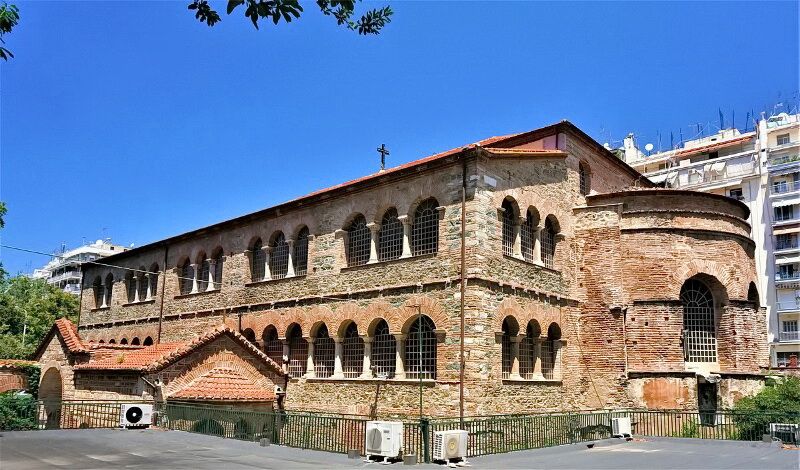
The Acheiropoietos Basilica is an early Christian basilica from the 5th century, considered one of the finest examples of early Byzantine architecture and renowned for its extraordinary frescoes and mosaics.
Bey Hamam is the oldest Ottoman bathhouse in Thessaloniki, featuring colorful wall paintings and marble pools. It was built in 1444 during the reign of Murad II.
Alaca Imaret Mosque is a 15th-century Ottoman mosque with wall paintings and interesting decorative relief elements.
Notable Museums of Thessaloniki
- Museum of Byzantine Culture — encompasses thousands of artifacts from the early Christian and Byzantine periods: frescoes, mosaics and wall paintings, ceramics, textiles.
- Archaeological Museum — collections spanning the Hellenistic, Archaic, Classical, and Roman periods.