Budapest, Hungary: The Most Detailed and Complete City Guide, Top Attractions of Budapest with Photos, Descriptions, and Map Locations.
Budapest, Hungary: The Ultimate Travel Guide
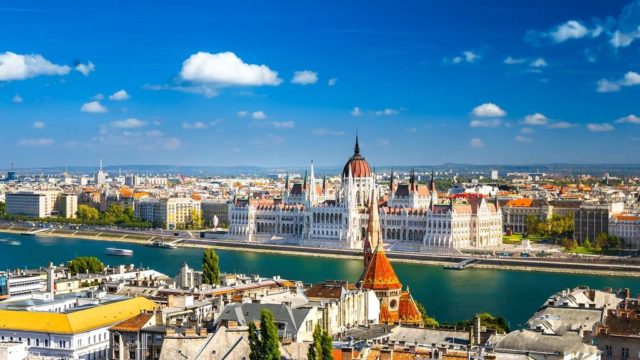
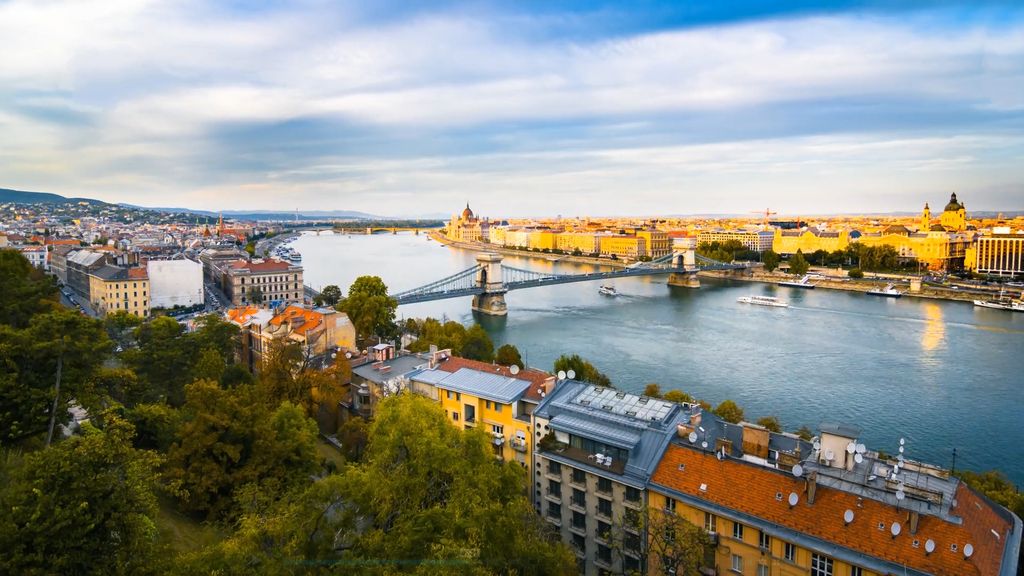
Budapest (Hungarian: Budapest) is the capital of Hungary, one of the largest and most beautiful cities in Europe, located in the northern part of the country on the banks of the Danube River. It is famous for its stunning architecture, particularly the magnificent Neo-Gothic Hungarian Parliament Building, numerous interesting landmarks and architectural monuments, wide and beautiful avenues lined with shops and restaurants, and a unique atmosphere of romance and freedom. Budapest stretches on both sides of the mighty Danube, bridged by several spans, the most beautiful of which is the Chain Bridge (Széchenyi Chain Bridge). Interestingly, the capital of Hungary was formed by the unification of three historic cities: Buda, Óbuda, and Pest. This is why Budapest is so unique, diverse, and somewhat resembles a patchwork quilt.
Budapest is one of the youngest European capitals. The city was officially established in 1873. It is a unique synthesis of three ancient Hungarian cities—Buda, Óbuda, and Pest—which for centuries developed side by side along the Danube. The more modern Pest, with its metropolitan elegance, grand boulevards, and beautiful 19th-20th century architecture, lies on the eastern bank of the Danube, while Buda and Óbuda, with their atmospheric old streets and historic-cultural landmarks, are on the western bank.
History and Interesting Facts
As early as the 1st century BC, a Celtic settlement existed on the territory of present-day Budapest. By the end of the 1st century AD, it was incorporated into the Roman province and named Aquincum. A Roman garrison was stationed here, and the population reached nearly 20,000.
In the 5th century, the Romans were displaced by the Huns and Ostrogoths, who established their empire here. The modern Pest was a small settlement called Contra Aquincum.

After the Huns, the region was first under Avar rule and later under Moravia. In 895, Hungarian tribes arrived. Aquincum was renamed Buda, which became the first center of the Hungarian state formed a century later. Pest, meanwhile, attracted settlers from Germany and France.
In 1241, during the Mongol invasion, Buda and Pest were severely destroyed. After the invasion, the King of Hungary decided to build a royal castle on Castle Hill in Buda.

In 1361, Buda became the capital of Hungary. In 1541, Hungary was conquered by the Ottoman Empire, leading to Buda’s decline. Later, the city was liberated by the Austrians and incorporated into the Habsburg domains. The 18th century marked a turning point for Pest, which emerged as a major commercial center, rapidly growing in population. By this time, Pest had more inhabitants than Buda and Óbuda combined.
 The first attempt to unite the three cities was made in the mid-19th century but was unsuccessful. Thus, the true birth of Budapest can be considered 1873. In the 19th century, railways connected Budapest with other European cities, streets were illuminated with electric lamps, tram services began, and telephone communication was introduced. Interestingly, the first metro in continental Europe was built in Budapest.
In 1918, Hungary became a republic, and in 1919, a socialist republic. In 1944, Budapest was occupied by German troops. During World War II, the city center was reduced to ruins. Reconstruction continued until the 1960s.
Useful Information
- The currency of Hungary is the forint (HUF). Do not exchange money on the street—use specialized exchange offices or ATMs.
- Public transport in Budapest includes 4 metro lines, 15 trolleybus routes, 32 tram lines, and over 200 bus routes, making it easy to reach any part of the city. Transport operates from 4:30 AM to 11:30 PM, with several night bus routes and tram line №6 running overnight. Tickets can be purchased at stops (stations) or special kiosks and are valid for all forms of public transport. Tickets must be validated on buses, trams, and trolleybuses.
- As in any popular tourist destination, pickpockets operate in Budapest, so keep an eye on your belongings in transport, shopping centers, and other crowded areas.
- Tobacco products can only be purchased at licensed tobacco kiosks. Smoking is prohibited in enclosed public spaces and at transport stops.
- Alcohol consumption is banned in public places.
- Tipping is not mandatory, but leaving 10% of the bill is considered good etiquette if you enjoyed the food and service.
- Summers in Budapest (especially July-August) can be quite hot, so plan accordingly.
- The coldest months are December and January, with occasional light frosts.
- Some shops and cafes may be closed on Sundays.
- When paying for parking, leave the receipt under the windshield.
- TAX Free refunds are available for purchases over 50,000 forints.
- The average restaurant or café bill in Budapest is €20-30 per person. If opting for Asian cuisine or fast food, you can eat for €3-5.
How to Get There?
The best and cheapest way to reach Budapest is by air. Numerous flights connect the Hungarian capital with major cities like Rome, London, Berlin, Warsaw, and many others. Budapest is also linked to other major European cities and neighboring countries like Austria, Czech Republic, Romania, Slovakia, etc., via rail and bus connections.
Shopping
Budapest is rightfully one of Europe’s shopping hubs, featuring many brand-name stores. Key shopping streets include Fashion Street, Váci utca, Nagykörút, and Andrássy út. Several shopping centers are also located near the city center.
Popular souvenirs among tourists include jewelry, porcelain, and folk art items.
Cuisine and Dining
Budapest is an excellent destination for food lovers—luxurious restaurants, street cafés, and global fast-food chains ensure no one goes hungry. Cuisines range from Hungarian and Italian to Asian.
Must-try: 10 Best Pastry Shops in Budapest
Hungarian national cuisine deserves special mention, known for its diversity and unique flavors. Traditional Hungarian dishes are based on ingredients like meat, fresh vegetables, fruits, bread, milk, and honey.
Famous National Dishes:
- a töltött káposzta – stuffed cabbage rolls
- a paprikás csirke – chicken paprikash
- a gulyás – goulash
- a paprikás krumpli – potatoes with paprika
- a bableves és – bean soup
- pörkölt – stewed meat dishes
- a halászlé – fisherman’s soup
- a túrós csusza – noodles with cottage cheese
- a disznótoros – pork dishes
Note that some restaurants may be pricey. For budget-friendly meals, try Asian cuisine.
Top Attractions in Budapest
The main landmarks of Budapest with detailed descriptions and photos.
Pest Attractions
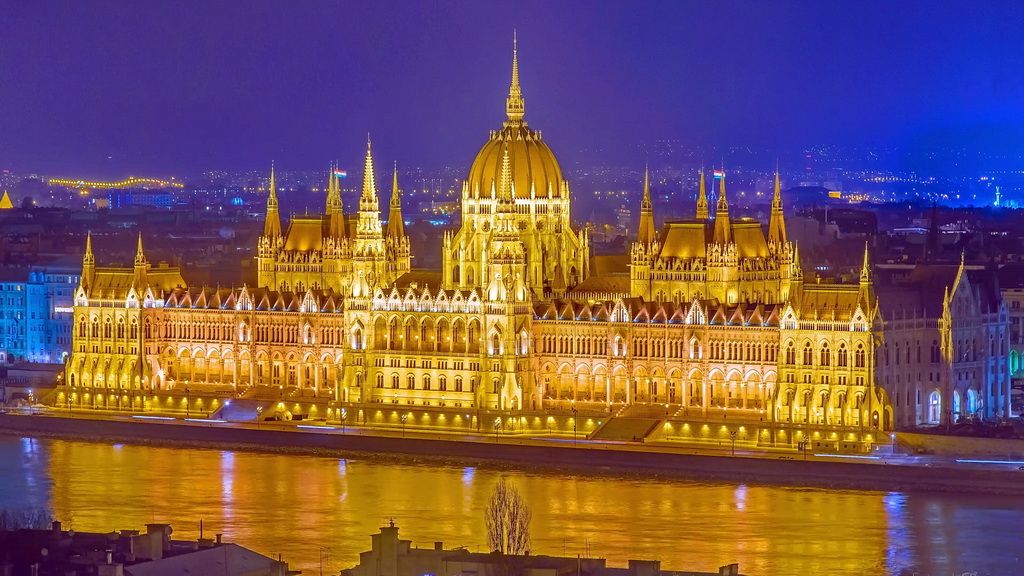
Parliament — The true symbol of Budapest, one of Europe’s most beautiful buildings, completed in 1904. This stunning Neo-Gothic structure sits on the Danube’s banks and represents Pest. Its dimensions are staggering: 691 rooms, 29 staircases, and an area of 18,000 sq. meters. The building is 268 meters long, 123 meters wide, and 96 meters tall. It is one of the architectural dominants of the historic center. Construction required 40 million bricks and 40 kg of gold. The facade is adorned with 88 statues of Hungarian kings and leaders. Designed by architect Imre Steindl, a renowned Neo-Gothic enthusiast.

Chain Bridge — A beautiful suspension bridge over the Danube, connecting Buda and Pest. Located near the Parliament, it was the first permanent bridge across the Danube. Named after statesman István Széchenyi, who invested heavily in its construction, the bridge played a pivotal role in uniting the two cities. Designed by British engineer William Tierney Clark.

St. Stephen’s Basilica — The largest church in Budapest, standing 96 meters tall. Built in Neo-Renaissance style in the shape of a Greek cross, its construction began in 1851 and took over 50 years. Alongside the Parliament, it is one of Pest’s tallest historic buildings. The interior, decorated with mosaics and marble columns, is a must-see.
Andrássy Avenue — Budapest’s grand boulevard, often called Hungary’s “Champs-Élysées.” Built in the late 19th century, this opulent street features pseudo-historical buildings by famous architects. In 2002, it was added to the UNESCO World Heritage List.

Heroes’ Square — One of Budapest’s most famous squares, at the end of Andrássy Avenue. Its centerpiece is the Millennium Monument, commemorating the 1000th anniversary of the Hungarian conquest. The column is topped by Archangel Gabriel holding the Hungarian crown and apostolic cross. Flanking the column are semicircular colonnades honoring Hungarian heroes. The square is framed by the Museum of Fine Arts and the Kunsthalle.
City Park (Városliget) — A favorite spot for locals and tourists. Beyond Heroes’ Square, this park complex includes landmarks like Vajdahunyad Castle, Széchenyi Thermal Bath, the zoo, and the Gundel Restaurant. Vajdahunyad Castle, built for the 1896 millennial celebrations, blends Romanesque, Gothic, and Baroque styles, incorporating elements from 21 famous Hungarian buildings.
Váci Street — The heart of Pest and Budapest’s main shopping street, leading to the Great Market Hall, where fresh produce, meats, cheeses, and souvenirs are sold. Nearby is the Liberty Bridge, connecting Pest to Buda at Gellért Hill.
Great Synagogue — Europe’s largest synagogue, located in Pest’s historic Jewish Quarter on Dohány Street.
Buda and Óbuda Highlights

Buda Castle — A UNESCO World Heritage Site and one of Buda’s top landmarks. This fortress-palace was the residence of Hungarian kings. Reachable via the historic Castle Hill Funicular or bus №16. Built in the 13th century after the Mongol invasion, its key attractions include:

Matthias Church — One of Buda’s main churches, built in late Gothic style in the 14th century and extensively renovated in the 19th century. Its 80-meter bell tower is the tallest structure in the castle complex.

Fisherman’s Bastion — A picturesque terrace with seven towers (symbolizing the seven Magyar tribes) offering breathtaking views of the Danube and Pest. At its center stands an equestrian statue of St. Stephen, Hungary’s first king.
Gellért Hill — A 235-meter hill on the Danube’s west bank, home to the Gellért Baths, the Citadel, the Liberty Statue, and a cave chapel.
Other Notable Sights
Danube Promenade — A scenic walkway with stunning views of Buda and Pest. Key landmarks include the “Shoes on the Danube Bank” Holocaust memorial.
Margaret Island — A tranquil island park in the Danube, featuring a musical fountain, Japanese garden, small zoo, and the Water Tower.
Budapest is not just about history and architecture—it’s also a spa city, the only European capital with numerous thermal springs (26 bathhouses).
Budapest Video