Squeeze every drop out of eastern Slovakia’s gem. Climb the 160 steps of St. Elisabeth Tower, find the 14th-century chapel, and sip wine under St. Urban’s bell. A no-nonsense guide to Košice.
The City of Košice (Slovakia)
Košice (Slovak: Košice) is the second-largest city in Slovakia, situated in the eastern part of the country. It is the administrative centre of the Košice Region, boasting a rich historical and cultural heritage shaped by several nations. Košice is a magnificent old city with a wonderful atmosphere and a wealth of sights spanning from the Middle Ages to modern times. Its historic core is the largest in the country and is rightfully considered one of the most beautiful in Slovakia.
Geography and Climate
Košice is located in eastern Slovakia, in the valley of the Hornád River, within the Košice Basin, which is surrounded by mountain ranges, notably the Čierna Hora. The city lies close to the borders of three countries: Hungary (20 km away), Poland (90 km away), and Ukraine (80 km away). It has a temperate continental climate, characterised by warm, humid summers and mild winters.

Practical Information
- Population — 240,000 people.
- Area — 242.33 km².
- Currency — Euro.
- Visa — Schengen.
- Language — Slovak.
- Time zone: CET (UTC+1), summer CEST (UTC+2).
- Košice International Airport has flights to Bratislava, Prague, Istanbul, Warsaw, and Vienna.
- You can get here by train from Prague, Bratislava, Budapest, Vienna, and Žilina.
- Eurolines buses connect the city with numerous major European cities.
- Large shopping centres: Aupark (on Námestie osloboditeľov, near the bus station), Optima Shopping Center (over 100 shops, the largest shopping complex in Košice), OC Galéria Košice (a new shopping centre in the western part of the city).
History and Interesting Facts
The surroundings of Košice were already settled in the 8th century. The first written mention of a settlement here dates back to 1230. In 1342, the town acquired city rights and royal privileges. During this period, it became the second-largest settlement in Slovakia, which was then part of the Kingdom of Hungary. In the 15th century, Košice was captured by the Hussites.
The Hungarian name for the city is Kassa (Hungarian: Kassa).

In the 17th and 18th centuries, Košice became a centre of the Hungarian struggle against the Habsburgs. In 1657, a university was founded in the city. In 1919, the Slovak Soviet Republic was proclaimed here, though it existed only very briefly. Between 1938 and 1944, the city was occupied by Hungary. After the Second World War, the city became part of Czechoslovakia, and since 1993, it has belonged to independent Slovakia.
Landmarks and Sights
The historic core of Košice is the largest among Slovakia’s historic towns. Most of the sights are concentrated along the main pedestrian street, known as Hlavná Ulica.
Main Street (Hlavná Ulica) is the largest historic street in Slovakia, with a unique atmosphere that forms the heart of Košice. It was once a medieval square that grew along with the city.
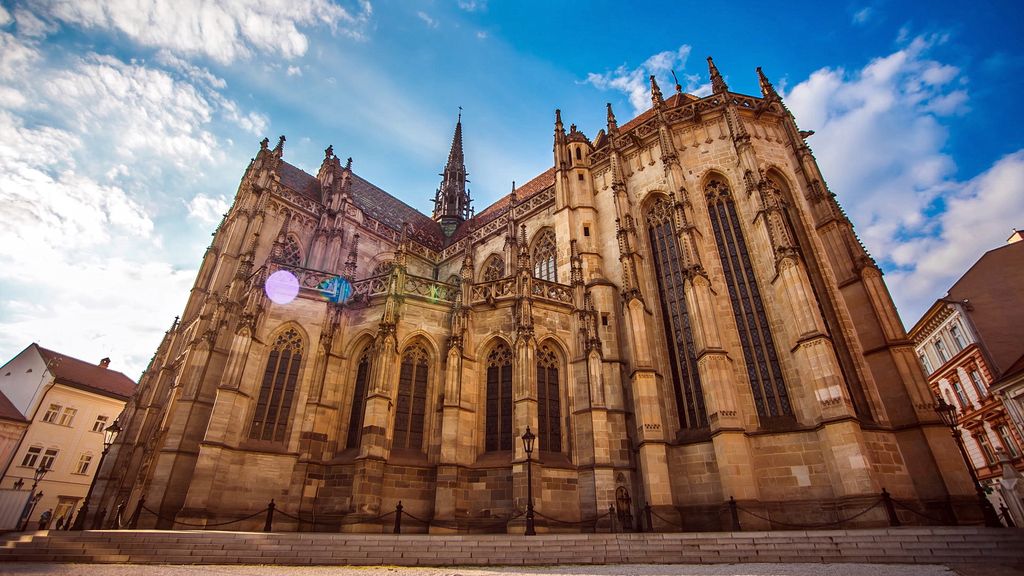
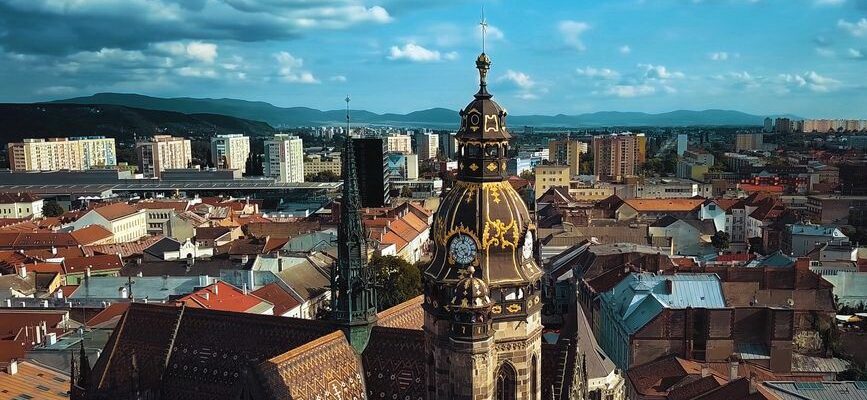
St. Elisabeth Cathedral is the largest church in Slovakia and the main landmark of Košice. This Gothic gem was built between the 14th and 15th centuries. The church is the easternmost Gothic cathedral in Europe. On the north tower, there is an observation deck with a stunning view of the Old Town. This tower is 59.7 metres high. To climb it, you need to ascend 160 steps.
The observation deck on the tower of St. Elisabeth Cathedral is open from 10:00 AM to 5:00 PM.

St. Michael Chapel is a small church built in the first half of the 14th century, located next to St. Elisabeth Cathedral. It was erected in the centre of an ancient cemetery inside the city walls. The chapel is a wonderful example of medieval Gothic architecture.
St. Urban Tower is a Gothic bell tower with a pyramidal roof, built at the turn of the 14th and 15th centuries. It is one of the oldest buildings in Košice, dedicated to St. Urban, the patron saint of winemakers.
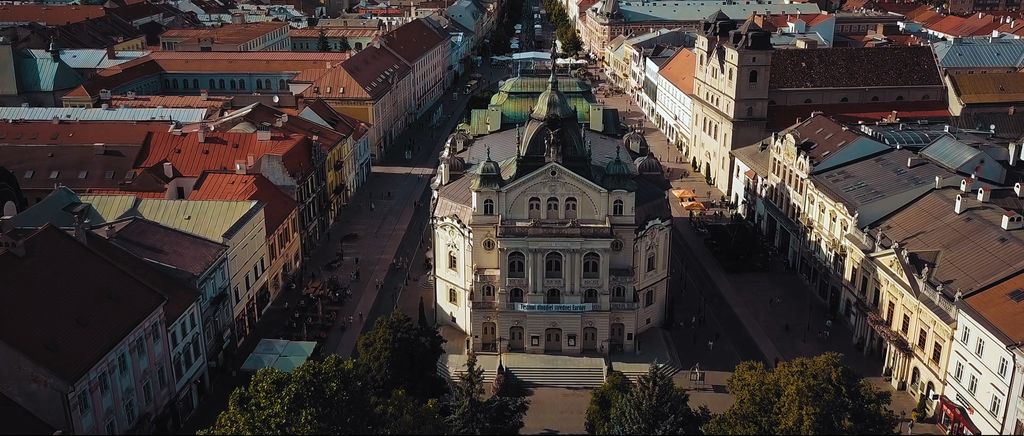
The State Theatre is a beautiful Baroque-style building, constructed at the end of the 19th century.
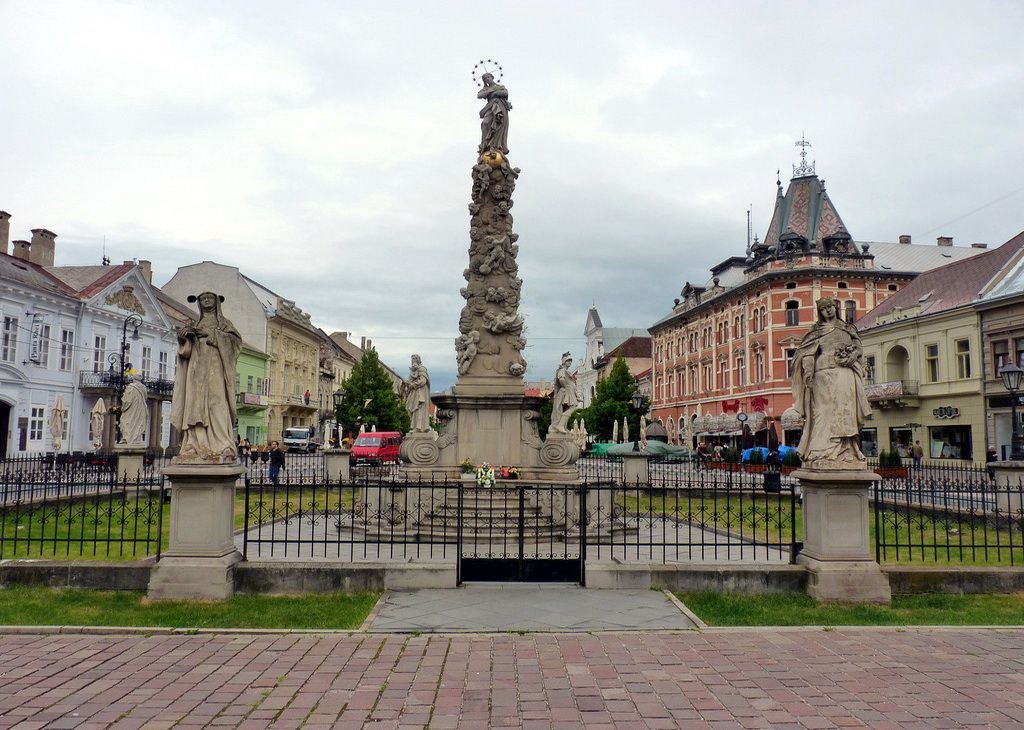
The Plague Column is the most beautiful Baroque sculptural monument in Košice. It was built between 1720 and 1723 to commemorate deliverance from the plague. It consists of a 14-metre-high column on a stone base, surrounded by statues of saints. A sculpture of the Virgin Mary is installed on top.
Žobrák’s House (Slovak: Žobrákov dom) is one of the most charming old buildings in the city. Although the name is often translated as “Beggar’s House” and linked to a legend about a poor man, it was actually built by a wealthy merchant named Žobrák.
The University Church is a 17th-century Jesuit church, considered a pearl of Baroque architecture. It is located next to the theatre.
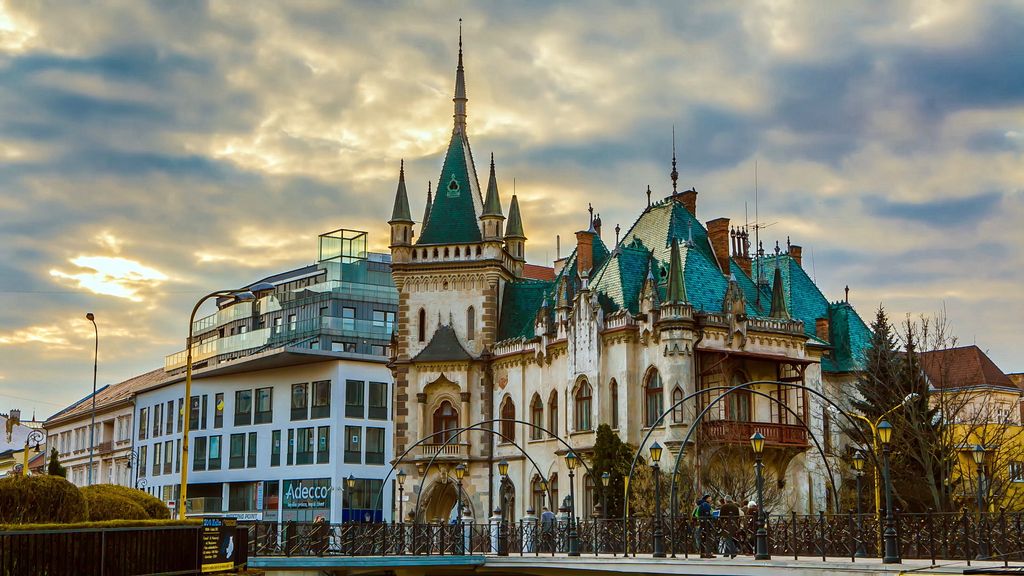
Jakab Palace is a monumental neo-Gothic building dating from 1899.
Levoča House is one of the best-preserved historic buildings in Košice, which housed the oldest known tavern in Slovakia, founded in 1569.
The Synagogue on Zvonárska Street is the oldest religious building of the Jewish community in Košice, built in 1883 in the Moorish style.
The Dominican Church is the oldest building in the city, dating back to the 13th century. Its Gothic tower is 8 metres taller than the equivalent structure of St. Elisabeth Cathedral, making this church also the tallest historic building in Košice.