Debrecen (Hungary) – Top Attractions with Photos and Descriptions. Detailed Information About the City and Interesting Debrecen Routes on the Map.
The City of Debrecen (Hungary)
Debrecen (Hungarian: Debrecen) is the second-largest city in Hungary, located 220 kilometers east of Budapest. Debrecen is a city of students, where the past coexists with the present, and youth resonates with traditions.
Debrecen is a city that cannot boast numerous landmarks, despite its centuries-old history. In this regard, it falls short even compared to Szeged. The historic city center is a mix of various architectural styles and generally leaves a pleasant impression, inviting leisurely strolls.

History and Interesting Facts
The founding year of Debrecen is 1245. The city was formed through the merging of neighboring settlements. In the second half of the 14th century, it gained the status of a free city.
During the 15th–16th centuries, Debrecen became an important trade center, hosting large fairs.

In the 16th century, after the Ottoman occupation of Hungary, Debrecen came under Transylvanian rule. By the late 17th century, it became part of Austria-Hungary. During the Hungarian Revolution in the mid-19th century, Debrecen practically served as the country’s capital. After the revolution was suppressed, the city continued its economic growth. In the mid-19th century, a railway connecting to Budapest was built.
Following World War I, Debrecen became a border city with Romania. After World War II, 50% of the city was destroyed.

Hotels, Best Accommodation Options
Climate and Weather
Debrecen has a fairly comfortable climate, with hot summers and mild winters. The warmest months are July and August, while the coldest is January. Negative temperatures are possible in winter.

Transportation
Debrecen is served by an international airport, the second-largest and most important in Hungary after Budapest. Public transport in the city includes buses and trolleys. There are two tram lines running from the central station toward the University.

Top 5 Debrecen Attractions
Here are the top landmarks in Debrecen:
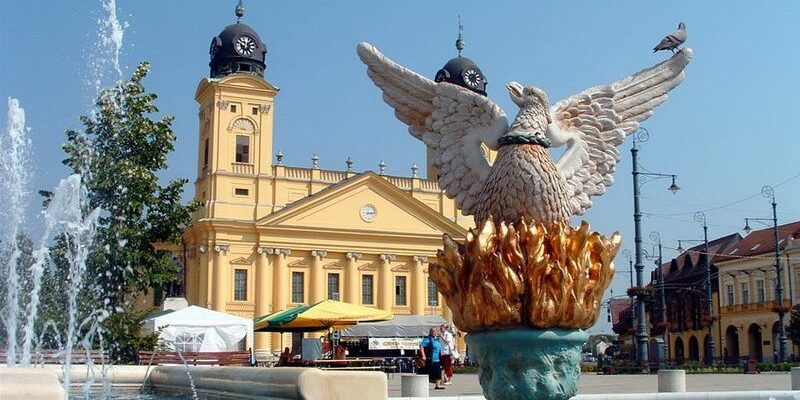
The Great Church and Kossuth Square — the heart of the historic center. Built in 1821 in neoclassical style, this is Hungary’s largest Protestant church. The church features two towers with clock mechanisms and a 56-ton bell whose sound can be heard across the city.

The Reformed College — one of Hungary’s oldest institutions, with a 450-year history. Many notable Hungarian figures graduated from here.
The Déri Museum — Debrecen’s main museum, showcasing regional history and national art.
The Thermal Park — a spa complex with thermal baths and pools, set in a scenic natural area. The water temperature reaches 65°C.

The University — one of Hungary’s leading educational institutions with a long history, hosting around 60,000 students.

What Else to See?
- St. Anne’s Cathedral — an 18th-century Catholic Church.
- Golden Bull Hotel — the oldest hotel in Hungary.
- Hortobágy National Park — a UNESCO World Heritage Site.
- Memorial Garden
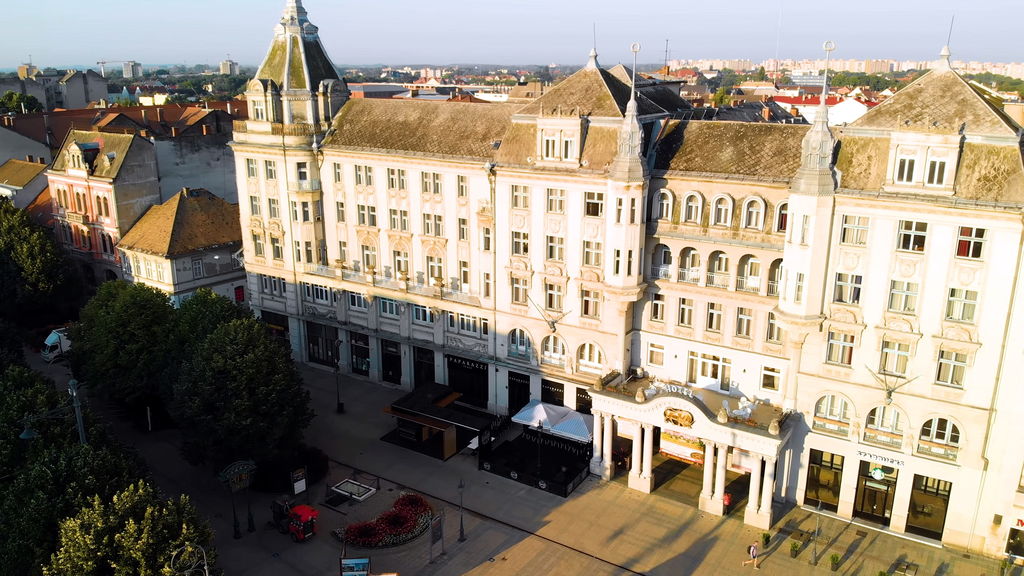
Additionally, in August, Debrecen hosts the Flower Carnival — a major event not only for the city but for the entire country.
The Heart of Eastern Hungary: Debrecen as a Crossroads of Tradition and Youth
Walking through the streets of Debrecen, you’ll undoubtedly feel the unique rhythm of this city, where history blends with modernity, and academic spirit intertwines with folk customs. Although Debrecen cannot boast the opulent architecture of other European cities, its calm atmosphere and provincial charm give it a special appeal.
As Hungary’s second-largest city, Debrecen impresses with its authenticity. The majestic Great Church towering over Kossuth Square is not only a symbol of the Reformed Church’s spiritual strength, but also a reminder of the times when Debrecen served as the temporary capital during revolutionary events.
Thermal springs, the Flower Carnival, student life, and the proximity to the unique Hortobágy steppe park make Debrecen an excellent destination for exploring authentic Hungary — one that lies beyond the tourist routes of the capital. Visiting this eastern city offers a different perspective on Hungary — less grandiose but far more sincere and original.