Szeged (Hungary) – Top Attractions with Photos and Descriptions. Detailed Information About the City and Interesting Routes in Szeged on the Map.
The City of Szeged (Hungary)
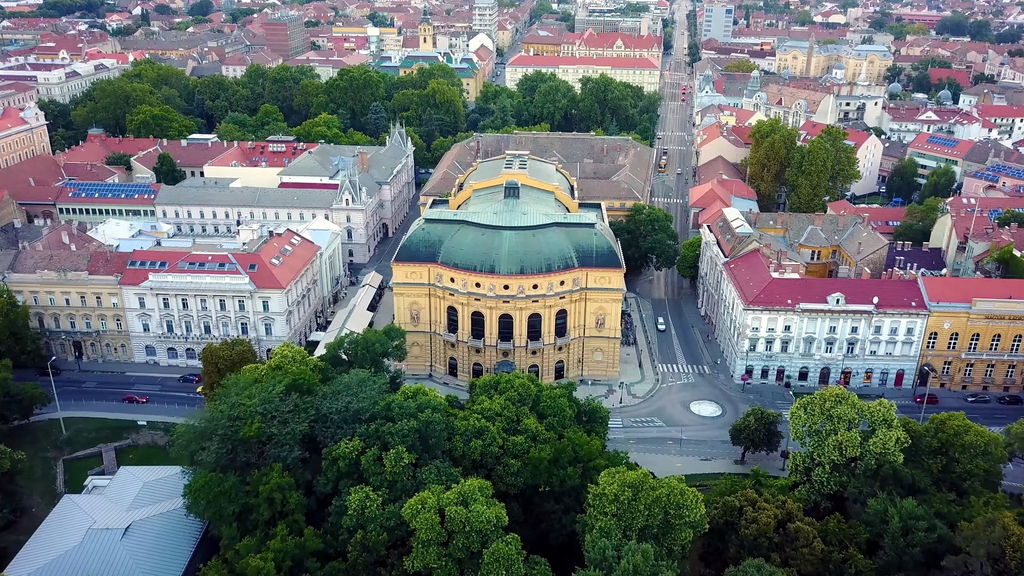
Szeged (Hungarian: Szeged, German: Szegedin/ Segedin) is a city in southern Hungary, located on the banks of the Tisza River. It is the third-largest city in the country and a fascinating tourist destination, boasting interesting landmarks, architectural monuments, rich history and culture, as well as a uniquely cozy atmosphere.

Szeged is located 170 km south of Hungary’s capital, Budapest.
Climate and Weather
Szeged has a continental climate with hot summers and mild winters. The coldest month is January, while the hottest are July and August. In winter, sub-zero temperatures and snowfall are possible. A distinctive feature of the climate is the high number of sunny days. In Hungary, Szeged is known as the “City of Sunshine.”
Map of hotels – best accommodation options
History and Interesting Facts
During the Roman Empire, a small settlement existed at the site of present-day Szeged, at the crossroads connecting two Roman provinces. There is also a theory that Attila the Hun’s camp was located nearby.
The first written mention of Szeged dates back to 1183. In the 13th century, the city was almost completely destroyed during the Mongol invasion. The residents hid in nearby swamps to survive. Afterward, the city was rebuilt.
In the second half of the 13th century, Szeged received royal fortress privileges. The 14th and 15th centuries were transformative for the city—it became the largest in southern Hungary, and the Ottoman threat increased its strategic importance. In 1498, it was granted the status of a free royal city.
The first half of the 16th century was unfortunate for Szeged. First, it was plundered by the Ottomans, and 20 years later, it became part of the Ottoman Empire, where it remained for 150 years.
In the second half of the 17th century, the city became part of Austria-Hungary. In the 18th century, Szeged grew and developed rapidly. By the 19th century, it had become a major industrial center. However, in 1879, a catastrophic flood nearly wiped out the entire city. Reconstruction took several decades.

In the 20th century, the city maintained its regional significance. After World War I, Szeged became a border city. During the civil war, it served as a political center. In World War II, it suffered significant destruction.
Best Hotels in the City
Cuisine and Restaurants
Szeged offers traditional Hungarian dishes as well as European cuisine and fast food. Along the Tisza River, you’ll find many cozy fish restaurants where you must try the local fish soup. The city also has a wide range of dining options—from high-end restaurants to small cafés with terraces. For lovers of fresh produce, Szeged has markets, including one at Mars Square (Mars téri piac).
Where to Buy Souvenirs?
For souvenirs, visit the market at Cserepes sori Piac. This 4.5-hectare market is open from 7:00 AM to 3:00 PM.
Transportation and Getting Around
Szeged has a well-developed transport system, including 5 tram lines, 5 trolleybus routes, and 33 bus lines. For cycling enthusiasts, automated bike rental stations are available.
Top Attractions in Szeged
The must-see landmarks in Szeged include:
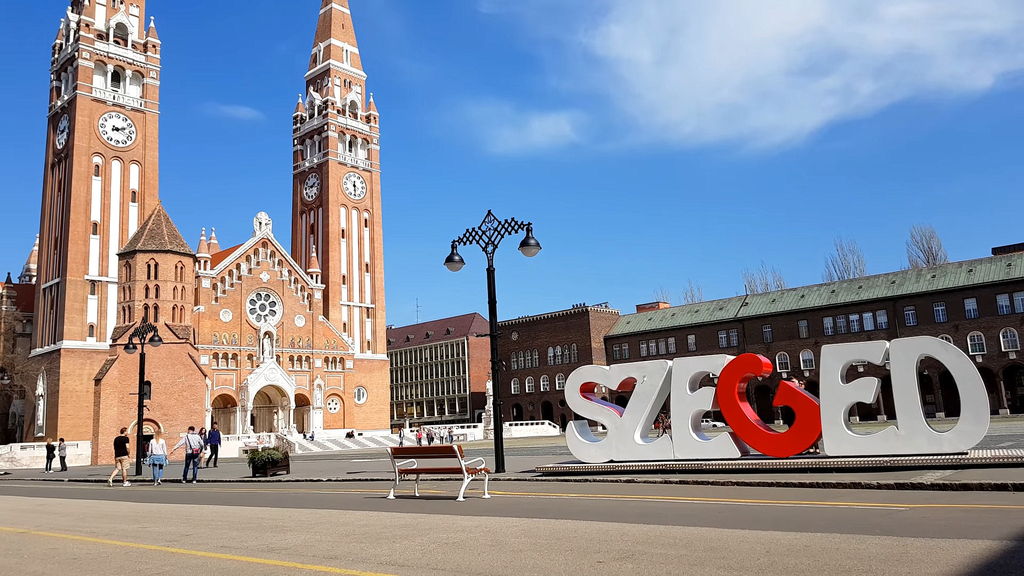
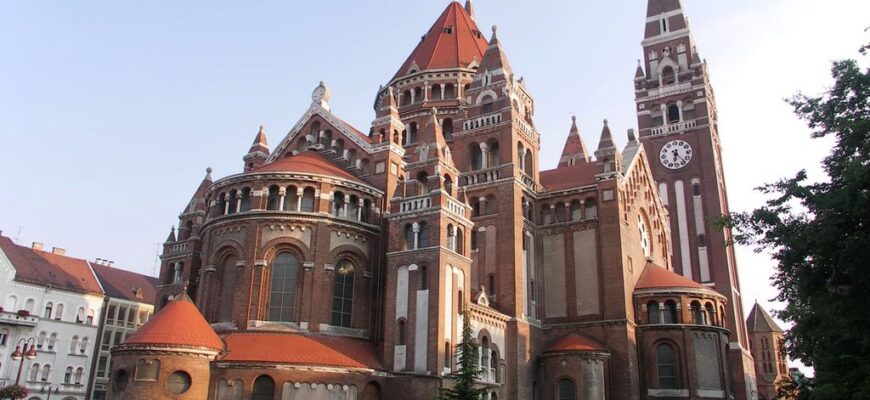
Szeged Cathedral – One of the city’s iconic landmarks. This beautiful early 20th-century cathedral, built of red brick in an eclectic style, blends Romanesque, Gothic, and Byzantine elements. It is Hungary’s fourth-largest church and houses one of the country’s biggest organs. Also known as the Votive Church, it stands next to the Tower of St. Demeter, originally the bell tower of a 13th-century cathedral, rebuilt after the 19th-century flood.
Franciscan Church and Monastery – Among the oldest buildings in Szeged, constructed in the 15th century in Gothic style and miraculously surviving the flood. The roots of this church and monastery date back to the 12th century, with Baroque-style interiors.
Synagogue – Built in the early 20th century, this stunning eclectic-style building is a masterpiece of Szeged’s Jewish heritage.

Reformed Church – Built in the late 19th century after the flood, this beautiful Neo-Gothic structure is a must-see.
Water Tower – An interesting engineering structure located on St. Stephen’s Square, built in the early 20th century from reinforced concrete. It still functions today.

Town Hall – A Neo-Baroque building from the late 19th century, serving as the seat of local government.
Gróf Palace – An early 20th-century Art Nouveau building with a beautifully decorated facade.

Central Bridge – Built in the late 19th century, this bridge connects both banks of the Tisza River.
The Pearl of Southern Hungary: Why Every Traveler Should Visit Szeged
Szeged earned its title “City of Sunshine” for a reason—it’s a true gem in southern Hungary, captivating visitors not only with its sunny days but also with its rich cultural heritage. The city has endured numerous historical challenges, from Mongol invasions to the devastating 1879 flood, yet it always rebuilt itself, emerging even more beautiful.
One of Szeged’s most enchanting aspects is its architectural diversity. The majestic Cathedral stands harmoniously alongside the elegant Synagogue, while the Neo-Gothic Reformed Church contrasts with modernist buildings. Strolling through its charming streets, you’ll feel the intertwining of different eras and cultures, creating a unique atmosphere.
But Szeged is more than just architectural masterpieces. It’s a city of culinary diversity, where traditional Hungarian cuisine blends seamlessly with local fish dishes. The tastiest ones can be enjoyed in cozy riverside restaurants along the Tisza. Additionally, the city’s well-developed transport system makes it easy to explore every corner of this enchanting place.
Visiting Szeged means not just seeing “Hungary’s third-largest city” but immersing yourself in a unique cultural space where every stone tells a story, and friendly locals are always eager to share fascinating tales about their beloved “City of Sunshine.