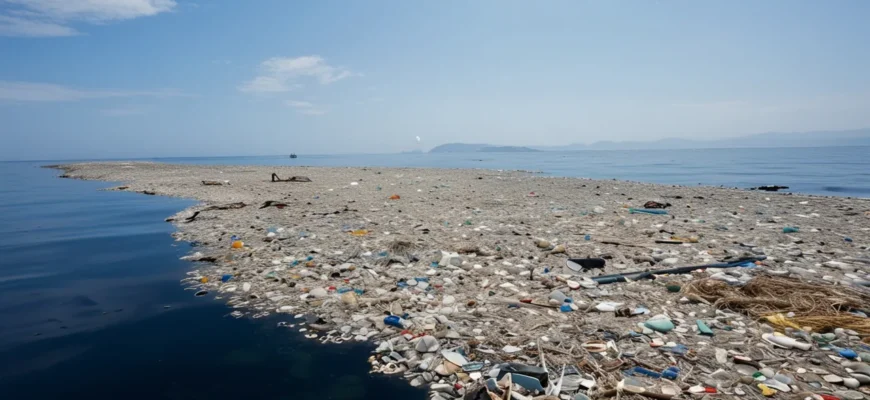
An island larger than several European countries appeared near Hawaii 40 years ago and has only grown since then. What threats does it pose?
Scientists have long known that a new continent has formed in the Pacific Ocean. Its approximate area and boundaries are still uncertain, and walking on this ‘land’ is impossible because it consists of plastic. This is the Great Pacific Garbage Patch, also known as the Eastern Garbage Continent. How it appeared is a fascinating and instructive story.
Where is the Great Pacific Garbage Patch Located?
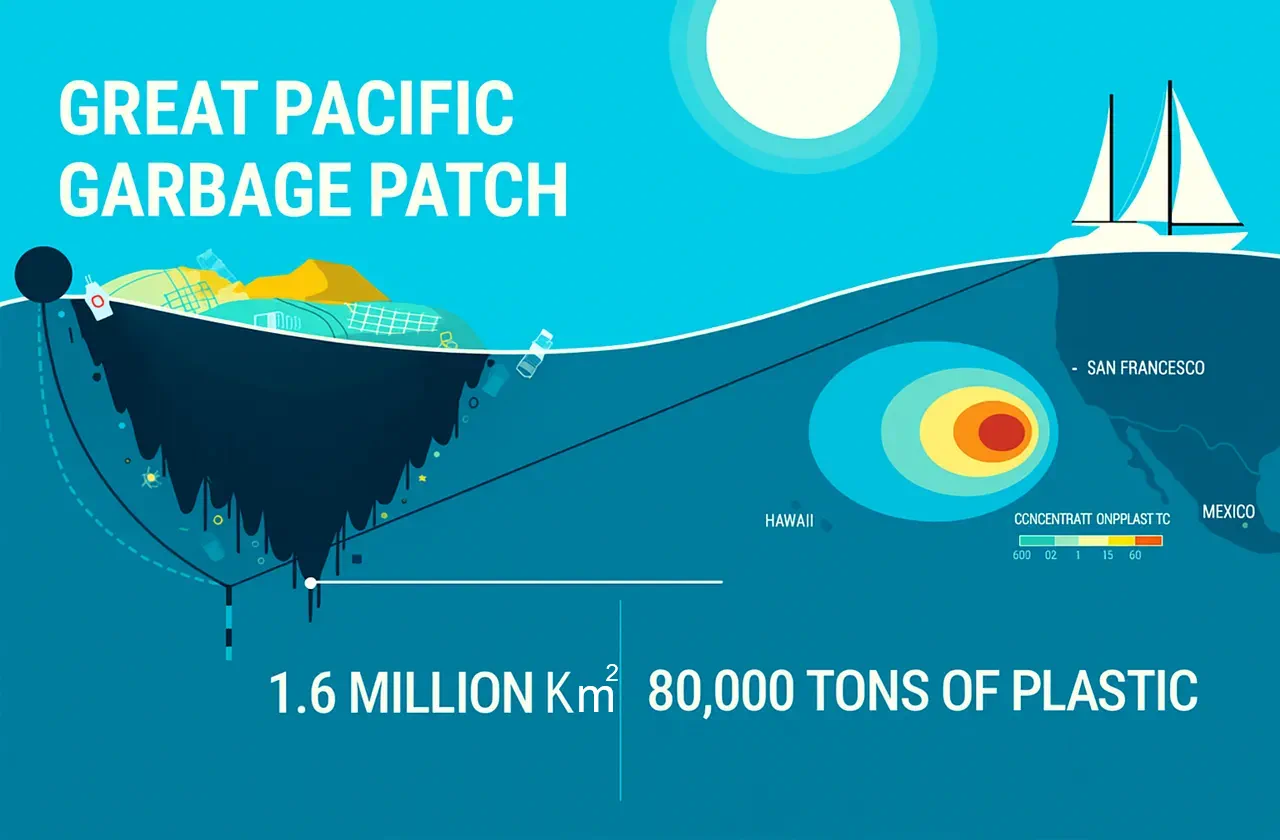
The garbage patch is located at coordinates 135–155° west longitude and 35–42° north latitude, roughly between California and the Hawaiian Islands, and is clearly visible in satellite images.
Experts from the National Oceanic and Atmospheric Administration predicted its existence in 1988. They based their findings on studies of specific areas of the Pacific Ocean and satellite images. However, the garbage patch was first seen with human eyes by American Charles Moore in 1997. Initially, the public did not take his claims about a giant garbage dump in the Pacific seriously. But one day, a storm washed tons of plastic waste onto the beaches of Hawaii, and the Great Pacific Garbage Patch became a topic of widespread discussion.
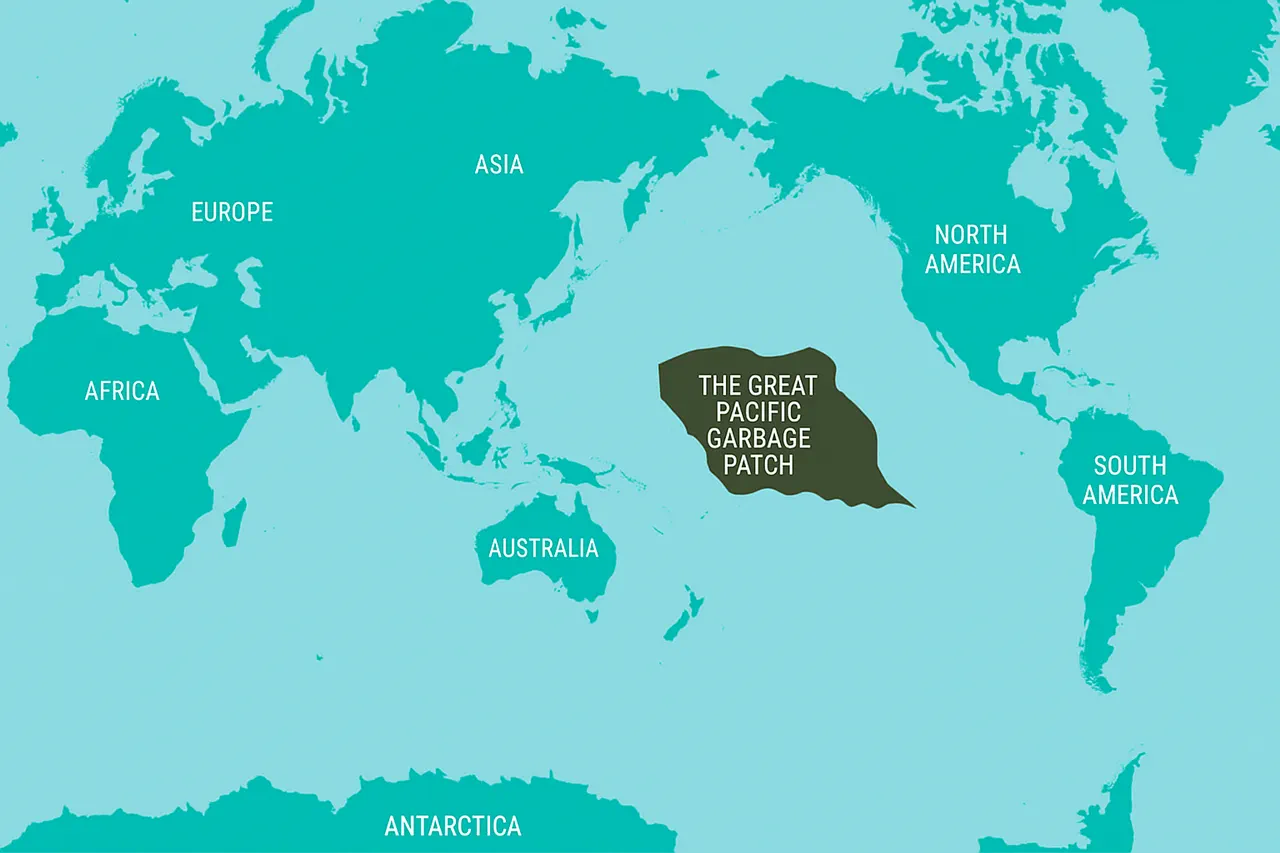
Size of the Great Pacific Garbage Patch
The area of the garbage island is over 1.6 million km². Given the Pacific Ocean’s total area of 165.2 million km², this may seem like a drop in the ocean. But imagine that the size of the Great Pacific Garbage Patch equals the combined area of France, Germany, Poland, and several other smaller European countries.
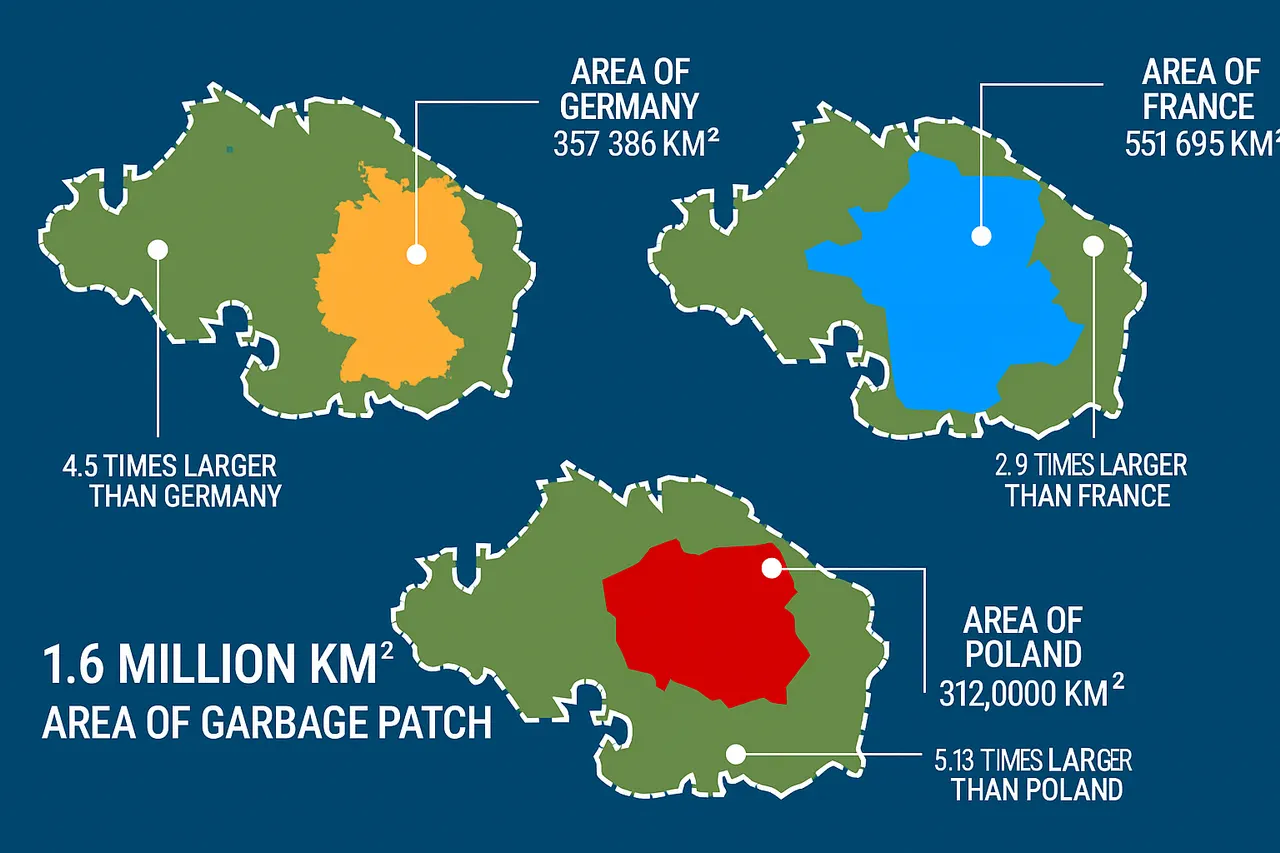
Approximately 80,000 tons of plastic have accumulated in this part of the Pacific Ocean. These figures were reported in a study published in the scientific journal Scientific Reports in 2018.
The Great Pacific Garbage Patch covers 1.6 million km² and consists of 80,000 tons of plastic.
Of course, these measurements are approximate. The Eastern Garbage Continent, better known as the Great Pacific Garbage Patch, is a collection of floating waste, including debris at various depths.
How the Great Pacific Garbage Patch Formed
Unfortunately, since its discovery, the number of garbage patches has only increased. Some waste is dumped from ships, some comes from shorelines, and some enters the ocean during storms and floods. The North Pacific Gyre currents carry it further. Senior researcher at the Laboratory of Coastal Bottom Communities Ecology, Ph.D. Philip Sapozhnikov, explains in his reports on the Pacific Ocean that the peculiarity of these currents is that they create a kind of whirlpool, inside of which there is almost always calm. As a result, the waste does not disperse across the ocean—instead, smaller garbage patches gradually merge into one large patch.
How the Garbage Continent Affects the Environment
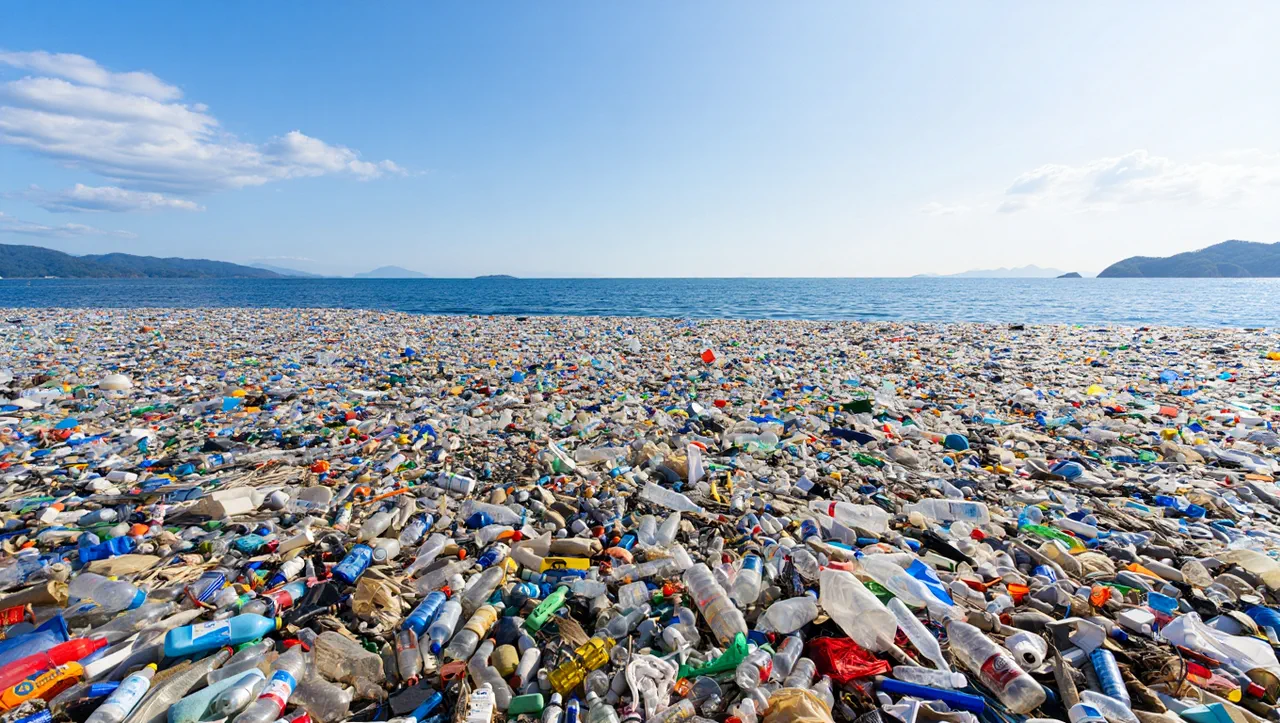
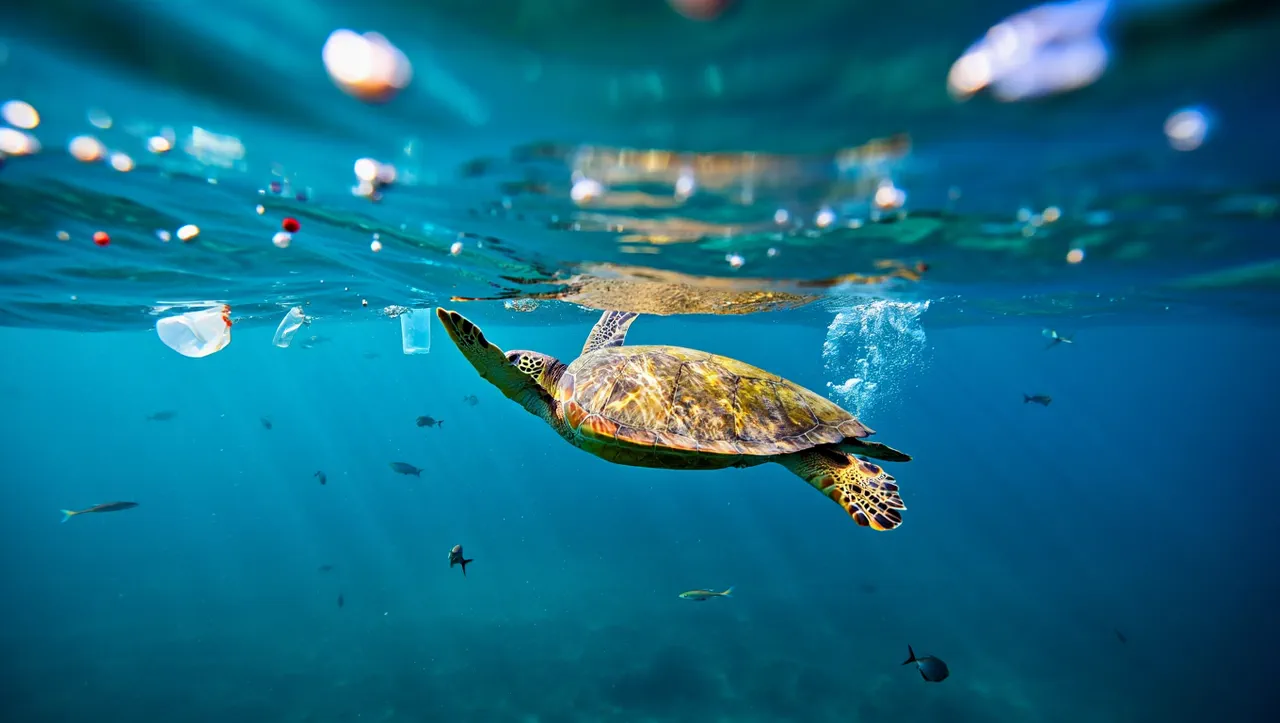
It is clear that the presence of garbage patches in the Pacific Ocean impacts marine life. Various materials float in the water, but plastic causes the most harm. Unlike biodegradable waste, plastic only breaks down into smaller particles under sunlight. Fish often mistake these particles for plankton, leading to varying degrees of poisoning. The plastic then moves up the food chain, eventually reaching humans. Fishing nets also cause significant harm, entangling and killing turtles and dolphins. Many marine animals mistake plastic bags and other debris for jellyfish and consume them. Later, the stomachs of beached animals are found to contain dozens of kilograms of plastic. Scientists estimate that Pacific garbage harms over 200 marine species.
Ecologists and oceanographers began studying the Great Pacific Garbage Patch in the late 2000s. Organizations dedicated to addressing ocean pollution were established. In 2017, environmentalists launched a campaign urging the UN to recognize the Eastern Garbage Continent as a country, even proposing a name—The Trash Isles. The goal was to raise public awareness, and it succeeded—especially when former U.S. Vice President Al Gore declared himself the first citizen of this new ‘nation.’ Read about other unusual places to live in our article ‘Amazing Places to Live.’ Also, ‘Mandry’ spoke with a resident of another garbage island—Joyxee in the bay of Isla Mujeres, Mexico. Read more in our article. British resident Richard Sowa not only built a house on a garbage island but even grows palm trees there, with mangrove trees helping to hold plastic bottles together.
Dutch inventor Boyan Slat also attempted to address the garbage patch problem by founding the nonprofit organization The Ocean Cleanup in 2013. His idea involved a 600-meter-long floating barrier designed to capture even the smallest plastic particles, with a support vessel periodically transporting the waste to land. The first version was tested in late 2018, refined, and redeployed in 2019. After four months, Slat announced successful trials and promised large-scale operations soon. He believes a fleet of 60 such devices could clean half of the Great Pacific Garbage Patch within five years. By 2040, the project aims to remove about 90% of the plastic.
Other efforts to clean the Pacific Ocean are also underway. In 2019, the Kaisei project, led by the non-governmental organization Ocean Voyages Institute, conducted an expedition. In 25 days, they collected 40 tons of waste, including 5 tons of fishing nets.