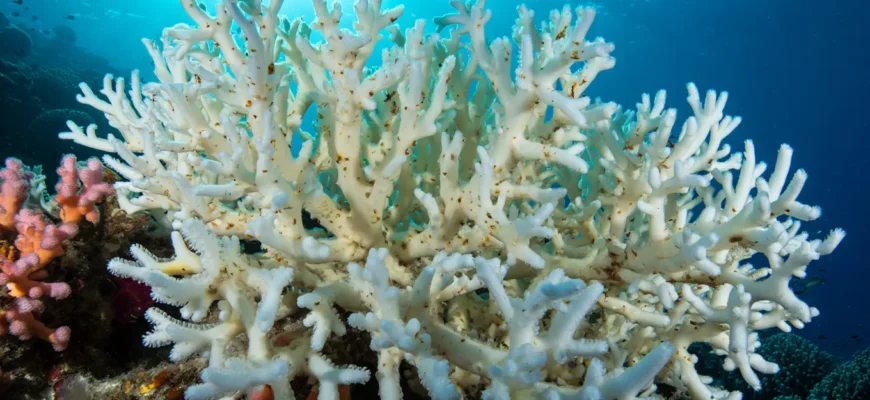
84% of the planet’s corals affected.
Coral bleaching has spread to 84% of oceanic reefs worldwide. Ecologists note this is the largest event of its kind in recorded history.
This global bleaching marks the fourth such event since 1998. The new phenomenon has surpassed the 2014-2017 bleaching that affected about two-thirds of reefs. Experts say such massive bleaching occurred due to thermal stress. 2024 became the hottest year in Earth’s recorded history, with most of this heat being absorbed by oceans. The average annual sea surface temperature far from poles reached a record 20.87 °C (69.57 °F).
Such water temperatures are deadly for corals. Coral polyps get their vibrant colors from colorful algae living inside them that serve as their food source. Overheating causes the algae to release toxic compounds, forcing corals to expel them. After this, only the white limestone skeleton remains. Without algae, corals starve, weaken, and can die within weeks. However, if conditions improve, polyps can recover – though this process is slow.
Coral reefs are sometimes called “rainforests of the sea” because they support high levels of biodiversity. Approximately 25% of all marine species live on and around coral reefs.
As the latest bleaching event proved particularly severe, ecologists warn of increasing risks to coral survival. Scientists say we must reduce planet-warming greenhouse gas emissions.
“I think people really need to understand what they’re doing. Inaction is a death sentence for coral reefs,” stated Melanie McField, co-chair of the Caribbean Steering Committee for the Global Coral Reef Monitoring Network.