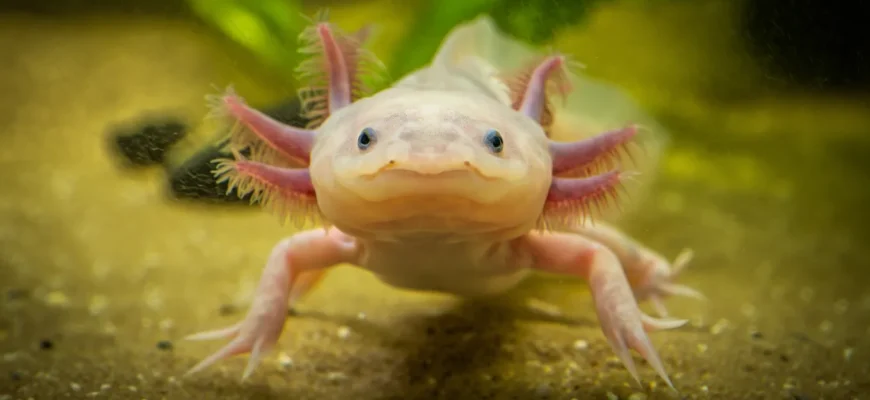
These exotic creatures have long been bred in aquariums all over the world, and in Ukraine, the axolotl gained popularity several years ago. It is kept as a pet, videos are made about it, and memes are created. In 2020, the axolotl even became a character in the famous game Minecraft.
What is an Axolotl
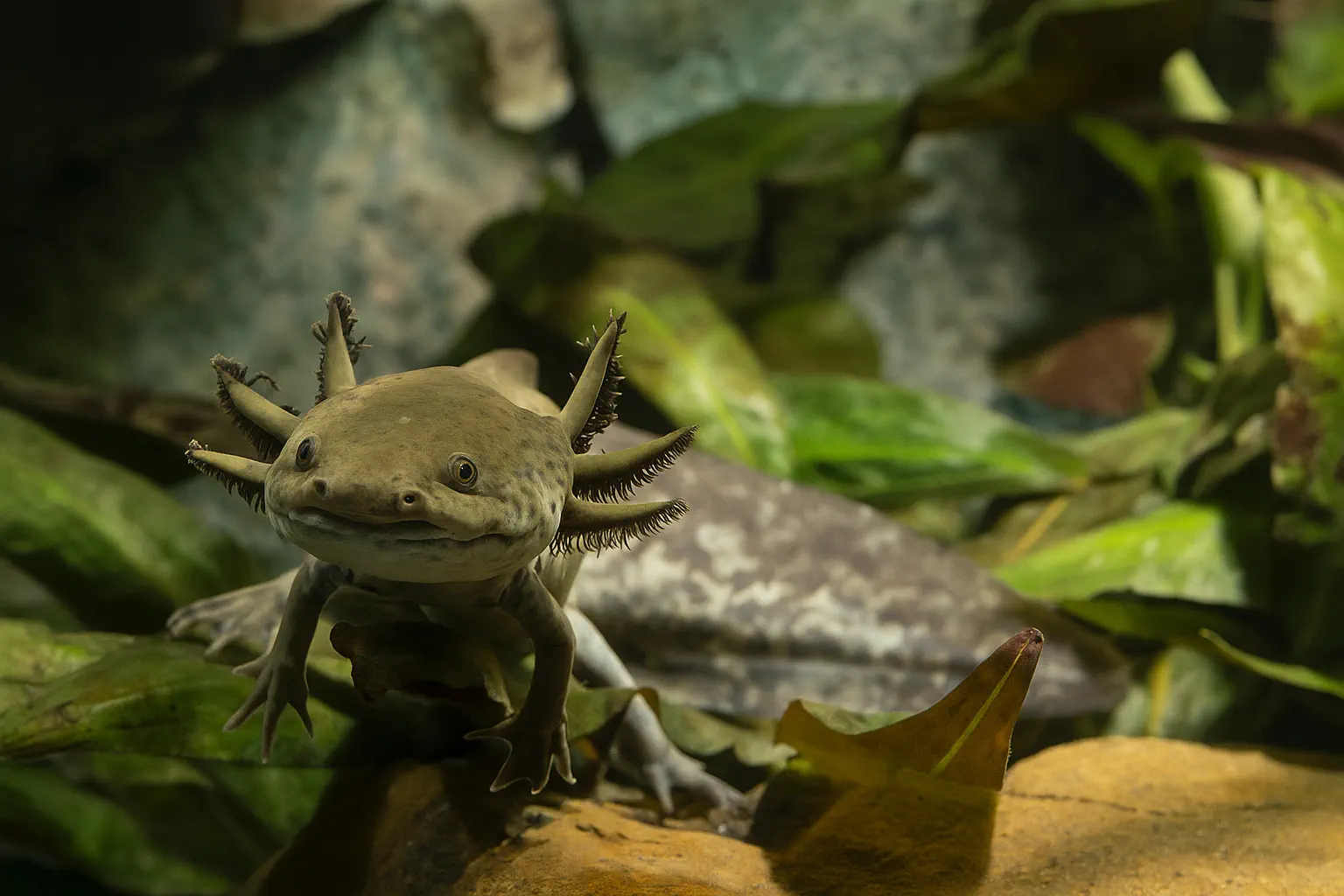
This rare property is called neoteny, or prolonged youth—only the animal’s reproductive system reaches true maturity, while other organs remain in a larval state. The whole point is that the axolotl’s body produces too little of the thyroid hormone thyroxine, which is supposed to trigger the maturation process.
Most often, the axolotl refers to the larva of the Mexican ambystoma (Ambystoma mexicanum), but there are other species of axolotls—for example, the larva of the tiger salamander. The unusual name of this animal comes from the Aztec language and means “water monster”: from atl — “water” and Xolotl — the Aztec god of thunder and death, whose name is sometimes translated as “monster.” The axolotl has several other names—for example, Mexican salamander, water dragon, aquarium dragon.
An axolotl can regenerate almost any organ, even its spine, part of its heart, or brain.
Until the middle of the 19th century, the axolotl was considered a separate species until French zoologists witnessed an amazing transformation. Several axolotls, caught in a cold mountain lake, were released into a warm pond in the Paris Botanical Garden, and some of the offspring of these amazing creatures suddenly turned into ambystomas and came out of the water onto land. So, under unfavorable conditions—a warmer environment, lack of water—the eternally young creature can still grow up, but will live significantly less.
The main mystery of the axolotl is its incredible ability to regenerate: it can regrow not only a lost tail or paw but also almost any organ, even its spine, part of its heart, or brain.
What an Axolotl Looks Like
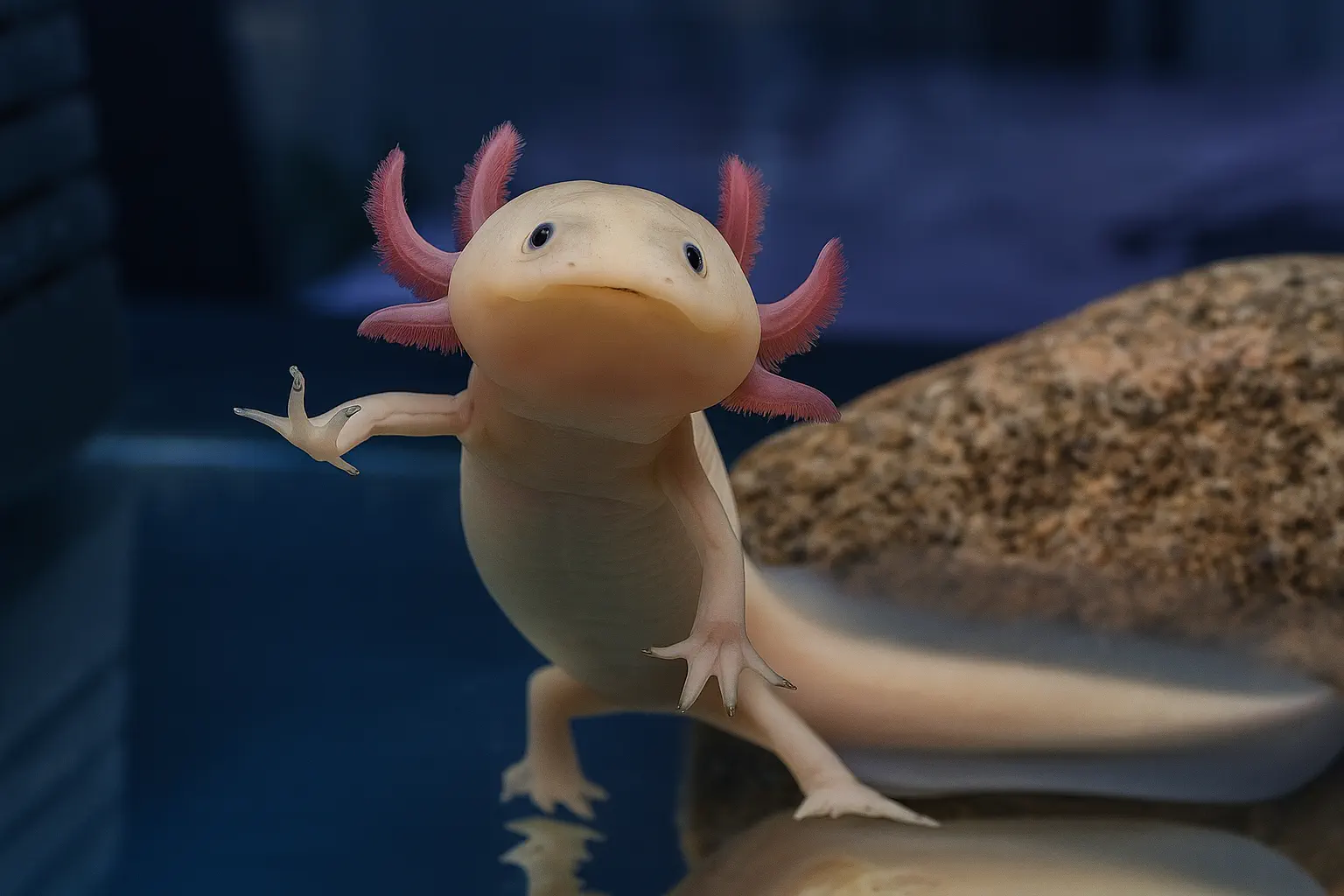
It’s no coincidence that the axolotl is compared to the cartoon character Luntik. These touching creatures with a large head, small eyes, and three pairs of fluffy external gills resemble fantastic animals, and their wide mouth gives the impression that they are always smiling. The axolotl has semi-transparent delicate skin, a strong body, and thin legs; the dorsal crest smoothly transitions into a tail swimming membrane. It is a fairly large creature: it grows up to 30 cm in length and weighs about 300 g. In nature, mainly black, gray, and brown individuals are found, but aquarium axolotls can boast a variety of colors: white, pale pink, golden yellow, olive, and spotted.
Where the Axolotl Lives
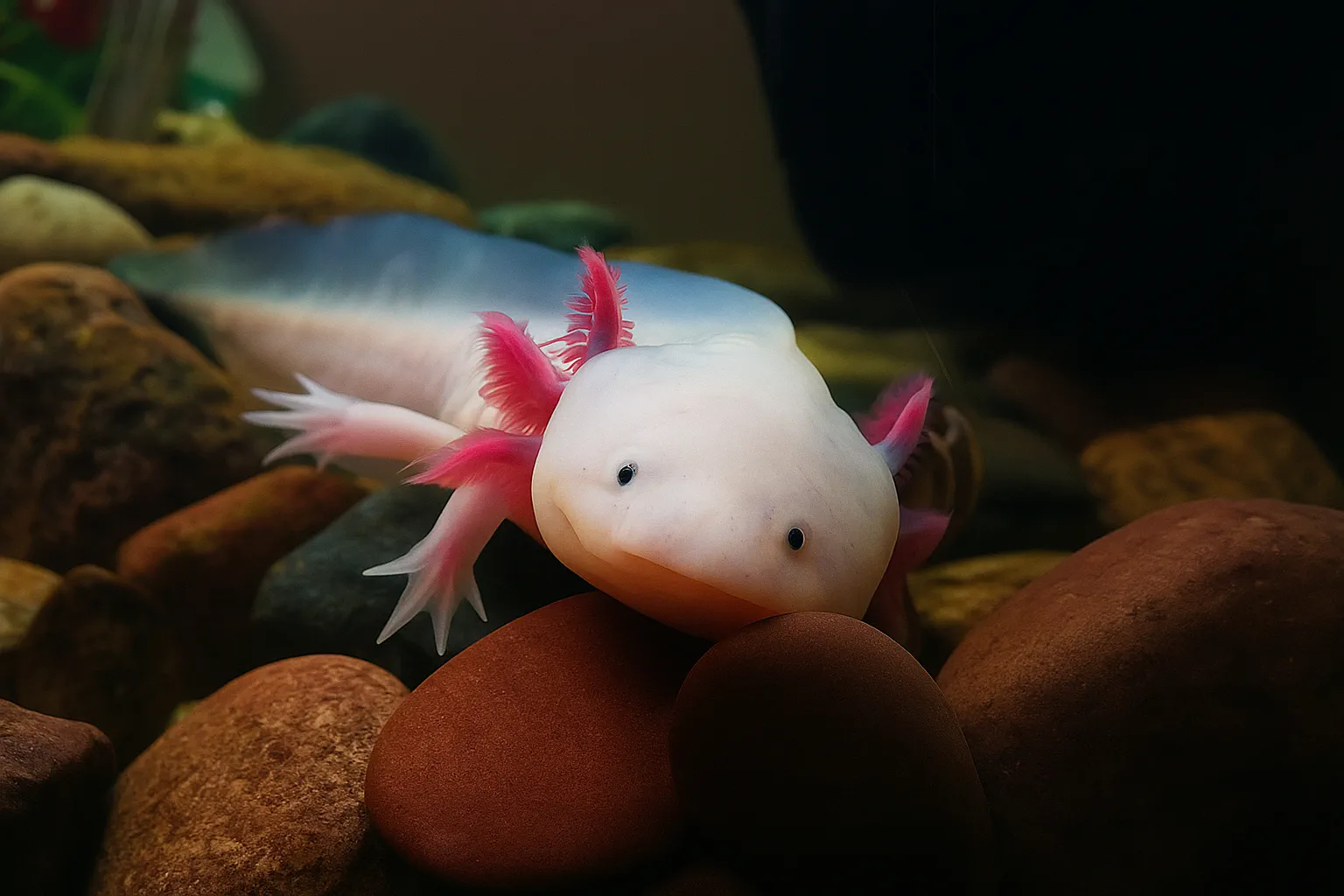
The axolotl is a rare and ancient animal. In the wild, it lives only in two cold mountain lakes—Chalco and Xochimilco—located near Mexico City. At the same time, adult ambystomas are much more widespread—from Mexico to Canada. Once, the Aztecs hunted water dragons and used them for food, but nowadays they have been given the status of an endangered species—the lakes where they live are gradually becoming shallow. Unlike adult ambystomas, axolotls live exclusively in an aquatic environment, and for comfortable existence, they need stable conditions: clean cold water (about +20 °C) and a constant food supply. Like other larvae of tailed amphibians, axolotls are predators: they hunt worms and snails, catch fish and crayfish, as well as their own kind.
Axolotl Lifespan
There is no definitive answer to the question of how long an axolotl lives. Scientists suggest that in natural conditions, these slow-moving but gluttonous larvae live no more than ten years, while in captivity their lifespan can be twice as long. Now, most axolotls are inhabitants of aquariums, as well as laboratories: biologists have long been studying the amazing abilities of these animals.
How Much an Axolotl Costs and Where to Buy One
In stores, larvae cost from $20 USD to $50 USD and more, depending on the size of the individual. So, babies measuring 6-8 cm will cost approximately $10-$20 USD and those grown to 20 cm will cost around about $50 USD
Water dragons are sold in the aquarium sections of pet stores.
Keeping an Axolotl
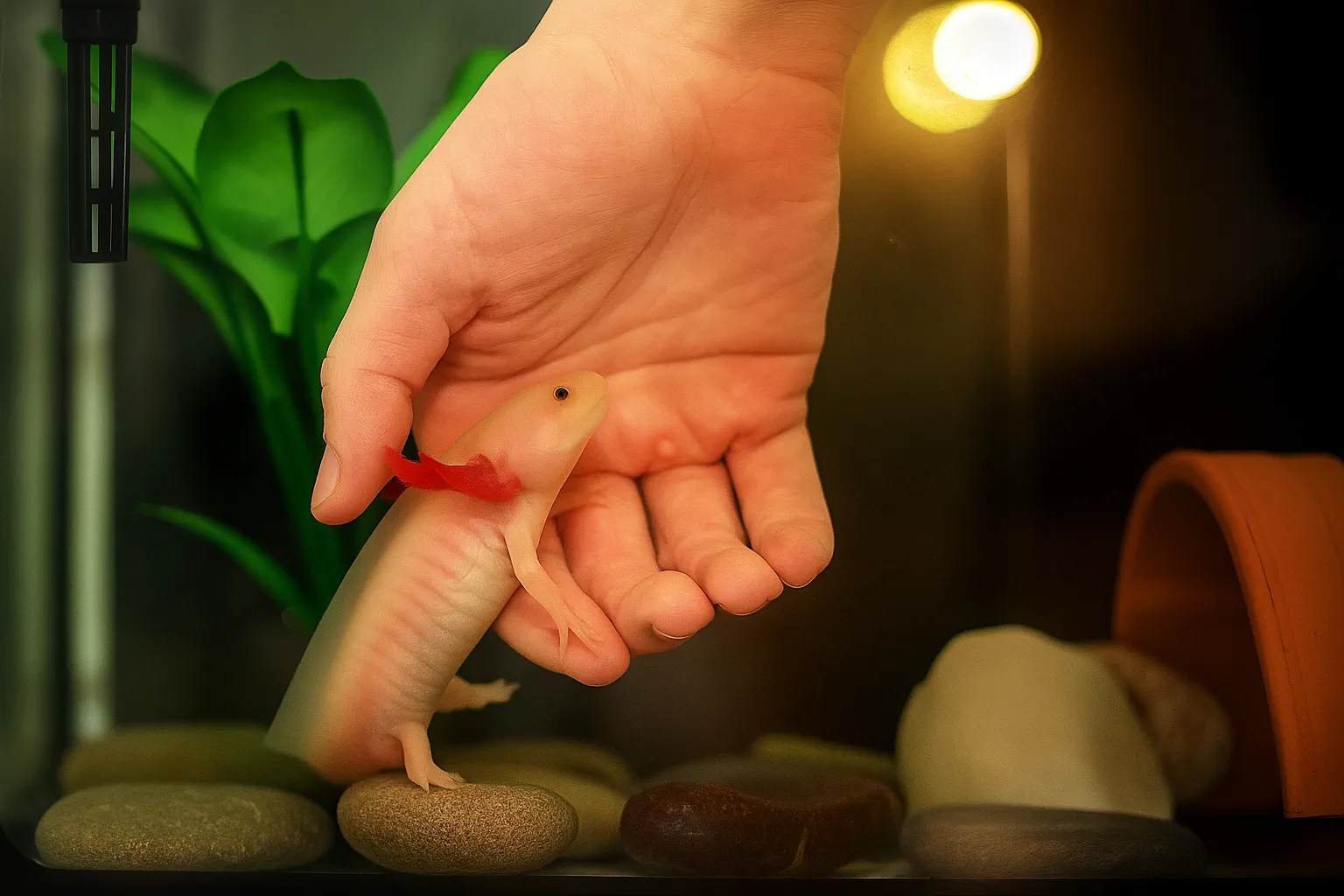
It is quite possible to tame a rare animal—the axolotl quickly gets used to a person and can even take food from hands. But you shouldn’t pick it up yourself—our body temperature is too high for these delicate creatures. Axolotls can live for some time even under a layer of ice but do not tolerate overheating well.
How to Care for an Axolotl
Keeping, caring for, and breeding axolotls, or Mexican salamanders, in captivity is not an easy task. You need to monitor the water temperature and quality, filter and change it at least once a week, and also remove food residues from the bottom.
- Water temperature: not higher than +23 °C (preferably around +18–20 °C);
- Water quality: the optimal water acidity level is from 7.2 to 7.4 pH—neutral. Water hardness is 13-25 gH. If the water is too soft, lime is added to the soil. If the water is hard, the soil should not contain lime. And, before pouring water into the aquarium, it is left to stand for two to three days. The water in the aquarium must be additionally saturated with oxygen; for this, a filter with an air supply function is needed.
- Required lighting: special lighting is not needed; axolotls avoid light, preferring dark corners, and during the day they need shelter: a grotto, driftwood, stones.
Aquarium Volume
The aquarium should be large—40–50 liters per adult individual, since in cramped conditions, larger larvae kill smaller ones. At the same time, paired keeping is recommended for axolotls, so it is advisable to buy a large aquarium right away. Ideally, it should be wider rather than taller, since axolotls prefer to hide at the bottom, not swimming to the top.
What an Axolotl Eats
Aquarium dragons are quite picky about food, and experts do not recommend feeding them regular fish food or the meat of warm-blooded animals—it is believed that this is too heavy food that axolotls are unable to digest. Crickets, worms, shrimp meat, fish fillets, and granulated food for predatory fish are more suitable. A piece of food is usually offered using long tweezers; axolotls do not pick up food from the bottom. Young animals are fed daily, grown ones—every other day.