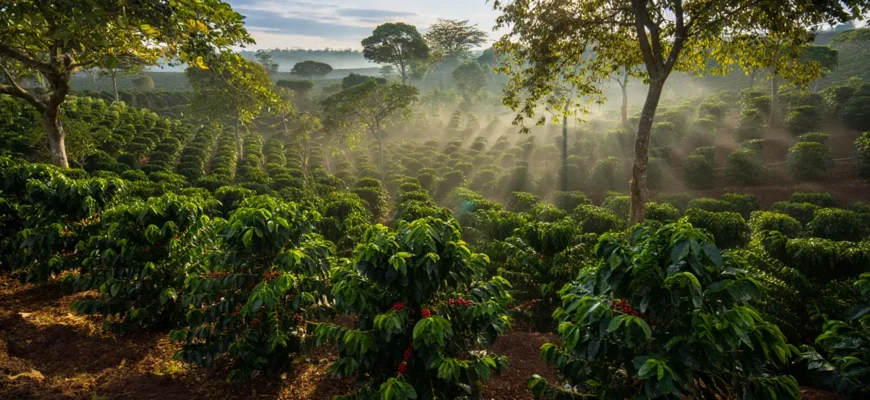
The zone where climatic conditions allow for coffee cultivation is called the Earth’s “Coffee Belt.” This belt encompasses the territories of several countries located right on the equator, as well as slightly north or south of it.
The most famous firms involved in coffee production and presenting their products worldwide are based in Germany, Italy, and Switzerland. However, none of the European countries have coffee plantations or farms where enough beans could be harvested to ensure the uninterrupted operation of even one average coffee shop. The whole issue lies in the finicky and capricious nature of the coffee tree. It is so demanding of temperature and humidity that it only agrees to grow a few kilometers above or below the equator’s strip. And Europe simply does not fall within these boundaries.
The zone where climatic conditions allow for coffee cultivation is called the Earth’s “Coffee Belt.” This belt encompasses the territories of several countries located right on the equator, as well as slightly north or south of it. The average annual temperature there stays around +20 °C, and rainfall is about 1100–1700 mm per year. Furthermore, these countries can boast the presence of mountain ranges at least 700 meters above sea level. All of this constitutes the ideal conditions for growing coffee trees or shrubs.
The first wild coffee shrubs appeared in Africa more than 1000 years ago, and people began specifically planting and cultivating these plants around the 16th-18th centuries. In the 18th-19th centuries, colonizers spread coffee throughout the entire current “Coffee Belt.”
The Earth’s “Coffee Belt” includes countries in Latin and Central America, Africa, South and Southeast Asia, Australia, and Oceania: Brazil, Vietnam, Guatemala, Honduras, Mexico, Colombia, Uganda, and some others. Each of them contributes to the world’s coffee production and stands out either for its volume or the unique taste of its beans.
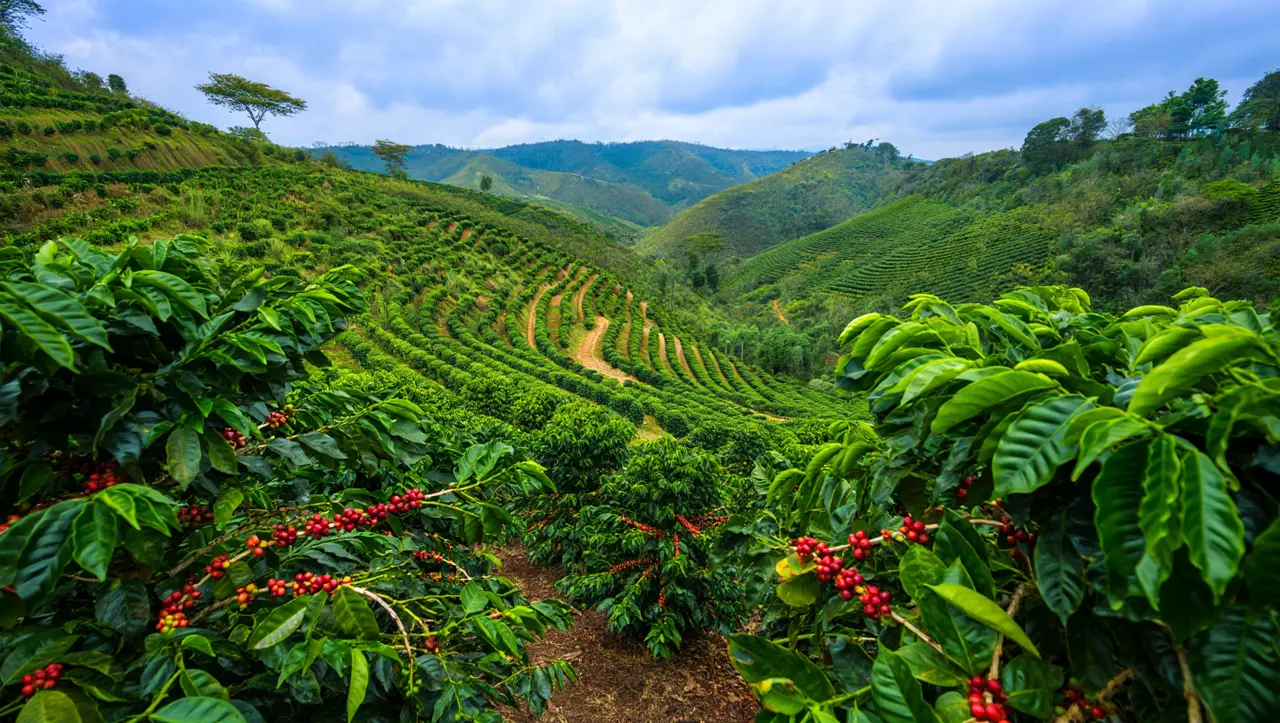
Although the fruits of the coffee tree are commonly called beans, they are actually the seeds of coffee berries.
Where Coffee Grows in the World
In the “Coffee Belt,” one can count no less than two dozen countries that have been engaged in coffee cultivation for centuries. However, the top five suppliers of this raw material to the world markets have remained unchanged for many years.
Brazil
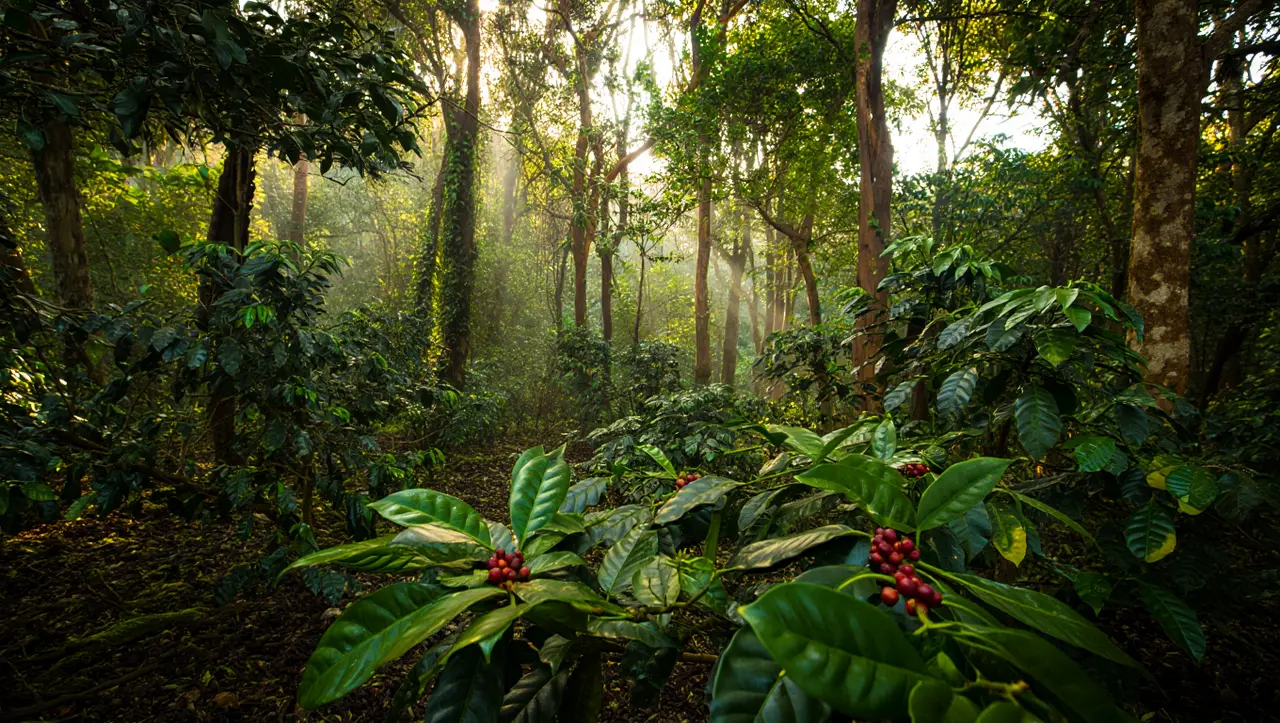
If you ask several people which coffee is the most popular, most would probably answer “Brazilian” — and they wouldn’t be wrong. Brazil has remained the leader in coffee cultivation and export for many years: one-third of the entire world’s supply of coffee beans is harvested here. Brazilian coffee is known for its affordability, although it is not distinguished by sophistication.
The strength of the Brazilian coffee industry is the diversity of its product. More than a dozen varieties of Arabica and Robusta are grown here, with new crossbreeds and varieties being developed that are resistant to potential weather whims.
Coffee plantations occupy an area in the southeastern part of Brazil roughly equal to the territory of Albania. When frosts or droughts occur in the country, the crop failure stimulates growth in coffee prices on world markets — all due to the scale of cultivation.
Vietnam
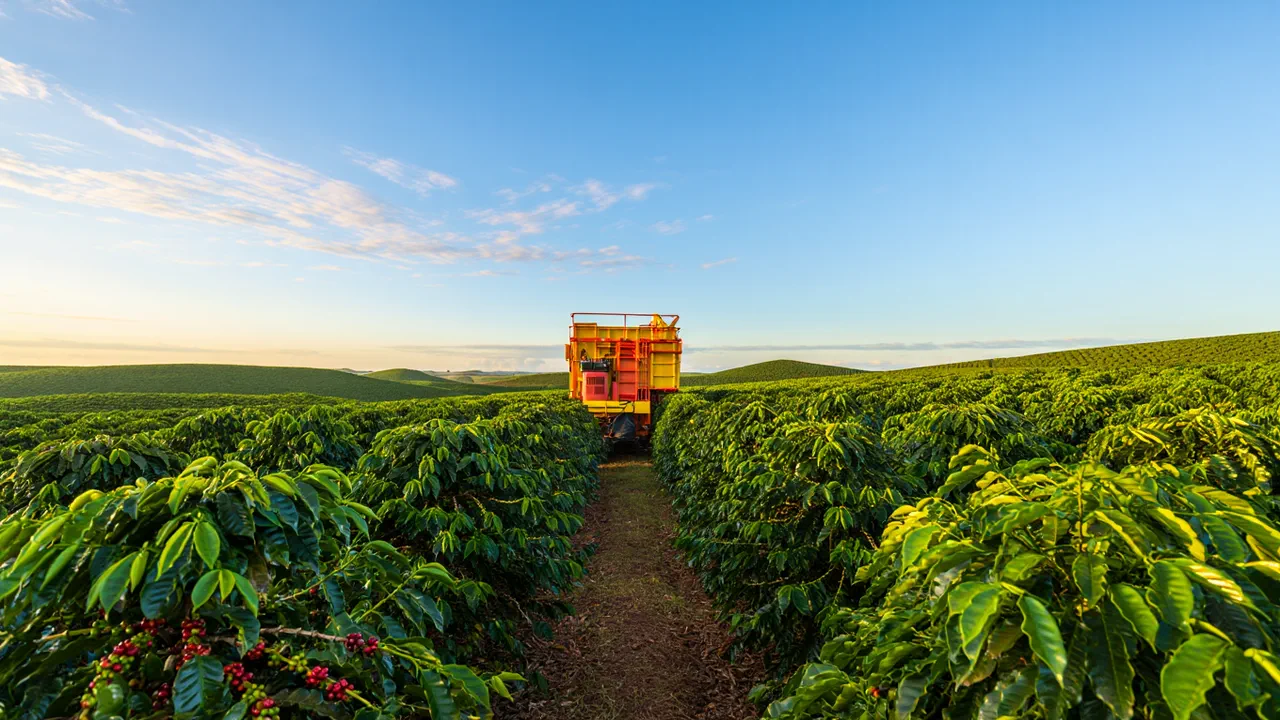
One-sixth of all the world’s coffee beans are harvested in Vietnam, securing the country second place in the global ranking of coffee suppliers and first place among Southeast Asian countries. Coffee plantations here are located on the slopes of the Dak Lak, Dak Nong, and Lam Dong provinces, and coffee cultivation is carried out by both large estates and small farms.
Vietnam can boast large harvests mainly because it grows almost exclusively Robusta. And it is much more prolific than Arabica.
Previously, the lion’s share of harvested coffee beans was sent for export; now, about one-third of the harvest remains in the country. Coffee consumption in Vietnam has grown, not least due to tourism: foreigners have accustomed locals to drinking more coffee. And the locals have accustomed foreigners to their own unusual coffee drinks: iced coffee with condensed milk or coconut yogurt, and even coffee with raw egg yolks.
Colombia
Colombian coffee is known worldwide no less than Brazilian, although the country grows only a tenth of the entire world’s supply. Colombia’s approach to this matter is more than serious. “Colombian Coffee” is registered as a trademark, so only beans collected within the territory of this state can be called that. And since the 1930s, the National Federation of Coffee Growers of Colombia has been operating in the country, promoting the cultivation and advancement of new coffee varieties, as well as helping those who grow coffee trees to get loans for the most disease-resistant plant varieties.
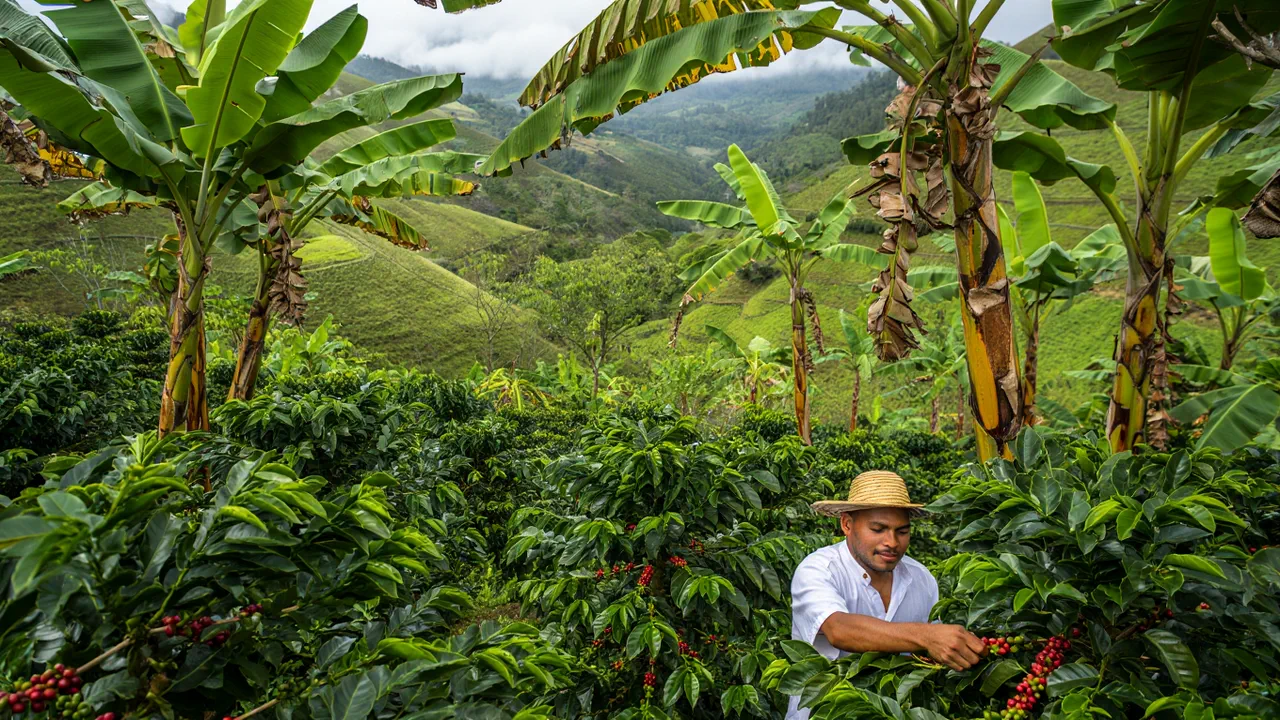
Colombia has its own coffee landmark — the Coffee Cultural Landscape of Colombia, or the “Coffee Axis.” These are the lands in the departments of Caldas, Quindío, and Risaralda, which UNESCO included in the World Heritage List as a unique example of a historical coffee-growing landscape.
The main advantage of Colombian coffee production is the existence of its own certification system from the National Federation of Coffee Growers. Thanks to its work, consumers receive beans of exceptional quality. Other products simply will not pass the strict control. This is done mainly to support Colombia’s image as a producer of extra-class coffee.
Indonesia
On the islands of Indonesia, less than 10% of all the world’s coffee is grown, but it is here, thanks to the climate features, that farmers can harvest not one, but 2 crops of beans per year. There are no plantations of industrial volume in the state; the main producers were and remain small farms, where the harvest from one tree might be only half a kilo of berries. With this method of cultivation, ensuring a consistently high level of quality is difficult, but Indonesian coffee is distinguished by its unique varieties and flavors. For example, local Arabica from the islands of Sumatra and Sulawesi is highly valued by connoisseurs worldwide.
Indonesia is considered the birthplace of the unusual Kopi Luwak coffee variety. This is the name for coffee beans that were first eaten by civets (Asian palm civets), and then passed out in their excrement. The first to collect such coffee were slaves who worked on the country’s coffee plantations but were deprived of the opportunity to take ordinary coffee tree beans for themselves.
Ethiopia
Ethiopia is considered the historical homeland of coffee — the highest mountainous country in Africa. In global terms, the state’s contribution to the production of coffee beans is small: its share is only about 5%. However, it is from here that the original Arabica varieties Yirgacheffe and Sidamo, popular with coffee lovers worldwide, are exported.
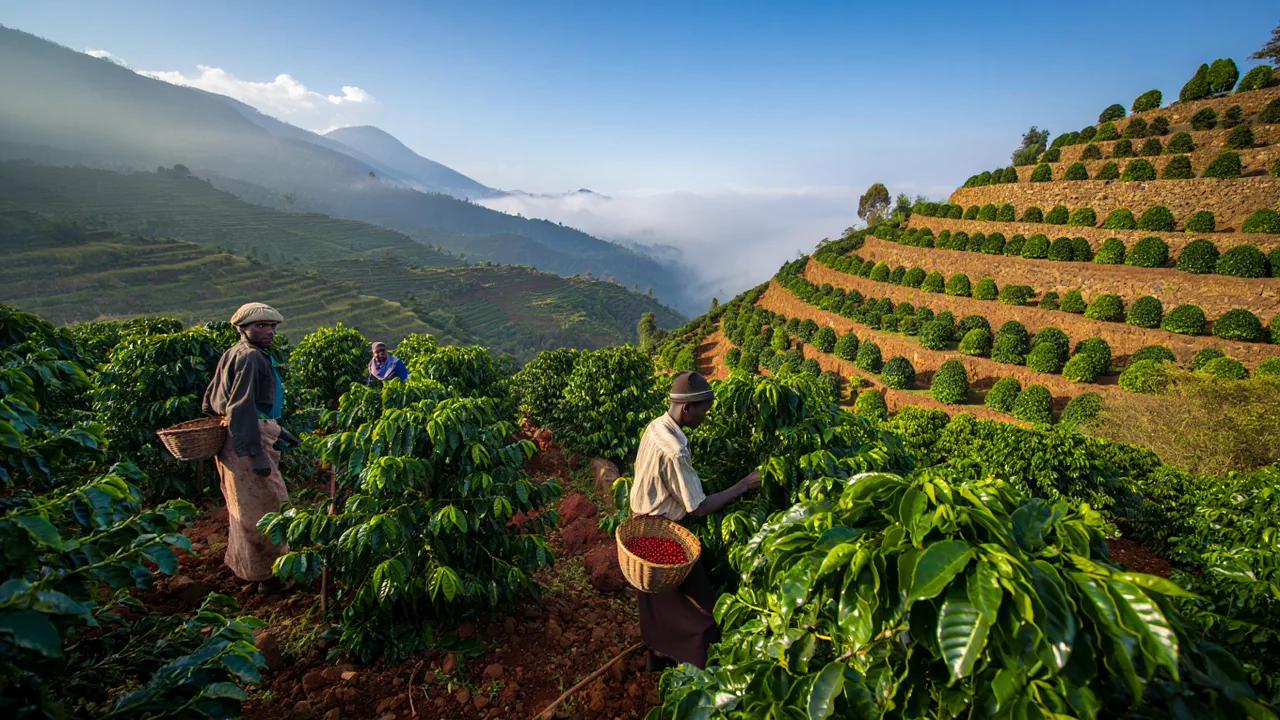
Ethiopian coffee is valued because it is still grown as in the old days: in natural conditions without any chemicals, and harvested by hand.
About a quarter of the country’s entire population works on coffee plantations in Ethiopia. At the same time, the locals keep most of the harvest for themselves; less than half of the beans are exported. Ethiopians drink coffee in enormous quantities, sometimes 10-12 cups a day, but it does not harm their health. It is believed that over the centuries they have developed a kind of resistance to caffeine, so they use it to the fullest.
Where Arabica Grows
The main suppliers of Arabica to the world markets are the African countries Kenya and Ethiopia, as well as the South American countries Brazil and Colombia. The task before them is not easy: Arabica is a more demanding variety in terms of growing conditions; it does not tolerate heat and drought and thrives only at altitudes from 1200 meters above sea level. A certain share of Arabian coffee is supplied to coffee shops and stores by Indonesia, Costa Rica, and Panama.
Where Robusta Grows
Robusta is easier to grow; it is more resistant to diseases and weather surprises, so it can be sourced from almost all countries of the “Coffee Belt,” including Australia, Vietnam, Guinea, India, Côte d’Ivoire, and Uganda. This coffee variety does not have as refined a taste as Arabica, but its price is lower.
The best Robusta is considered to be from Vietnam, India, and Indonesia (from the island of Java).