Usually, it happens like this: after visiting India for the first time, you either fall in love with it for life, or you don’t accept it at all. The priceless UNESCO Heritage, the incomparable Taj Mahal and Hawa Mahal — and right there, behind the fence, endless garbage dumps. Beach parties in cheerful Goa, the diamond shine of Bollywood — and the familiar poverty outside the tourist zones. India is an ambivalent country, and that’s putting it mildly.
And yet it is beautiful. Its majestic Himalayas make you believe in the existence of parallel worlds, the stunningly beautiful nature of Kerala state strikes right at the heart, and the mystical sacrament of religious rites along the sacred Ganges plunges you into a trance. India stuns with its anthill-cities, where everything mixes into a crazy cocktail: people, religions, languages, customs, and smells.
When to Go
For a holiday in Goa and Kerala, head there between October and April (May). At other times, tropical downpours pour, and the humidity is simply off the charts. In Delhi during summer, there’s nothing to do either, as hellish heat won’t let you stroll around the city calmly. And in the Himalayas, conversely, July and August are comfortable months.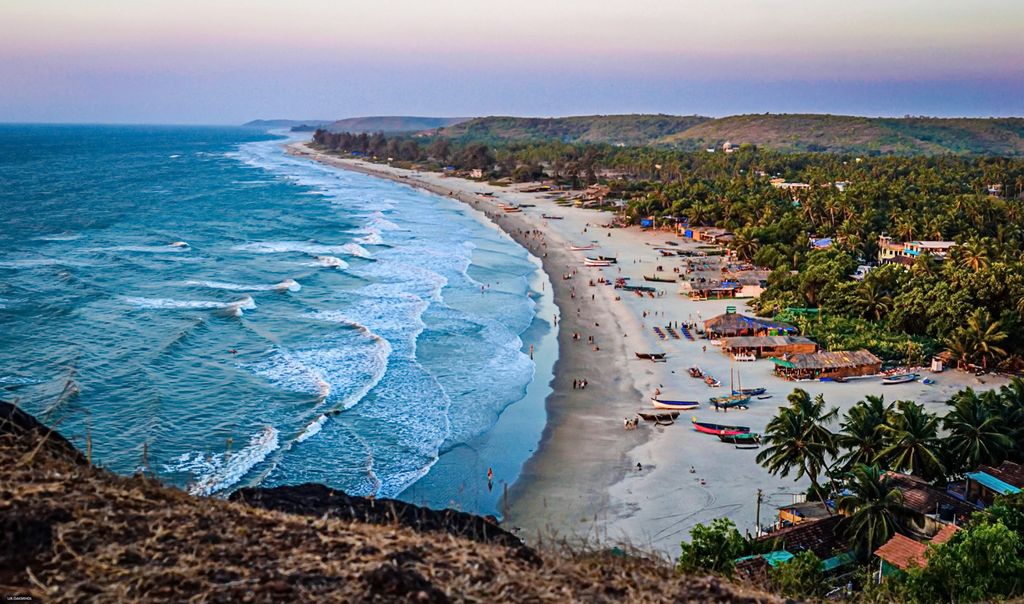
In general, it’s better to go to North and Central India from mid-autumn to early spring. The situation is different with Ayurvedic tours in Kerala. It is believed that during the peak rainy season in June-early September, caring for body and soul is just the thing.
Where to Sunbathe
The country’s main beach region is Goa, entirely oriented towards tourists: hotels for any wallet, entertainment for any taste, it suits everyone from young to old. Young people choose North Goa with its parties and democratic accommodation prices. Families with children and tourists wanting a calm and comfortable rest go to South Goa, where the beaches are cleaner and the surroundings are quieter.
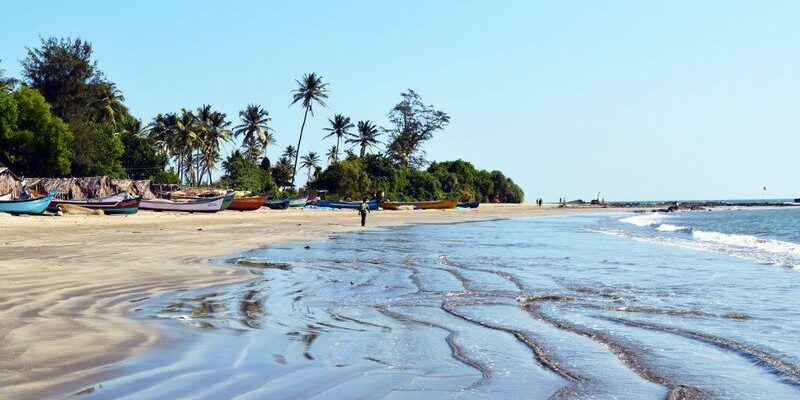
In the majority, the beaches of North Goa feature gray or yellow sand, a gentle entry into the sea, and coastal palm groves. Hotels, restaurants, bars, and merchant stalls surround it, always crowded and lively. The coastline of South Goa is “well-ordered” — even rows of loungers on sand the colors of saffron and dull gold, cafes in the shade of trees, and relative silence.
Kerala state is not as popular with tourists, but precisely because of this, it has still preserved its charm. The local beaches are wilder, typically with minimal infrastructure, but very clean and picturesque. The shore is surrounded by tropical thickets on rocky slopes, transitioning into wide strips of fine sand that you barely feel underfoot.
If you want snow-white, deserted beaches and azure waters, like in the picture, then head to the Andaman, Nicobar, and Lakshadweep Islands — settle in a bungalow, hang a hammock between palm trees, and enjoy life to the sound of the surf. And for variety, go scuba diving to observe the underwater world or ride a boat along the shore, barely having time to click the shutter in pursuit of panoramic views.
Where to Go
You can travel around India for months and still see only a small part of it. For the first time, the Golden Triangle — Delhi, Jaipur, and Agra — is enough.
Old Delhi and the capital New Delhi feature thousands of monuments from different eras: mosques, Hindu temples, mausoleums, and colonial-style villas. In the huge shopping centers, you can shop to your heart’s content, and in restaurants with exquisite cuisine, assess the skill of the chefs.
In Jaipur, there are absolutely incredible palaces from the era of the Great Mughals, built of pink sandstone. In Agra and its surroundings, besides the famous Taj Mahal, it’s interesting to see the Red Fort of the 16th century with features of Islamic and Hindu architecture and Fatehpur Sikri – the ancient capital of Emperor Akbar I the Great’s empire.
One of the most powerful tourist magnets is Mumbai, with its famous Dharavi slums, the Bollywood dream factory, and the Kanheri Buddhist cave monastery. To be in Bombay is to discover India in all its diversity.
In the Himalayas, you can see fantastic snow peaks reaching into space, millennia-old temples and monasteries, and people still living in past centuries. The most popular destination of mountainous India is the border state of Sikkim, surrounded by national parks. This is an excellent place for cycling trips, trekking, and rafting.
Where to Find Enlightenment and Healing
Hinduism is extremely popular outside India. Foreigners believe that if they can comprehend the wisdom of this religion, they will uncover the secrets of existence or at least find peace of mind. To restore their health, people go to Ayurvedic resorts in Kerala and Karnataka. There is a “light” Ayurveda, where liberties in food and even entertainment are allowed, and there is a “hard” option — strict adherence to the doctor’s prescriptions, a rigid schedule, almost drill. But, they say, it’s worth it.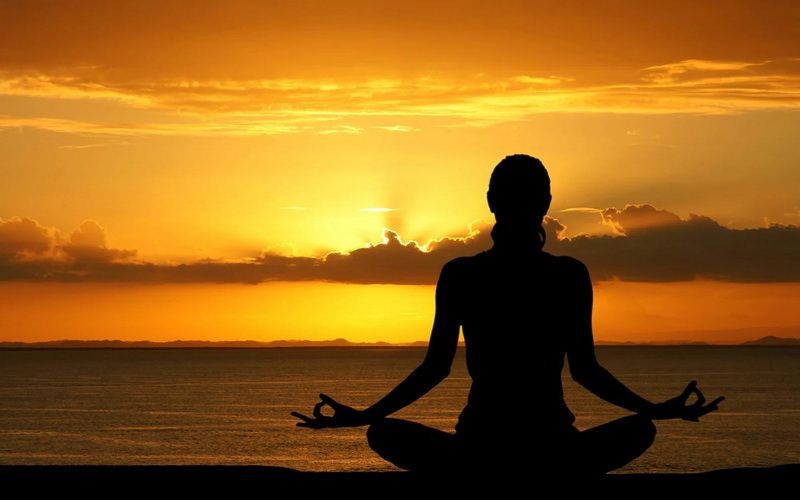
For a serious yoga tour, it’s better to go to the ashrams of Rishikesh, Tamil Nadu, and Kerala. Just to meditate at sunset in good company is also possible in Goa.
For the quintessence of Hinduism, head to the banks of the Ganges in Varanasi. Those less sensitive can walk along the embankment and watch the funeral pyres burning as the deceased are seen off on their last journey. The rest should better confine themselves to an excursion through the temples, which are countless here.
Holiday with Children
The most suitable place for a holiday with children is South Goa. Family tourists usually settle near the beaches of Varca, Majorda, and Utorda. In North Goa, despite its non-family orientation, there are also suitable options: quiet Mandrem or Morjim, devoid of a bustling nightlife. You can also go to Kerala to the resorts of Kovalam or Varkala.
Swimming on most Goa beaches is safe. The entry into the sea is gentle, the sand is soft, and there are no sea dwellers that threaten life and health in the coastal zones (except for jellyfish after a storm). But it can be dirty, and tourists are often bothered by stray dogs and cows.
The Goa water parks Froggyland, Splashdown, as well as the “Bhagwan Mahavir” wildlife sanctuary, where exotic animals live, make the resort attractive for travelers with children.