- The Sacred Art of Stone Selection in Japanese Gardens
- Essential Principles of Stone Arrangement (石組み, ishigumi)
- Professional Stone Selection Guide
- 1. Foundation Stones (下部石, kabu-ishi)
- 2. Body Stones (胴石, do-ishi)
- 3. Vertical Accent Stones (立石, tate-ishi)
- Professional Stone Installation Techniques
- Equipment Needed:
- Installation Steps:
- Inspiration from Traditional Japanese Gardens
- FAQs About Japanese Garden Stone Design
- What types of stones are best for Japanese gardens?
- How deep should garden stones be buried?
- What is the ideal size ratio for garden stones?
The Sacred Art of Stone Selection in Japanese Gardens
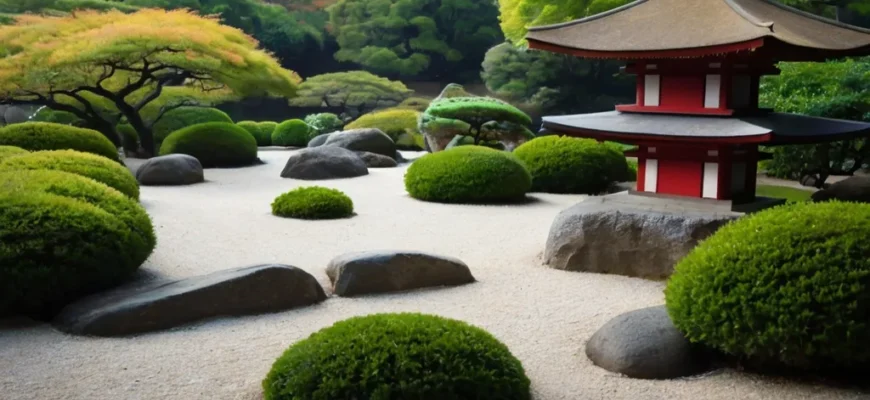
In traditional Japanese garden design (日本庭園, nihon teien), stones serve as the backbone of the landscape, transcending mere decoration to become powerful symbols of nature’s permanence. Each carefully chosen rock can represent everything from majestic mountains (山, yama) to serene valleys, creating a miniature natural landscape that captures the essence of Japan’s diverse topography.
Essential Principles of Stone Arrangement (石組み, ishigumi)
- Work with odd-numbered groupings (三和, sanwa) for natural balance
- Create asymmetrical triangular arrangements
- Consider the viewing angles from all garden paths
- Maintain proper scale relationships between elements
Professional Stone Selection Guide
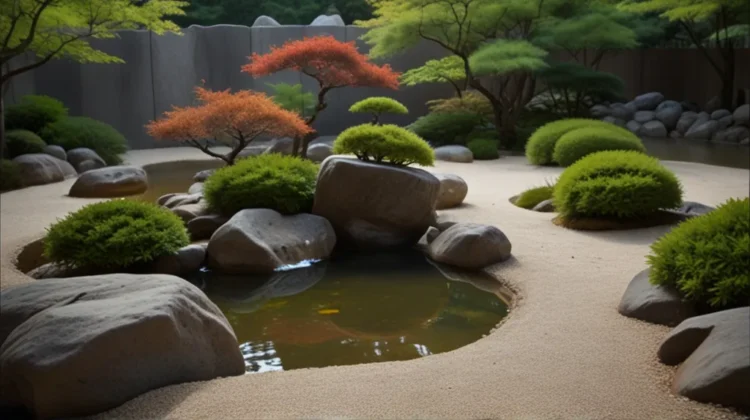
When selecting stones for your Japanese garden design, consider these three fundamental categories:
1. Foundation Stones (下部石, kabu-ishi)
- Flat, horizontal profile
- Natural weathering patterns
- Earth-tone colors
- Stable base structure
2. Body Stones (胴石, do-ishi)
- Substantial mass
- Lower center of gravity
- Complementary textures
3. Vertical Accent Stones (立石, tate-ishi)
- Natural tapering form
- Balanced proportions
- Harmonious relationship with surrounding stones
Professional Stone Installation Techniques
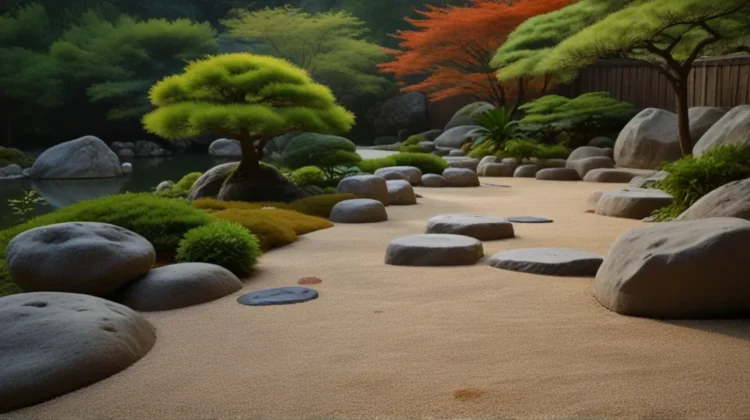
Installing garden stones requires careful planning and proper equipment:
Equipment Needed:
- Tracked mini-excavator for larger stones
- Professional-grade dollies
- Leverage bars and wedges
- Safety equipment
Installation Steps:
- Prepare the foundation with proper drainage
- Excavate placement areas to natural depth
- Position stones with wider base at ground level
- Ensure geological consistency throughout the garden
- Create natural weathering effects
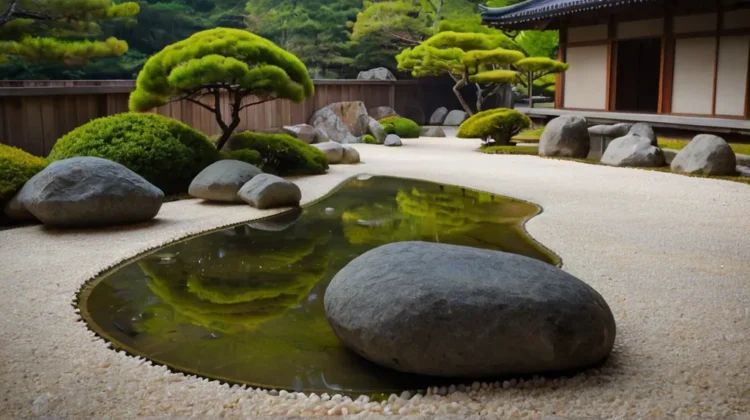
Inspiration from Traditional Japanese Gardens
Study these elements from classical Japanese gardens:
- Ryoanji Temple (龍安寺) rock arrangements
- Kenroku-en Garden (兼六園) stone compositions
- Karesansui (枯山水) dry landscape techniques
- Natural integration with surrounding vegetation
FAQs About Japanese Garden Stone Design
What types of stones are best for Japanese gardens?
Choose locally sourced stones with natural weathering, avoiding artificially colored or treated rocks. Granite, basalt, and limestone are traditional choices.
How deep should garden stones be buried?
Generally, bury 1/3 of the stone’s height for stability and natural appearance. Larger stones may require deeper foundations.
What is the ideal size ratio for garden stones?
Follow the traditional 5:3:2 ratio for primary stone groupings, with the largest stone being approximately 5 units, supported by stones of 3 and 2 units respectively.