And What Happens If They Get Confused?
Unlike humans, animals have no need to recognize distant relatives. The exception is most primates, but that’s another story.
For mammals and birds, which are known for caring for their offspring, the ability to recognize their parents is crucial.
For example, when adult animals are absent, their young often hide from predators and only come out when called by their parents. Many birds form breeding colonies consisting of hundreds or even thousands of pairs. Without the ability to recognize their own offspring, different individuals might end up feeding the same chicks while their own starve.
Nature Can Sometimes Be Tricked
In the mid-20th century, Austrian zoologist and ethologist Konrad Zacharias Lorenz, along with his teacher Oskar Heinroth, studied this phenomenon. It became known as “imprinting,” a unique form of visual memory that helps young animals form primary social bonds. The offspring recognize not only their parents’ appearance but also their voices and scents.
Imprinting is tied to a specific period in life, often called the sensitive or critical period. Depending on the type of imprinting, this period varies in duration.
- Immediately after birth, a mother goat must learn to recognize her kid. She does this by licking and sniffing the newborn to pick up the necessary chemical signals.
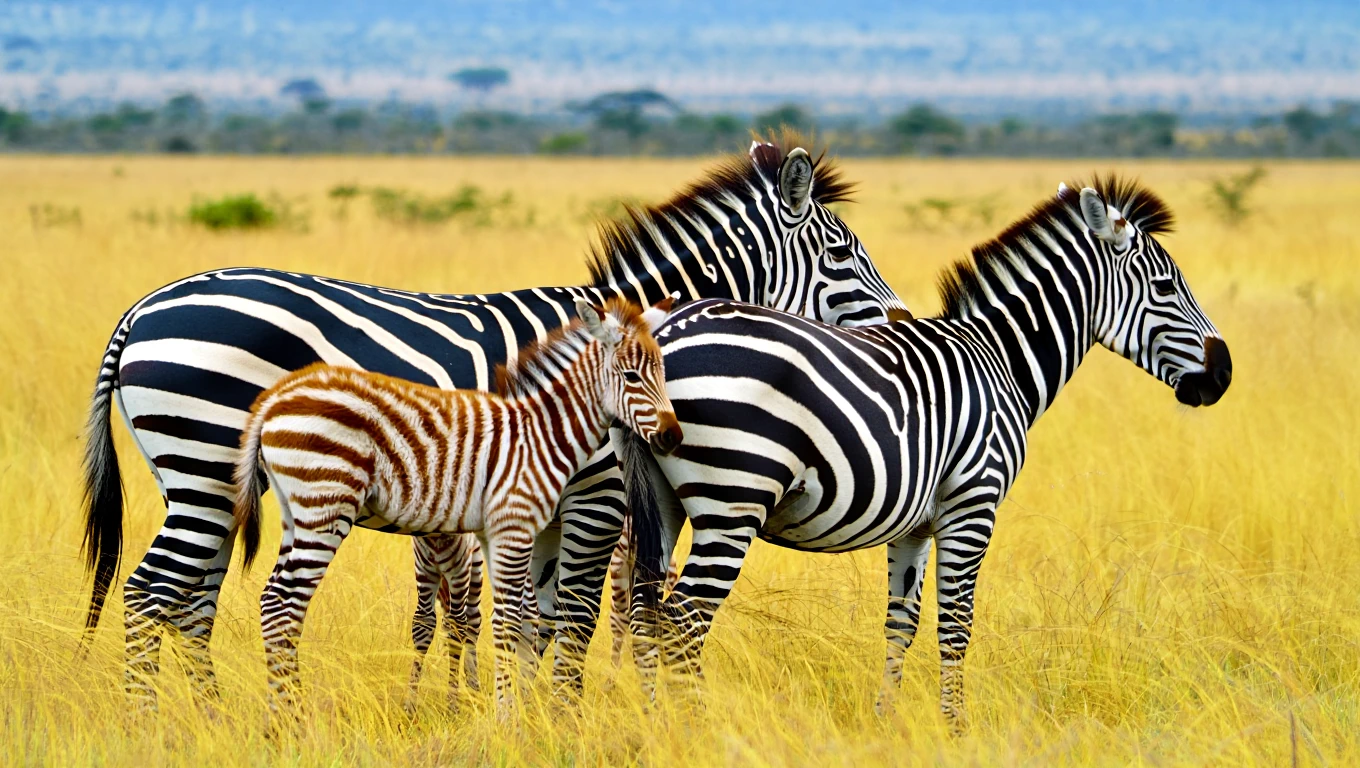
- A zebra foal recognizes its mother by her stripes. That’s why, right after birth, the foal walks around its mother to memorize her pattern. A lost foal is doomed—no other zebra will accept it.
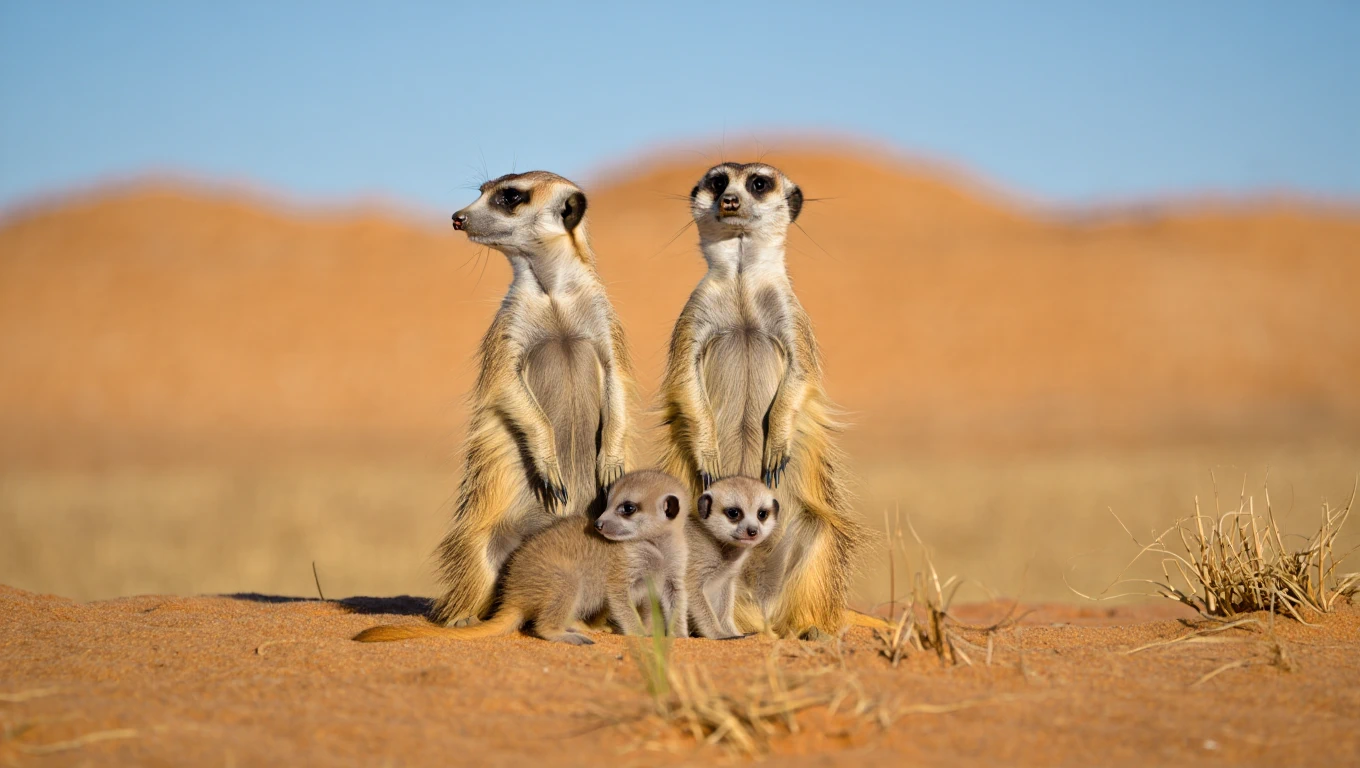
- Meerkats can recognize each other by voice and have unique individual codes.
- Predatory mammal cubs can imprint on soft, warm objects they encounter during the critical period.
- Imprinting is vital for penguins. These birds form communal nurseries where adults watch over all the chicks while parents hunt. Feeding is targeted—parents find their own chick in the crowd and feed only it. Interestingly, penguin chicks can recognize their parents’ voices even before hatching.
- Imprinting is used in domesticating dogs and raising orphaned puppies. Dogs sometimes “adopt” young of other species.
- Baby wild boars look different from adults—this coloring helps confuse predators.
- Piglets, however, resemble their mothers from day one because they have no natural predators.
- Monkeys have maternal instincts just as strong as humans.
In animals born with developed sensory and motor organs, the sensitive period is usually short. For example, a goat remembers its kid within the first hours after birth, and even if separated temporarily, it will recognize the young later based on appearance, voice, and scent. Goslings, chicks, and ostrich chicks also imprint on their parents within hours of hatching.
In animals born less developed and unable to move or feed independently, the sensitive period is longer. For instance, mice take several days to recognize their mother.
However, it’s not always that simple: studies show that newborn chicks already know their mother’s voice, and mouse pups recognize her scent. Sometimes, nature can even be tricked.
Through experiments with greylag goslings, Lorenz proved that “parents” can be members of other species—or even inanimate objects. Sometimes, humans become “mothers.” In such cases, caution is needed: if the animals are to be released into the wild later, they should only see members of their own species. Yet, even then, some birds still imprint on humans as social partners. These individuals must remain in captivity, as they wouldn’t survive in the wild.
If birds lacked the ability to recognize their own, different individuals might end up feeding the same chicks while their own starved.
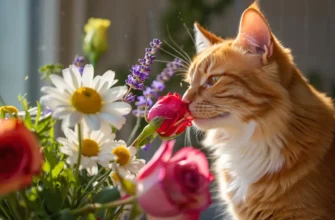
If a mother abandons her young early, imprinting may not occur. For cats, scent plays a major role in recognizing kittens in the first days after birth. If the kittens are temporarily replaced with others, the mother won’t notice the change. The adopted kitten will see her as its real mother. There are cases where domestic cats, even without giving birth, have nursed kittens.

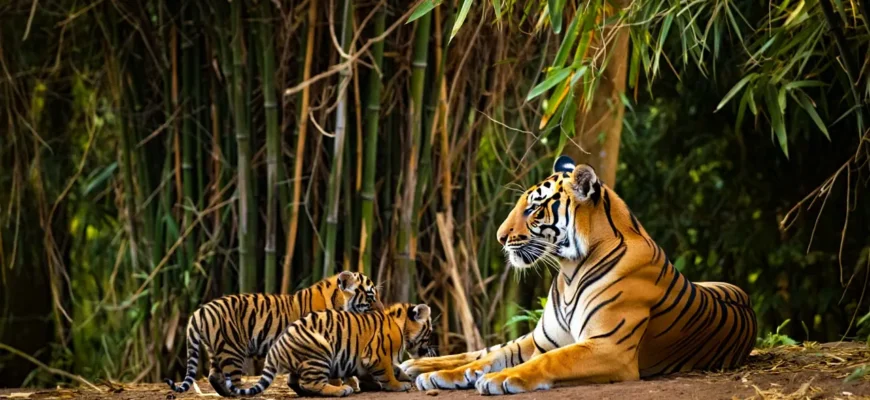
In the wild, unusual pairs have been observed—such as lionesses raising antelope calves. These bonds likely form when a lioness loses her own cubs, redirecting her maternal instinct to whatever young animal is nearby. Sadly, such antelopes rarely survive long, as other lions pose a threat.
As we can see, imprinting can’t be fully canceled, but its effects can be adjusted. Over time, bonds with parents weaken, and new relationships—including mating bonds—form.
Interestingly, it’s often the father who takes on the role of raising the young.