Since humans began studying the Moon, many false beliefs have surrounded this celestial object. Here are the most common misconceptions.
Supermoon Is Always Large
A Supermoon refers to the phenomenon when the Moon, during a new moon or full moon, is at its closest point to Earth. From an observer’s perspective, a Supermoon always appears larger than the smallest Moon. But this isn’t accurate.
Earth’s satellite doesn’t suddenly increase in size, but gradually grows and shrinks throughout the month. To compare the size of a Supermoon with previous full moons, you would need to go back several months and place the celestial bodies in a row. However, this is impossible.
The Far Side of the Moon Is Dark
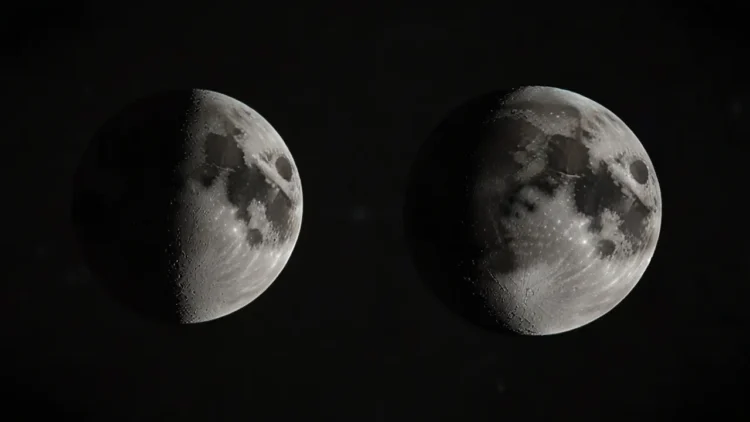
This classic misconception originated from another myth that the Moon doesn’t rotate around its axis, and we always see only one side of it.
In reality, the Moon rotates around its axis and completes one full orbit around Earth in the same amount of time. We don’t see the far side of the satellite not because it’s always dark, but because it always faces away from Earth. Similarly, the visible side always faces our planet.
Earth’s Shadow Determines Moon Phases
Throughout the month, the Moon goes through several phases. Sometimes this is explained by Earth’s shadow covering parts of it. In reality, everything depends on the position of the Sun. For example, when the Sun is behind us, we see a fully illuminated part of the Moon, and when it’s to the side, we see only half.
The exception is a lunar eclipse, when Earth’s satellite actually enters our planet’s shadow.
In the Southern Hemisphere, the Moon Moves in the Opposite Direction
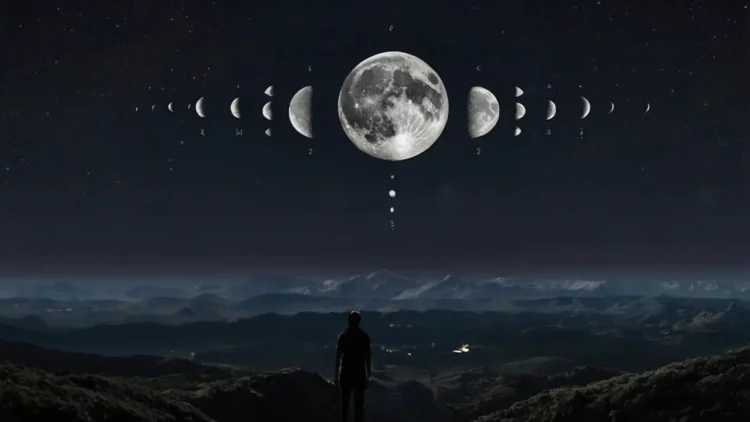
The shape of the Moon shows whether it’s waxing or waning. In the Northern Hemisphere, the “DOC” method can be used to determine the phase: D – waxing, O – full Moon, C – waning.
In the Southern Hemisphere, the sequence is reversed. This is because a person looking at the Moon in the Southern Hemisphere is positioned as if upside down compared to someone standing in the Northern Hemisphere. Therefore, the phases also appear inverted.
The Crescent Moon Points to the Sun
It’s said that the crescent moon always points to the Sun’s location, but this isn’t entirely accurate. This statement is based on the assumption that the line connecting the Moon and the Sun is straight. However, Earth resembles an ellipsoid, so this line is actually curved. To see a more realistic projection of the Moon and Sun, simply tilt your head. This simple experiment helps understand that the Moon can appear different due to the peculiarities of human perception and the observation point.