The glow is visible even at night.
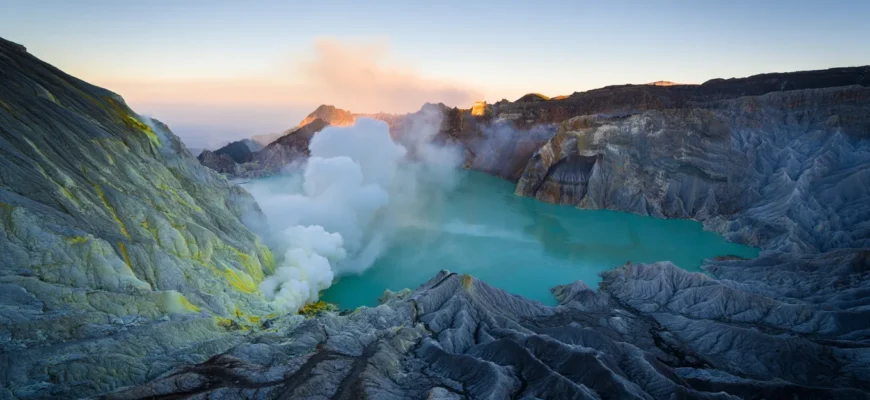
On the eastern part of Indonesia’s Java Island lies one of the most extraordinary volcanoes in the world—Kawah Ijen. Its eruptions look like a fantastical light show: instead of the usual red lava, it spews bright blue lava that glows even at night. This spectacle draws thousands of tourists, but behind the stunning visuals lies a deadly danger, as reported by Green Matters.
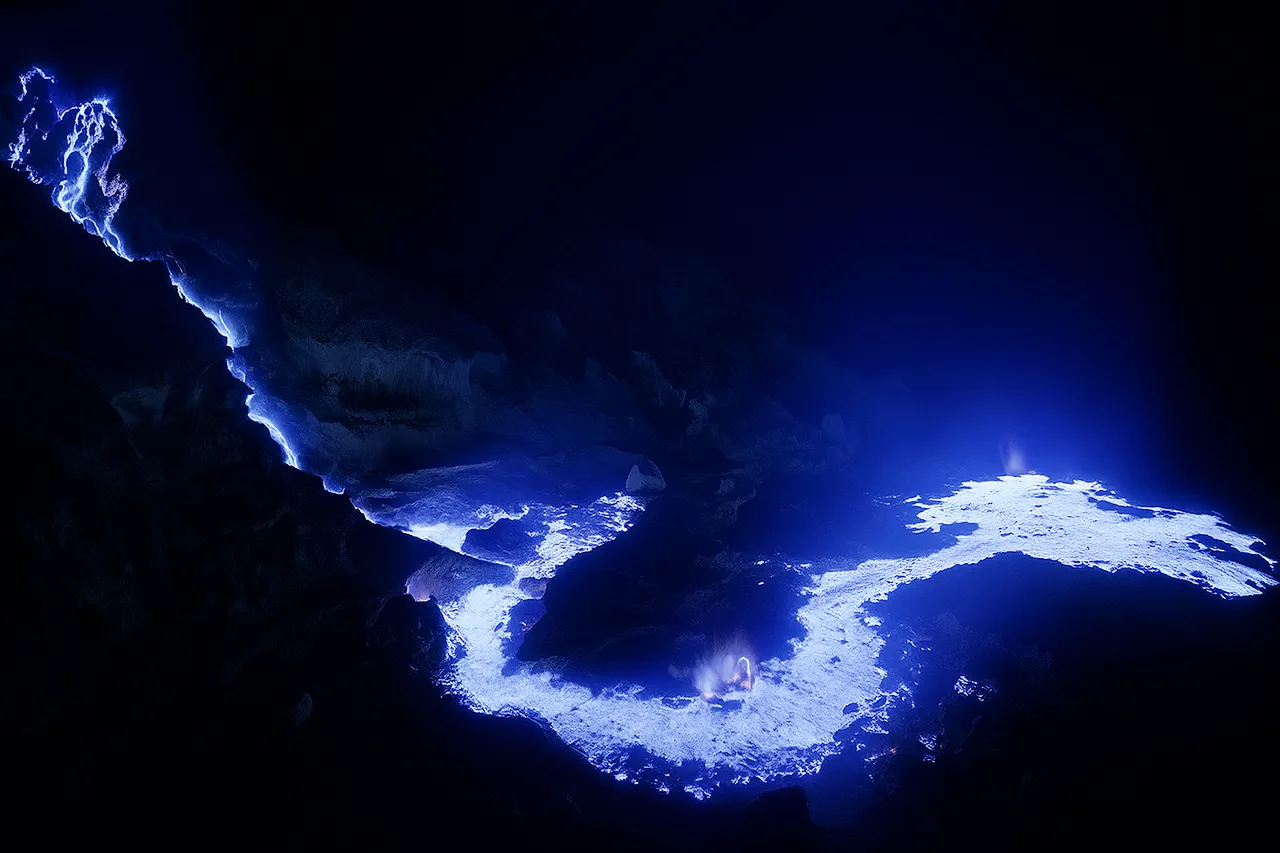
Photos of the “blue fire” spread across social media, attracting thrill-seekers. This phenomenon has led to a surge in “dark tourism” in the region—a term describing people drawn not by beauty but by the danger of a place.
In reality, this is not lava but superheated sulfur gases. When they erupt from the volcano’s crater, they react with oxygen and emit a blue-violet glow. This phenomenon is called “electronic excitation.”
“I’ve never seen so much sulfur coming out of a volcano,” shared American geologist Cynthia Werner.
Kawah Ijen is not just a tourist attraction but also a site of grueling labor. Here, sulfur is mined manually. Workers climb to the crater, fill baskets with chunks of sulfur (up to 90 kg at a time), and carry them to a processing plant.
“Our families worry about us,” said worker Haltom, who has worked here for over ten years. “They say this job shortens our lives.”
Their fears are well-founded: miners constantly inhale toxic fumes that damage their lungs. Many develop chronic illnesses after just a few years. They breathe in poisonous gases and haul heavy loads along rocky paths—all for just a few dollars. Moreover, the growing number of visitors increases the danger as the fragile ground thins and the trails become less stable. For the workers, Kawah Ijen is not a tourist landmark but a daily struggle for survival.