Trnava (Slovakia) – detailed city guide with photos. Top attractions in Trnava with descriptions, travel guides and maps.
Trnava City (Slovakia)
Trnava (Slovak: Trnava, German: Tyrnau, Hungarian: Nagyszombat, Latin: Tyrnavia) is an ancient city in western Slovakia. It boasts a beautiful historic center filled with impressive architectural and cultural landmarks. Trnava is a charming city located just 50 km from Bratislava. Known for several magnificent sacral buildings, it earned the nickname “Little Rome“.
Geography and Climate
Trnava is located in western Slovakia near the foothills of the Little Carpathians and serves as the center of the Dolné Považie natural region. The city lies on the Trnávka River, northeast of Bratislava. Trnava has a moderate continental climate with warm summers and cool winters.
Practical Information
- Population – 65 thousand people.
- Area – 71.5 km².
- Language – Slovak.
- Currency – Euro.
- Visa – Schengen.
- Time – Central European (UTC +1, summer +2).
- The nearest international airport is in Bratislava. Vienna Airport is also relatively close.
- Trnava is located on the Bratislava – Košice railway line, making it easily accessible by train from these two cities.
City Hotels
History
Trnava was likely founded in the late 9th century as a small market settlement at the crossroads of medieval trade routes from Bohemia (Czech Republic) to Hungary and from the Mediterranean to Poland. First written mentions date back to 1211. In 1238, Trnava received city rights (first in Slovakia). During the 13th-14th centuries, it became a major trade and crafts center, surrounded by powerful walls.

In 1432, Trnava was captured by Hussites and until 1435 was one of their movement centers. The city reached its peak in the 16th century through trade. In 1541, the bishop’s residence was moved to Trnava, further strengthening its position. The city’s importance declined in the 19th century. After Czechoslovakia was established, Trnava became one of Slovakia’s most industrially developed cities.
Landmarks

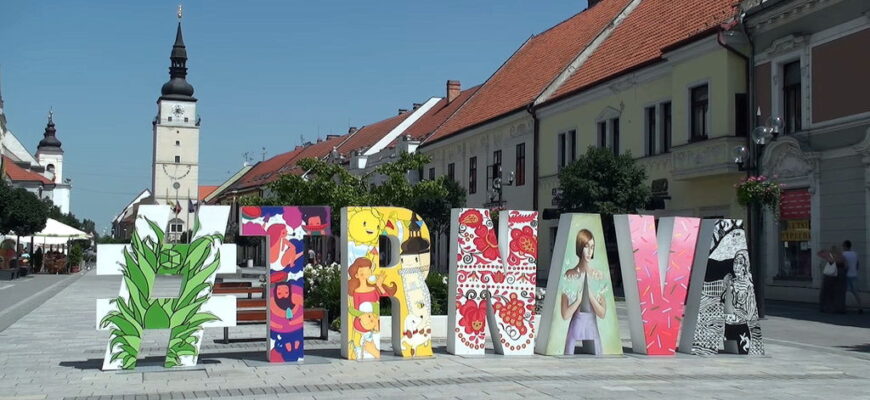
Trnava has a beautiful Old Town that has largely preserved its historic atmosphere and architecture. The unique feature is the preserved city fortifications built between the 13th-16th centuries, considered among the most significant monuments of their kind in Europe.

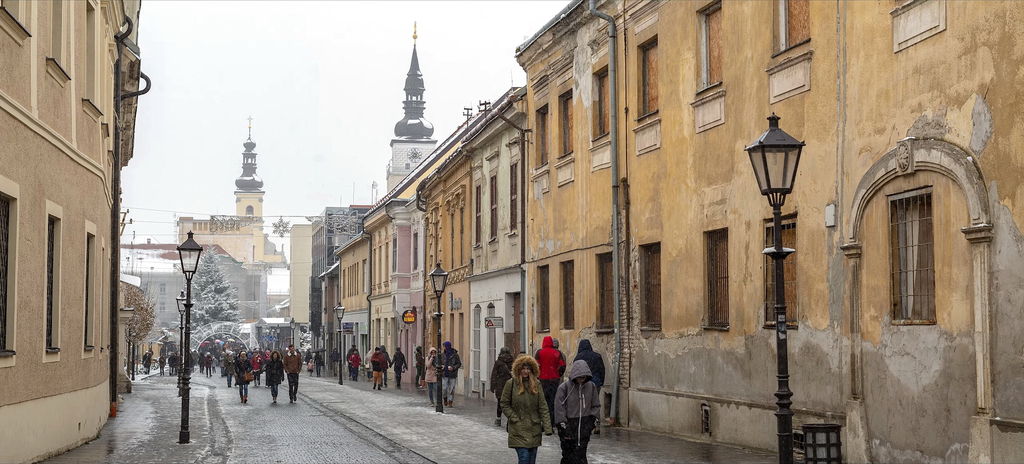
Trnava’s historic center has many spots that aren’t famous for anything specific but are simply pleasant to walk through while admiring the facades of old Baroque and Rococo buildings.

The tallest structure and true symbol of Trnava is the City Tower, built in 1574. Standing 57 meters tall, it features an observation platform at 29 meters with stunning views of the historic center. The tower also boasts 17th-century bells that ring twice hourly and the city’s only sundial.

Basilica of St. Nicholas – one of Trnava’s oldest sacral buildings, constructed between the 14th-15th centuries. This beautiful Gothic church with a Baroque chapel added in the 18th century is dedicated to the patron saint of merchants and traders.

Cathedral of St. John the Baptist is considered Trnava’s most symbolic and beautiful building. This single-nave church with two elegant towers was built in 1637 as Slovakia’s first completely Baroque structure. The interior features an impressive 17th-century wooden altar, paintings, and gilded elements.
Church of St. James – one of Trnava’s oldest buildings. Constructed by Franciscans in the 14th century as part of what was then one of Slovakia’s largest monasteries. Its current Baroque architecture resulted from restorations after several 17th-century fires.

Holy Trinity Statue – a Baroque sculpture dating back to 1695.
Pearl of Western Slovakia: Why Every Traveler Should Visit Trnava
Trnava, often called “Little Rome”, is a true gem of Slovakia’s cultural heritage that often goes unnoticed among more popular tourist destinations. The city impresses with its unique atmosphere blending Gothic and Baroque elements, ancient history and modern changes.
Walking through the narrow streets of the Old Town, you’ll feel the special ambiance created by medieval walls, majestic church towers and elegant townhouses. Here, every stone is steeped in history, and every building tells its own unique story about the glorious past.
Trnava amazes with its diversity – next to magnificent religious monuments you’ll find cozy cafés. After visiting the majestic Cathedral of St. John the Baptist, you can enjoy delicious local cuisine in one of many restaurants.
Trnava’s special charm comes alive during seasonal festivals and markets that transform the main square into a place filled with aromas of traditional food and sounds of folk music.
Located just 50 km from the capital, this city offers a calmer, more authentic alternative to bustling Bratislava. Here, time seems to slow down, allowing deeper immersion into Slovak culture, discovery of rich traditions, and experiencing genuine local hospitality.
Visiting Trnava makes it clear that the real Slovakia isn’t just about the High Tatras or Spiš Castle. It’s also about small historic towns that have preserved their authenticity through centuries and continue to impress everyone who walks their cobbled streets.