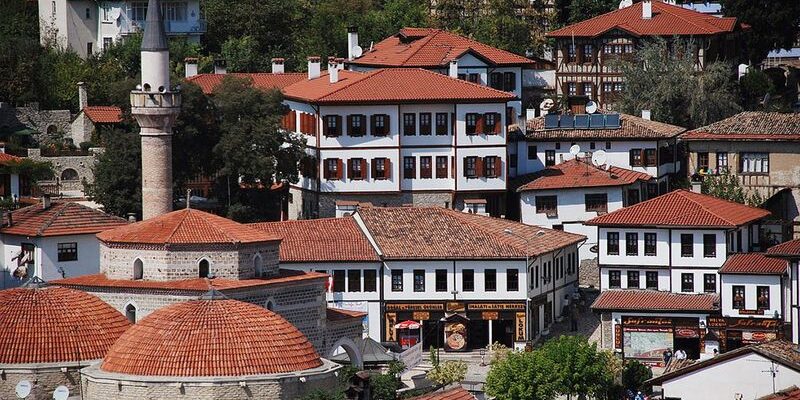
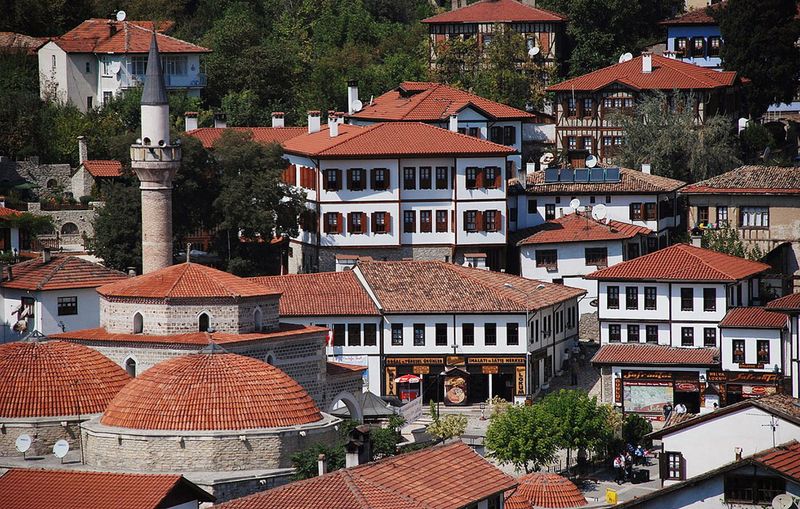
Safranbolu (Turkish: Safranbolu) — a small town in northern Turkey, not far from the Black Sea coast. The city has long been famous for its saffron, from which it actually got its name. As in many other Turkish cities, Roman, Byzantine, and Ottoman cultures are closely intertwined in Safranbolu. The city is included in the UNESCO World Heritage List and resembles one large museum: Safranbolu has 1,008 registered historical objects and artifacts!
Safranbolu (Turkey)
The city consists of three separate historical districts: the central Çukur, Kıranköy, and Bağlar (meaning “vineyards” in Turkish). Çukur is located in the south and has a triangular shape. In the center of the district is the old market, surrounded by craftsmen’s houses. In Bağlar, private estates stand among gardens. This district was formerly the city’s summer resort. In Kıranköy, one can find houses with blind facades without windows, making them resemble extensions of garden walls.
Geography and Climate
Safranbolu is located in the west of the Black Sea region in the historical area of Paphlagonia. The city lies at the foot of the mountains, 90 km from the Black Sea coast. The climate is moderate, with warm summers and cool winters.
Practical Information
-
Population — over 50,000 people.
-
Language — Turkish.
-
Currency — Turkish lira.
-
Visa — for citizens of Ukraine, a visa-free entry regime is in effect. As of 2026, the permitted stay is 90 days within a 180-day period. The foreign passport must be valid for at least 60 days after the end of the permitted stay. (It is recommended to always check the current rules on the MFA website before traveling).
-
Time — UTC +2, in summer +3.
Best Time to Visit
From June to September, when the weather is warm and dry. It often rains in Safranbolu in May.
Shopping and Purchases
Traditional souvenirs and products can be bought at the Arasta Bazaar. The most popular purchases are saffron products, leather, textiles, lace, and local halva (tahini).
What to See?
- Old Town Çarşı is located in the southeast of Çukur. It is a trading district where old timber-framed buildings and narrow, cobblestone-paved streets have been preserved. Many mansions have been turned into museums or are open for free visits. On Kaymakamlar and Kileciler streets, you can find houses with preserved interiors from the 18th–19th centuries.
- Köprülü Mehmet Paşa Mosque (Köprülü Mehmet Paşa Camii) — this is a squat building with a helmet-like roof. Built in 1661, it features architecture unusual for mosques. In the courtyard, you will see a metal sundial installed back in the 19th century (when it was fashionable).

- It is also worth visiting traditional Turkish baths. Cinci Hamam (Kazdagliogulu Meydani) — one of the oldest and most famous Turkish baths, frequented by locals. The building is located in the very center of the city — there you will find separate sections for men and women.
-
Cinci Hanı Hotel (Çeşme Mahallesi, Saraçlar Sk) was built by city merchants back in the 19th century and still welcomes guests today. It is worth popping in for the wonderful view of Safranbolu from the rooftop and traditional Turkish tea in the hotel courtyard.
-
Be sure to head to any bazaar to enjoy the trading scenes of provincial Turkey. Felt, leather, and lace products are traditional crafts of Safranbolu. The region produces its own special type of halva — tahini, which can be found in every sweet shop. Don’t forget about spices and saffron as well.
-
Not far from the city is the six-kilometer Bulak Cave. Minibuses to the cave depart from the central bus station, the fare is about €0.7. About 500 meters of the cave are accessible for tourist viewing. We recommend arriving as early as possible, because from 11 a.m. onwards, it gets crowded with Turkish schoolchildren eager to see the stalactites and stalagmites.

How to Get There?
There may be no direct bus routes from major cities to Safranbolu. The easiest way to get there is by bus from Istanbul (Alibeyköy bus station) or Ankara (AŞTİ bus station) to the neighboring city of Karabük (approximate cost — €12.5 and €6 respectively). The journey takes 4–6 hours. From there, take a minibus for €2, and in 30–40 minutes you will reach the city of saffron. (Prices are approximate and may vary).