Ostrava (Czech Republic) – detailed city guide with photos. Top attractions in Ostrava with descriptions, travel guides, and maps.
City of Ostrava (Czech Republic)
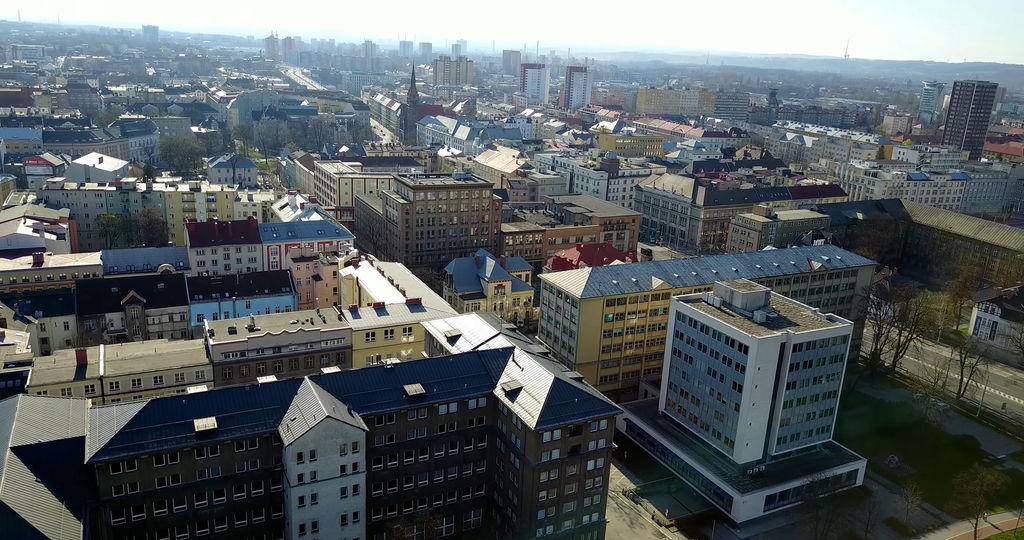
Ostrava (Czech: Ostrava) is the third-largest city in the Czech Republic and the capital of the Moravian-Silesian Region. Located in the historical region of southern Silesia near the borders with Poland and Slovakia, Ostrava is an ancient city with a fascinating industrial history and the heart of the country’s second-largest urban agglomeration. Until recently, it was considered the most polluted city in the Czech Republic. Now, most industrial enterprises have closed (for various reasons), and Ostrava is gradually transforming into a tourist and cultural hub.
Stereotypes suggest that Ostrava is purely an industrial city with little to offer tourists. That’s not entirely true! The city boasts a rich history, numerous beautiful historical buildings, remarkable sacred architecture, and a wealth of old industrial sites converted into fascinating museums.
Geography and Climate
Ostrava is located in the far northeastern part of the Czech Republic on the Ostravice River near its confluence with the Odra and Opava Rivers. The city lies between Katowice and Brno, 371 km from Prague and 170 km from Poland’s Krakow. Ostrava has a temperate climate, with relatively warm summers and cool winters.

Practical Information
- Population: over 290,000.
- Area: 214 km².
- Language: Czech.
- Currency: Czech koruna.
- Time zone: UTC+1, UTC+2 in summer.
- Ostrava is a major transport hub in eastern Czechia. High-speed trains connect it to Prague, Brno, Olomouc, Katowice, and Warsaw. There are also direct rail links to Vienna, Bratislava, Budapest, Kraków, and Moscow.
- Ostrava has a small international airport with flights to London, Milan, and Dubai.
Best Hotels in the City
History
The first written mention of Ostrava dates back to 1267. At that time, a village was established along the so-called Amber Road, a major trade route connecting the Baltic and Mediterranean regions. In the second half of the 14th century, city fortifications and likely a castle were built. Later, Ostrava’s significance declined, and until the 18th century, it remained a quiet provincial town.
A turning point in Ostrava’s history was the discovery of coal deposits in the late 18th century, leading to an industrial boom and rapid urban growth. Large mines and metallurgical plants were built, transforming Ostrava into one of the largest coal and steel production centers. Today, Ostrava has shed its heavy industrial appearance. Coal mining ceased in 1994, and most heavy industry closed after the Velvet Revolution in 1989.
Attractions
Ostrava is best known for its large coal mines, blast furnaces, and steel plants.
Industrial Heritage of Ostrava

Vítkovice – an industrial zone established in the early 19th century. Declared a national cultural heritage site in 2002, it is a massive historical complex featuring authentic blast furnaces, illustrating coal mining and iron/steel production.

Landek – the largest mining museum in the Czech Republic, located on the site of the former Anselm Mine (founded in the late 18th century). A fascinating place showcasing geology, archaeology, history, and mining technology evolution.
Michal Mine – one of Ostrava’s oldest mines, established in 1843. A valuable industrial heritage site declared a national cultural monument in 1995. Visitors can explore above-ground work areas miners passed through before their shifts.
Sacred Architecture

St. Wenceslas Church – one of Ostrava’s oldest and most important cultural-historical landmarks. Built in the 13th century in High Gothic style on earlier Romanesque foundations, it was expanded in the 16th century with Baroque elements and later rebuilt in Classicism style, losing some Gothic features.
Evangelical Church of Christ (Red Church) – one of Ostrava’s most beautiful sacred buildings. Constructed in the early 20th century in Dutch Renaissance style, it features a single-nave gray stone structure with a striking square tower.

Cathedral of the Divine Savior – a triple-nave Neo-Renaissance basilica, the second-largest church in Moravia and Silesia. Built in the late 19th century, it has two 67-meter towers.
Church of the Immaculate Conception – a Roman Catholic parish church built in the late 19th century. Ostrava’s most important Neo-Gothic building, located in the Přívoz district.
Other Landmarks & Points of Interest
Silesian-Ostrava Castle – one of Ostrava’s most significant cultural-historical monuments. Founded in the late 13th century at the confluence of the Lučina and Ostravice Rivers, where a Slavic fortified settlement once stood. Burned down in 1872 but later rebuilt. Mining caused the structure to sink 16 meters into the ground.

City Hall – the largest town hall in the Czech Republic, built in 1930. Its most notable feature is a tall tower with an observation deck offering views of neighboring Poland on clear days (72 meters high).

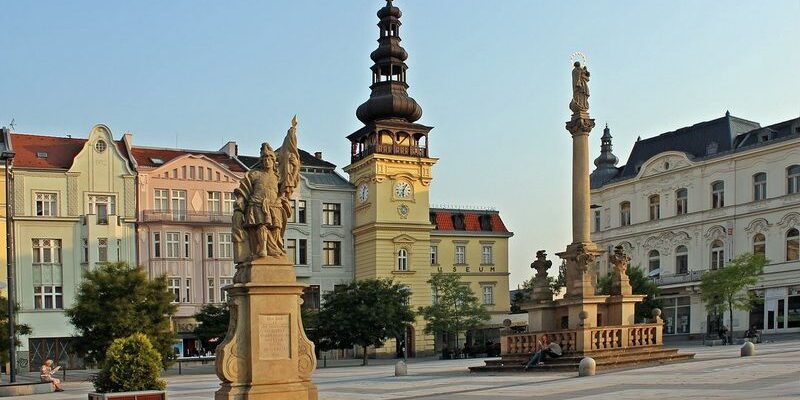
Masaryk Square – the heart of Ostrava. This market square has been the city center since medieval times. Originally surrounded by small wooden merchant houses, replaced by stone buildings in the 19th century. Dominated by the Old Town Hall tower, it also features a statue of St. Florian (patron saint of firefighters), a Marian (plague) column from the early 18th century, and a modern fountain.
Ostrava: An Industrial Heart with an Artistic Soul
Walking through Ostrava’s streets, it’s hard to miss the striking contrast: the grand silhouettes of old industrial plants now peacefully coexisting with cozy squares and elegant churches. Once associated with factory smoke and miners’ labor, the city now showcases an impressive transformation. Coal dust has given way to cultural festivals, and old factories have become modern galleries.
Ostrava is a shining example of how industrial heritage can become a unique advantage rather than a burden. That’s why it’s worth spending more than a day here. Only by immersing yourself in the city’s rhythm—from medieval Masaryk Square to the majestic Vítkovice complex—can you truly understand its essence: strong as Silesian coal yet open to change.
As the evening sun gilds church spires and reflects off restored buildings’ windows, you’ll feel Ostrava’s unique atmosphere—a city that preserved its authenticity while reimagining it for future generations.