Banská Bystrica (Slovakia) – detailed information about the city with photos. Main attractions of Banská Bystrica with descriptions, guides, and maps.
City of Banská Bystrica (Slovakia)
Banská Bystrica (Slovak: Banská Bystrica, German: Neusohl, Hungarian: Besztercebánya) is the sixth-largest city in Slovakia and the capital of the region of the same name. It is one of the most important cultural and economic centers in the country, as well as the unofficial capital of Central Slovakia. Banská Bystrica is a beautiful historic city with stunning architecture, landmarks, and a rich history.
Geography and Climate
Banská Bystrica is located in the central part of Slovakia in the Zvolen Basin. The city is situated in a picturesque area at the foothills of the Lower Tatras, 212 km from Bratislava. It has a moderate continental climate with warm summers and cool winters.
The surroundings of Banská Bystrica are home to several national parks and nature reserves. Nearby, there are also ski resorts (the distance to the famous Donovaly is only 28 km).

Practical Information
- Population — approximately 80,000 people.
- Area – 103.368 km².
- Currency — Euro.
- Visa — Schengen.
- Language — Slovak.
- Time — Central European Time (UTC +1, summer +2).
- Nearest international airports — Budapest (200 km), Bratislava (205 km), and Vienna (260 km).
- Banská Bystrica has railway connections with most major cities in Slovakia. Direct trains also run here from Austria, Hungary, Czech Republic, and Poland.
City Hotels
History
Banská Bystrica is one of the oldest Slovak cities, founded in 1255. Initially, it was a small village that grew rapidly thanks to German colonists. During the Middle Ages, Banská Bystrica flourished due to copper mining and trade. The city was surrounded by mines owned by the Ungarischer Handel company (one of the leading copper producers in the 16th century).
The earliest history of Banská Bystrica is connected to the exploitation of copper mines. The city was built on the site of an ancient Slavic settlement, which is believed to have existed here as early as the 9th century.
The copper deposits were nearly exhausted by the 18th century. Later, the city developed textile and paper production.
Landmarks and Attractions
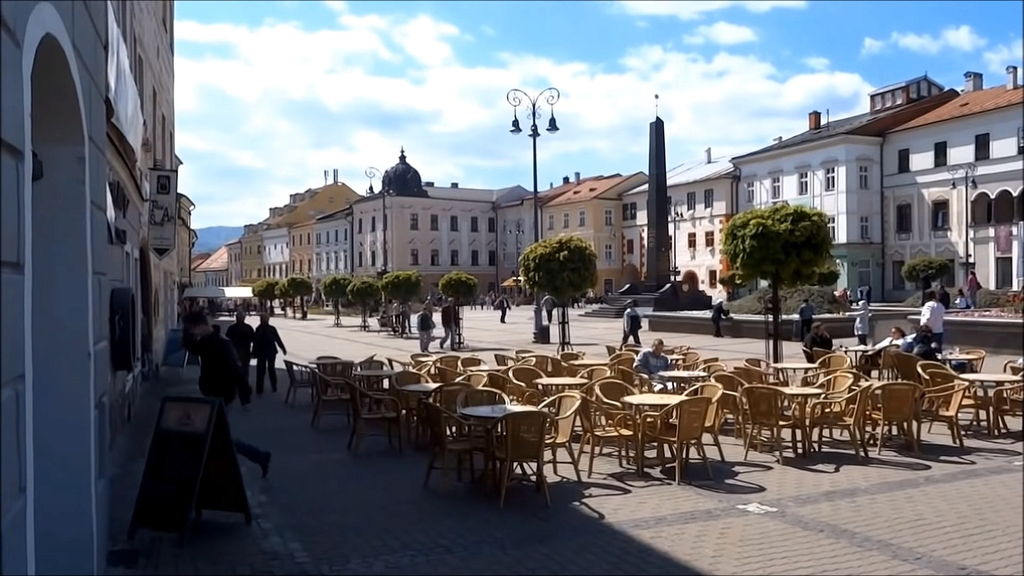
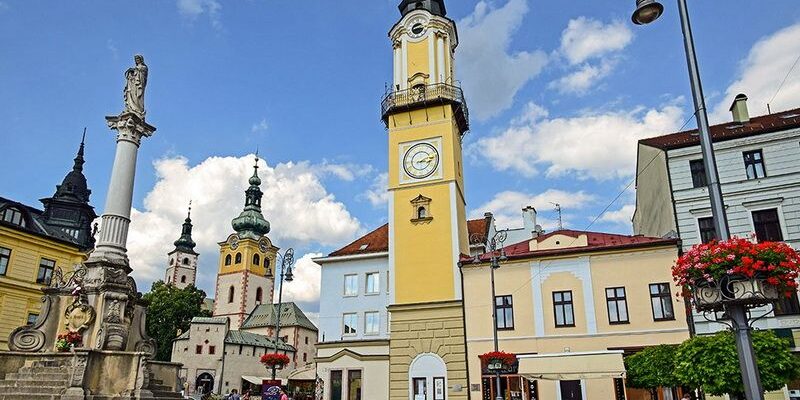
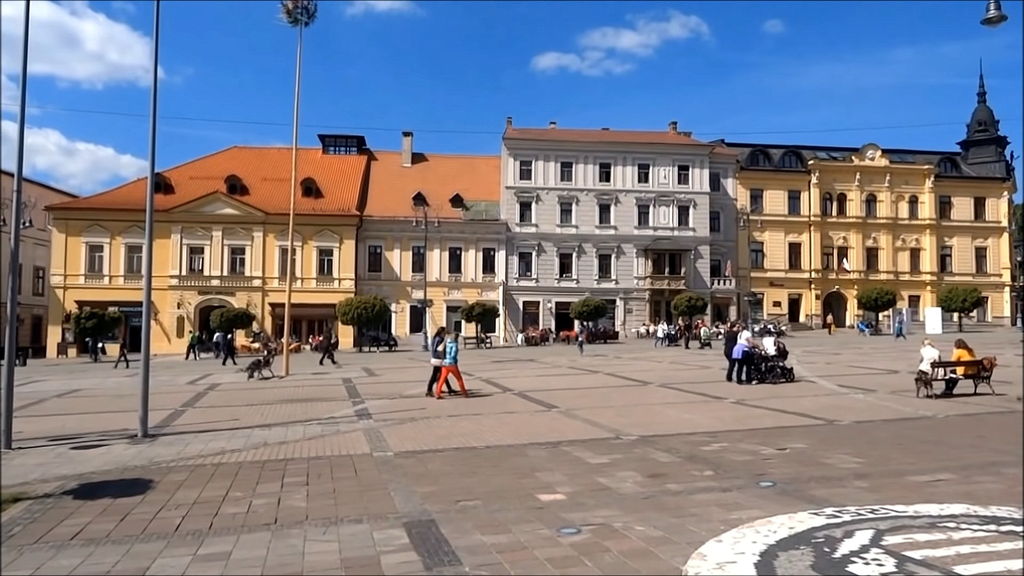
SNP Square or Slovak National Uprising Square — the heart of Banská Bystrica with its original charm and historical atmosphere. It is the oldest square in the city, founded in the 13th century, and features stunning architecture. Several iconic landmarks are located here.
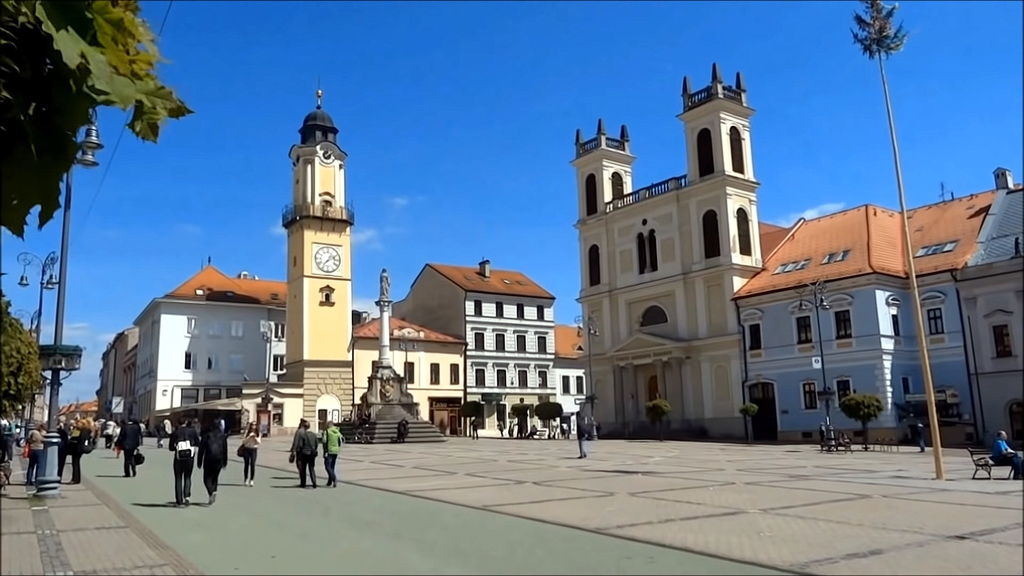
St. Francis Cathedral — a Jesuit Baroque-style church built between 1702-1715 on the site of a medieval Gothic chapel from the early 16th century. The towers were added in 1844 during a major reconstruction. In front of the cathedral stands an 18th-century Baroque plague column.

Clock Tower — one of the main landmarks of Banská Bystrica, built in 1552, beneath which the city’s torture chamber and prison were once located. In the past, this structure also served defensive functions. In case of danger (fire, war), a trumpeter would climb to the top and alert the entire city. At the beginning of the 20th century, the tower began to tilt from its axis, somewhat resembling the famous Leaning Tower of Pisa.
Several old buildings on Štefana Moyzesa Square formed a castle in the Middle Ages, which was destroyed during the dismantling of the city walls. Today, a quarter of the original city fortifications and several bastions remain.

Barbican — one of the main symbols of the city and the architectural dominant of Námestie Štefana Moyzesa. It is the main fortification structure of Banská Bystrica and also served as the main gate to the castle. The Barbican acquired its current Baroque facade after a fire in 1761.

Parish Church of the Virgin Mary — one of the oldest structures in the city. The church was built on the foundation of a Romanesque basilica in the mid-13th century and served as the basis for the castle. Since its founding, the building has undergone several reconstructions, mainly due to fires. The last reconstruction, which gave the church its Baroque features, was carried out after a devastating fire in 1761.
Church of St. James — a simple Gothic church founded in the 14th century.
Church of St. Elizabeth — one of the oldest structures in the city. The church was founded in the early 14th century and rebuilt in the Gothic style in the 19th century.
Among the ancient buildings of Banská Bystrica, it is also worth noting: the Church of the Holy Cross from the 15th century, which was actually part of the northern walls, the Gothic Matejov Dom from the 15th century, and the Stará radnica with a tower from the 16th century.
Video

Banská Bystrica: A City Where Copper Turned into Architectural Gold
Although the copper veins that once made Banská Bystrica prosperous have long been exhausted, the city has managed to retain its brilliance. Today, it is not just an administrative center of the region but a true treasure trove of medieval architecture, where every stone tells a story of German colonists, Jesuit builders, and local craftsmen. The city’s special charm is enhanced by its “leaning” clock tower — a symbol that even imperfection can become an attraction. Located at the foothills of the Lower Tatras and close to ski resorts, Banská Bystrica is an ideal destination for those who want to combine historical immersion with active recreation. Here, medieval churches stand alongside Baroque palaces, and ancient fortifications remind us of the times when the city was not only an industrial but also a defensive center. And although the city no longer mines copper, it continues to “mine” admiration from everyone who walks its streets.