The Bosphorus Strait is far more than just a waterway that divides a city. It is a flowing timeline that has witnessed the rise and fall of empires for thousands of years. From the myths of ancient Greece to the majestic reign of the Ottoman Empire, these waters have served as the stage for history itself. Taking a cruise here is not merely a sightseeing activity. It is a journey through time where every bend in the river reveals a new chapter of human civilization. Understanding the history behind this iconic route transforms a simple boat ride into a profound cultural experience.
- A Brief Historical Background of the Bosphorus
- How Bosphorus Cruises Evolved Over the Years
- Architectural and Cultural Highlights Along the Cruise Route
- Why the Bosphorus Route Became World Famous
- Different Cruise Options Showcasing Historical Beauty
- Modern Day Highlights That Add Value to the Experience
- Why History Makes the Bosphorus Cruise Even More Impactful
A Brief Historical Background of the Bosphorus
In ancient times, the Bosphorus was the most critical maritime gateway in the known world. It controlled the trade routes between the Black Sea and the Mediterranean, making it the lifeblood of the ancient city of Byzantium. Control over these waters meant control over the economy of the entire region. Armies clashed and navies fought for centuries just to possess the keys to this strait. It was the physical meeting point where the cultures of the East and the West collided and eventually blended together.
During the Ottoman era, the function of the Bosphorus shifted from purely strategic defense to imperial leisure. The Sultans realized the unmatched beauty of the shoreline and began constructing lavish summer palaces and hunting lodges along the water. The wealthy elite followed suit, building the iconic wooden mansions known as yalı directly on the water edge. These structures turned the Bosphorus into a symbol of high culture and sophistication. Today, in the modern Republic of Turkey, the strait remains the heart of Istanbul, serving as a bustling corridor for international trade and a beloved escape for locals seeking peace away from the city chaos.
How Bosphorus Cruises Evolved Over the Years
The concept of touring the Bosphorus has evolved significantly over the last century. Initially, maritime travel here was purely functional. Small rowboats and later steam ferries were used solely to transport goods and people between the European and Asian villages. It was not until the mid 20th century that the idea of cruising for pleasure began to take root. As Istanbul started attracting global travelers, the local ferry lines began offering special scenic loops designed specifically to showcase the beauty of the city rather than just move commuters.
With the boom in tourism, the industry adapted rapidly. Modern technology introduced silent engines and stabilized yachts that offer a smooth sailing experience. Today, the options range from public ferries to ultra luxury private charters. Travelers today who are looking for the best bosphorus cruise experience benefit from decades of maritime tradition combined with modern comfort. The evolution from simple transport to a world class tourism activity highlights how central the Bosphorus is to the identity of Istanbul.
Architectural and Cultural Highlights Along the Cruise Route
The true magic of the cruise lies in the landmarks that line the shores. These buildings are not random; they are a curated collection of history that defines the skyline.
- Dolmabahçe Palace: This massive structure represents the final era of the Ottoman Empire. Its Neoclassical style shows the shift towards European aesthetics.
- Çırağan Palace: Once destroyed by fire and now restored as a luxury hotel, its marble walls still echo the grandeur of the Sultans.
- Beylerbeyi Palace: Located on the Asian side, this was the summer residence where visiting royalty from Europe were entertained.
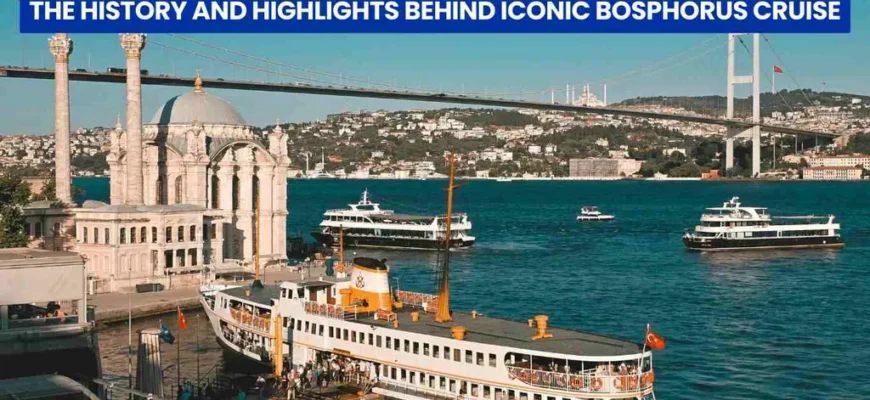
- Ortaköy Mosque: Standing right at the water edge, this Baroque mosque is perhaps the most photographed religious site on the strait.
- Rumeli Fortress: Built in just four months by Sultan Mehmed the Conqueror, this fortress was the key to conquering Constantinople.
- Anadolu Fortress: The older sister to Rumeli, this fortress sits on the Asian bank and marks the narrowest point of the strait.
- Maiden’s Tower: A lonely tower on a small islet that has served as a lighthouse, a quarantine station, and a defensive post throughout history.
- The Bridges: The modern suspension bridges connect the two continents and represent the engineering prowess of the modern era.
Each of these structures adds a layer of depth to the visual feast. Seeing the formidable walls of Rumeli Fortress immediately after passing the delicate beauty of Ortaköy Mosque highlights the contrast between war and peace that defines Istanbul.
Why the Bosphorus Route Became World Famous
The fame of the Bosphorus route comes from its unique geography. There is simply no other place on the planet where you can sail between two major continents while remaining in the same city. As the boat moves forward, you can look to your left to see Europe and look to your right to see Asia. This geographical anomaly has fascinated geographers and travelers for centuries.
Photographers find the Bosphorus endless because the light changes constantly. The reflection of the water, the silhouette of the minarets, and the color of the sky create a dynamic canvas. International travel magazines consistently rank a cruise on the Bosporus as one of the top things to do before you die. It is iconic because it offers a panoramic summary of Istanbul in a single journey, allowing visitors to grasp the massive scale and diverse beauty of the metropolis.
Different Cruise Options Showcasing Historical Beauty
Not every cruise offers the same historical perspective. The classic short tour is excellent for seeing the main palaces and the first bridge. It focuses heavily on the imperial history of the 19th century. The full Bosphorus tour, however, takes you further north towards the Black Sea, where you see the ancient fortifications and the greener, wilder side of the strait.
Sunset and night cruises offer a different kind of historical appreciation. Seeing the palaces illuminated against the night sky emphasizes their architectural details in a way that daylight cannot. The lights reflect off the water, creating a romantic and mysterious atmosphere. Choosing the Best Bosphorus Tour depends entirely on which era of history you want to focus on. Whether it is the Byzantine fortifications or the Ottoman summer mansions, there is a route that highlights these specific treasures.
Modern Day Highlights That Add Value to the Experience
While the history is ancient, the experience is thoroughly modern. Today, cruise operators enhance the historical journey with digital tools. Many boats now offer multi language audio guide systems that use GPS to trigger stories exactly as you pass a landmark. This ensures you know exactly what you are looking at without needing a guidebook.
Luxury vessels have also introduced premium services such as VIP decks and fine dining options. You can now enjoy a glass of Turkish wine while listening to the history of the Maiden’s Tower. These modern touches make the history accessible and enjoyable, allowing you to relax while absorbing the rich heritage of the city.
Why History Makes the Bosphorus Cruise Even More Impactful
You can certainly enjoy a Bosphorus cruise just for the wind in your hair and the blue water. However, knowing the history adds a profound emotional weight to the experience. When you know that the Rumeli Fortress was built to cut off aid to a dying empire, the stone walls look more imposing. When you know that the Dolmabahçe Palace was built to show the world that the Ottoman Empire was still powerful, the gold leaf details shine a little brighter.
Connecting the visual beauty with the historical narrative creates a much deeper travel memory. It allows you to see Istanbul not just as a collection of buildings, but as a living survivor of history. The Bosphorus cruise is the thread that ties all these stories together, presenting them to you in a flow of beauty and water.