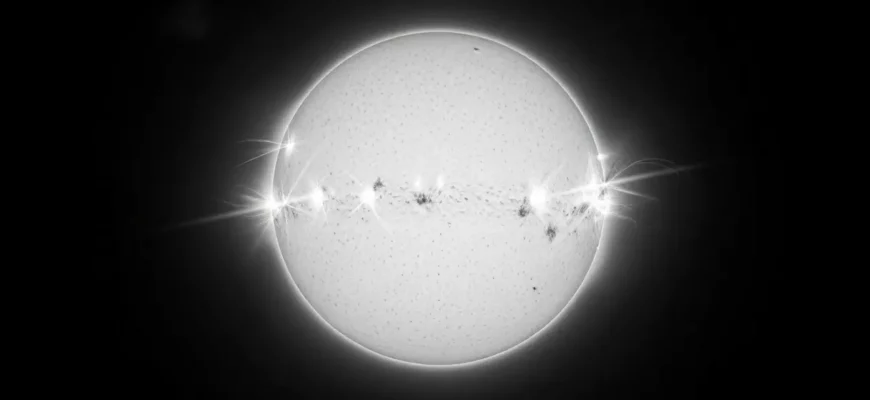
Over the past few days, the number of observed solar flares has sharply increased on the Sun. From March 28 to today (in less than 4 days), there have been over 50 flares, including one high-level X-class event ((March 28 at 16:21 UTC) and 11 medium-level M-class flares. The X-class flare on the 28th was accompanied by a large plasma ejection, which, however, was directed away from Earth.
The increase in activity appears to be systemic, as the number of active regions is growing simultaneously in both the northern and southern hemispheres. The strongest series of explosions is currently being recorded south of the solar equator in Active Region No. 4048. The center is still at a significant distance (about 60 degrees) from the Sun-Earth line, but it is reducing this angle by 15 degrees per day and will enter the zone of maximum impact by the middle of the week. However, it may start to slightly affect Earth as early as tomorrow, Tuesday. The risks associated with other solar regions are currently significantly lower but not zero. Overall, the situation is characterized as exceptionally dynamic and could shift in any direction at any moment.
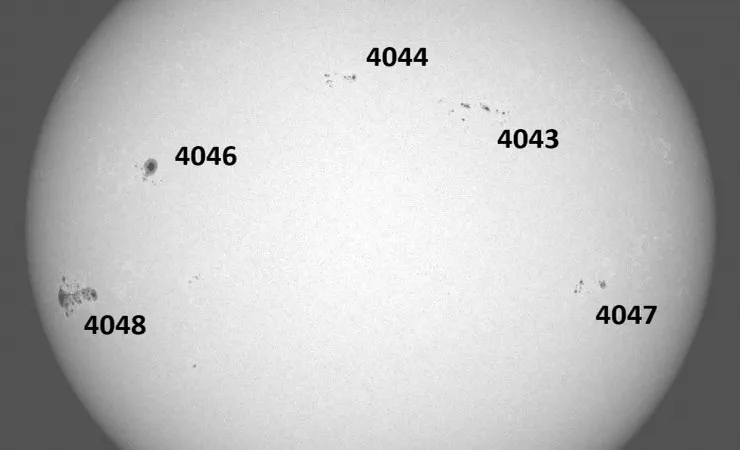
There is currently no direct forecast for magnetic storms, as the solar wind remains in a calm state, and flare activity is still occurring at a significant distance from the Sun-Earth line. Starting approximately tomorrow, flares in Region No. 4048 will begin to be factored into models, and the first red indicators may appear in forecasts. Further updates will follow as events develop.