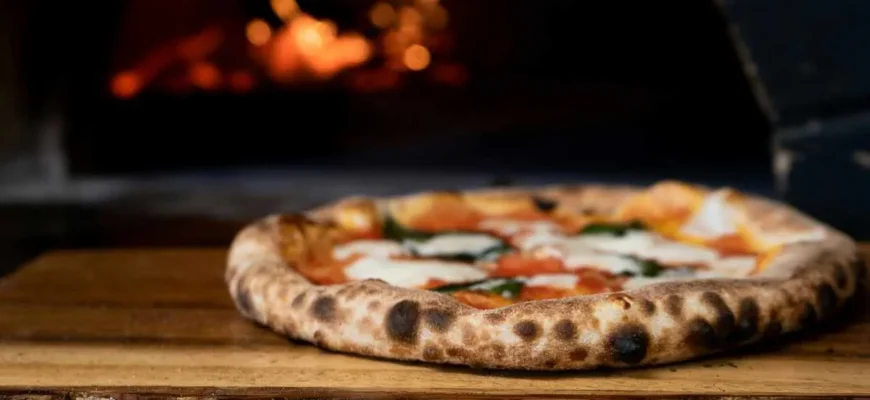
The question, still very relevant today, is: in the pinsa vs. pizza challenge, which one is lighter and easier to digest? To answer, we need to go beyond appearances—beyond the oval shape—and look at the dough, the technique, and the gastronomic philosophy that made pinsa a unique product, able to establish itself on an international scale.
Hidden ingredients, visible differences
Many associate pinsa with pizza only for aesthetic similarities, though the former is oval and the latter is round. The real difference lies in the base. The original pinsa recipe, created by Corrado Di Marco in the early 2000s, was born from a precisely calibrated flour blend: high-quality wheat, soy, rice, and dried sourdough starter. This created an elastic, light dough that stays crisp on the outside and soft on the inside.
Looking deeper into pinsa vs pizza guide, we quickly discover that the real innovation isn’t visible to the naked eye. It’s not the toppings that make pinsa different, nor the striking oval shape, but the balance of high hydration, long fermentation times, and minimal fat. This is the key that made pinsa perceived as more digestible, while still remaining faithful to the authentic flavor consumers expect from an Italian leavened product.
Lightness born from time
If traditional pizza—especially until the 1980s—was often associated with quick doughs, heavy toppings, and little lightness, pinsa follows a very different philosophy. Its identity is rooted in a long fermentation, lasting up to 72 hours, which develops complex aromas and a more balanced structure. Water, present in much greater quantities than in classic pizza, makes the dough lighter, soft yet crunchy at the same time.
The research that led to the birth of pinsa was also cultural: the intention was to offer consumers a product aligned with a more conscious idea of nutrition, attentive to well-being without giving up sensory satisfaction. Today this approach feels natural, but twenty years ago it meant anticipating trends that would only later become mainstream.
That’s why speaking of digestibility means acknowledging a process aimed precisely at this: reducing the feeling of heaviness and restoring leavened bread’s role as an everyday food, without compromising on taste.
Pizza and pinsa, two traditions coexisting
Pizza has not lost its iconic strength; in fact, it remains a symbol of conviviality and national identity. Pinsa, on the other hand, was never meant to replace it but to stand alongside it, offering an alternative that interprets the same tradition in a contemporary way. Its oval shape, more balanced nutritional values, and lower calorie impact don’t erase the image of pizza but enrich it with a variant that speaks to different audiences, even international ones.
Today there are many pinserie around the world, and the word “pinsa” has become synonymous with a recognizable, codified product. What once seemed like an experiment has turned into a gastronomic phenomenon that has won over professionals and consumers alike. Pizza is still beloved, but pinsa has carved out its own space thanks to its clear identity.
And so we return to the original question: in the challenge between pinsa and pizza, lightness and digestibility clearly lean in favor of pinsa. But in the end, these two products meet different needs. That is the real difference.
Pizza remains the timeless classic that has always been with us, while pinsa has brought a new idea of lightness to the table. And its international success is no coincidence: behind the more than five thousand pinserie worldwide lies the ability to capture a universal desire for authentic flavor without sacrificing well-being. The choice, therefore, is not exclusive. Pizza and pinsa coexist within the same Italian tradition, enriching it with diverse nuances.