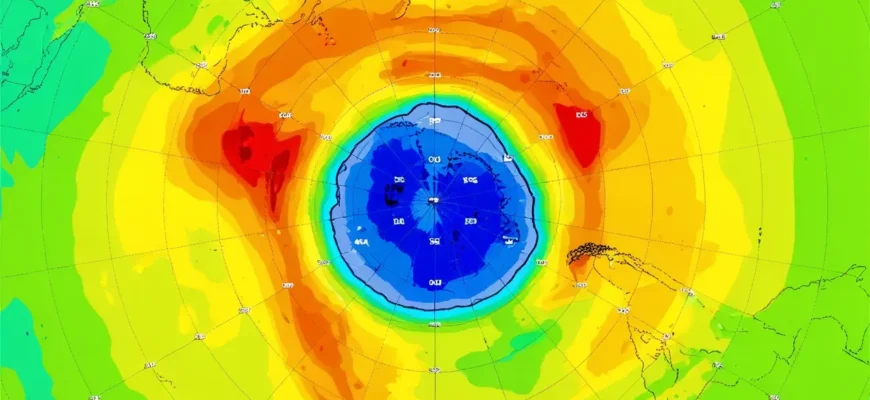
This is the result of joint efforts by the global community to reduce harmful emissions.
Scientists have confirmed that the ozone hole over Antarctica is recovering. In their opinion, this is happening thanks to combined efforts to reduce emissions of ozone-depleting substances.
New research by specialists from the Massachusetts Institute of Technology has shown that the recovery of the ozone layer is in full swing. It has also been proven that the hole is closing specifically due to the reduction in emissions of ozone-depleting agents, and not due to natural weather fluctuations.
“With 95 percent certainty, we can say that the layer is recovering, and that’s amazing,” said chemist Susan Solomon. If the trend continues, the ozone layer over Antarctica could fully recover in about 10 years, she added.
The ozone layer is an area of the stratosphere at an altitude of 15 to 30 kilometers above the Earth’s surface, where the concentration of ozone is higher than in other parts of the atmosphere. By absorbing some of the harmful ultraviolet rays from the Sun, the layer protects life on our planet. In the 1970s and 1980s, it became clear that a huge hole was forming in the ozone layer over Antarctica.
The depletion of the layer was associated with chlorofluorocarbons — synthetic compounds that were once widely used in aerosol cans, solvents, and refrigerants. When they enter the stratosphere, they release chlorine atoms that catalyze the destruction of ozone molecules. The ozone layer was destroyed mainly over the South Pole due to extremely low temperatures, the presence of polar stratospheric clouds, and other conditions that retain ozone-depleting chemicals.
The Montreal Protocol, signed by 197 countries, came into force in 1989. It provides for the phasing out of ozone-depleting substances by industry, including chlorofluorocarbons. Over the past decade, there have been signs that the ozone hole is getting smaller every year, especially in September, when Antarctica traditionally begins to warm up and the hole increases, writes IFL Science.