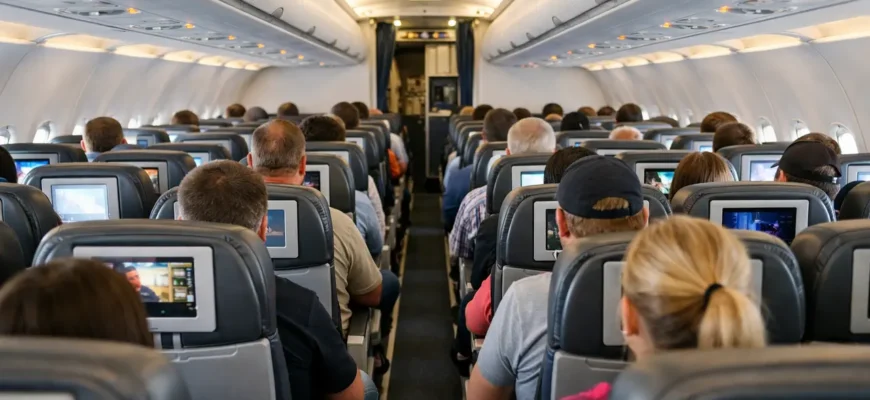
Swelling of the legs, face, and hands is one of the most common problems during flights, especially on long-haul flights. Just a few hours into a flight, many travelers experience heaviness in their legs, a feeling of “puffiness,” and discomfort.
The cause is a combination of factors: immobility, dry air, pressure changes, and prolonged sitting. All of this disrupts blood circulation and causes fluid retention in the body.
The good news is that swelling on a plane can be avoided by following simple yet effective rules. Let’s explore how to avoid puffiness during a flight and which methods really work.
For more interesting materials, fresh news, videos, and memes — check out our channel on Telegram
Why swelling occurs on a plane
Before moving on to recommendations, it’s important to understand the mechanism.
| Cause | How it affects |
| Prolonged sitting | Blood circulation worsens |
| Cabin pressure | Fluid retention |
| Dry air | Blood thickening |
| Lack of movement | Leg stagnation |
The longer the flight, the higher the likelihood of swelling.
How to avoid swelling during a flight
Move every 1–2 hours
The main cause of swelling is blood stagnation in the lower extremities. When a person sits still for a long time, blood circulates more slowly, and fluid begins to accumulate in the tissues.
Therefore, one of the most effective solutions is regular activity. Even on a plane, it’s important to get up, walk down the aisle, and change body position.
If you can’t get up, you can do simple exercises right in your seat: rotate your feet, lift your toes or heels, tense and relax your leg muscles.
These actions stimulate blood circulation and help prevent swelling. Even a little activity every 1–2 hours significantly reduces the risk.
Drink enough water
During a flight, the body loses moisture due to the dry air in the cabin. This leads to blood thickening and poorer circulation.
To avoid this, it’s important to drink water regularly. This helps maintain normal fluid balance and prevents water retention in the body.
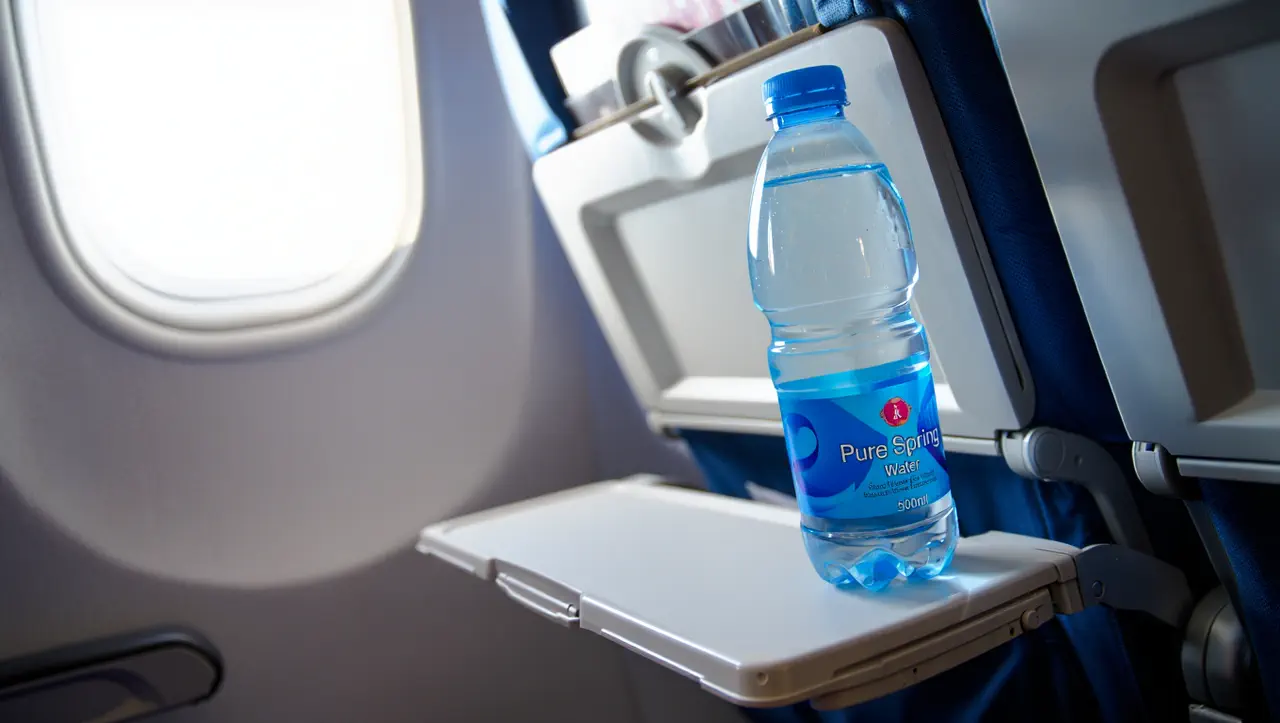
Many people make the mistake of reducing water intake to get up less often. But this only worsens the problem.
It’s better to drink small amounts regularly. This improves your overall condition and reduces the risk of swelling.
Avoid salty food and alcohol
Salt retains water in the body, which directly contributes to swelling. Alcohol, in turn, increases dehydration and disrupts water balance.
During a flight, it’s best to avoid salty snacks, fast food, and alcoholic beverages.
Light meals and moderation help the body endure the flight more easily and reduce the risk of fluid retention.
Wear comfortable clothes and shoes
Tight clothing and shoes impair blood circulation and worsen swelling. This is especially true for narrow jeans, belts, and shoes that fit tightly around the feet.
For a flight, choose loose clothing that doesn’t constrict the body. Shoes should be comfortable, with the ability to loosen pressure or remove them.
Use compression stockings
Compression stockings are one of the most effective ways to prevent swelling. They apply pressure to the legs, improving blood circulation.
These products are especially useful during long flights and for people prone to swelling.
Stockings help prevent blood stagnation and reduce stress on the blood vessels.
Try to keep your legs in the correct position
Leg position plays an important role. If your legs remain bent for a long time, blood circulation worsens.
Whenever possible, stretch your legs, change position, and avoid crossing them.
Even small changes in position help improve circulation and reduce the risk of swelling.
Interesting facts
- The humidity in an airplane cabin is lower than in a desert.
- Compression stockings reduce the risk of swelling by 30–40%.
- Movement is the most effective prevention method.
FAQ: frequently asked questions
— Why do legs swell on a plane?
— Due to prolonged sitting and poor blood circulation.
— How to avoid swelling?
— Move, drink water, and avoid salty foods.
— Do compression stockings help?
— Yes, they improve blood circulation and reduce the risk of swelling.
— Can you drink alcohol during a flight?
— It’s better to limit it, as alcohol increases dehydration.
— How often should you drink water?
— Regularly, in small portions throughout the flight.