Stuttgart, Germany: comprehensive information about the city of Stuttgart, major attractions with photos and descriptions, and a map.
City of Stuttgart (Germany)
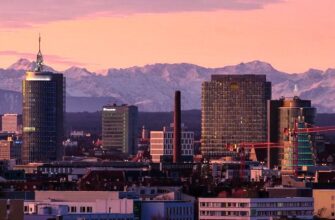
Stuttgart (German: Stuttgart) is one of the largest cities in southern Germany and the administrative capital of the state of Baden-Württemberg. With a population of over 600,000, it is one of the country’s industrial capitals. The city is home to the headquarters of the world-famous automobile manufacturers Mercedes and Porsche. Surprisingly, despite being a fairly large and industrial city, Stuttgart doesn’t feel like a metropolis. There’s a pleasant, cozy atmosphere throughout. Interestingly, locals speak German with a Swabian accent, though that doesn’t stop them from being friendly and open — even if your German is far from perfect.
Although Stuttgart was founded over 1,000 years ago, it won’t overwhelm you with an abundance of historical landmarks. But there is still plenty to see! Stuttgart is, above all, a city of high technology and industrial giants. It is the wealthiest city in Germany, though perhaps that isn’t immediately obvious.

The city is located in the historic region of Swabia on the banks of the Neckar River. The climate is temperate, with warm summers and mild winters. Warm weather typically lasts from May through September, though the weather is comfortable at other times of year as well. The average summer temperature is +20°C, and in winter it hovers around 0°C. Snow cover rarely lingers for more than a couple of weeks throughout the entire winter.
History and Interesting Facts
In antiquity, a Roman fortress stood in the vicinity of what is now Stuttgart. The city itself was founded in 950 by Duke Liudolf, son of Emperor Otto I. The Duke of Swabia built stables and initial fortifications here. The settlement was named Stutengarten (literally “mare’s garden” in German) and was eventually shortened to Stuttgart.
In the first half of the 13th century, the settlement came under the rule of the Margrave of Baden, who granted Stuttgart city status. In 1251, the city passed into the hands of the Württemberg nobility, remaining under their rule until 1918.
In the first half of the 14th century, Stuttgart became the capital of the County of Württemberg, and from the late 15th century onward — the capital of the Duchy of the same name. During the 16th century, Stuttgart was briefly under Austrian occupation.
After World War II, the city became the capital of the state of Baden-Württemberg.
How to Get There
Stuttgart has its own airport, served by flights from other German and European cities as well as from the United States. You can reach the city center from the airport via S-Bahn lines S2 and S3, with the journey taking about half an hour. Stuttgart is a major transportation hub, and arriving by train, bus, or car is straightforward. Public transport includes metro lines, suburban trains, and buses. The transport network operates on a zone-based fare system with a unified ticket.

Shopping
Stuttgart’s main shopping street is Königstraße, which starts at the central railway station. Shops are open Monday through Saturday until around 8 PM. On Sundays, almost all shops are closed. Stuttgart’s largest shopping center, Milaneo, is located close to the main station. A market operates on the Market Square on Tuesdays, Thursdays, and Saturdays.

Attractions and Landmarks
The most popular and interesting sights in Stuttgart.
The New Palace is the last major Baroque palace in Germany, built in the late 18th century. It was commissioned by Charles of Württemberg as a sort of German Versailles. It is an enormous palace complex with three wings and sculptures adorning its balustrades.

Palace Square (Schlossplatz) is one of Stuttgart’s central squares, adjoining the New Palace and forming the heart of the main shopping street, Königstraße. The square is a popular gathering place for locals and visitors alike. At its center stands a column erected in the 19th century to mark the anniversary of King Wilhelm’s reign. The square also features several fountains and benches. Walking down toward the Neckar River, you can stroll through the Palace Garden.

The Old Castle (Altes Schloss) is one of Stuttgart’s most ancient sites, with a history stretching back to the 10th century. In the 14th century, after the city passed to the Württembergs, the castle was substantially rebuilt. Remarkably, despite numerous alterations and reconstructions over the centuries, it has retained its medieval character. It lost its primary significance in the 18th century following the construction of the New Palace.
The Market Hall (Markthalle) is a building from the early 20th century, built in the Art Nouveau style. Here you can purchase the freshest local produce.
The Stuttgart TV Tower was built in the mid-20th century and stands 217 meters tall.

Adjacent to the Old Castle lies Schillerplatz, named in honor of the famous German poet and philosopher Friedrich Schiller, whose sculpture stands at the center of the square. Also located here is one of Stuttgart’s oldest brick buildings — the Old Chancellery — as well as the city’s oldest church, the Stiftskirche (Collegiate Church).
The Stiftskirche (Collegiate Church) is a Protestant church, originally founded in the 12th century. In the 14th and 15th centuries, the church was substantially rebuilt in the Late Gothic style. Ulrich of Württemberg and his wife are buried in the southern tower.
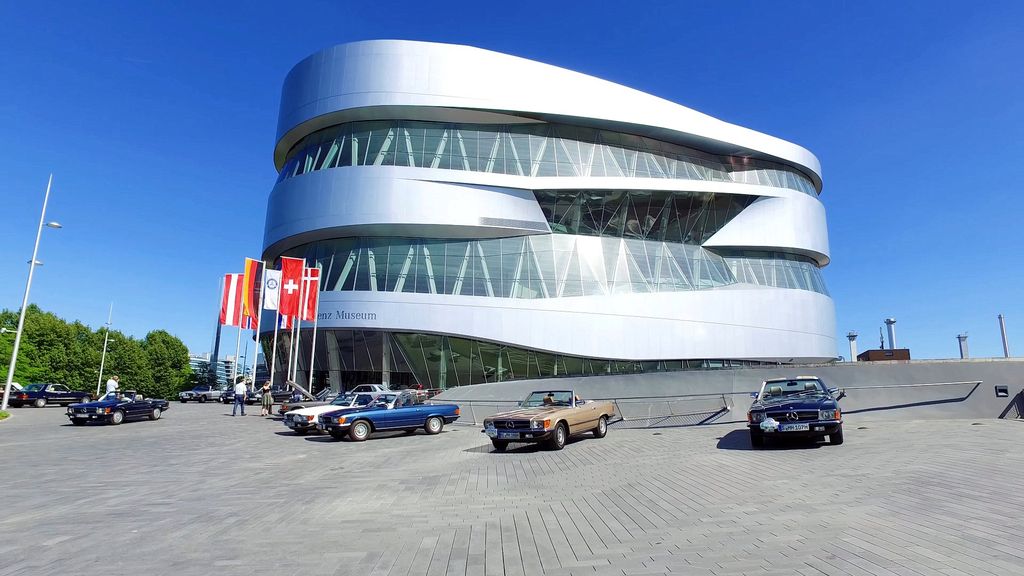
The Mercedes-Benz Museum is a dedicated automotive museum tracing more than a century of history of one of the world’s most iconic car brands. Across 16,500 square meters of exhibition space, over 150 vehicles and 1,500 exhibits are on display.
Another fascinating museum is dedicated to yet another legendary automotive brand — Porsche. The Porsche Museum displays more than 80 cars.

The Stuttgart Football Club Stadium — home ground of Swabia’s top sports team, which competes in the Bundesliga.

The Stuttgart State Opera is one of the most important opera houses in Germany. The historic building was constructed in the 17th century in the Renaissance style.

The Neo-Gothic St. John’s Church was built in the late 19th century and is situated in a picturesque setting on the banks of an artificial reservoir.
We also recommend visiting one of Stuttgart’s most distinctive neighborhoods — the Bean Quarter (Bohnenviertel). Once home to the city’s poorest residents, who grew and ate beans and peas to survive, it is now filled with antique shops, artists’ studios, cozy cafés, and wine bars.
One of the most romantic spots in the city is a chapel built by King Wilhelm in memory of his dearly beloved wife.
Video