Seville (Spain) – detailed information about the city with photos. Main attractions of Seville with descriptions, guides, and maps.
City of Seville (Spain)
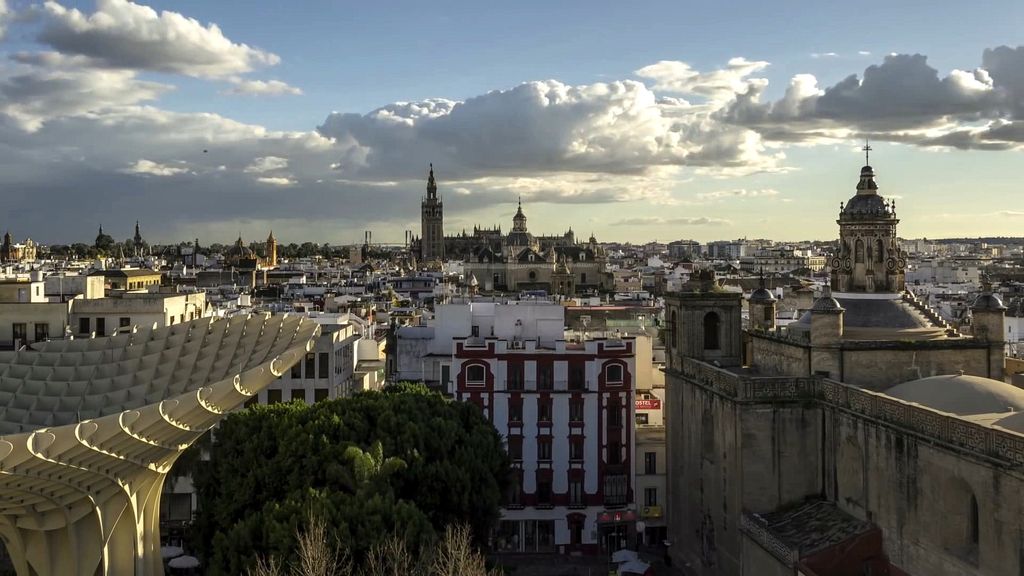
Seville (Spanish: Sevilla) is a city in southern Spain, the capital of Andalusia. It is located on a plain on the Guadalquivir River, which divides the city into two parts — the historic center (on the left bank) and Triana. Seville is one of the most charming cities in Spain, boasting amazing sights and relics of the past, exquisite architecture, and a magical atmosphere. Here, in the capital of Andalusia, Eastern and Western cultures, Moorish and Spanish historical heritage meet and mix whimsically. The city captivates at first sight; it is the true cultural and historical heart of Spain.
Seville is elegant buildings and cobblestones, antique street lamps and horse-drawn carriages, fiery flamenco rhythms, and as many as three UNESCO World Heritage Sites. Here you can see sights that are sure to impress! For example, Seville Cathedral — one of the largest Gothic churches in the world with a majestic tower that was once the minaret of an ancient mosque. Or the Moorish Alcázar Palace with its luxurious Mudejar decor and beautiful gardens. But the main charm of this city is hidden in the small courtyards and winding alleys of medieval Barrio Santa Cruz.
Geography and Weather
Seville is located in the fertile valley of the Guadalquivir River. The terrain is flat with an average elevation of 7 meters above sea level. The climate is subtropical Mediterranean with very hot summers and humid, mild winters.
Best Time to Visit
- September — January is one of the best seasons to visit Seville. During this time, there are relatively few tourists, and low prices for hotels and tickets. It is quite warm in winter, but it often rains.
- February — June is considered the high season. The most famous festivals take place during this period, the weather is wonderfully comfortable, and the long daylight hours allow you to do everything.
- July — August is not the best time to visit the capital of Andalusia. It is very hot here during this time. But if the heat does not scare you, you can enjoy Seville without crowds of tourists.
Practical Information
- Population – 703 thousand people (the fourth largest city in Spain).
- Area – 140 square kilometers.
- Language — Spanish.
- Currency — Euro.
- Visa — Schengen.
- Time — Central European UTC + 1, in summer + 2.
- Tap water is safe to drink in Seville.
- Do not eat the oranges that grow on the streets. They are sprayed to deter birds and are also sour.
Tourist information centers:
- Avenida de las Delicias, 9 (Monday — Friday from 9:30 AM to 5:00 PM, weekends and holidays from 10:00 AM to 2:00 PM).
- Marqués de Contadero (Monday — Friday from 9:00 AM to 7:00 PM, weekends and holidays from 10:00 AM to 2:00 PM).
History and Interesting Facts
Legend attributes the founding of Seville to the mythical Hercules. Several thousand years BC, Phoenicians already lived here, and in the 2nd century BC the Romans founded the city of Hispalis here. At the beginning of the 8th century, the settlement was conquered by the Arabs. At that time, the city was called Ishbiliya, which later transformed into modern Seville. In the 9th century, the future capital of Andalusia was destroyed by the Norsemen.
In the 11th century, Seville was conquered by the Berbers. In the 13th century, the city became part of the Kingdom of Castile. Its greatest prosperity came in the 15th-16th centuries. After the discovery of America, Seville became one of Spain’s main trading ports and one of the cultural and artistic centers of Southern Europe.
In the 17th century, the city’s importance began to decline, and by the early 18th century, Seville had lost its status as the main trading center of Spain.
How to Get There
Seville has an airport located half an hour’s drive from the historic center, connecting it to major Spanish cities and European capitals. A bus runs from the airport to the center every 30 minutes. You can also reach the city by taxi for about 25 euros.
Seville is easily accessible by train and bus. High-speed trains run from Barcelona and Madrid. The Santa Justa railway station is located in the northeastern part of the historic center.
Public transport consists of buses, one metro line, and a short tram section. The metro crosses the city from west to east. The tram runs from San Bernardo railway station to Plaza Nueva.
Shopping and Purchases
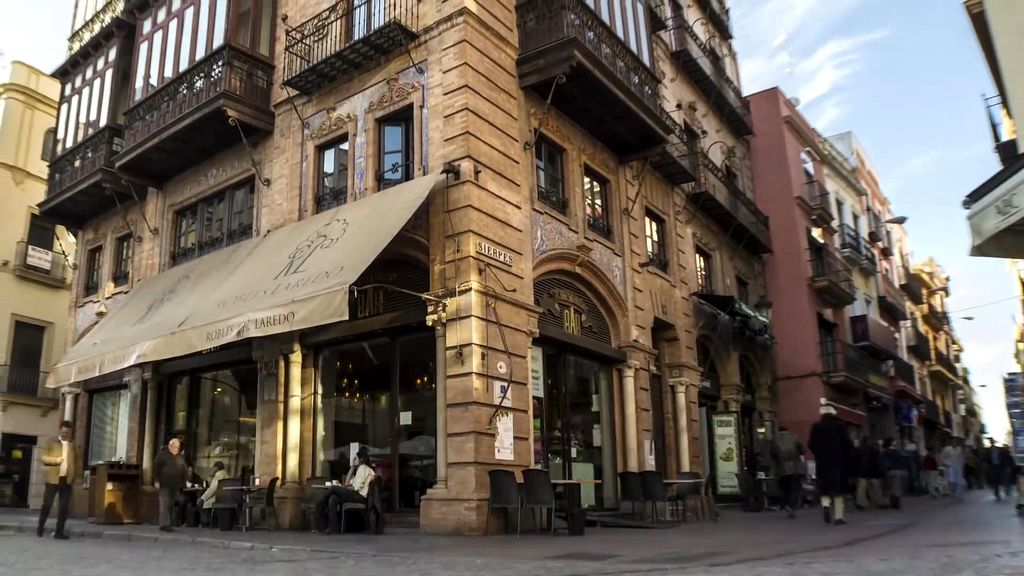
Seville is famous for its ceramics. Numerous shops (including those with traditional goods and souvenirs) can be found on the winding streets and alleys of the Santa Cruz district and throughout the old city.
Cuisine, Where to Eat
Seville is famous for its tapas (traditional appetizers). Typical tapas include tortilla española (potato omelet), aceitunas (olives), patatas bravas (spicy potatoes), and queso manchego (sheep’s milk cheese).
Overall, the capital of Andalusia has excellent, delicious cuisine and wine, with many restaurants and cafes that won’t leave you hungry. It is important to note that many restaurant kitchens start working in the evenings from 8 PM.
Sights and Landmarks
The most interesting sights and places in Seville.
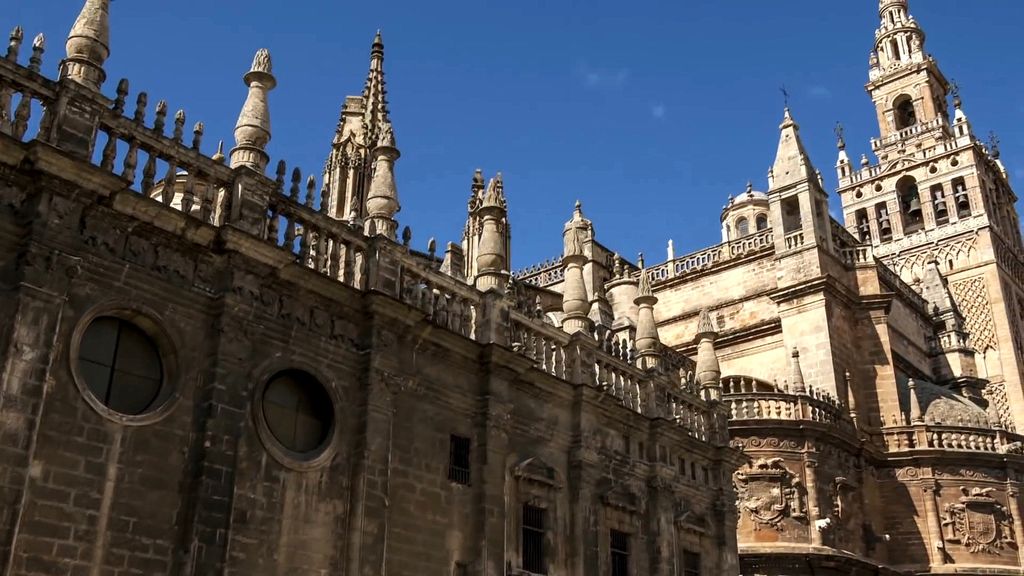
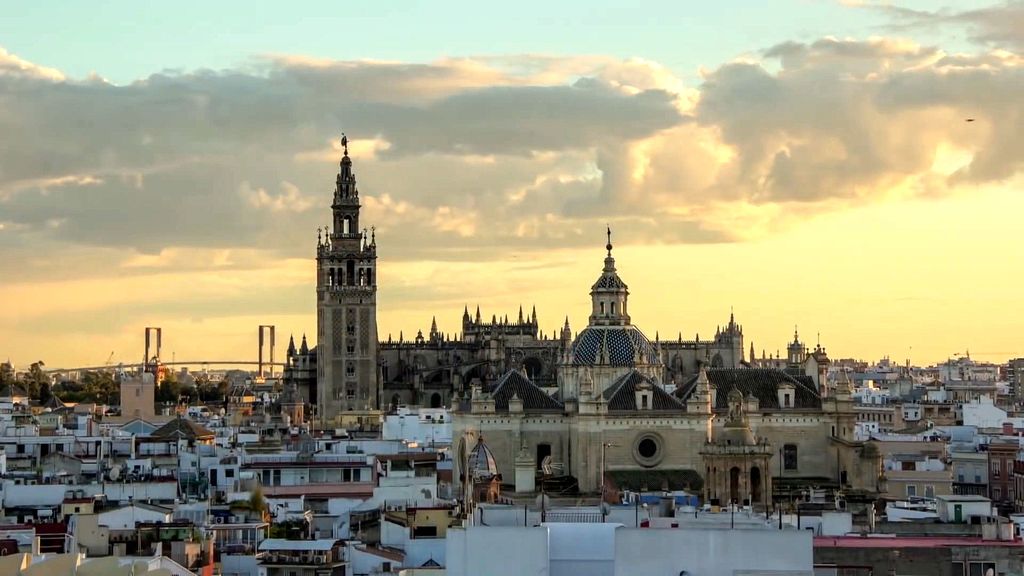
Seville Cathedral — the largest Gothic temple in the world, a UNESCO World Heritage Site. This religious building is exceeded in size only by St. Peter’s Cathedral in Rome and St. Paul’s in London. Interestingly, the cathedral was built on the site of a 12th-century Moorish mosque. Construction of the temple began in 1401, after the Spanish recaptured the city, and was finished only in 1506. Five years after construction, the dome collapsed. It was restored in 1519.
As many as eight doors lead into the cathedral, and its interior decoration is impressive. The temple has the longest nave and the largest altar in Spain. It is believed that the remains of Christopher Columbus are located here, as well as the tomb of Ferdinand III of Castile. Seville Cathedral is surrounded by small columns connected by huge chains. These chains were installed in 1565 to prevent merchants from entering the temple with their horses during bad weather. On the north facade, there is a collection of busts by the sculptor Susillo, each representing an important personality to the city.
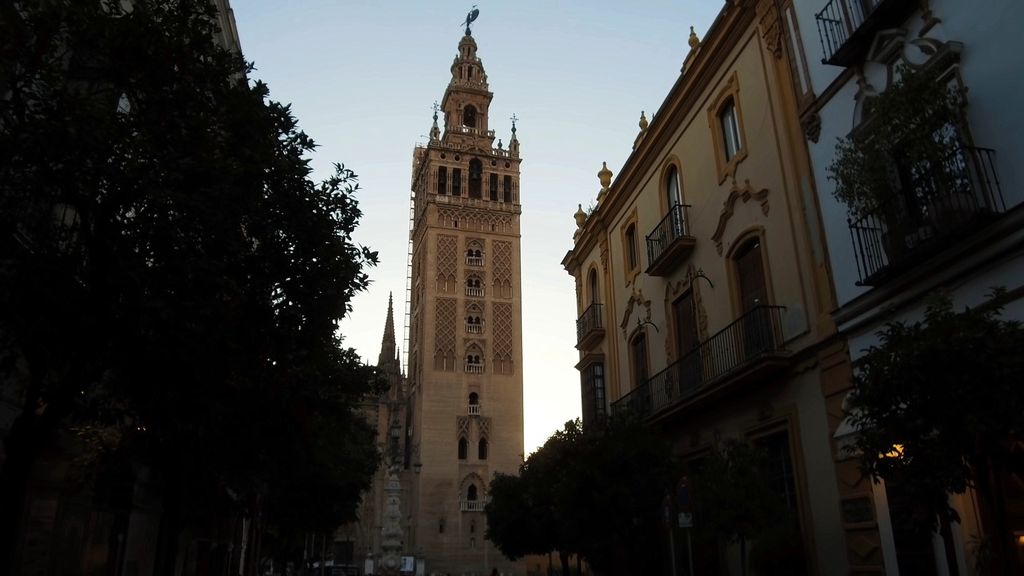
The Giralda — one of the main symbols of Andalusia, the bell tower of the cathedral. It is probably one of the oldest structures in Seville, built in the 12th century as the minaret of the mosque. The tower has a height of 97.5 meters and at that time was one of the tallest buildings in the world. The bell tower was remodeled in the Renaissance style in the 16th century, but it still retains features of Moorish architecture. From June to September, you can climb to the observation deck of the Giralda.

The Alcázar — another symbol of the capital of Andalusia, included in the UNESCO World Heritage Site list. The Royal Palace of Seville was originally a Moorish fort built in the 10th century by the first Caliph of Andalusia. Construction of the current royal palace began in the 14th century. It is the finest example of the Mudejar architectural style in Spain, although elements of Islamic architecture, Gothic, Renaissance, and Baroque are also distinctly visible.
Alcázar — a Spanish word, synonymous with a fortified castle. In fact, the word derives from the Arabic word “al-qasr”, meaning palace or fortress.
Originally, a Roman settlement was located on the site of the palace, later occupied by the Visigoths. In the 8th century, the city was conquered by the Arabs, who built a fortress here. In the 13th century, Fernando of Castile turned the fortress into a royal palace. In the 14th century, Pedro I rebuilt the Alcázar in the Mudejar style. Mudejar is characterized by being a mix of Muslim and Christian architectural elements. This style can only be found on the Iberian Peninsula.

Upon entering, be sure to pay attention to the Lion Gate. On the left is the Hall of Justice and part of the old Arab walls. On the right is the House of Trade, where Columbus was received after his second voyage. On the left side is the entrance to the inner courtyard and the 13th-century Gothic palace. If you go through the main entrance, you can see the Mudejar-style palace — the most beautiful building of the Alcázar.
Opening hours:
- Winter (October-March): Monday to Sunday from 9:30 AM to 5:00 PM
- Summer (April-September): Monday to Sunday from 9:30 AM to 7:00 PM
Church of San Salvador — the second largest religious building in Seville. It belongs to the Roman Catholic diocese. The building was erected on the foundations of Ibn Adabba — a 9th-century mosque. The church is distinguished by its beautiful architecture and impressive interior.

Torre del Oro (The Golden Tower) – one of the most recognizable landmarks of Seville, located by the Guadalquivir River. It was built in the 13th century during the rule of the Taifa kings, when Spain was occupied by the Moors. Currently, the walls of the Torre del Oro house a naval museum. Among the things you can see are old nautical charts, ship models, navigational instruments, and historical documents. The museum showcases the history of Seville’s navy and Spanish maritime history.

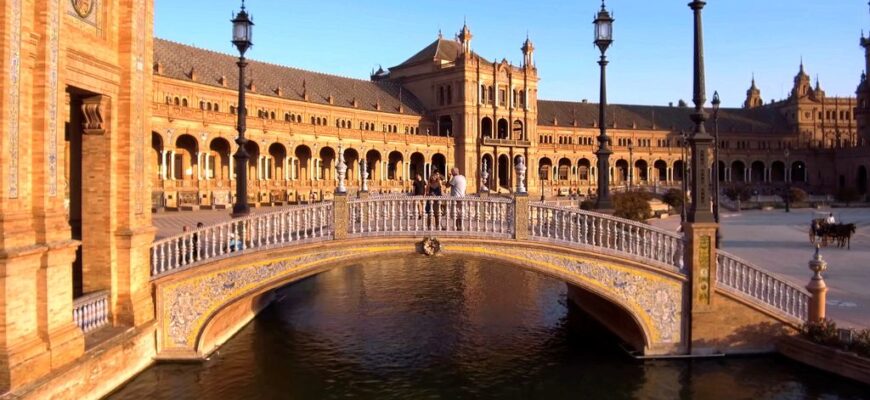
Plaza de España — one of the most amazing squares in Seville. It has the shape of an ellipse, a diameter of 200 m, and an area of about 50,000 square meters. Its architecture features a huge semicircular Renaissance-style building with balustrade balconies. There is also a monumental fountain on the square. The highlight of the square is the canal. Because of it, this place is often called the Seville Venice. The Maria Luisa Park is also located here.

De Los Venerables – a historic building of a former hospital in the Barrio de Santa Cruz district. This two-story 17th-century building is a classic example of the Baroque style that prevailed in Seville at that time. Inside, there is a small courtyard and a charming chapel.
Barrio Santa Cruz — one of the most charming quarters of Seville with old-fashioned charm. In the medieval era, this was the Jewish quarter. Most of the local churches are former synagogues. This medieval district is characterized by a labyrinth of cobblestone alleys (too narrow for cars) with orange trees, pretty houses with attractive courtyards, small cozy squares, and open-air cafes.
Plaza de Toros de la Maestranza – one of the largest bullrings in Spain. It accommodates 14,000 spectators. It was built in the 18th century.
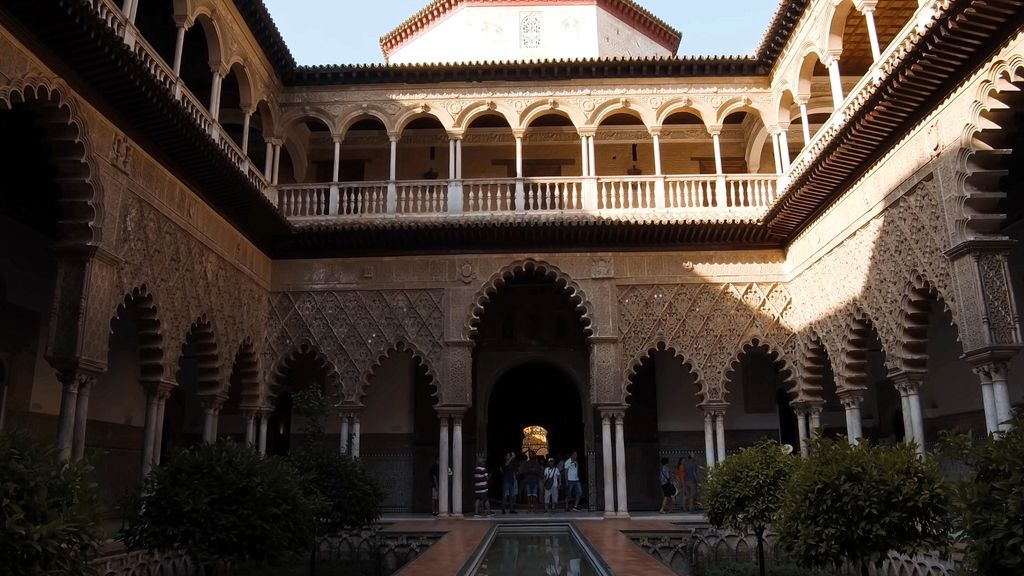
Casa de Pilatos — a historic building from the 16th century. It is considered a copy of Pilate’s house in Jerusalem. It combines Mudejar, Gothic, and Renaissance styles. The small inner courtyard has a fountain and is decorated with colorful tiles.
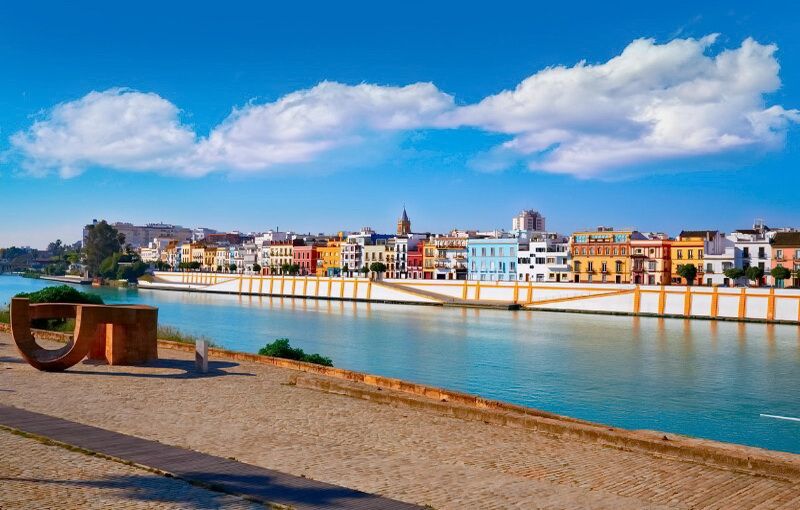
Barrio de Triana — a historic quarter of Seville with atmospheric streets and squares. It is a traditional artisans’ quarter. In the Triana district, you can find colorful ceramics and charming cafes with views of the river.
Landmarks, Interesting Places in the City
Interesting places in Seville worth seeing and visiting.
- Monasterio de Santa Paula — founded in the 15th century. Contains valuable works of art.
- El Costurero de la Reina — a charming building in Maria Luisa Park. It was reportedly built for the wife of Alfonso XII and literally translates as “the Queen’s sewing room”.
- City Walls. Seville has been surrounded by walls since the times of the Roman Empire. During the Moorish invasion, the fortifications were expanded. The walls of Seville had a length of 7 km, 166 towers, and 13 gates. Most of the fortifications were demolished in the 19th century. Sections of the old walls and a gate can be seen near the Macarena Church.
- El Postigo (The Oil Gate) – the most famous entrance to the city. It was built in the 12th century by the Arabs.
- The Royal Shipyards next to the Guadalquivir River. They were used as dry docks in the 15th century.
- Torre de la Plata (The Silver Tower) – one of the preserved towers of the original Arab walls. Dates back to the 13th century.
- Andalusian Parliament — monumental historic building from the 16th century.
- Ayuntamiento (City Hall) – a historic 16th-century building in the Renaissance style.
- Flamenco Dance Museum is dedicated to Spain’s most famous dance.
- Museum of Fine Arts — the collection covers works of art from the Gothic period to the 20th century. Considered the second-best museum after Madrid’s Prado.
- Archaeological Museum — an interesting collection of antiquities from the Paleolithic and Phoenician eras.