Your complete resource for visiting Patras - from ancient ruins to vibrant nightlife. See what makes this Peloponnesian city special.
City of Patras (Greece)
Patras (Greek: Πάτρα) is the third-largest city in Greece, located in the northwest of the Peloponnese peninsula. Thanks to its geographical position and large port, it’s considered the “western gateway” of the country. Patras is the largest city in the Peloponnese with vibrant nightlife, a major university, and several interesting historical landmarks. The city’s symbols are the medieval castle situated on a hill above the historic center and the Church of St. Andrew. Near Patras lie the ruins of ancient Olympia and the picturesque coastal town of Nafpaktos.
Geography and Climate
Patras is located in southern Greece in the northwestern part of the Peloponnese peninsula on the shores of the Patraikos Gulf. The distance to Athens is about 180 km. The climate is Mediterranean. Summers are warm, but not excessively hot. Winters are mild with average temperatures of 5-10 °C.

Practical Information
- Population – over 160 thousand people.
- Area – 57.41 km².
- Language – Greek.
- Currency – Euro.
- Visa – Schengen.
- Time – UTC +2, summer +3.
- Patras is one of the best shopping cities in Greece. The largest shopping center is Notos Galleries.
- Patras is famous for wines from the Achaia Clauss winery. The most popular variety is Mavrodafni.
- Food here is cheaper than in Athens. In the Old Town, it’s easy to find good places with simple and delicious Greek cuisine.
- Patras is considered not the safest city in Greece. Although since the 90s things have improved significantly, and walking here is no more dangerous than in Athens or Thessaloniki.
- Patras is famous for its carnival, which is one of the largest in Europe. It takes place in the second half of January.
History
Patras was founded in the 6th century BC by settlers from Sparta. However, modern research indicates the first settlements dating back to the third millennium BC. In 62 AD, Apostle Andrew the First-Called was martyred here. During the Roman period, Patras became one of the most important trading cities in the Mediterranean. The Romans built an odeon, an amphitheater, and engineering systems here.
In the 3rd century BC, the city declined. A new period of prosperity began in the 9th century. In 1205, the city became part of the Principality of Achaea. From 1408 to 1430, Patras was ruled by the Venetians. In 1458, the city was captured by the Turks, and in 1687 it came under Venetian rule again. In 1715, Patras became part of the Ottoman Empire again. The city became Greek during the War of Independence in 1821-1829.
How to Get There
The airport is located at the Araxos military base and handles a limited number of flights and charters. Athens Airport is located about 250 km northeast. Patras is the “gateway to Italy” and has ferry connections with Venice, Bari, Ancona, and Trieste.
Best Hotels in the City
Landmarks
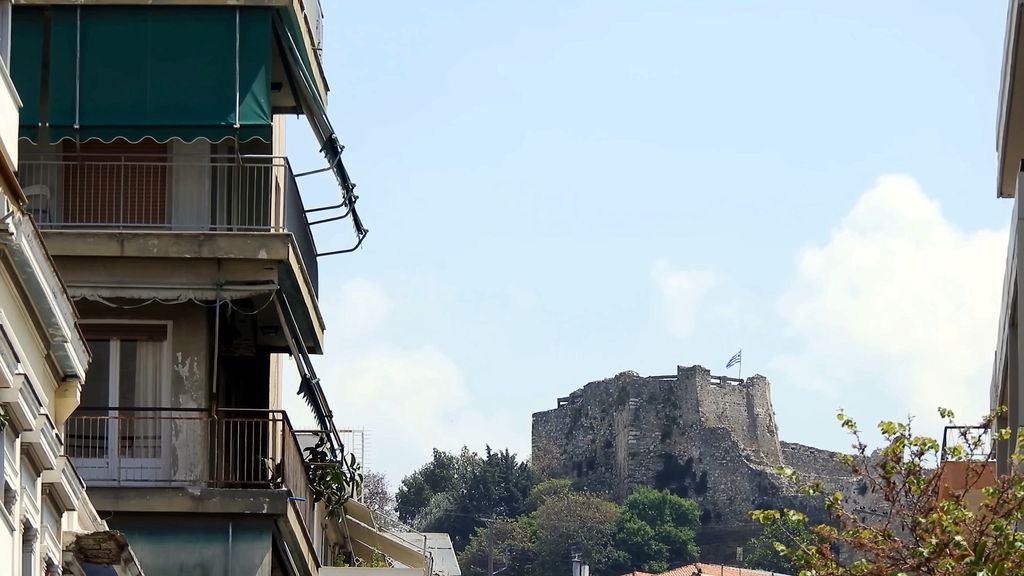
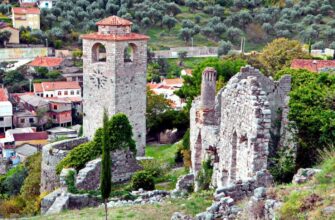
Kastro Castle – a medieval castle on the site of the ancient acropolis, founded in the 6th century during the reign of Justinian. Located on a hill 800 meters from the sea and is the symbol of Patras. The castle served as an administrative center and defensive stronghold during Byzantine, Frankish, Venetian, and Ottoman rule. All these rulers rebuilt and strengthened the structure, so you can see fragments from various historical periods here. The castle covers an area of over 20,000 m². It has a triangular structure reinforced with towers and ramparts.

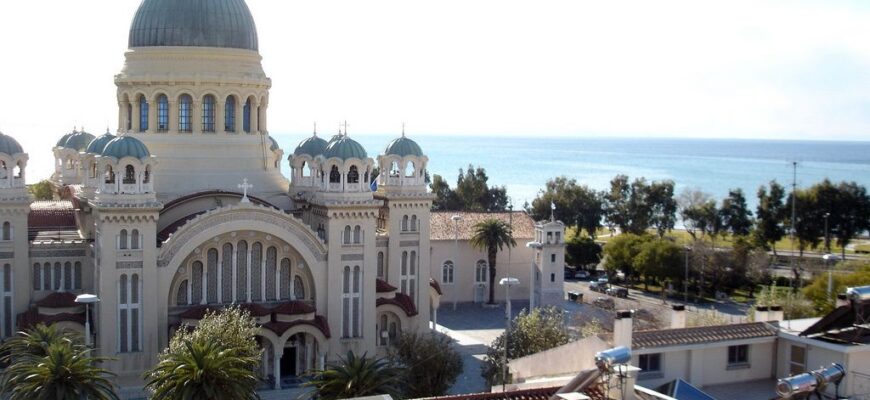
Church of St. Andrew – one of the largest religious buildings in the Balkans. Built in 1974 and dedicated to Saint Andrew the Apostle, who was crucified in Patras. The central dome rises to a height of 46 meters and is topped with a 5-meter gilded cross.
Odeon – a Roman theater built in 160 AD. According to eyewitness accounts, its decorative beauty was second only to its counterpart in Athens. The odeon was an extension of the ancient Agora. It was destroyed during wars and earthquakes. The odeon was discovered in 1889 during excavation works and restored in 1965.
 Lighthouse (Faros) was built in 1999 in a historically accurate style near the Church of St. Andrew.

Rion-Antirion Bridge – the longest multi-span cable-stayed bridge in Europe, opened in 2004. Its length is over 2 km.

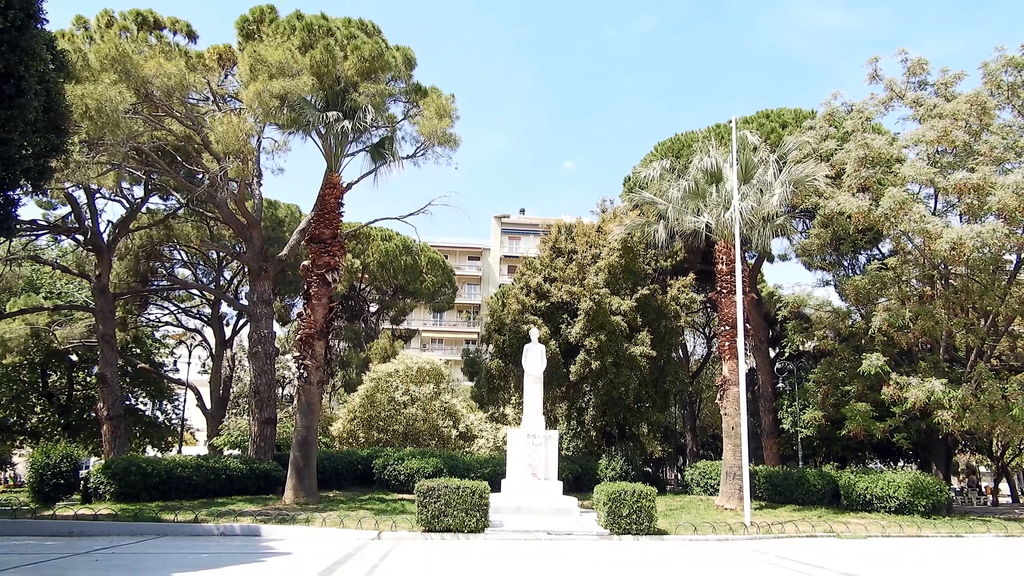
Georgiou I Square – the central square in Patras with two fountains on the north and south sides. It was designed in the mid-19th century.
Patras – The Pearl of Western Greece Where History Meets Modernity
Patras is an amazing place where ancient history organically combines with modern life. This third-largest city in Greece, located by the clear waters of the Patraikos Gulf, offers visitors a unique atmosphere that you won’t find in more popular Athens or the famous islands.
As you walk through the streets of this city, you’ll feel its distinctive spirit. Patras is a territory where grand history, from antiquity through the Middle Ages, forms a special character. The majestic Kastro Castle overlooking the city, the impressive Church of St. Andrew, and the Roman Odeon – all these are witnesses to centuries of events that shaped Patras’ identity.
But Patras isn’t just about historical sites. It’s a modern university city famous for its vibrant nightlife, colorful carnival celebrations, and delicious, affordable food. All these factors make it attractive to various visitors. Whether you seek cultural enrichment or simply want to experience authentic Greek hospitality, Patras will provide everything needed for a wonderful vacation.
So when planning your trip to Greece, don’t forget about these “western gates” of the country. Patras, which successfully combines centuries-old heritage with modern life rhythms, will undoubtedly give you unforgettable moments and inspire you to return again and again.