Your perfect Nuremberg itinerary – from gingerbread to Gothic churches. Learn about the castle, WWII history, where to eat, and how to explore this Bavarian treasure.
Nuremberg, Germany: Must-See Sights & Best Things to Do
Nuremberg (German: Nürnberg, Bavarian: Niamberg, Franconian: Nämberch) is a city in Germany, located in the southeastern part of the country in the federal state of Bavaria on the banks of the small Pegnitz River. This is a city with nearly a thousand years of history, a city of toys, gingerbread, Bavarian sausages, and interesting sights. Nuremberg is the second most populous city in Bavaria after Munich, with almost half a million residents. Nuremberg is one of the most economically developed cities in Germany and ranks among the top 25 cities in the world with the highest standard of living.
Nuremberg is often called the capital of Northern Bavaria, a title it holds with good reason. It is the most important cultural, tourist, and economic center in all of southeastern Germany.

History
The history of the city begins with its first written mention in 1050. At that time, a fortress called Norenberc was built on a rocky cliff above the Pegnitz River. It is believed that the city’s name comes from the word “Nor,” meaning “rocky cliff.”
Its advantageous location ensured Nuremberg’s prosperity, and the fortress became the residence of German kings. King Conrad II built a royal court on the left bank of the river (now part of the historic city center).

In the early 12th century, the castle and settlement suffered during the conflict between King Henry IV and his son Henry V. The castle was handed over to the noble von Raabs family. In the first half of the 12th century, King Conrad III began expanding the castle, which was completed in 1180 by Emperor Frederick I Barbarossa, who made it an imperial residence.
In the 13th century, Nuremberg’s importance grew, partly due to religious factors. The hermit St. Sebald lived and died near Nuremberg. The city’s first major church was built in his honor, housing his relics.
In the early 15th century, Emperor Sigismund decreed that the imperial regalia would be permanently stored in Nuremberg. This continued until the late 18th century when they were moved to Vienna under threat of French invasion.

The 15th and 16th centuries were prosperous for the city. Nuremberg gained influence, grew, and thrived. Trade, crafts, and science flourished, attracting renowned artists and scholars.
This prosperity lasted until the early 17th century when the Thirty Years’ War began. Maintaining neutrality, Nuremberg chose a strategy of paying off threats, which left the city in debt and slowed its economic growth.
The 18th and 19th centuries marked an industrial boom. Factories and manufactories were built, and the first German railway connected Nuremberg to Fürth. By the late 19th century, the city’s population exceeded 100,000.

In the early 20th century, Nuremberg became an ideological center of racism. In 1927, the first congress of the National Socialist Workers’ Party was held here.
World War II left a devastating mark on the city. Bombings destroyed 90% of the Old Town, which was only restored in 1966. From 1945 to 1949, the Nuremberg Trials—the trial of Nazi leaders—took place here.
Useful Information for Tourists
- Getting Around: Nuremberg is a compact city. The historic center is best explored on foot. If you prefer cycling, there are about 70 bike rental stations. Public transport includes buses, metro, and trams. Interestingly, in 2008, a fully automated metro line was introduced.
- Tourist Information Centers: Königstraße 93, 90402 Nürnberg and Hauptmarkt 18, 90403 Nürnberg.
- Tourist Tax: Nuremberg does not charge a tourist tax.
How to Get to Nuremberg?
Nuremberg has a large international airport with flights from major cities in Ukraine and the CIS.
From other cities in Germany and Europe, Nuremberg can be reached by train or bus. Check schedules and buy tickets here: https://www.bahn.de/p/view/angebot/index.shtml.
Accommodation
Finding accommodation in Nuremberg is easy if planned in advance. There are numerous hotels, guesthouses, and apartments in various price ranges. Budget travelers can stay in hostels. Since Bavaria is one of the most expensive regions in Germany, prices for accommodation and food are slightly higher than the national average and significantly higher than neighboring Czech Republic and Poland.
Shopping
Nuremberg offers excellent shopping opportunities, with many stores selling souvenirs, clothing, and more.
The largest shopping center in Nuremberg is Franken-Center Nürnberg, featuring over 100 stores, including discount outlets.
Nuremberg also has many farmers’ markets offering relatively affordable fresh produce, vegetables, and fruits.
Seasonal Markets in Nuremberg
Nuremberg’s seasonal markets are famous not only in Germany but beyond:
- Christmas Market (December 1 onwards) – Held in the old city center.
- Easter Market – Features Easter decorations, tableware, food, and more.
- Germany’s Largest Flea Market (May 12-13) – Offers antiques and unique items.
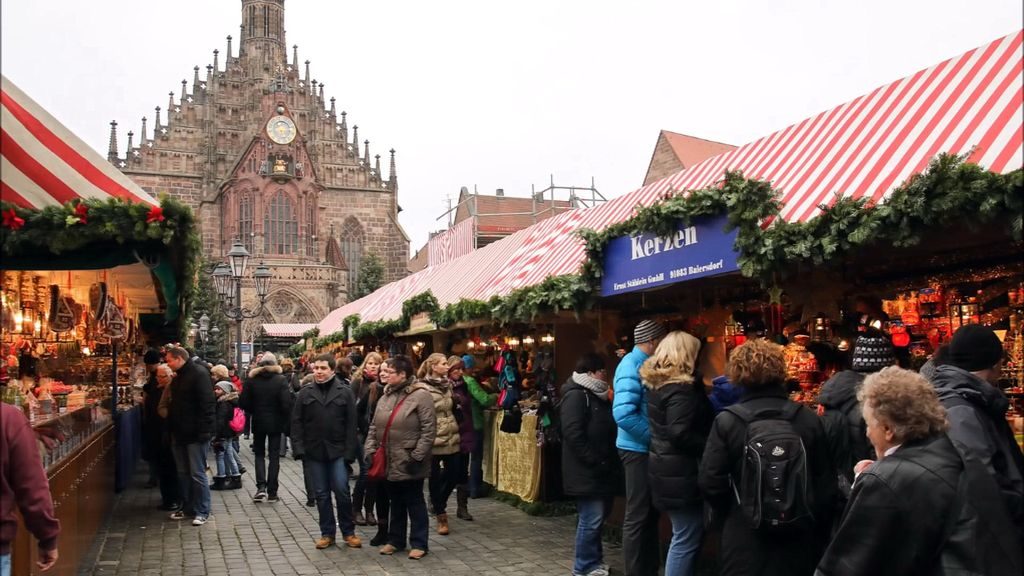
Nuremberg Christmas Market

Museums in Nuremberg
Nuremberg is a paradise for museum lovers. Here are some of the most interesting ones:
- Germanisches Nationalmuseum – Kartäusergasse 1, D-90402 Nürnberg. Open Tue-Sun 10 AM–6 PM, Wed 10 AM–9 PM.
- Kaiserburg (Imperial Castle) – Auf der Burg 13, 90403 Nürnberg. Open Apr-Sep: 9 AM–6 PM, Oct-Mar: 10 AM–4 PM.
- Natural History Museum – Marientorgraben 8, 90402 Nürnberg. Open Mon-Thu & Sun 10 AM–5 PM, Fri 10 AM–9 PM.
- Toy Museum – Karlstraße 13-15, 90403 Nürnberg. Open Tue-Fri 10 AM–5 PM, weekends 10 AM–6 PM.
Cuisine and Dining
Nuremberg offers a wide range of restaurants serving regional, European, and Eastern cuisine, as well as popular fast-food chains. Regional dishes include Bavarian and Franconian specialties.
Soups:
- Fränkische Hochzeitssuppe – Franconian wedding soup
- Fränkische Metzelsuppe – Franconian meat soup
- Fränkische Sauerampfersuppe – Franconian sorrel soup
- Leberklößsuppe – liver dumpling soup
- Petersiliensuppe – parsley soup
- Bohnensuppe – bean soup
- Aischer Fischsuppe – fish soup
Appetizers & Salads
- Ochsenmaulsalat (beef tongue salad)
- Nürnberger Bratwurstzwiebel (Nuremberg sausage with onions)
- Bauernseufzer (smoked sausage, served cold or warm)
- Nackerte (sausage filling)
- Fränkische Wurst- or Bratwurstsülze (Franconian sausage aspic)
- Stadtwurst mit Musik (city sausage with onions)
- Ziebeleskäs (cheese spread)
- Nürnberger Gwerch-Wurstsalat auf Nürnberger Art (sausage salad Nuremberg-style)
- Pressack mit Musik (headcheese with onions)
Desserts
- Versoffene Jungfrau (“drunken maiden” dessert)
- Kirschenmännla (cherry dumplings)
- Gebackene Holunderblüten (fried elderflower fritters)
- Apfelkiechla (Apfelkrapfen – apple fritters)
- Knieküchle (fried dough pastries)
Must-Try Foods:
- Lebkuchen – Nuremberg gingerbread
- Bratwürste – grilled sausages
Regional Cuisine Restaurants on the Map
The most popular drink is beer. The best beer halls are marked on the map:
Nuremberg’s Top Attractions
Nuremberg boasts numerous fascinating landmarks—ancient cathedrals, historic buildings, the impressive Imperial Castle, and much more.
Imperial Castle (Kaiserburg)
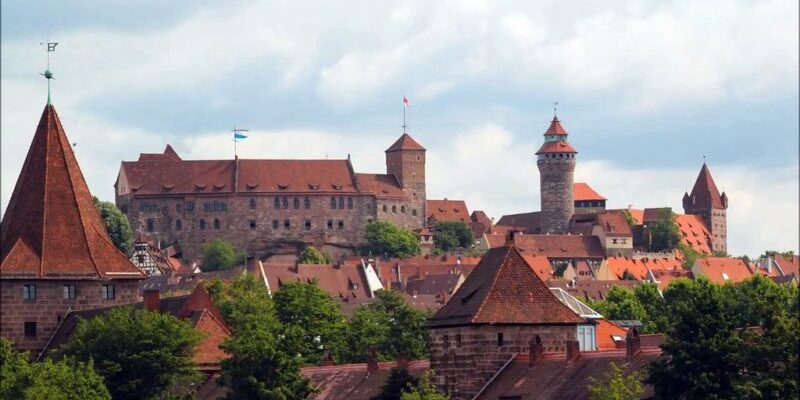
Perched on a sandstone cliff overlooking the city, Kaiserburg (Imperial Castle) is one of Nuremberg’s most iconic landmarks. Dating back to around 1200, it played a crucial role in the city’s and Germany’s history.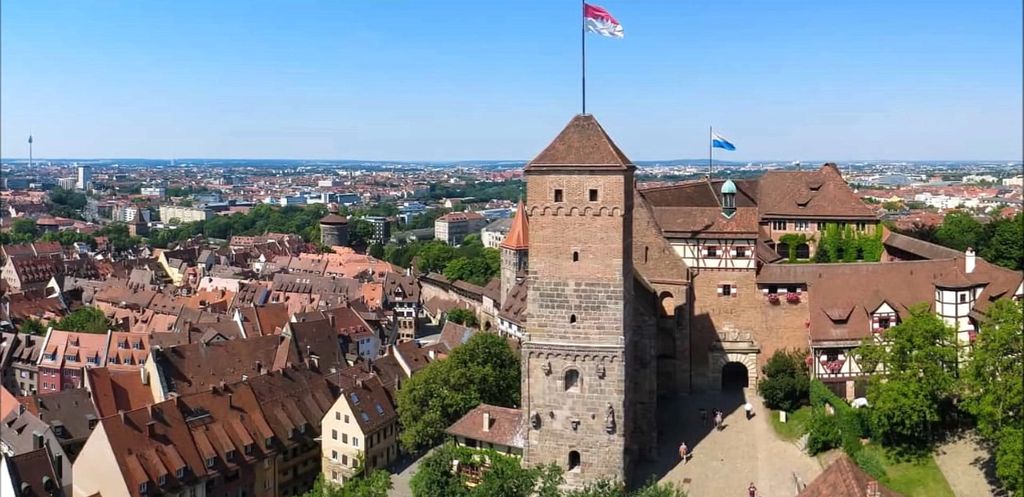
The first written records of the castle date to 1050. By the 12th century, it became an imperial residence and was expanded.
In the late Middle Ages, Nuremberg became one of the empire’s most influential cities. Charles IV decreed that every newly elected emperor must hold their first Reichstag (imperial assembly) here—a tradition that lasted until the late 17th century.
In the early 15th century, Emperor Sigismund ordered the imperial regalia to be stored in Kaiserburg as a sign of special trust.
In the early 19th century, after the Holy Roman Empire dissolved, the city became part of the Kingdom of Bavaria, and the castle became a monument to German history.
During World War II, the castle was heavily damaged, though many Romanesque and Gothic elements survived intact.
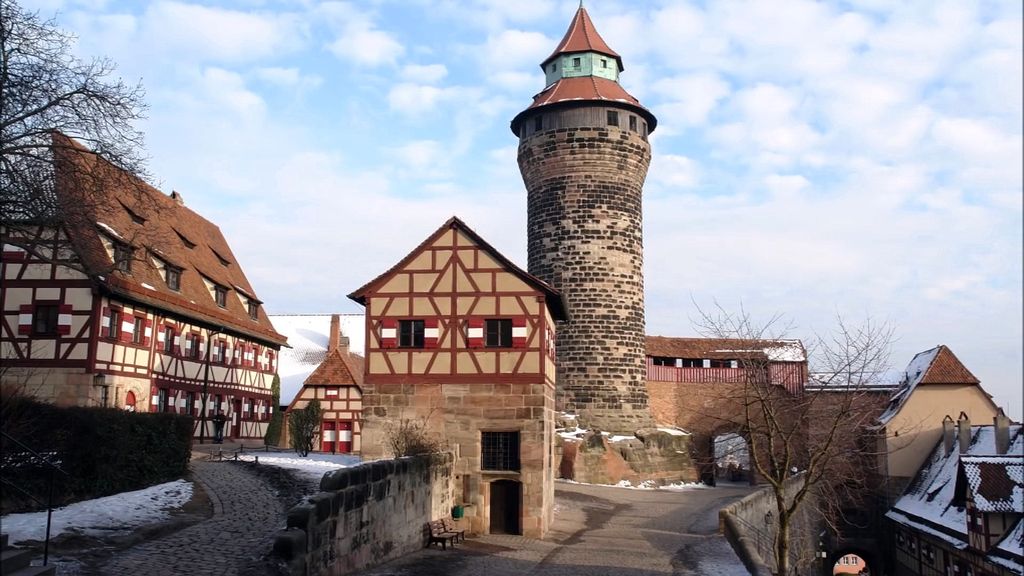
Kaiserburg is one of Germany’s largest castles, featuring a closed system with three gates and powerful walls.
Castle Layout:

Key Features:
- Inner Courtyard
- Palas – A two-story building with living quarters and halls, built on the foundations of earlier 12th-century structures.
- Chapel – Adjacent to the palas.
- Museum – Exhibits weapons, armor, astronomical instruments, and artifacts related to Nuremberg’s history.
- Deep Well – Built in 1563, the well is 50 meters deep.
- Sinwell Tower – A 13th-century tower offering panoramic views of the Old Town, originally used as a keep for military purposes.
- Pentagonal Tower
- Chapel
- Stables
- Watchtower
Opening Hours: Apr-Sep: 9 AM–6 PM; Oct-Mar: 10 AM–4 PM (daily).
St. Sebaldus Church (St. Sebald)
St. Sebaldus Church is Nuremberg’s oldest church, dating back to the 13th century. The current building was completed in 1480. This beautiful Gothic church is dedicated to St. Sebald, a hermit who lived in the forest near Nuremberg in the 8th century. His relics are said to be housed here.

St. Lorenz Church (St. Lorenz)
St. Lorenz is a medieval Gothic church built around 1250. It is one of Nuremberg’s most beautiful cathedrals and a masterpiece of Gothic architecture.

This tall basilica is one of Nuremberg’s two major Protestant churches. Its towers exceed 80 meters in height, and the church has a belfry with 16 bells.
The interior features Gothic masterpieces, including a tabernacle, altars, sculptures, and frescoes.
Next to the church stands the Nassauerhaus, a medieval Gothic tower house.

Frauenkirche (Church of Our Lady)
Frauenkirche is one of Nuremberg’s most famous and beautiful churches, located in the heart of the Old Town on the eastern side of the market square.
This medieval Gothic church was built in the 14th century.
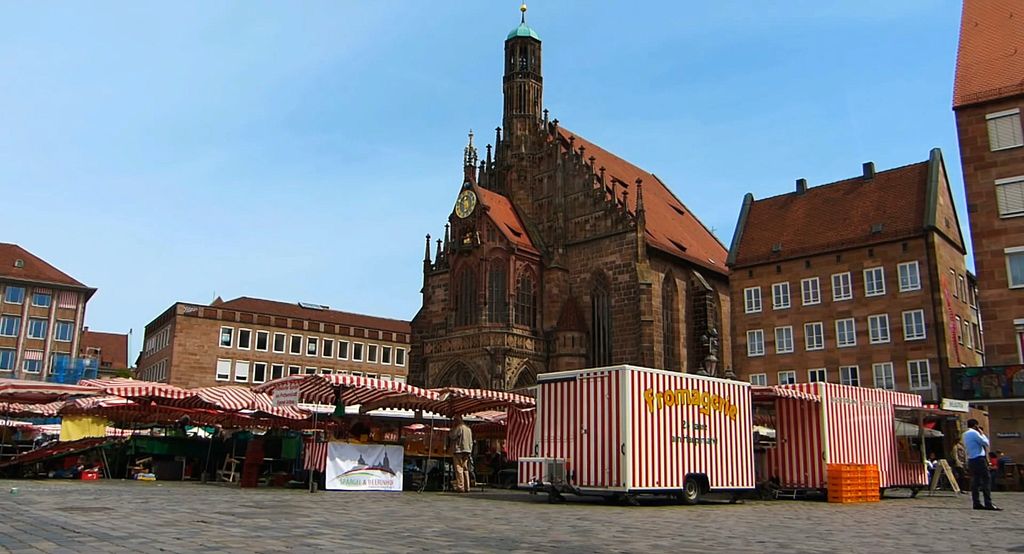
The façade features an early 16th-century astronomical clock.

Inside, the church houses numerous medieval artworks.
Beautiful Fountain (Schöner Brunnen)
This medieval fountain, built in the late 14th century on the market square, stands about 19 meters tall. Designed like a Gothic spire, it has been restored several times throughout history and is now open to visitors.
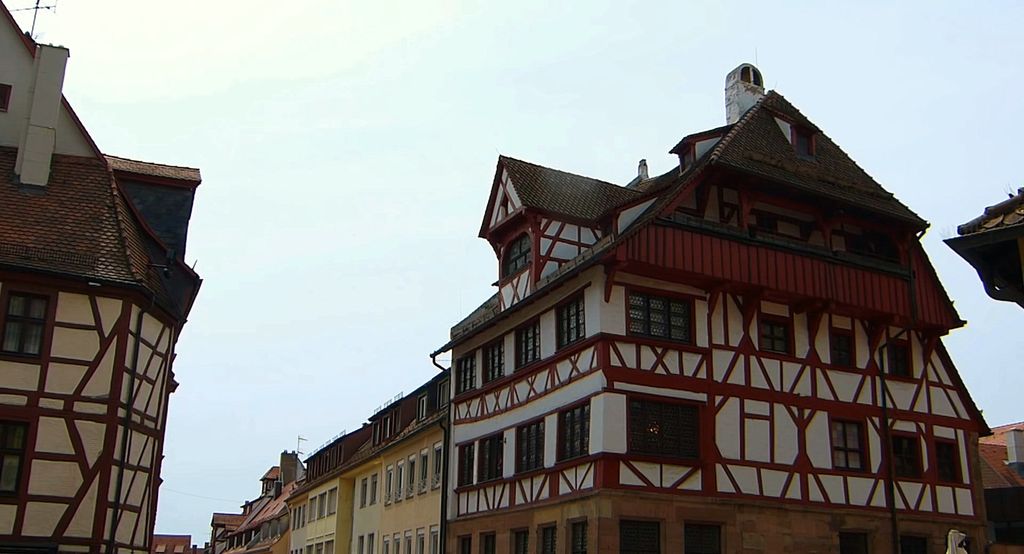
Albrecht Dürer’s House (Albrecht-Dürer-Haus)
Albrecht Dürer’s House is a beautiful late-medieval building where the famous Renaissance painter lived in the 15th century. Today, it houses a museum with exhibitions of his prints and paintings.
Old Town Hall (Altes Rathaus)
The Old Town Hall, built in the 16th century, is a masterpiece of Gothic architecture in Nuremberg’s historic center. Destroyed in World War II, it was later restored.

Pegnitz River Embankment
This historic district features medieval buildings and structures:
- A 15th-century sandstone arch bridge.
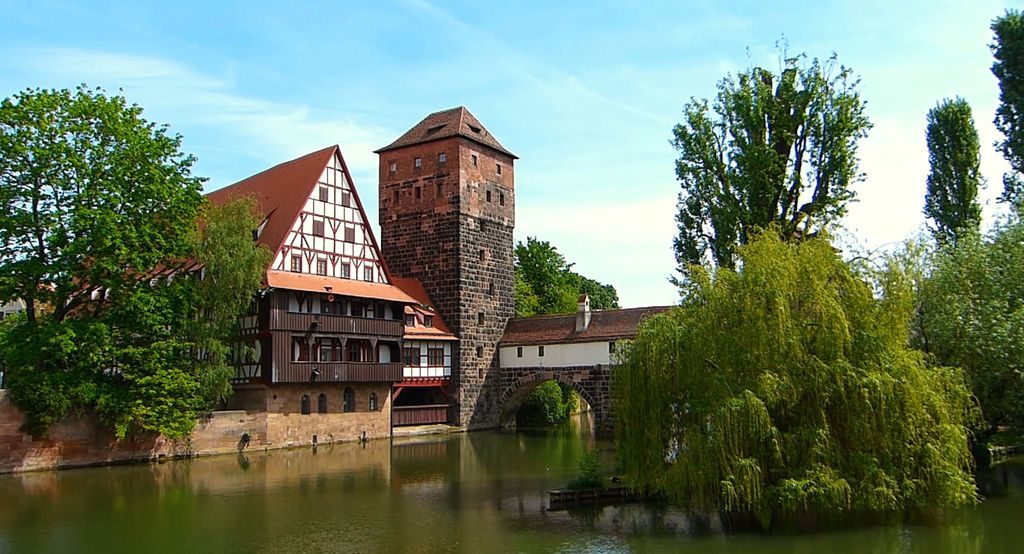
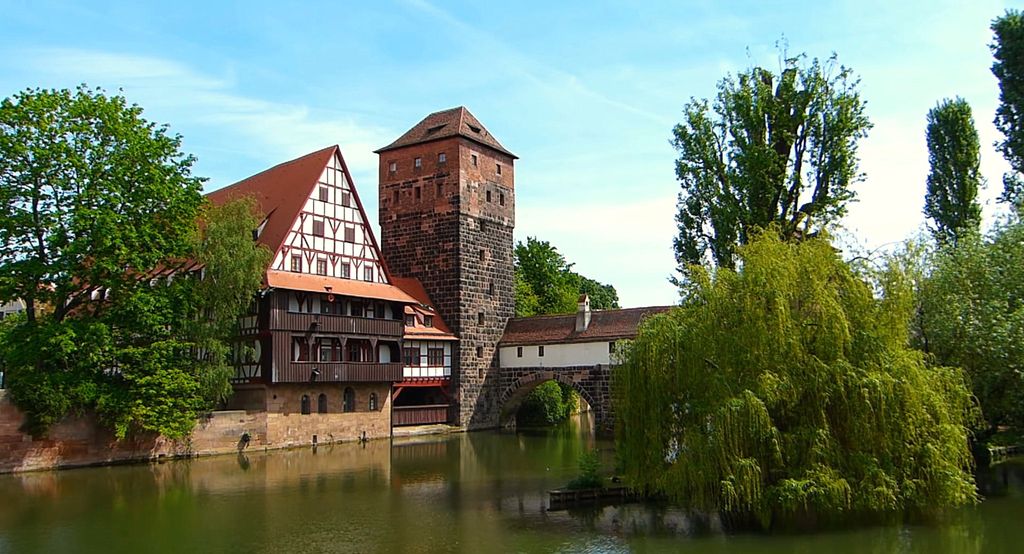
- Weinstadel (Wine Storehouse) – A 15th-century half-timbered building, one of Germany’s largest. Originally used as a wine storage facility, it stands near an old water tower.
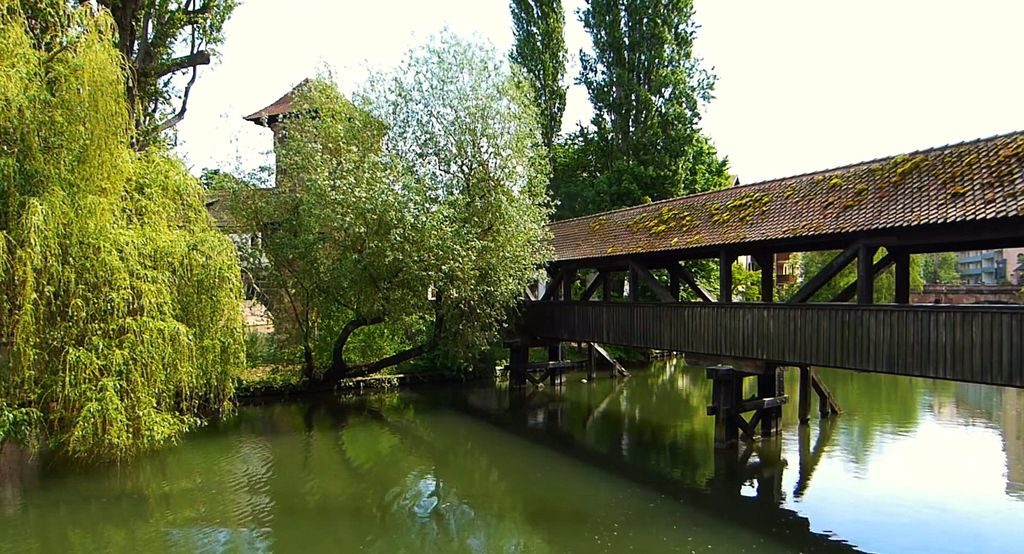
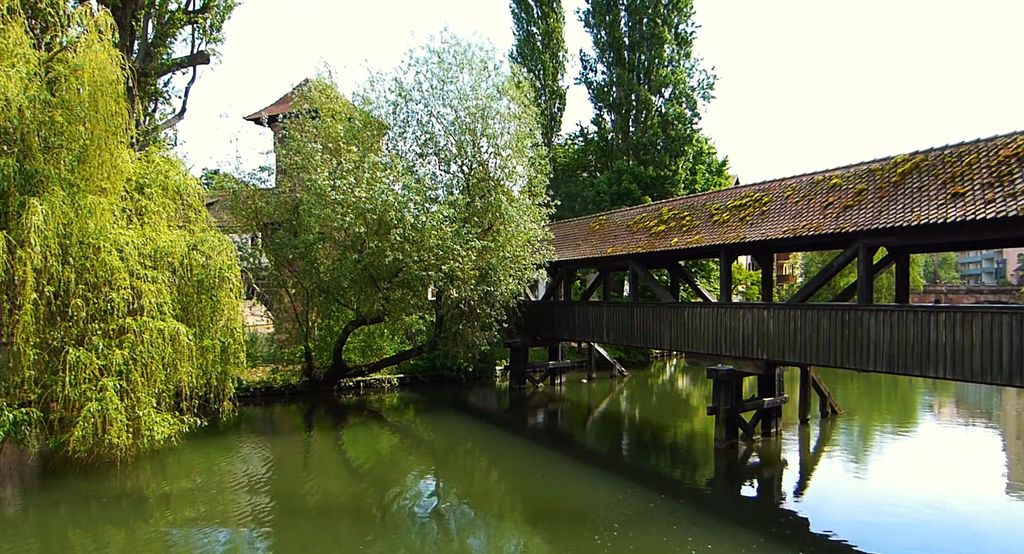
- Henkersteg (Hangman’s Bridge) – A wooden bridge from the 15th century, rebuilt after World War II.
St. Klara Church (St. Klara)
One of Nuremberg’s oldest churches, St. Klara was built in 1270 in the Old Town. Originally serving a Clarissan convent, it features Gothic architecture with Romanesque elements. The sandstone exterior contrasts with its austere interior.
St. Martha Church (St. Martha)
Tucked between buildings in the Old Town, this Gothic church dates to before the 14th century. Severely damaged in a 2014 fire, it has since been restored.
Nuremberg City Walls (Stadtmauer)
The city walls are among Nuremberg’s most impressive architectural landmarks. These massive fortifications encircle the Old Town and connect to the castle. First built in the 11th century, the walls were expanded in the 13th century. Remarkably, Nuremberg was only captured once—in 1945 during World War II.

In the early 15th century, the walls took the shape of an oblique parallelogram with four corner towers. A dry moat was added during the Hussite Wars.

The city had five main gates, two pedestrian passages, and four tower gates. Today, most of the walls remain intact.
Mauthalle (Customs Hall)
A medieval building from the late 15th century, originally used as a granary to supply the city during crises. Now a commercial space.
Debtors’ Tower (Schuldturm)
A 14th-century tower that was part of the city walls before becoming a debtors’ prison.
Tucher Castle (Tucherschloss)
A 16th-century Renaissance palace built by the noble Tucher family. Now a museum showcasing their history.
Pilatushaus (Pilate’s House)
One of the few surviving late-Gothic houses in Nuremberg, built in the late 15th century. Today, it hosts contemporary art exhibitions.

Video