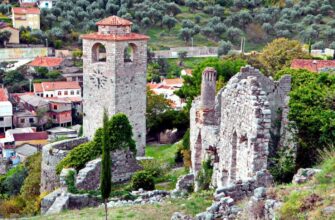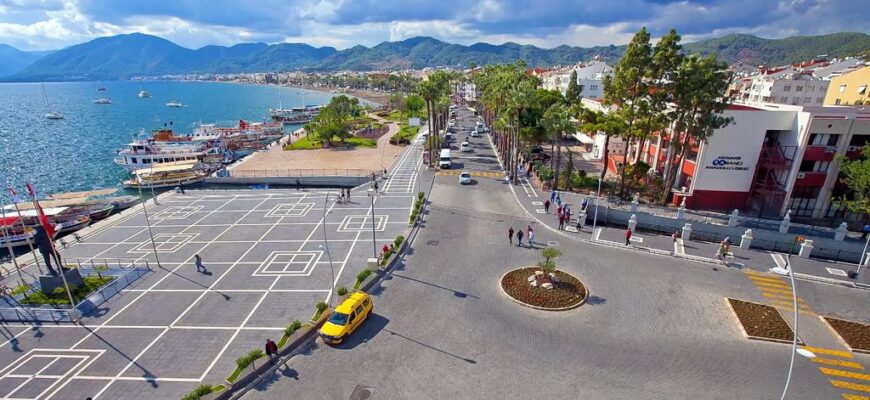
Marmaris (Turkish: Marmaris) — recognized by many as the pearl of Turkey’s resorts, it is the most “European” of all holiday destinations. Until recently, most vacationers here were citizens of the United Kingdom and the Netherlands, who appreciate comfort. The undeniable advantages of Marmaris include a less scorching climate than in other places, and a carefree sea (thanks to the sheltered cove that is protected from the rough waves typical of the open sea). Even the hot July and August months, which are intense everywhere else, are much easier to bear here.
The City of Marmaris (Turkey)
The dense sea water, combined with the absence of waves, is very suitable for those who are just learning to swim. The gentle slope into the sea also makes it very convenient for a holiday with children. Young people will find an outlet for their energy at evening discos — Marmaris is rightly considered the dance capital of Turkey. In the harbour, sheltered by an island and a peninsula, luxurious yachts and gulets (special small wooden boats for short cruises) await sea adventurers. The breathtaking beauty of the sea views is a perfect excuse for leisurely walks along the coast.
The bay is surrounded on all sides by mountain ranges. An island standing guard at the entrance to the inner waters cuts through strong sea waves, preventing them from reaching the shore. A ferry operates from the coast to the neighbouring state, the Greek island of Rhodes. Seven kilometres to the southwest lies the village of İçmeler, immersed in gardens and famous for its healing mineral springs (its very name comes from the Turkish verb “to drink”).
- Founded: Marmaris has been known since 1522
- Area: 878.1 km²
- Population: 34,047 people (2012)
- Currency: Turkish lira
- Language: Turkish
- Official website: http://www.marmaris.bel.tr
- Flight time: (charter flights to Dalaman) from Kyiv — 4 hours 30 min
- Time difference from Kyiv: +1, summer +2
- Currency: Turkish lira (YTL) Exchange rate: 1 YTL = 4.79 UAH
Marmaris enjoys a special location at the junction of the Mediterranean and Aegean seas, a hilly landscape along the coast indented with picturesque coves, and fragrant forests covering more than 50% of the surrounding area — all of this attracts true connoisseurs of beauty and comfortable holidays.
How to Get There
By bus, Marmaris can be reached from Fethiye (3 hours, cost €5.6), Bodrum (3.5 hours, ticket price €6.7), Izmir (4 hours 15 minutes, €10.7), Antalya (6 hours, €15). The longest and most expensive journey is from Istanbul (13 hours, ticket price €25).
Dalaman airport is located 120 km east. Thanks to Turkish Airlines, passengers are comfortably transported to the airport by internal bus services. Buses with the sign “Havas bus” depart from the regional office of the airline in Marmaris (located at Ataturk Caddesi 26-B) approximately three and a half hours before each flight departure. The fare costs €3. A slightly more expensive trip (€3.9) is offered by Coop’s buses from the city’s bus terminal.
During the navigation period (from April to the end of November), you can travel comfortably from the resort by ferry to Rhodes Island (the crossing takes less than an hour, payment is for a round trip and amounts to €42). All that is required to make this voyage to the neighbouring country possible is a Schengen visa.

History
Once a fishing village, Marmaris has developed over just a few decades into a major tourist centre with a comprehensively planned infrastructure. The nearest airport is on the mainland east of Marmaris in the city of Dalaman. The journey from there to the resort takes about an hour.
The founding date of the first settlement deep in this convenient bay is lost in the mists of time. It is known that in ancient times (11th century BC) there was a settlement called Physkos, one of the cities of Caria. In the 10th century BC, it came under the rule of Rhodes, who strengthened their presence by building the fortified city of Amos nearby. Starting from the 6th century BC, the Persians dominated here. Alexander the Great recaptured the city in 334 BC and returned it to Rhodian control.
The Romans appeared here in 164 BC and firmly established themselves in these lands in the 1st century BC. The Byzantine period began in 395 AD and ended in the 7th-8th centuries with the destructive Arab invasion. The Turks under the leadership of the Menteshe Beylik conquered the city by the end of the 13th century. A century later, in 1391, the city passed to the Ottoman Turks and by 1424 became an inseparable part of the Ottoman Empire.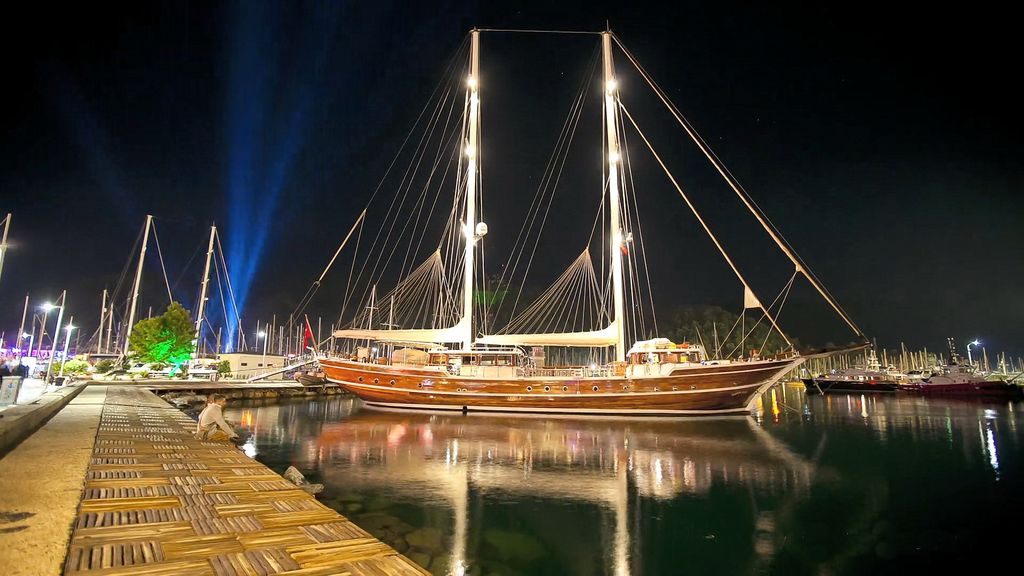
Suleiman the Magnificent ordered a fortress to be built here, and by the command of the same sultan, the city was renamed to its present name. This happened in the first quarter of the 16th century. Interestingly, the name has not Turkish but Greek roots — in Greek, Marmaris means “shining”.
The city found its new appearance after a devastating earthquake in 1957, being rebuilt from the ruins.
Climate and Weather in Marmaris
The climate of the resort zone is almost typical for the Mediterranean coast. Winters are somewhat colder than usual here; at the beginning of the year, the average temperature is 7.5°C, with rain alternating with wet snow. Frosts are rare, and the temperature never drops below -4°C. By spring, the temperature rises to +25°C, but even in May the water is still too cool for a full beach holiday (its temperature is no more than +20°C).
The average summer air temperature (usually close to this median value) is about +30°C. The temperature record recorded in Marmaris is +52°C. Early autumn is characterized by relatively high air temperatures (not exceeding +30°C), and the water during this time (September-October) is comfortable for swimming (water temperature from +25 to +28°C).
European tourists prefer to visit Marmaris at the border of spring and summer, as well as during the first two months of autumn. Those who enjoy hot summer holidays can comfortably head to the local coasts in both July and August.
Transport
It is useful to understand the colour-coded schemes on the sides of dolmuşes (minibuses) that run daily around the city from 7:15 a.m. until 1:30 a.m. The colour of the stripe on the side indicates the service area of each transport line:
- Turquoise (sometimes perceived as green) — taxis operating within the city of Marmaris;
- Orange stripe — these dolmuşes can take you to İçmeler, located in a picturesque bay seven kilometres to the southwest;
- Blue stripe — these taxis will take you to Armutalan, situated right between İçmeler and Marmaris proper.
Fares are paid in Turkish lira: within the city — about 1.5 lira, to İçmeler — one lira more.
Regular taxi ranks are located on street corners and near hotels. In addition to the per-kilometre fare, a fixed “pick-up” fee is charged.
Otogar (bus station) is located in the north-eastern part of the city, from where buses depart to neighbouring Turkish cities. A particular feature of bus travel is that direct long-distance routes are not provided, so if you plan to go to a city far from Marmaris, be prepared for multiple transfers from bus to bus.
By sea from Marmaris, you can reach (importantly — without transfers!) the same İçmeler, as well as Datça (heading west, rounding the prominent peninsula from the south) and Dalyan (a city to the east at the mouth of a river).
What to See in Marmaris
|
|
Where to Go in Marmaris
- Marmaris Singing Fountain — in the centre of the 19 May Youth Square in the resort city of Marmaris, Turkey, there is a beautiful singing fountain with dancing water jets.
- Sedir Island and Cleopatra Beach — Marmaris can remind you of the Egyptian Queen Cleopatra, who loved taking milk baths.
- Bar Street in Marmaris — this quite lively and fun resort is famous for its Bar Street, one of its well-known spots.
- Turgut Waterfall — located in the same small and quiet village of Turgut, 36 kilometres northwest of Marmaris.
- Dr. Lukum Factory — undoubtedly, tourists will find the Dr. Lukum Factory interesting. This place is particularly fascinating for those who adore sweets.
- Kız Kumu Sandbar — near Marmaris, in the small village of Orhaniye, there is an amazing and interesting place called the Kız Kumu sand spit.
Things to Do
Entertainment & Nightlife in Marmaris
Marmaris is often compared to Ibiza, competing with it due to the huge number of bars, discos, and nightclubs on the energetic Bar Street. Popular iconic dance clubs on Ataturk Boulevard (a disco called “Disco Maxim”) and “Turban”, located southwest of the city centre in the village of the same name. The latter disco is famous for its original dance floor that extends out into the open sea.
Evenings and nights are much calmer, without loud music, in İçmeler. The bay there is no less picturesque, and the sea water is calm. This place is better for lovers of peaceful, quiet relaxation.
In Marmaris, tourists can enjoy horseback riding, jeep and quad safaris, jet skiing and yachting, diving, rafting, and paragliding.
Beaches of Marmaris
Marmaris does not have the cleanest city beach. Beach holidays are most comfortable in İçmeler, as well as on the opposite, northern edge of the Cennet Peninsula. Turunç Bay is perfectly clean (Blue Flag for coastal ecology). Kumlubük Bay is also considered more than suitable for swimming.
The long promenade and beach of the Uzunyalı district, which connects Marmaris with İçmeler, are also a popular holiday spot. The original beach near the village of Orhaniye. Here, far out to sea (up to 600 metres), a shoal in the form of a spit divides the bay. This underwater spit has its own name — “Kizkumu”, and it is possible to walk far out into the sea almost “on dry land”, reminiscent of the hero Andrei Mironov in the film “The Diamond Arm”.
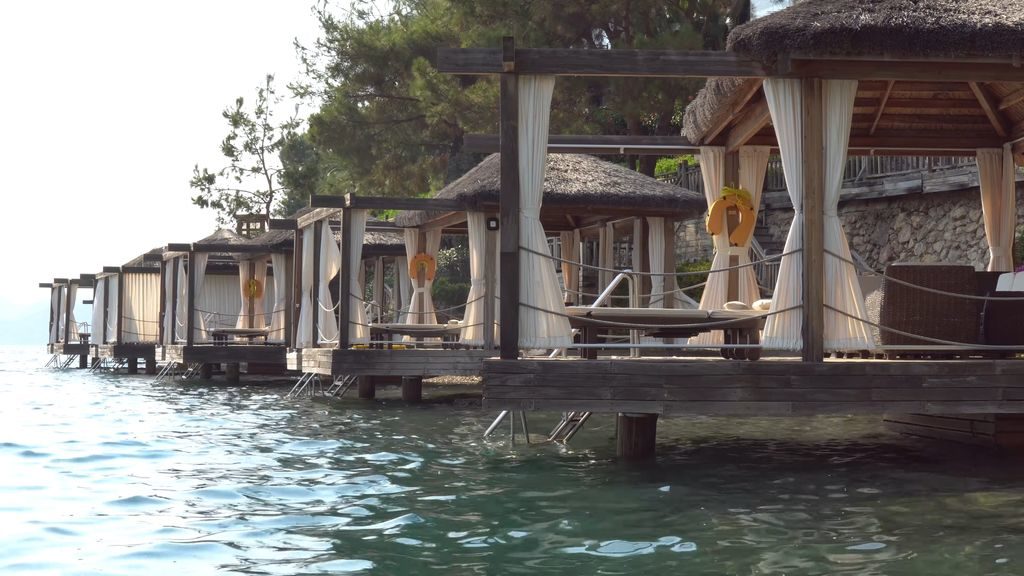 Main Beaches of Marmaris:

- Iztuzu Beach (Turtle Beach)
- Turunç Beach
- Ovabükü Beach
- City Beach (Marmaris)
- İçmeler Beach
- Günnücek Beach
- Amos Beach
- Uzunyalı Beach
- Çiftlik Beach
- Kumlubük Beach
- Cleopatra Beach (Sedir Island)
Diving in Marmaris
Ancient ruins are scattered across more than fifty dive sites in Marmaris and its surroundings. The most notable are:
- Abdi Reis Bay with the “Phosphorlu” underwater cave, near Yıldız Island, a favourite spot for beginner divers;
- Kütük Cape, recommended only for the most experienced dive masters;
- Cennet Island, famous among other things for its caves and excellent local cuisine;
- Kadırga Lighthouse, a remote place that never experiences strong waves;
- Hayıtlı Cape opposite Keçi Island, favourable for diving due to the absence of strong currents;
- Kargı Island, ideal for snorkelers (on the bay side) during periods when strong underwater currents subside;
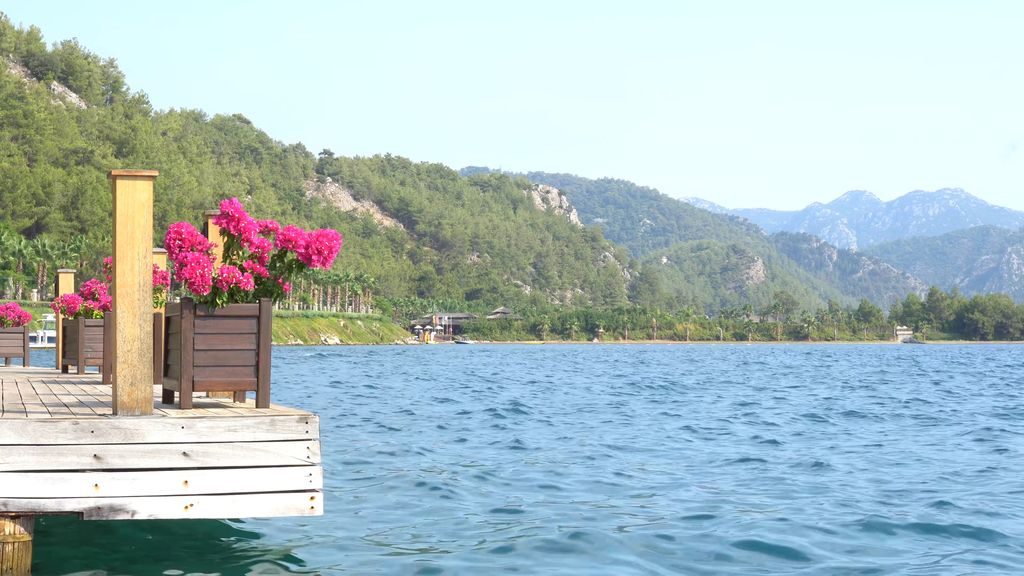
- Lighthouse on Keçi Island, depth 10 m for beginners, 30 m dives for professionals;
- “Ince Burun” Lighthouse on the resort side of Yıldız Island, where original inhabitants of the underwater world — sea hares — are found;
- Yazıh Rock, where good visibility occurs only in the early morning hours (later the site is shaded by overhanging cliffs);
- Basa Cave, the most popular and deepest (50 m) site near Marmaris;
- Bükü (Aksu Bay), accessible even to beginners, with wonderful clear turquoise water;
- Sarı-Mehmet Cape in the Aegean Sea, a spot for calm, safe dives.

On the seabed (at certain sites) you can see fragments of amphorae; towards the end of summer, the waters teem with tuna and sardines. Large crustaceans and cephalopods, predatory moray eels, and a variety of sea goldfish — silvery cardinal fish — can also be encountered.
Shopping in Marmaris
The most popular purchases in Marmaris are: leather goods, carpets, onyx and ceramic items, jewellery, and replica clothing and shoes. The most popular shopping district is the Grand Bazaar, located in the city centre. Shops in Marmaris are open from 9:00 a.m. to 10:00 p.m.
To get the best price, you need to bargain.
Cuisine
There will definitely be no problems with food in Marmaris. The popular resort offers a wide variety of cuisines, from Turkish to European and Caucasian. The main ingredients of local cuisine: fish and seafood, lamb, chickpeas, eggplant, olive oil, yoghurt, cheese, rice, spinach, potatoes, bread, tomatoes, spices and herbs. Read more in the article: Turkish National Cuisine – Which Dishes to Try
Video