<p><span class="">Ravenna — the most detailed information about the city with photos. Top attractions of Ravenna with descriptions, guides, and maps.</span></p>
<div class="table-of-contents open"><!--noindex--><div class="table-of-contents__header"><span class="table-of-contents__hide js-table-of-contents-hide">Contents</span></div><ol class="table-of-contents__list js-table-of-contents-list">
<li class="level-1"><a href="#city-of-ravenna-italy">City of Ravenna (Italy)</a></li><li class="level-2"><a href="#geography-and-climate">Geography and Climate</a></li><li class="level-2"><a href="#practical-information">Practical Information</a></li><li class="level-2"><a href="#history">History</a></li><li class="level-2"><a href="#how-to-get-there">How to Get There</a></li><li class="level-2"><a href="#attractions">Attractions</a></li></ol><!--/noindex--></div><h2 id="city-of-ravenna-italy">City of Ravenna (Italy)</h2>
<p class="ds-markdown-paragraph"><span class="">Ravenna (Italian: Ravenna) is a city in northeastern <a href="https://mandry.club/en/countries/italy/">Italy</a> in the Emilia-Romagna region. It is situated on a low-lying plain near the confluence of the Ronco and Montone rivers, about ten kilometers from the Adriatic Sea, to which it is connected by a canal. Ravenna is a city with an interesting and rich history, a true treasure trove of art and culture. Eight late antique monuments are included in the UNESCO World Heritage List.</span></p>
<p class="ds-markdown-paragraph"><span class="">Ravenna is one of the largest cities in the Emilia-Romagna region. It is conveniently located between <a href="https://mandry.club/en/cities/bologna-italy/">Bologna</a> and <a href="https://mandry.club/en/countries/san-marino-2/">San Marino</a>, as well as not far from Florence and Adriatic resorts, making it a very popular tourist destination. However, what makes Ravenna unique are its Byzantine-era monuments, which are among the best-preserved in Italy. Furthermore, the city is famous as the place of death of the legendary Dante Alighieri — one of the greatest poets of the Middle Ages and the founder of the modern Italian language.</span></p>
<h3 id="geography-and-climate">Geography and Climate</h3>
<p class="ds-markdown-paragraph"><span class="">The province of Ravenna is located in the eastern part of the Emilia-Romagna region, 10 km from the Adriatic coast. The Candiano Canal connects the city to the sea. The province lies on the Padan Plain in its lowland part.</span></p>
<p class="ds-markdown-paragraph"><span class="">The climate of Ravenna is typical for the southeastern Po Valley with maritime influence. Summers are quite hot, with an average temperature of 23–25 degrees. Winters are mild, with an average temperature of 3–5 degrees, although cold eastern winds can bring frost and snowfall.</span></p>
<figure id="attachment_10117" aria-describedby="caption-attachment-10117" style="width: 750px" class="wp-caption aligncenter"><a href="https://mandry.club/wp-content/uploads/2020/04/ravenna15.jpg"><img class="wp-image-10117 size-large" src="https://mandry.club/wp-content/uploads/2020/04/ravenna15-1024x576.jpg" alt="Charming narrow streets in Ravenna old town Italy" width="750" height="422" /></a><figcaption id="caption-attachment-10117" class="wp-caption-text">Streets of Ravenna</figcaption></figure>
<h3 id="practical-information">Practical Information</h3>
<ul>
<li class="ds-markdown-paragraph"><span class="">Population — 171 thousand people. </span></li>
<li class="ds-markdown-paragraph"><span class="">Area — 653.82 square kilometers.</span></li>
<li class="ds-markdown-paragraph"><span class="">Language — Italian.</span></li>
<li class="ds-markdown-paragraph"><span class="">Currency — euro.</span></li>
<li class="ds-markdown-paragraph"><span class="">Time — Central European UTC +1, in summer +2.</span></li>
<li class="ds-markdown-paragraph"><span class="">Visa — Schengen.</span></li>
</ul>
<p class="ds-markdown-paragraph"><span class="">The historical center is home to many small stylish shops. Although you won&#8217;t find large stores and shopping malls here as in Milan or Rome.</span><br />
<span class="">Ravenna is a budget-traveler-friendly city. There are many small pizzerias and trattorias offering delicious and inexpensive Italian cuisine.</span></p>
<h3 id="history">History</h3>
<p class="ds-markdown-paragraph"><span class="">Ravenna is an ancient city with a rich and complex history. After the collapse of the Roman Empire, from the beginning of the 5th century, the city was the capital of the Western Roman Empire, later the state of the Ostrogoths, and the Exarchate of Ravenna (part of Byzantium).</span></p>
<p class="ds-markdown-paragraph"><span class="">Initially, the territory of the province was inhabited by Etruscan and Umbrian tribes. Ravenna became part of the Roman Empire in the 2nd century BC. Under Octavian Augustus, a port was built here, which later grew into a city. In 402 AD, after the Visigoths besieged Mediolanum (Milan), Ravenna became the capital of the Western Roman Empire. In 476, the empire ceased to exist. This date is also considered the end of the Antiquity period.</span></p>
<figure id="attachment_10119" aria-describedby="caption-attachment-10119" style="width: 750px" class="wp-caption aligncenter"><a href="https://mandry.club/wp-content/uploads/2020/04/ravenna16.jpg"><img class="wp-image-10119 size-large" src="https://mandry.club/wp-content/uploads/2020/04/ravenna16-1024x576.jpg" alt="Historic cobblestone alleyway in Ravenna Italy" width="750" height="422" /></a><figcaption id="caption-attachment-10119" class="wp-caption-text">Streets of Ravenna</figcaption></figure>
<p class="ds-markdown-paragraph"><span class="">At the end of the 5th century, Ravenna was conquered by the Ostrogothic king Theodoric, who made the city the capital of his kingdom. But the Ostrogothic kingdom did not last long. As early as 540, Ravenna became a province of Byzantium. In the mid-8th century, the city was conquered by the Lombards. Although this kingdom was also short-lived. In the mid-9th century, Ravenna came under the control of the Pope.</span></p>
<p class="ds-markdown-paragraph"><span class="">From the 9th to the 13th centuries, the city was governed by archbishops. In the 13th century, Ravenna became the fiefdom of the Traversari family, and later the da Polenta family. In the 15th century, Ravenna became part of the Venetian Republic. At the beginning of the 16th century, the city fell again under Papal rule and was also sacked and burned by French troops. For the next three centuries, Ravenna was part of the Papal States until it became part of a unified Italy in the 19th century.</span></p>
<figure id="attachment_10129" aria-describedby="caption-attachment-10129" style="width: 750px" class="wp-caption aligncenter"><a href="https://mandry.club/wp-content/uploads/2020/04/ravenna04.jpg"><img class="size-large wp-image-10129" src="https://mandry.club/wp-content/uploads/2020/04/ravenna04-1024x576.jpg" alt="Panoramic view of Ravenna rooftops and landmarks" width="750" height="422" /></a><figcaption id="caption-attachment-10129" class="wp-caption-text">Ravenna</figcaption></figure>
<h3 id="how-to-get-there">How to Get There</h3>
<p>In the town of Forlì, 20 km from Ravenna, there is a small airport serving a few local destinations. Large airports are located in Bologna, Venice, and Florence. The city is also easily reached by car via the A14 motorway. There is also a railway station here, with main routes to Bologna and Rimini.</p>

<!-- WP QUADS v. 3.0.4 Shortcode Ad -->
<div class="quads-location quads-ad17596" id="quads-ad17596" style="">
<!-- admitad.banner: yq1d7d70jj14642d67dd9b8c64f65e Infobus [CPS] WW -->
<a target="_blank" rel="nofollow" href="https://bednari.com/g/yq1d7d70jj14642d67dd9b8c64f65e/?i=4"><img width="728" height="90" border="0" src="https://ad.admitad.com/b/yq1d7d70jj14642d67dd9b8c64f65e/" alt="Infobus [CPS] WW"/></a>
<!-- /admitad.banner --></div>

<h3 id="attractions">Attractions</h3>
<p class="ds-markdown-paragraph"><span class="">Ravenna boasts wonderful late antique monuments that are UNESCO World Heritage sites, ancient churches and basilicas, old streets, and wide squares. But the city is not only famous for its historical and cultural sights. Nearby are Adriatic resort towns that can offer a wonderful holiday.</span></p>
<p class="ds-markdown-paragraph"><strong><span class="">Neonian Baptistery</span></strong><span class=""> (also often called the Orthodox Baptistery) — the oldest preserved building in Ravenna and an extremely important religious site. The baptistery was built in the 5th century on the territory of a Roman bath complex. The structure has an octagonal shape and a rather simple exterior.</span></p>
<figure id="attachment_10120" aria-describedby="caption-attachment-10120" style="width: 750px" class="wp-caption aligncenter"><a href="https://mandry.club/wp-content/uploads/2020/04/ravenna01.jpg"><img class="wp-image-10120 size-large" src="https://mandry.club/wp-content/uploads/2020/04/ravenna01-1024x576.jpg" alt="Famous Byzantine mosaics inside the Neonian Baptistery Ravenna" width="750" height="422" /></a><figcaption id="caption-attachment-10120" class="wp-caption-text">Baptistery mosaics</figcaption></figure>
<p>But the main treasure is hidden inside — a stunning series of ancient Byzantine colored mosaics depicting religious scenes, such as the baptism of Christ and the procession of the twelve apostles.</p>
<p><a href="https://mandry.club/wp-content/uploads/2020/04/ravenna07.jpg"><img class="aligncenter size-large wp-image-10121" src="https://mandry.club/wp-content/uploads/2020/04/ravenna07-1024x576.jpg" alt="Intricate ceiling mosaic detail in Ravenna baptistery" width="750" height="422" /></a></p>
<p><strong><span class="">Basilica of San Vitale</span></strong><span class=""> — another ancient structure, located not far from the Neonian Baptistery. The construction of the church dates back to the first half of the 6th century. The basilica has a similar exterior and architecture, featuring a large octagonal central dome. The interior of San Vitale contains amazing mosaics and decorations considered some of the finest examples of Byzantine art in Italy.</span></p>
<figure id="attachment_10123" aria-describedby="caption-attachment-10123" style="width: 750px" class="wp-caption aligncenter"><a href="https://mandry.club/wp-content/uploads/2020/04/ravenna02.jpg"><img class="size-large wp-image-10123" src="https://mandry.club/wp-content/uploads/2020/04/ravenna02-1024x576.jpg" alt="Exterior of the Mausoleum of Galla Placidia in Ravenna" width="750" height="422" /></a><figcaption id="caption-attachment-10123" class="wp-caption-text">Mausoleum of Galla Placidia</figcaption></figure>
<p class="ds-markdown-paragraph"><strong><span class="">Mausoleum of Galla Placidia</span></strong><span class=""> — another UNESCO World Heritage site in Ravenna, built in the 440s. This structure, simple on the outside, offers wonderful interiors considered one of the best-preserved and artistically perfect examples of mosaic art in Italy. The mausoleum was created for the sister of Western Roman Emperor Honorius, but ultimately she was buried in Rome.</span></p>
<p class="ds-markdown-paragraph"><strong><span class="">Basilica of Sant&#8217;Apollinare Nuovo</span></strong><span class=""> was built by the Ostrogothic king Theodoric. The church is located in the eastern part of the old city, easily reachable on foot. To the right of the building stands a large bell tower, and the front entrance is decorated with stone arches. Inside, the basilica boasts wonderful mosaic decoration that documents the stylistic, iconographic, and ideological evolution of Byzantine wall mosaics from the era of Theodoric to Justinian. The mosaics depict scenes from the New Testament.</span></p>
<figure id="attachment_10124" aria-describedby="caption-attachment-10124" style="width: 750px" class="wp-caption aligncenter"><a href="https://mandry.club/wp-content/uploads/2020/04/ravenna13.jpg"><img class="size-large wp-image-10124" src="https://mandry.club/wp-content/uploads/2020/04/ravenna13-1024x576.jpg" alt="Facade of the Basilica of San Francesco in Ravenna" width="750" height="422" /></a><figcaption id="caption-attachment-10124" class="wp-caption-text">Basilica di San Francesco</figcaption></figure>
<p><strong><span class="">Basilica of San Francesco</span></strong><span class=""> is located between the Neonian Baptistery and the Basilica of Sant&#8217;Apollinare Nuovo. The church was built in the 9th century, and the bell tower in the 10th century. Although the interior of the basilica is quite simple, it attracts visitors with its mysterious crypt and the bishop&#8217;s tomb.</span></p>
<figure id="attachment_10125" aria-describedby="caption-attachment-10125" style="width: 750px" class="wp-caption aligncenter"><a href="https://mandry.club/wp-content/uploads/2020/04/ravenna06.jpg"><img class="size-large wp-image-10125" src="https://mandry.club/wp-content/uploads/2020/04/ravenna06-1024x576.jpg" alt="Stone Mausoleum of Theodoric in Ravenna park" width="750" height="422" /></a><figcaption id="caption-attachment-10125" class="wp-caption-text">Mausoleum of Theodoric</figcaption></figure>
<p><strong><span class="">Mausoleum of Theodoric</span></strong><span class=""> — the burial place of the Ostrogothic king who chose Ravenna as the stronghold of his kingdom. This 1500-year-old structure is located in the park of the same name. The roof of this construction is made of Istrian stone. The interior of the tomb is quite simple.</span></p>
<figure id="attachment_10126" aria-describedby="caption-attachment-10126" style="width: 750px" class="wp-caption aligncenter"><a href="https://mandry.club/wp-content/uploads/2020/04/ravenna08.jpg"><img class="size-large wp-image-10126" src="https://mandry.club/wp-content/uploads/2020/04/ravenna08-1024x576.jpg" alt="Marble tomb monument of poet Dante Alighieri" width="750" height="422" /></a><figcaption id="caption-attachment-10126" class="wp-caption-text">Dante&#8217;s Tomb</figcaption></figure>
<p class="ds-markdown-paragraph"><strong><span class="">Dante&#8217;s Tomb</span></strong><span class=""> — is a simple marble structure that houses the remains of one of Italy&#8217;s greatest poets. The mausoleum was built much later than Alighieri&#8217;s death.</span></p>
<p class="ds-markdown-paragraph"><strong><span class="">Arian Baptistery</span></strong><span class=""> was built at the turn of the 5th–6th centuries by Theodoric. This inconspicuous-at-first-glance structure is located in the immediate vicinity of Piazza del Popolo, next to the Church of Spirito Santo. Inside, the baptistery is beautifully decorated with mosaics. The very detailed ceiling mosaic depicting the baptism of Jesus Christ is especially impressive.</span></p>
<p class="ds-markdown-paragraph"><strong><span class="">Archiepiscopal Chapel</span></strong><span class=""> — the chapel of the Ravenna bishops, built in the early 6th century under Theodoric. The interior is beautifully decorated with mosaics.</span></p>
<figure id="attachment_10127" aria-describedby="caption-attachment-10127" style="width: 750px" class="wp-caption aligncenter"><a href="https://mandry.club/wp-content/uploads/2020/04/ravenna05.jpg"><img class="size-large wp-image-10127" src="https://mandry.club/wp-content/uploads/2020/04/ravenna05-1024x576.jpg" alt="Exterior view of Sant'Apollinare in Classe Basilica Ravenna" width="750" height="422" /></a><figcaption id="caption-attachment-10127" class="wp-caption-text">Sant&#8217;Apollinare in Classe</figcaption></figure>
<p><strong><span class="">Sant&#8217;Apollinare in Classe</span></strong><span class=""> — a 6th-century basilica located outside the old city. It was built over the grave of the first bishop of Ravenna, Saint Apollinaris. It is a masterpiece of Byzantine art. The church&#8217;s interior is decorated with mosaics from the Justinian period.</span></p>
<h4>What else interesting can be found in Ravenna:</h4>
<ul>
<li>
<p class="ds-markdown-paragraph"><strong><span class="">National Museum</span></strong><span class=""> — located in the building of an old Benedictine monastery. It houses an excellent collection of artworks, artifacts, and relics from various periods of the region&#8217;s history.</span></p>
</li>
<li>
<p class="ds-markdown-paragraph"><strong><span class="">Marina di Ravenna</span></strong><span class=""> — a marina northeast of the city. At the northern edge, there is a harbor with many fishing and sailing boats, and to the south is a long stretch of beach with beautiful golden sand.</span></p>
</li>
<li>
<p class="ds-markdown-paragraph"><strong><span class="">Cesenatico</span></strong><span class=""> — a charming seaside resort town southeast of Ravenna, half an hour&#8217;s drive away.</span></p>
</li>
<li>
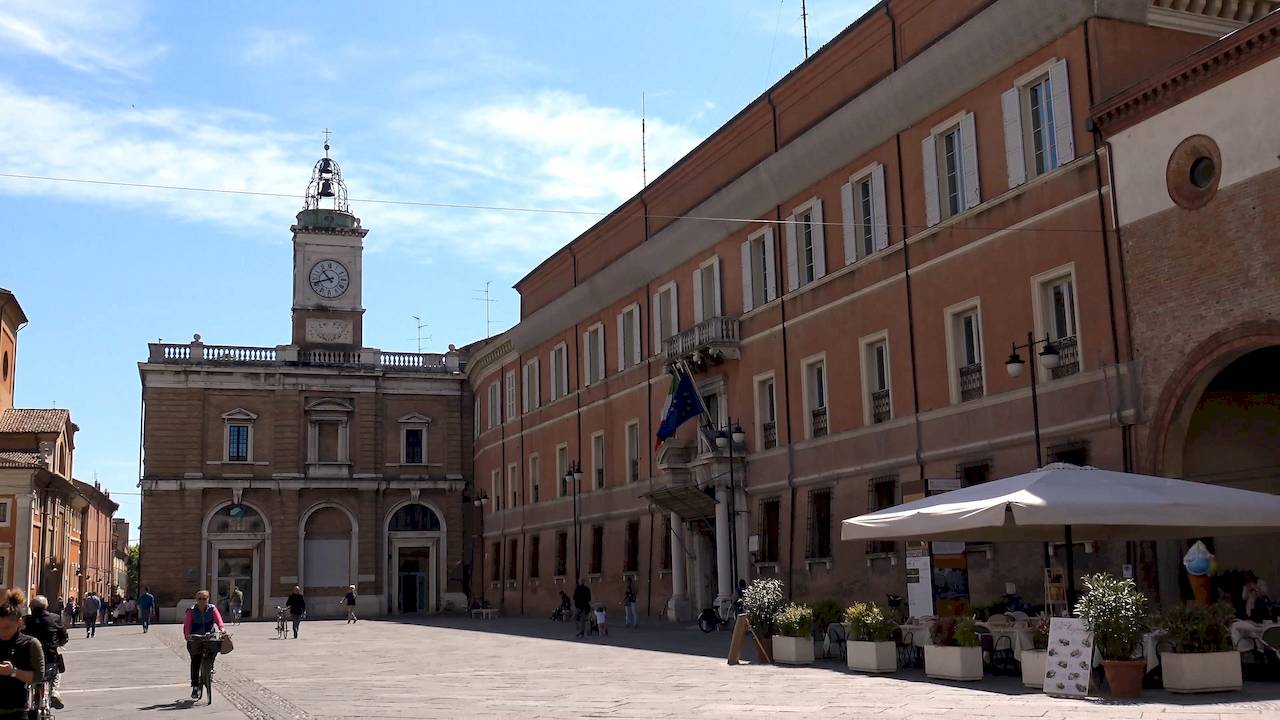
<p class="ds-markdown-paragraph"><strong><span class="">Piazza del Popolo</span></strong><span class=""> — one of the busiest and most important city squares. Located in the center of the historic old town, a few minutes&#8217; walk from the Basilica of San Francesco and the Basilica of Sant&#8217;Apollinare Nuovo. The square is distinguished by beautiful architecture and many restaurants.</span></p>
</li>
<li>
<p class="ds-markdown-paragraph"><strong><span class="">Mirabilandia</span></strong><span class=""> — a theme park with various attractions, one of the most visited in Italy.</span></p>
</li>
<li>
<p class="ds-markdown-paragraph"><strong><span class="">Municipal Tower</span></strong><span class=""> — a 39-meter-high tower, built in the 12th century. Located at Via Ponte Marino, 2.</span></p>
</li>
</ul>
We'll explain what stars are, how they shine, and why we can't see them during…
A well-packed suitcase is one of the key ingredients for a successful trip. Taking everything…
By Tony Wooding People often ask me what my dream holiday is. Most expect the…
The hospitality industry in Turkey is one of the best in the world. And this…
The majority of hotels worldwide are geared toward family vacations: they offer entertainment for children,…
Is there salt in raindrops, why do the seas remain salty if so many freshwater…
